


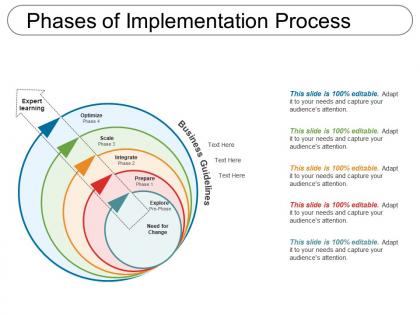
42613974 style cluster stacked 5 piece powerpoint presentation diagram infographic slide





Try Before you Buy Download Free Sample Product
 Impress Your
 Audience
 100%
100% Editable
 Save Hours
 of Time


Our Phases Of Implementation Process provide the perfect balance. Your weighty ideas will get the ideal impetus.
42613974 style cluster stacked 5 piece powerpoint presentation diagram infographic slide with all 5 slides:
Don't allow heightened expectations to build with our Phases Of Implementation Process. It helps bring down the hype.

FAQs for 42613974 style cluster stacked 5 piece powerpoint presentation
So basically you've got four main phases - planning, execution, monitoring, and closure. Planning is where you map out scope, timeline, resources, all that stuff. Execution is the actual work (and yeah, it gets chaotic fast). You're monitoring the whole time though, checking progress and putting out fires. Closure wraps everything up with deliverables and lessons learned. Oh, and one thing I learned the hard way - don't rush the planning phase. I know it's tempting to jump straight into the fun stuff, but trust me, those extra hours upfront will save you so much stress later when everything's falling apart.
Figure out exactly what problem you're solving first - sounds obvious but you'd be surprised how many people skip this step. List your must-haves vs nice-to-haves right away. Document everything: which systems you'll touch, what users are affected, and definitely what's NOT included. Get everyone to agree on a simple one-page scope doc before you start anything else. When scope creep hits (and it will), you'll thank yourself for having that reference. Honestly, this saves so much drama down the road when stakeholders suddenly want ten new features.
Honestly, stakeholder engagement will make or break your whole project. Get everyone involved from the start - and I mean actually involved, not just sending them updates they'll ignore. Map out who matters when, listen to their feedback (even the annoying stuff), and adjust your plan accordingly. I've watched perfectly good implementations crash because someone didn't think to include the right people early enough. These folks remove your roadblocks and decide if people actually adopt what you're building. Don't just check boxes here - their input is what separates success from expensive failure.
Start by figuring out what success looks like for each phase - be specific about it. Planning phase? Track stakeholder buy-in and whether you're hitting deadlines. During execution, watch your adoption rates, user feedback, budget stuff. Post-launch is honestly where it gets interesting - that's your ROI and whether you actually fixed the problem you set out to solve. Here's the thing though - tons of teams mess this up by not measuring anything at the beginning. Then they're scrambling later trying to prove they did something worthwhile. Get your measurement stuff set up early and check in weekly.
Ugh, you're gonna deal with scope creep, resource issues, and stakeholders who just won't get on board. Document everything upfront - seriously, everything. Set up a proper change process so people can't just add random stuff later. Build extra time into your timeline because something always goes wrong, and figure out your backup team members now. Most resistance happens when people feel left out of the loop, so keep them updated with regular check-ins and show some quick wins early. Stay flexible but don't let people walk all over your main goals. Push back when you need to.
Honestly, break everything into chunks with way more buffer time than feels reasonable - I've learned this the hard way. Figure out what depends on what first so you can spot potential bottlenecks. Review your timeline every week or two with everyone involved because stuff always comes up. When things inevitably go sideways, don't just extend everything equally. Look at what you can actually cut, run in parallel, or simplify instead. Oh, and schedule regular check-ins where people feel comfortable flagging problems early. Way better than discovering issues when it's too late to fix them.
Honestly, just grab whatever project management tool your team will actually stick with - Asana, Monday, Trello, doesn't really matter. Gantt charts are pretty solid for visualizing timelines if you're not allergic to them. A basic dashboard or even a Google Sheet showing milestones and completion rates usually does the trick too. I'd probably start super simple though - like embarrassingly simple. You can always jazz it up later if needed. The whole point is having something that actually gets updated and shows you what's done, what's moving, and what's totally stuck. Simple beats fancy every time when it comes to this stuff.
Honestly, collaboration can totally make or break your whole project timeline. Good communication means you catch problems early and everyone knows what they're doing. Bad communication? That's when you get those awkward "oh, I thought YOU were doing that" moments - been there way too many times. Your phases are basically just handoffs between people, so if nobody's talking, everything falls behind schedule. I'd definitely set up regular check-ins right from the start. Oh, and make sure people actually have clear ways to reach each other when stuff comes up.
Here's how I'd handle it - build risk checks right into your project milestones instead of just doing it once upfront. During planning, map out your biggest threats. Then set regular checkpoints where someone actually owns tracking each risk (not just generic "team responsibility"). Honestly, most projects I've worked on died because we got tunnel vision after kickoff and ignored warning signs. Keep that risk register updated as you go - implementation always throws curveballs you never saw coming. Having quick risk updates in your regular team meetings works way better than formal quarterly reviews or whatever.
Start with weekly check-ins and some kind of dashboard people can actually see. Trust me, way better to over-communicate than leave everyone guessing. Mix up your channels - email for the formal stuff, Slack for quick hits, real meetings when things get complicated. Executives just want the big picture, but your team needs the nitty-gritty details. Oh, and create a communication schedule early on. Stick to it! Nothing kills trust faster than randomly going silent on people. Multiple touchpoints are your friend here.
Honestly, most people think about training way too late - like right before launch when they're already panicking. Start planning during design phase so you can build materials while configuring everything. The actual training happens right before go-live, but here's the thing: your users need to practice on the real system, not sit through boring PowerPoint slides. I always tell people to run multiple sessions leading up to launch. Oh, and definitely pick some super-users early who can be your champions afterward. Trust me, you don't want to scramble at the end like I've seen happen so many times.
Honestly, month 6 is where most of these things just die because everyone's over it. The trick is celebrating those random boring wins - like yeah, the data import finally works! Whatever keeps people caring. Don't push crazy deadlines when you hit actual problems, just adjust them. Quick check-ins help but keep them focused, nobody wants another endless meeting. Oh and definitely keep your main stakeholders in the loop on decisions - once they check out mentally you're screwed. Maybe do a quick vibe check with your team next week?
Honestly, set up check-ins at every major milestone - that's the game changer. Get feedback from actual end users, not just the bosses who never touch the real work. Anonymous channels work great because people will actually tell you what sucks. I learned this the hard way on a project last year! Weekly pulse surveys during busy phases, then monthly deep dives to figure out what's broken. Oh, and act on feedback fast or people just stop caring. Track metrics that matter to real humans. Skip this stuff and you'll hate yourself later when everything falls apart.
Track completion rates, budget stuff, timeline accuracy, and how many users actually adopt what you're building. Early on? Focus on hitting milestones and not burning through resources - trust me on this one. As you get further along, defect rates and user satisfaction become way more important. Stakeholder feedback matters just as much as the numbers, even though it's messier to measure. Set up a weekly dashboard so you can catch problems early. Oh, and start tracking from day one - don't wait until things get complicated.
Oh yeah, definitely do a lessons learned thing after each project. Six months from now you'll be like "why did we even make that choice?" So write down what worked and what totally bombed. The weird unexpected problems are goldmine material - way better than generic stuff like "we need better communication." Actually USE it when planning though, otherwise it's just another forgotten document. Make your team write real examples, not fluff. And make it searchable or you'll never find anything when you need it.
-
Informative design.
-
The content is very helpful from business point of view.