

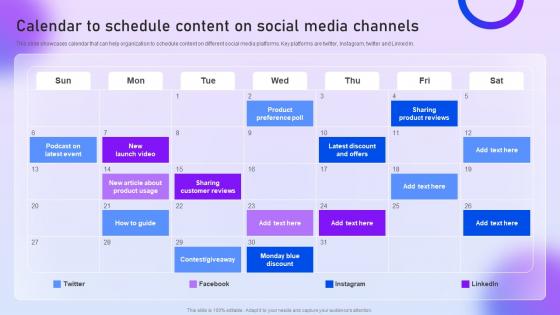
Calendar To Schedule Content On Social Media Channels Content Distribution Marketing Plan




Try Before you Buy Download Free Sample Product
 Impress Your
 Audience
 100%
100% Editable
 Save Hours
 of Time


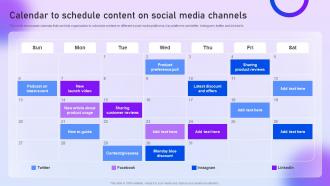
This slide showcases calendar that can help organization to schedule content on different social media platforms. Key platforms are twitter, Instagram, twitter and Linked In.
People who downloaded this PowerPoint presentation also viewed the following :
Calendar To Schedule Content On Social Media Channels Content Distribution Marketing Plan with all 6 slides:
Use our Calendar To Schedule Content On Social Media Channels Content Distribution Marketing Plan to effectively help you save your valuable time. They are readymade to fit into any presentation structure.





FAQs for Calendar To Schedule Content On Social Media Channels Content
Key components of an effective social media content calendar include posting schedules, content themes, platform-specific formats, engagement metrics tracking, and campaign alignment with business objectives. These elements streamline content creation by ensuring consistent messaging, optimizing posting times, and coordinating cross-platform campaigns, with many marketing teams finding that structured calendars enhance audience engagement while significantly reducing content planning time and operational costs.
A content calendar improves social media strategy by ensuring consistent posting schedules, aligning content with business objectives, and enabling strategic campaign planning across multiple platforms. This systematic approach streamlines content creation workflows, enhances audience engagement through timely relevant posts, and delivers measurable ROI improvements, with many brands finding that organized content planning ultimately increases follower growth and conversion rates.
A social media content calendar should include promotional posts, educational content, user-generated content, behind-the-scenes glimpses, industry news, interactive polls, seasonal campaigns, and community engagement posts. These diverse content types work together to maintain audience interest, build brand authority, and drive engagement, with many organizations finding that this strategic mix ultimately delivers stronger customer relationships and increased brand visibility.
Content calendars should be updated weekly for tactical adjustments and revised monthly for strategic alignment, with quarterly comprehensive reviews to assess performance metrics, audience engagement patterns, and campaign effectiveness. This regular revision cycle enables organizations to respond to trending topics, seasonal opportunities, and audience feedback while maintaining consistent brand messaging, ultimately delivering improved engagement rates and stronger social media ROI.
Top tools for social media content calendars include Hootsuite, Buffer, Sprout Social, CoSchedule, and Later, each offering scheduling capabilities, analytics integration, and team collaboration features. These platforms streamline content planning by enabling bulk scheduling, cross-platform posting, and performance tracking, with many marketing teams finding that strategic calendar management ultimately delivers consistent brand messaging and improved audience engagement.
Audience engagement directly shapes content calendar planning by determining optimal posting times, content formats, and topic priorities based on historical performance data and audience behavior patterns. Social media managers analyze engagement metrics like comments, shares, and click-through rates to schedule high-performing content types during peak activity periods, ultimately delivering more targeted campaigns and stronger ROI across platforms.
Key metrics include engagement rates, reach and impressions, click-through rates, conversion rates, follower growth, and content performance by format or topic. These analytics enable marketers to identify high-performing content patterns, optimize posting schedules, and refine audience targeting strategies, with many organizations finding that consistent tracking ultimately delivers improved ROI and more strategic content decisions.
Seasonal events and holidays can be incorporated by aligning content themes with relevant celebrations, creating holiday-specific campaigns, and planning promotional tie-ins that resonate with audience sentiment during these periods. This strategic approach enables brands to capitalize on increased engagement during festive seasons, connect emotionally with audiences through timely messaging, and drive higher conversion rates, with many businesses finding that seasonal content generates significantly more shares and interactions than standard posts.
Visual content serves as the primary engagement driver in social media content calendars, encompassing infographics, videos, carousel posts, Stories, and branded graphics that capture attention and convey messages quickly. These visual elements enhance brand recognition, increase post engagement rates, and streamline content creation workflows, with many organizations finding that strategic visual planning ultimately delivers stronger audience connections and measurable social media performance improvements.
A content calendar helps maintain brand consistency by standardizing messaging themes, visual guidelines, posting schedules, and tone across all social platforms. Through centralized planning, organizations can coordinate campaigns, align content with brand values, and ensure cohesive storytelling, with many companies finding that structured scheduling delivers stronger brand recognition and more engaged audiences.
Content repurposing strategies include transforming blog posts into infographics, breaking videos into social snippets, converting webinars into podcast episodes, and adapting case studies into multiple post formats. These approaches streamline content creation by maximizing resource efficiency, extending content lifespan, and reaching diverse audience preferences, with many organizations finding that strategic repurposing reduces production costs while maintaining consistent messaging across platforms.
A content calendar facilitates team collaboration by providing centralized planning visibility, clear role assignments, shared deadline tracking, and real-time editing capabilities across departments. Through integrated workflows and comment systems, marketing teams, designers, and content creators can coordinate seamlessly, reduce approval bottlenecks, and maintain consistent messaging, ultimately delivering more strategic campaigns and faster content execution.
Common mistakes include inconsistent posting schedules, lack of platform-specific content adaptation, poor audience research, neglecting engagement monitoring, and failing to plan for trending topics or seasonal campaigns. Many businesses find that avoiding overly promotional content while ensuring diverse content types, maintaining brand voice consistency, and building buffer time for real-world events ultimately delivers stronger audience engagement and measurable social media growth.
**INPUT**: How can you tailor a content calendar for different social media platforms? **OUTPUT**: Tailoring content calendars involves adjusting posting frequency, content formats, optimal timing, and platform-specific features for each channel's unique audience behavior and algorithm preferences. While LinkedIn favors professional insights and industry thought leadership, Instagram thrives on visual storytelling and behind-the-scenes content, with many brands finding that platform-specific customization increases engagement rates and ultimately delivers stronger audience connections across their entire social media ecosystem. [Word count: 60 words]
Audience feedback shapes content calendar planning through engagement metrics analysis, comment sentiment evaluation, direct message insights, and social listening data interpretation. This feedback enables content creators to identify high-performing content themes, optimal posting times, preferred formats, and emerging audience interests, ultimately allowing strategic pivots that enhance engagement rates and deliver more targeted messaging across platforms.
-
Good research work and creative work done on every template.
-
SlideTeam is the best in the business. Their templates are engaging and customizable. You can rely on them.