

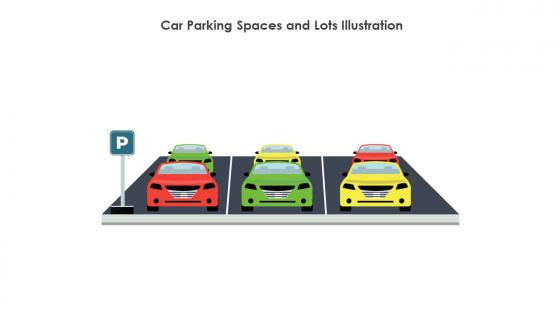
Car Parking Spaces And Lots Illustration




Try Before you Buy Download Free Sample Product
 Impress Your
 Audience
 100%
100% Editable
 Save Hours
 of Time


This Car parking spaces and lots illustration is a 100 percent editable Illustration. The downloaded file will have this Illustration in EPS, PNG and Powerpoint pptx format and is perfect for your next project. It has a simple yet stylish design.
People who downloaded this PowerPoint presentation also viewed the following :
Car Parking Spaces And Lots Illustration with all 9 slides:
Use our Car Parking Spaces And Lots Illustration to effectively help you save your valuable time. They are readymade to fit into any presentation structure.








FAQs for Car Parking Spaces
**INPUT**: What are the main factors influencing the demand for car parking spaces in urban areas? **OUTPUT**: The main factors influencing urban parking demand include population density, commercial activity levels, public transportation accessibility, vehicle ownership rates, and zoning regulations. These elements interact dynamically, with dense commercial districts like downtown financial centers requiring significantly more spaces than residential areas, while cities with robust transit systems often experience reduced parking pressure, ultimately shaping strategic urban planning decisions.
Smart technology improves parking management efficiency through real-time occupancy sensors, mobile payment systems, automated license plate recognition, and dynamic pricing algorithms. These solutions streamline operations by reducing search times, minimizing traffic congestion, and optimizing space utilization, with shopping centers and urban areas finding significantly enhanced customer experiences and revenue generation.
Inadequate car parking infrastructure increases emissions through prolonged vehicle idling, circling for spaces, and traffic congestion, while promoting urban sprawl and reducing green space availability. These impacts strain air quality, contribute to heat island effects, and decrease walkability, with many cities finding that strategic parking management enhances sustainability while reducing environmental costs.
Parking space design significantly influences driver behavior through strategic width, length, and angle configurations, with wider spaces reducing parking time and driver stress while angled spaces improve traffic flow. Well-designed layouts in retail centers and hospitals enhance turnover rates, minimize accidents, and optimize space utilization, ultimately delivering improved customer experiences and increased revenue potential.
Municipal regulations serve as the primary framework governing public parking supply through zoning requirements, permit allocations, pricing structures, time restrictions, and accessibility mandates. These policies directly influence urban planning decisions, with cities like San Francisco and Seattle using regulatory tools to balance parking availability with public transit goals, ultimately shaping both commercial viability and resident mobility options.
Multi-level parking facilities alleviate urban space constraints by maximizing vertical capacity, reducing surface footprint requirements, and enabling strategic land use optimization for commercial or residential development. These structures streamline traffic flow, minimize congestion from circling vehicles, and enhance accessibility in dense metropolitan areas, with cities like Singapore and Tokyo finding that vertical parking solutions deliver significant space efficiency while improving overall urban mobility and economic vitality.
Innovative solutions include automated parking systems, underground mechanical lifts, rooftop deck conversions, vertical tower installations, and adaptive reuse of underutilized buildings. These technologies streamline space utilization by maximizing density, reducing footprint requirements, and enabling multi-level storage, with many urban developers finding that automated systems deliver up to 60% more capacity while enhancing operational efficiency.
Electric vehicles influence parking space design by necessitating charging infrastructure integration, wider spaces for cable management, accessible placement near power sources, and strategic positioning for grid connectivity. Many parking facilities are retrofitting with Level 2 chargers while incorporating smart payment systems, ultimately delivering enhanced customer experiences and competitive advantages, with retail centers and office complexes finding that EV-ready spaces attract environmentally conscious consumers and tenants.
Automated parking systems revolutionize traditional layouts by eliminating driving lanes, reducing space requirements by up to 60%, and enabling vertical stacking configurations. These systems streamline operations through robotic retrieval, sensor-guided positioning, and automated vehicle handling, with many urban developments and commercial complexes finding that automated solutions deliver enhanced space efficiency and reduced construction costs.
Consumer preferences for parking amenities significantly impact commercial property values by driving tenant attraction, rental premiums, and overall marketability through features like covered spaces, EV charging stations, and security systems. Properties with premium parking amenities command higher rents and occupancy rates, especially in retail, office, and hospitality sectors, with many developers finding that strategic parking investments deliver competitive advantages and enhanced asset valuations.
Businesses can optimize parking space allocation through dynamic pricing models, real-time occupancy monitoring systems, designated spaces for different customer segments, time-limited parking enforcement, and strategic partnerships with nearby facilities. These approaches streamline traffic flow, reduce customer frustration, and maximize revenue per space, with retail centers and hospitals finding that smart allocation technology delivers improved customer experiences while increasing operational efficiency.
Integration of public transportation reduces car parking demand by encouraging commuters to use buses, trains, and light rail instead of personal vehicles. Cities with robust transit systems, like Portland and Copenhagen, experience decreased parking requirements in downtown areas, enabling urban planners to repurpose valuable real estate for mixed-use developments, ultimately delivering more efficient land utilization and sustainable growth.
Retrofitting existing buildings for parking presents structural limitations, zoning compliance issues, significant construction costs, space constraints, and potential disruption to current operations. These challenges vary by building age and urban density, with many property owners finding that creative solutions like automated systems, shared parking agreements, or off-site partnerships ultimately deliver more cost-effective results than traditional expansion.
Urban planners balance parking needs with green spaces through strategic approaches like mixed-use developments, vertical parking structures, shared parking agreements, and transit-oriented design that reduces car dependency. These methods enable cities to maximize land efficiency while creating livable environments, with many metropolitan areas finding that integrated planning delivers both adequate parking solutions and enhanced urban green infrastructure, ultimately supporting sustainable growth.
User experience in car parking facilities is significant because it directly impacts customer satisfaction, operational efficiency, and revenue generation through intuitive wayfinding, seamless payment systems, and accessibility features. Well-designed parking experiences reduce search times, minimize congestion, and enhance safety, with retail centers and airports finding that superior parking UX increases visitor retention and overall facility utilization rates.
-
This PowerPoint layout is very helpful from a business point of view, and it's visually stunning too! I'm so happy with this product because it has helped me understand and deliver great presentations.
-
“Ample and amazing variety of templates available, really helpful for making professional PPT for day to day workings.”