

Career roadmap example presentation about yourself ppt design ideas





Try Before you Buy Download Free Sample Product
 Impress Your
 Audience
 100%
100% Editable
 Save Hours
 of Time


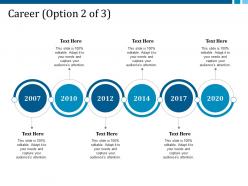
We are happy to introduce our Career Roadmap Example Presentation about Yourself PPT Design Ideas PPT design template, use this amazing PPT design in self introduction presentations. The PPT design is perfect to display your career growth over last successive business years. The design layout consists of a timeline showing your career history, it can include the companies where you served, roles you played or key strengths. The PPT design can be used to showcase yourself to your immediate boss for self-review during appraisal process. The PPT design is so awesome, that it will impact your PPT purpose positively. The PPT diagram can be used to show self-improvement purpose over last few business years, to do planning and management accordingly. So, without another though, download this amazing Career Roadmap Example Presentation about Yourself PPT Design Ideas PPT diagram and impress your immediate managers and boss to take as much benefits as possible. Get them aroused with our Career Roadmap Example Presentation About Yourself Ppt Design Ideas. They will activate their every cell.
People who downloaded this PowerPoint presentation also viewed the following :
Career roadmap example presentation about yourself ppt design ideas with all 5 slides:
Get folks to indulge in friendly chats with our Career Roadmap Example Presentation About Yourself Ppt Design Ideas. It increases the degree of informality.
FAQs for Career roadmap example presentation about yourself
Key elements include current position assessment, short and long-term goals, required skills development, potential career paths, timeline milestones, and success metrics. These components work together by providing clear direction, identifying skill gaps, and establishing accountability measures, with many professionals finding that structured roadmaps enhance career progression and strategic decision-making.
Visual storytelling transforms career roadmap presentations by creating emotional connections, simplifying complex progression paths, and making future goals tangible through infographics, timeline graphics, and milestone visualizations. These elements streamline audience comprehension by illustrating career transitions, skill development phases, and achievement markers, with many professionals finding that compelling visuals ultimately deliver stronger engagement, clearer understanding, and enhanced motivation for career advancement.
Effective templates for career milestones include timeline roadmaps, achievement dashboards, skills progression matrices, goal-tracking frameworks, and milestone celebration slides. These presentation formats enhance professional storytelling by visualizing career progression, highlighting key accomplishments, and demonstrating strategic growth planning, with many professionals finding that structured visual narratives significantly strengthen performance reviews and career advancement discussions.
Tailoring career roadmaps requires adjusting focus and detail for each audience's priorities, with employer presentations emphasizing skills alignment, measurable achievements, and organizational value, while mentor presentations explore personal growth, challenges, and strategic guidance needs. Both formats benefit from clear timelines and specific examples, though employer versions should highlight competitive advantages and business impact, whereas mentor discussions can delve deeper into developmental uncertainties and long-term aspirations.
Personal branding and online presence serve as critical differentiators in career roadmap presentations, showcasing professional identity, expertise demonstration, networking capabilities, and digital footprint management. These elements enable professionals to articulate their unique value proposition while highlighting strategic social media use, thought leadership development, and industry engagement, ultimately delivering enhanced visibility and competitive positioning in an increasingly digital professional landscape.
Data visualizations improve career progression clarity by transforming complex pathways into intuitive charts, timelines, flowcharts, and interactive diagrams that audiences can quickly comprehend. Through strategic visual elements like progression arrows, milestone markers, and skill development trees, professionals can communicate advancement opportunities, required competencies, and timeline expectations more effectively, ultimately enabling organizations to enhance employee engagement and strategic workforce planning.
Interactive career roadmap strategies include live polling for career priorities, breakout sessions for goal-setting discussions, digital collaboration tools for real-time feedback, scenario-based decision trees, and audience participation through Q&A segments. These approaches enhance engagement by encouraging personal reflection, peer learning, and collaborative planning, with many presenters finding that interactive elements significantly improve retention and help participants create more personalized, actionable career development plans.
Case studies demonstrate career progression by showcasing specific achievements, quantifiable outcomes, strategic decisions, and lessons learned from real professional experiences. Incorporating examples like successful project launches, leadership challenges overcome, or skill development milestones helps audiences understand practical pathways to advancement, while illustrating how strategic career moves ultimately deliver measurable results and competitive positioning.
Best practices for incorporating feedback into career roadmap presentations include establishing clear feedback collection points, using anonymous survey tools, scheduling regular review sessions, creating visual progress tracking elements, and implementing iterative refinement processes. These approaches enhance presentation effectiveness by ensuring content resonates with diverse audiences, addresses specific career concerns, and delivers actionable insights, with many organizations finding that structured feedback loops ultimately streamline career development discussions and improve employee engagement outcomes.
Presenters can highlight transferable skills by creating visual connections between different roles, showcasing specific examples like leadership from project management to team supervision, and demonstrating skill evolution across industries. Through strategic storytelling and concrete metrics, professionals effectively illustrate how communication, problem-solving, and analytical abilities transcend sectors, ultimately positioning themselves for diverse opportunities while building compelling narratives that resonate with hiring managers.
**INPUT**: What tools can help create engaging graphics for a career roadmap presentation? **OUTPUT**: Design tools include Canva, Adobe Creative Suite, PowerPoint, Google Slides, and specialized presentation platforms like Prezi or Visme. These technologies streamline visual storytelling by offering timeline templates, infographic elements, and professional color schemes, with many organizations finding that strategic visual design enhances audience engagement and delivers clearer career progression messaging. [Word count: 54 words]
Including both short-term and long-term goals is essential for creating comprehensive career roadmap presentations, as it demonstrates strategic thinking, realistic planning, and progressive skill development. This balanced approach enables professionals to showcase immediate achievements while articulating future vision, with many organizations finding that candidates who present both timeframes deliver stronger interview performance and clearer strategic direction.
Common pitfalls include being overly vague about timelines, ignoring skill gaps, failing to align with organizational goals, neglecting market trends, and presenting unrealistic expectations. These oversights undermine credibility and strategic value, with many professionals finding that successful roadmaps balance ambitious targets with practical milestones, ultimately delivering clearer career direction and enhanced professional development outcomes.
Personal anecdotes humanize career roadmap presentations by sharing specific challenges overcome, lessons learned from failures, mentorship moments, and pivotal decision points that shaped professional growth. These stories create emotional connections with audiences, demonstrate authentic leadership development, and provide relatable context for career transitions, with many professionals finding that vulnerability and storytelling significantly enhance engagement and inspire others' career planning.
Industry trend research resources include professional associations, government labor statistics, industry reports from consulting firms, LinkedIn workforce insights, and trade publications. These sources enable comprehensive market analysis, salary benchmarking, and skills gap identification, with many career professionals finding that combining multiple data streams delivers more accurate projections and strategic career positioning in an increasingly competitive landscape.
-
Editable templates with innovative design and color combination.
-
Use of different colors is good. It's simple and attractive.