


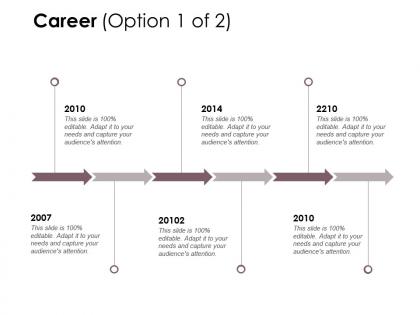
Career timelines roadmap d161 ppt powerpoint presentation file master slide





Try Before you Buy Download Free Sample Product
 Impress Your
 Audience
 100%
100% Editable
 Save Hours
 of Time


Handle journalists with our Career Timelines Roadmap D161 Ppt Powerpoint Presentation File Master Slide. Ensure you are given fair coverage.
People who downloaded this PowerPoint presentation also viewed the following :
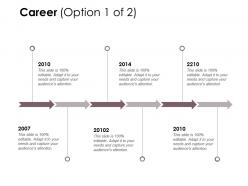
Career timelines roadmap d161 ppt powerpoint presentation file master slide with all 5 slides:
Ensure you are given fair coverage with our Career Timelines Roadmap D161 Ppt Powerpoint Presentation File Master Slide. It allows you to handle journalists.
FAQs for Career timelines roadmap d161 ppt powerpoint presentation
Okay so first thing - be brutally honest about where you're at right now. Skills, experience, what you actually like doing (this part's harder than it sounds). Pick where you want to be in 2-3 years, not some crazy decade plan. Find a job posting for your dream role and work backwards - what do they want? Those are your targets. I break mine into 6-month chunks because it's less overwhelming. Life's gonna throw you curveballs anyway, so update every few months. Oh and definitely tell someone about your plan - accountability makes a huge difference.
Honestly, just think about what parts of your job don't make you want to cry. When does time actually fly by? Those moments are usually pointing you toward stuff you're naturally good at. And don't just think about next year - where do you wanna be in like 3-5 years? I'd definitely talk to people doing jobs that sound cool to you. Sometimes the reality is way different than what you imagine (learned that the hard way). Oh, try this backwards thing - write down your dream work situation first, then figure out what jobs actually look like that. Works better than just scrolling job boards forever.
Think of self-assessment like checking your maps before a road trip - where are you now, and where do you actually want to end up? Look at your skills, what you're genuinely into (not what you think you should be into), and what makes work feel less like work. Honestly, most people skip this step and wonder why they're stuck in jobs they hate. It'll show you what gaps you need to fill and save you from chasing something that sounds cool but would drain your soul. I do mine every few months because things shift way faster than you'd think.
Honestly, having a mentor is like getting cheat codes for your career. They'll show you roles and paths you never knew existed, plus warn you about pitfalls before you face-plant into them. Mine helped me realize my timeline was way too aggressive - saved me from burning out trying to hit impossible goals. You get that insider view of industries that you can't find on LinkedIn or whatever. Find someone whose journey actually interests you and ask them about specific turning points, not generic advice. It's basically learning from someone else's mistakes without the drama.
Honestly, networking can completely flip your career trajectory. People in your network hear about jobs way before they hit LinkedIn or whatever. I've watched friends get their dream roles because someone from a random meetup remembered them when something opened up. The trick is being real about it though - don't just collect contacts like Pokémon cards. Actually build relationships with people you vibe with. Your connections will think of you for opportunities that fit your skills. Start small. Maybe reach out to one person this week and see where it goes.
So many good options for this! Miro and Lucidchart are solid if you want to make those fancy flowcharts showing career progressions. LinkedIn's Career Explorer is pretty decent too, plus MyPlan.com for more structured planning. Honestly though? Sometimes I just use a Google Doc or grab a whiteboard – works just as well and way less overwhelming. Your company might have internal career frameworks worth checking out. Oh, and there's this thing called the O*NET Interest Profiler that's actually useful. Just pick whatever you'll stick with. No point getting a complex tool if you'll abandon it after a week.
Honestly, I'd check in on your career plan every 6 months - not just once a year like most people do. The job market's moving crazy fast these days. Do quick monthly gut checks too, just to see if you're still heading where you want. Life throws curveballs though - new opportunities pop up, your industry shifts, or sometimes you just realize your priorities changed. I mean, what mattered to me at 25 feels totally different now. Set a calendar reminder and actually follow through with it (I'm terrible at this but trying to get better). Think of it like a coffee date with yourself to figure out what's next.
Honestly, the worst thing you can do is make your roadmap super rigid. Careers are messy and rarely go straight up! Break those big goals into smaller chunks - otherwise you'll never feel like you're getting anywhere. I learned this the hard way lol. Also don't just chase promotions. Sometimes a sideways move teaches you way more than climbing the ladder. Do your homework on what skills you actually need too. I've watched people get certifications that look impressive but mean nothing to hiring managers. Review your plan every few months because industries change fast.
Honestly, industry trends can completely flip your career upside down if you're not paying attention. I found this out the hard way when automation basically wiped out my first job! Now I make sure to research where my field's heading regularly. You've got to spot emerging skills early and start building them before everyone else catches on. Like, don't wait until your boss tells you to learn that new software - by then you're already behind. Consumer habits shift, new tech pops up, the economy does its thing. Being proactive instead of scrambling to catch up later makes all the difference.
Honestly, chunk your roadmap into smaller pieces so you can actually celebrate the wins. Those little victories hit different than you'd expect! Find people who are already doing what you want to do - their stories will keep you going when things get tough. I always tell people to write down their progress somewhere they'll see it. Your phone notes work fine, doesn't have to be fancy. When you're feeling meh about everything (totally normal btw), go back to your original "why." That usually snaps me out of it. And hey, don't stress about changing direction as you figure things out.
Look, personal branding is basically putting yourself on people's radar before jobs even get posted. When you share stuff about your field consistently, the right opportunities find you instead of the other way around. It also helps you figure out what you actually want career-wise - which honestly took me forever to nail down. During interviews, you'll have clear examples of what makes you different. Plus networking gets way easier when people already know your vibe. Pick one platform and start posting insights regularly. LinkedIn's probably your best bet, but honestly anywhere you'll actually stick with it works.
Your degree and training pretty much determine what jobs you can even apply for - some fields like med or engineering won't budge on requirements. But education also shapes how your brain works and what feels like a "fit" career-wise. Here's what bugs me though: tons of people think their major locks them into one path forever. Not really true. Focus on the actual skills you picked up, not just the piece of paper. Then figure out how to build from there. I mean, a psych major could end up in UX design if they play it right.
Honestly, I'd focus on a mix of tech and people skills. Digital literacy is huge - like basic data analysis and knowing how AI works. Communication never goes out of style either. Adaptability matters because everything shifts so quickly now. Problem-solving is probably the biggest one though - companies want people who can figure stuff out without constant hand-holding. Oh, and don't underestimate emotional intelligence. When everyone has similar technical abilities, that's what makes you stand out. Pick maybe 2-3 skills that actually match your goals instead of trying to learn everything at once.
Don't treat work-life balance like some bonus feature you'll figure out later. Build it right into your career plan from day one. When you're mapping the next few years, throw in personal stuff too - family dinners, that guitar collecting dust, whatever matters to you. Trust me, I learned this after completely burning out chasing some promotion that wasn't even worth it. Pick your non-negotiables early: no weekend emails, actual lunch breaks, leaving by 6pm. Your goals should be "make senior analyst" AND "don't miss my kid's games." Both matter equally.
Take Satya Nadella - he bounced around Microsoft for years doing engineering, business dev, cloud stuff before landing the CEO gig. Nothing linear about it, but each role built on the last one. Same with Oprah going from local news to talk shows to basically owning half the media world. Here's the thing though - the most successful people I know didn't have some master plan mapped out perfectly. They figured out their general direction, then made smart moves that got them closer while staying flexible. Sometimes the best opportunities come sideways, you know? Just make sure they actually fit what you care about.
No Reviews