

Case Studies Of Affected Cities Urban Heat Island PPT Presentation ST AI SS





Try Before you Buy Download Free Sample Product
 Impress Your
Audience
 100%
Editable
 Save Hours
of Time


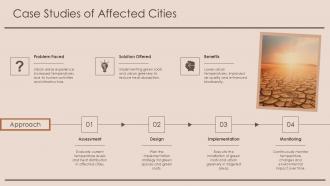
Explore our comprehensive PowerPoint presentation on Urban Heat Island effects in affected cities. This deck features in-depth case studies, insightful analysis, and actionable strategies to mitigate urban heat. Perfect for urban planners, researchers, and policymakers aiming to address climate challenges in urban environments.
People who downloaded this PowerPoint presentation also viewed the following :
Case Studies Of Affected Cities Urban Heat Island PPT Presentation ST AI SS with all 9 slides:
Use our Case Studies Of Affected Cities Urban Heat Island PPT Presentation ST AI SS to effectively help you save your valuable time. They are readymade to fit into any presentation structure.








FAQs for Case Studies Of Affected Cities Urban Heat Island PPT Presentation
The Urban Heat Island effect occurs when cities experience significantly higher temperatures than surrounding rural areas due to concrete surfaces, reduced vegetation, and concentrated human activities. This phenomenon impacts urban environments by increasing energy consumption for cooling, worsening air quality, and creating health risks, with many metropolitan areas finding that strategic green infrastructure and reflective materials help mitigate these effects while improving livability.
Urban materials like concrete and asphalt contribute to UHI by absorbing and retaining solar radiation throughout the day, then releasing this stored heat during nighttime hours. These dense, dark surfaces replace natural vegetation and permeable ground, creating thermal mass that can be 2-7°C warmer than surrounding areas, ultimately reducing energy efficiency and increasing cooling costs for businesses and municipalities.
Key factors exacerbating Urban Heat Island effects include reduced vegetation cover, extensive concrete and asphalt surfaces, dense building configurations, increased energy consumption, and limited air circulation pathways. These elements combine by absorbing solar radiation, reducing natural cooling mechanisms, and generating additional heat sources, with metropolitan areas like Phoenix and Singapore finding that strategic urban planning, green infrastructure integration, and building material optimization significantly minimize temperature differentials while enhancing livability.
Vegetation and green infrastructure mitigate UHI effects through evapotranspiration, shading, and improved air circulation, with green roofs, urban forests, and permeable surfaces reducing ambient temperatures by 2-9°F. These solutions enable cities to enhance air quality, reduce energy consumption, and improve resident comfort, while delivering cost savings through lower cooling demands and ultimately creating more sustainable, livable urban environments.
Urban planning plays a crucial role in UHI development through decisions on building density, material selection, green space allocation, transportation infrastructure, and zoning regulations. Strategic planning approaches like incorporating parks, green roofs, reflective surfaces, and mixed-use developments help mitigate heat accumulation, with many cities finding that comprehensive planning reduces temperatures while enhancing livability and energy efficiency.
The UHI effect influences local weather patterns by creating temperature gradients that alter wind circulation, cloud formation, and atmospheric pressure systems, often intensifying thunderstorms and shifting precipitation timing. These thermal anomalies enhance convective activity, with many metropolitan areas finding that urban cores experience 10-15% more rainfall than surrounding regions, ultimately delivering concentrated precipitation events that challenge stormwater management and urban planning strategies.
Urban heat island effects increase heat-related illnesses like heat exhaustion, dehydration, and cardiovascular complications, particularly affecting vulnerable populations including elderly residents, children, and individuals with chronic conditions. These elevated temperatures exacerbate respiratory issues, disrupt sleep patterns, and intensify air pollution exposure, with many urban health systems finding that targeted cooling strategies and heat emergency protocols significantly reduce hospitalization rates during extreme weather events.
Reflective materials and cool pavements reduce urban surface temperatures by reflecting solar radiation rather than absorbing it, incorporating light-colored aggregates, and using specialized coatings that enhance albedo effects. These technologies can lower pavement temperatures by 20-50 degrees Fahrenheit, with cities like Los Angeles and Phoenix finding that strategic implementation delivers reduced energy costs, improved air quality, and enhanced pedestrian comfort in increasingly dense urban environments.
UHI creates significant economic burdens through increased energy costs, infrastructure strain, and healthcare expenditures from heat-related illnesses. Cities face higher cooling demands, accelerated infrastructure deterioration, and reduced productivity, while public health services experience surge capacity challenges during heat events, with many urban areas finding that strategic mitigation investments ultimately deliver operational savings and enhanced community resilience.
Cities can leverage IoT sensors, satellite imagery, thermal mapping, weather monitoring systems, and predictive analytics to track temperature variations and identify heat hotspots across urban areas. Through real-time data collection, municipalities streamline targeted interventions like green roof installations, strategic tree planting, and cool pavement deployment, ultimately delivering more efficient resource allocation and measurably cooler urban environments.
Singapore's "City in a Garden" initiative combines extensive green roofing, vertical gardens, and urban forestry, while New York's Cool Neighborhoods program focuses on reflective surfaces and tree planting in vulnerable areas. These comprehensive approaches deliver measurable temperature reductions, improved air quality, and enhanced energy efficiency, with many cities finding that strategic combinations of green infrastructure and reflective materials ultimately provide both environmental benefits and significant cost savings.
The UHI effect disproportionately impacts low-income communities, elderly residents, and those with pre-existing health conditions through limited access to air conditioning, inadequate housing insulation, and reduced green space availability. These vulnerable populations face higher heat-related illness rates, increased energy costs, and greater mortality risks, with many urban planners finding that targeted cooling interventions and equitable infrastructure development significantly improve health outcomes.
Local governments can implement green building codes, urban tree planting mandates, cool roof requirements, zoning reforms that prioritize green spaces, and transportation policies promoting public transit. These policy measures work by reducing surface temperatures, improving air circulation, and minimizing heat-generating activities, with cities like Los Angeles and Singapore finding that strategic regulatory frameworks deliver measurable temperature reductions and enhanced livability.
Climate change amplifies Urban Heat Island effects by raising baseline temperatures, intensifying heat waves, and altering precipitation patterns that reduce natural cooling mechanisms. This interaction creates compounding challenges for cities, with urban areas experiencing disproportionately higher temperatures that strain energy systems, worsen air quality, and increase health risks, ultimately requiring strategic adaptation measures and enhanced cooling infrastructure to maintain livability and economic competitiveness.
Community engagement enhances UHI mitigation through citizen-led tree planting initiatives, collaborative green roof projects, neighborhood cooling center development, and public education campaigns about heat-reducing practices. These grassroots approaches streamline implementation by leveraging local knowledge, building social ownership, and creating sustainable maintenance networks, with many municipalities finding that resident-driven programs deliver faster cooling results and stronger long-term environmental resilience.
-
SlideTeam is the best in the business. Their templates are engaging and customizable. You can rely on them.
-
SlideTeam provides PPTs on every single topic. Their templates suit my job very well. I am very grateful!