

Case study for financial management powerpoint template




Try Before you Buy Download Free Sample Product
 Impress Your
 Audience
 100%
100% Editable
 Save Hours
 of Time


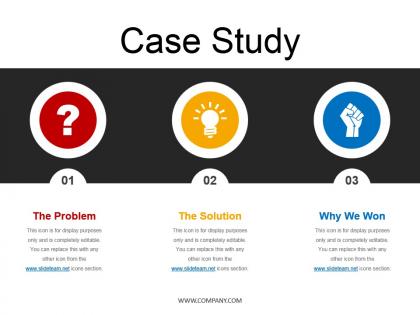
Conjure up a cordial atmosphere with our Case Study For Financial Management Powerpoint Template. Create conditions that encourage integration.
People who downloaded this PowerPoint presentation also viewed the following :
Case study for financial management powerpoint template with all 6 slides:
Display foresight with our Case Study For Financial Management Powerpoint Template. Envisage events likely to follow.





FAQs for Case study for financial
Honestly, cash flow management is everything - way more important than people think. Most businesses tank because they're profitable on paper but can't pay their bills. Get your cash flow forecasting nailed down first, that's my advice. Budgeting and forecasting come next, plus you need decent risk assessment. Working capital control is huge too. Oh, and don't skip the boring stuff like financial controls and reporting systems - I know it's tedious but you'll thank yourself later. Strategic planning and performance metrics matter, but start with the cash flow piece. That's where I'd focus anyway.
Okay so financial forecasting is basically your roadmap for making smart money decisions. Shows you where your cash flow's heading, what revenue looks like, all that stuff. Without it? You're just winging it and might blow money on expansion when you're actually strapped, or sit on opportunities thinking you can't afford them. I learned this the hard way tbh. The trick is keeping those forecasts updated as things change - otherwise you're planning based on outdated info. Makes the difference between actually strategic moves versus just crossing your fingers and hoping for the best.
Dude, cash flow is everything. I don't care how good your sales look - if you can't actually collect that money fast enough, you're screwed. Too much inventory sitting around? Same problem. Your bills won't wait just because customers haven't paid you yet. Honestly, I've watched profitable businesses literally collapse because their timing was off. Track your cash position daily (seriously, daily) and keep enough liquid cash for both regular stuff and those random opportunities that pop up. The cash conversion cycle thing sounds boring but it'll save your ass.
So financial ratios are basically just comparing numbers from a company's statements to see how they're doing. ROE shows profitability, liquidity ratios tell you if they can cover bills, debt ratios reveal risk levels. There's honestly way too many to track - I got lost in them when I first started. Pick maybe 5-6 that actually matter for what you're analyzing. Compare them against industry averages or how the company did before. I'd start simple: current ratio, debt-to-equity, profit margin. Those'll give you the foundation you need.
Cash flow problems are brutal - that's what kills most businesses. Revenue jumps around way more than you think it will, and costs always end up higher than planned. I'd keep 6 months of expenses saved up minimum, and track exactly how much you're burning each month. Multiple income streams help too, though that's obviously easier said than done. Random stuff will go wrong - equipment dies, clients disappear overnight. Monthly budget check-ins are honestly a lifesaver for catching problems early. Sounds boring but it beats scrambling when you're suddenly broke.
Honestly, the biggest game-changer is getting everything to actually talk to each other - your accounting, budgets, all that stuff. Real-time dashboards are pretty sweet too, no more digging through spreadsheets. Automated reconciliation saves me like 3 hours every week, which is insane. AI forecasting is way more accurate than I expected it to be. Payment approvals don't get stuck in email hell anymore either. Oh, and month-end reporting basically runs itself now - used to be such a nightmare. I'd start small though, maybe just expense management first, then build from there.
Ugh, international finance regs are such a pain - every country has different reporting standards, tax rules, all that stuff. Non-compliance though? That'll get you massive fines or even kicked out of markets completely. Your finance people need to track IFRS changes, local GAAP, transfer pricing rules, anti-money laundering requirements. Honestly feels endless sometimes. I'd start by figuring out which regs actually apply to your operations in each country. Maybe grab some compliance software or hire local experts who know the quirks. Way easier than trying to DIY this mess.
Honestly, think of budgeting like a GPS for your money - you'll know where everything's going before you hit "spend." No more surprise overdrafts or that panic when your car breaks down. I know it sounds super boring (trust me, I get it), but having those numbers laid out saves you so much stress. Track your big expenses first - rent, groceries, utilities, whatever. Then you can actually see if you're overspending somewhere or if a department's going rogue with company cash. Just start small with next quarter and build from there.
Okay so basic rule - don't put everything in one place, you know? Figure out what could actually mess up your money flow first. Then build multiple ways to make income so if one client bails or the market goes sideways, you're not screwed. Keep 3-6 months of expenses saved up (I learned this the hard way honestly). Get insurance for the big stuff and maybe hedge if you're dealing with currency/commodity risks. Run those "what if things go wrong" scenarios every few months - sounds boring but it works. Set up systems to catch problems early before they blow up.
Hey! So first things first - max out your 401k and IRA because the tax benefits are honestly too good to pass up. Figure out your risk tolerance and timeline, then diversify across different asset classes. I'm a huge fan of dollar-cost averaging since it takes the guesswork out of timing (which nobody gets right anyway). Set up automatic contributions so you're not constantly thinking about it. Rebalance periodically to stick to your target allocation. Oh, and when the market tanks - which it will - don't freak out and sell everything. That's literally how people lose money long-term.
So basically, people are terrible at making rational money decisions - we're all driven by emotions and weird mental shortcuts. Loss aversion makes investors cling to losing stocks way too long. Herd mentality? That's why everyone chases the same hot trends. I've seen even experienced CFOs get overconfident and completely botch risk assessments. Anchoring bias is another big one - people get stuck on random reference points when they're trying to value stuff. My advice? Build some kind of systematic process with checkpoints, because honestly, we can't trust our brains to make these calls objectively.
Honestly, start with your risk assessment - that's gonna be your roadmap for everything else. Get your team sorted early and map out a realistic timeline with actual milestones. Document literally everything as you go because trust me, you'll forget half the details later when you're drowning in data. Hit the high-risk stuff first, obviously. Keep talking to stakeholders so they know what's happening - nobody likes surprises in audit land. Oh, and stick to GAAS standards throughout the whole thing. Independence is huge here, so don't let anyone push you around. Be upfront about any roadblocks you hit along the way.
Honestly, it comes down to what you're optimizing for. For-profit companies care about ROI, revenue growth, making shareholders happy - the usual stuff. Nonprofits are way messier though. You're tracking program impact instead of just profit, which gets complicated fast. Plus you've got donor restrictions, grant deadlines, and boards breathing down your neck. Cash flow's weird too - nonprofits get these random donation spikes around holidays while businesses usually have steadier income. Figure out who you actually answer to first, since that'll drive pretty much every money decision you make.
Honestly, I'd start with the boring stuff first - how long does month-end close take you now? Invoice processing? Report generation? Those should speed up big time with a decent system. Error rates in data entry matter too, obviously. Revenue cycle stuff is where you'll really see impact though. Days sales outstanding, cash conversion - that's your real money metrics right there. Oh and track if people actually USE the damn thing! Sounds dumb but I've seen companies drop serious cash on systems that just sit there collecting digital dust. Get your baselines before you switch, then check quarterly to see if it's actually working.
So basically, good financial planning lets you put money toward green stuff and actually see if it pays off. Budget for energy-efficient gear, sustainable suppliers, green certs - then track the savings. Here's the thing though - a lot of eco-friendly moves end up saving you money long-term through cheaper energy bills and less waste. Your financial data becomes proof when you're talking to investors or applying for green loans. Honestly? Start with the sustainable investments that'll give you the biggest financial bang for your buck. That's how you build a solid case for going green without tanking your profits.
-
Wonderful templates design to use in business meetings.
-
Unique and attractive product design.