


Case study for operations management ppt template




Try Before you Buy Download Free Sample Product
 Impress Your
 Audience
 100%
100% Editable
 Save Hours
 of Time


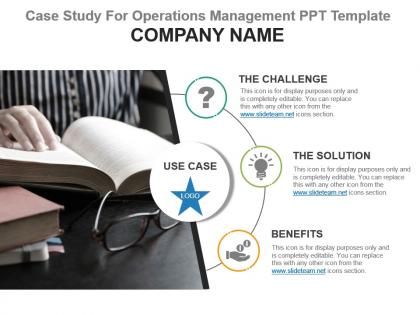
Employ our Case Study For Operations Management Ppt Template as a circular. Get the directions across clearly to all.
People who downloaded this PowerPoint presentation also viewed the following :
Case study for operations management ppt template with all 6 slides:
Doing things right is important to you. And to us. Our Case Study For Operations Management Ppt Template are here to make sure that your presentations look perfect every time.





FAQs for Case study for operations
Operations management is all the stuff happening inside your company - processes, quality control, capacity planning, you know? Supply chain management covers way more ground though. It's your suppliers, their suppliers, distributors, the whole network outside your walls. Think kitchen vs farm-to-table journey, if that makes sense. Operations focuses inward on making things efficient. Supply chain looks at the entire flow from start to finish. There's definitely overlap (business terms always do this), but when you're planning a project, just think: am I dealing with internal processes or do I need external partners? That'll tell you which approach makes more sense.
Honestly, tech can be a total game-changer for streamlining ops. Start with your biggest headache first though - don't try to digitize everything at once, you'll go crazy. Inventory management systems are clutch for preventing stockouts. Workflow automation cuts down on all those annoying manual handoffs between teams. Real-time analytics dashboards? They'll catch problems before they get expensive. IoT sensors are pretty sweet too - they actually predict when equipment's about to fail so you're not scrambling last minute. My buddy's company saved like 30% on maintenance costs with those. Focus on automating repetitive stuff and getting better data visibility.
Dude, data analytics is like having a crystal ball for your business operations. It takes all that messy data and turns it into stuff you can actually use. You'll spot problems before they blow up, predict what customers want, and find where you're wasting time or cash. Flying blind without it? Yeah, that's terrifying now. Plus you stop making decisions based on hunches and start using real evidence instead. My advice - don't go crazy at first. Pick something simple like tracking inventory or delivery times, set up basic dashboards, then expand. Trust me, once you see it working you'll wonder how you managed before.
Honestly, lean is pretty awesome for cutting through all the BS that slows teams down. It's all about spotting waste - like when people are waiting around, fixing mistakes, or making too much stuff nobody wants yet. Once you start eliminating that junk, everything flows better and costs way less. The coolest part? Everyone starts looking for tiny improvements every day instead of waiting for some big company initiative. Your processes actually start responding to what customers need. Just map out how work flows through your team first - I bet you'll spot obvious problems right away that are easy wins.
Man, supply chains are still totally screwed from COVID - that's probably your biggest headache right now. Finding good workers is brutal too. Everyone wants stuff delivered yesterday but cheaper, which is basically impossible. Oh, and don't get me started on the whole "go green" pressure from every direction. Digital stuff moves so fast you can barely keep up. Honestly? Cross-train your people so they can jump around when shit hits the fan. Build flexibility into everything you do. That's really the only way to survive this chaos right now.
Look, inventory's all about not having too much cash sitting around in stuff that won't move. I'd start with checking your sales history to predict what you'll actually need - saves so much stress later. ABC analysis is clutch for figuring out which products deserve your attention first. For your fast sellers, order just-in-time style. Keep safety stock for anything critical though, because running out of those hurts. Oh, and set up automatic reorder alerts so you're not scrambling when things run low. Check your turnover rates monthly and pivot when needed.
Honestly, cross-training is huge - get people comfortable with different tasks so you're not screwed when someone's out. Look at your current processes and cut the BS steps that don't actually add value. I swear, most places have so much redundant crap it's not even funny. Better tools help obviously, but don't go crazy with the spending. Pick metrics that actually matter so everyone knows what they're aiming for. Oh, and people work way harder when they feel appreciated - feedback goes a long way. Just roll out changes gradually though. Nobody likes having everything flipped upside down overnight.
Honestly, regulations will completely reshape how you run things - there's no way around it. Healthcare moves at a snail's pace because of patient safety stuff, but you can't argue with that logic. Manufacturing gets hit with environmental rules that dictate what equipment you can even buy. Financial services? They audit literally everything twice. Food industry might have it roughest though - they need to track every ingredient back to the original farm. My advice? Don't treat compliance like an afterthought you slap on later. Figure out what regulations you'll face upfront and build your processes around them from the start. Way less painful that way.
Honestly, prevention beats detection every time - way cheaper to catch stuff early than fix it later. Map out where your defects usually happen first, then build controls around those spots. Train your team on standards but also give them power to actually stop things when they see problems. Regular quality checkpoints throughout your process work better than just inspecting at the end. Track your metrics and do root cause analysis when things go wrong. Customer feedback is pure gold for catching blind spots you'd never see otherwise. Start small with your biggest problem areas and build from there.
Look, don't treat risk management like some separate department thing - just bake it into what you're already doing. Do quick risk checks when you're planning projects. Set up alerts for your important metrics so nothing surprises you. Yeah, it feels like extra steps at first, but trust me, way better than panicking when stuff goes sideways. Train your team on backup plans for critical processes. The trick is making it automatic - like when I'm negotiating with suppliers, I always ask about their alternatives upfront. Build in buffer time, have contingency options ready. Make it part of your routine instead of something you remember at 2am during a crisis.
So process mapping is basically drawing out how work actually moves through your company - and wow, it's usually way messier than anyone expects. You'll catch bottlenecks, redundant steps, and all those random shortcuts people invented but never mentioned. Honestly, it's like getting x-ray vision for your workflows. The cool part? You can finally see all the waste that's been hiding right under your nose. Map it out and you'll streamline everything - shorter cycle times, fewer pointless steps, better flow overall. My advice: start with whatever process annoys you most. You'll be shocked at what you find.
Honestly, the best ops managers I know don't see cost vs quality as an either/or thing. They go after waste first - that's your low-hanging fruit right there. Then they streamline processes and actually invest in training their people (which sounds backwards but works). My old boss tried the slash-and-burn approach once... total disaster. You'll just end up with returns and angry customers later. Better to dig into what's actually causing defects and fix those issues systematically. Good supplier relationships help too - they can cut your costs without compromising standards. Short-term thinking kills you in this game.
Look, global sourcing is gonna flip your whole operation upside down. Lead times get crazy long, and managing quality when suppliers are scattered across different continents? Total nightmare. The cost savings are definitely there though - that's why everyone does it. You'll be dealing with currency swings, cultural barriers, plus your supply chain becomes way more fragile. One disruption hits and you're screwed for weeks. My advice? Map out your supply network first and figure out where you're most vulnerable. Oh, and invest in solid forecasting - you can't wing it anymore when parts take months to arrive.
Honestly, I'd start with supply chain stuff - find local vendors and figure out better shipping routes. Waste reduction is where you'll see quick wins though. Lean processes, recycling programs, maybe some circular economy things where you actually reuse materials instead of tossing them. Energy efficiency saves you crazy money (like, the ROI is insane). Solar panels, better equipment, smarter building design. Oh, and design products that last longer and can be recycled later. Pick one thing to test first, track how it goes, then expand from there.
Look, customer feedback is basically your best detective for figuring out what's broken in your business. People complaining about slow delivery? Your logistics need work. Quality issues popping up repeatedly? Something's off in production. Honestly, customers notice stuff we completely miss sometimes. The trick is looking for patterns in what they're saying - those themes that keep coming up are gold. That's your priority list right there. Track the feedback properly and you'll know exactly which fixes will actually move the needle on satisfaction. Way better than guessing what's wrong.
-
Very unique and reliable designs.
-
Very unique, user-friendly presentation interface.