

Center Of Excellence Powerpoint Ppt Template Bundles





Try Before you Buy Download Free Sample Product
 Impress Your
Audience
 100%
Editable
 Save Hours
of Time


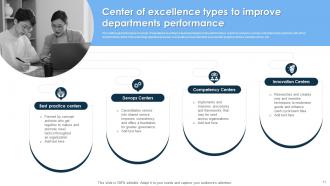
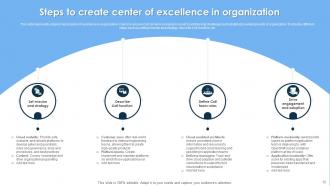
A Center of Excellence CoE is a specialized, cross functional team or department within an organization that excels in a particular area, such as technology, innovation, or best practices. It serves as a hub for knowledge, expertise, and continuous improvement. A CoE enhances efficiency, promotes best practices, and fosters innovation by bringing together subject matter experts to collaborate and drive excellence in their respective domains. It often plays a vital role in knowledge transfer, skill development, and ensuring the organization remains at the forefront of industry trends. CoEs contribute to organizational growth, quality, and competitiveness by providing a structured, well managed environment for continuous learning, problem solving, and driving excellence in their specific focus areas.
People who downloaded this PowerPoint presentation also viewed the following :
Center Of Excellence Powerpoint Ppt Template Bundles with all 28 slides:
Use our Center Of Excellence Powerpoint Ppt Template Bundles to effectively help you save your valuable time. They are readymade to fit into any presentation structure.











FAQs for Center Of Excellence Powerpoint
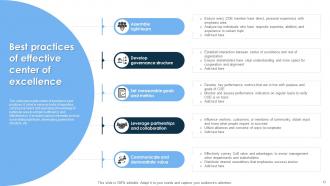
Successful Centers of Excellence are characterized by clear governance structures, standardized processes, dedicated expert resources, measurable performance metrics, and strong stakeholder engagement across organizational levels. These characteristics work together by establishing accountability, ensuring consistent delivery, and fostering continuous improvement, with many organizations finding that well-defined CoEs ultimately deliver enhanced operational efficiency and sustainable competitive advantage.
Organizations can effectively measure CoE impact through key performance indicators like cost reduction percentages, project delivery timelines, adoption rates across departments, and quality metrics. These measurements enable leadership to track tangible outcomes such as faster implementation cycles, improved standardization, and enhanced operational efficiency, with many enterprises finding that regular assessment drives continuous improvement and demonstrates clear return on investment.
Common pitfalls when establishing a CoE include inadequate leadership support, unclear governance structures, insufficient resource allocation, poor stakeholder engagement, and lack of defined success metrics. Organizations often struggle with scope creep, resistance to change, and failing to align CoE objectives with broader business strategy, ultimately hindering knowledge transfer and operational efficiency across departments.
A CoE should align with business strategy by establishing clear governance frameworks, defining measurable outcomes that support strategic objectives, and ensuring resource allocation matches organizational priorities. Through strategic leadership involvement and cross-functional collaboration, organizations streamline decision-making processes, accelerate innovation initiatives, and maintain competitive advantage, with many enterprises finding that aligned CoEs deliver enhanced operational efficiency and sustainable growth.
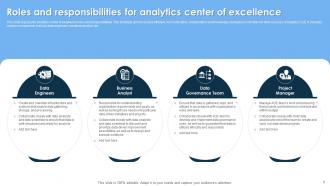
Essential CoE roles include executive sponsors, program managers, subject matter experts, change management specialists, and business analysts. These professionals streamline operations by establishing governance frameworks, driving standardization, and facilitating knowledge transfer across departments, with many organizations finding that strategic role alignment ultimately delivers enhanced operational efficiency and sustainable competitive advantage.
A CoE fosters innovation by creating dedicated spaces for experimentation, establishing cross-functional collaboration frameworks, and implementing structured processes for idea generation and testing. Through strategic resource allocation and knowledge sharing initiatives, organizations streamline innovation workflows, accelerate prototype development, and enhance competitive positioning, with many companies finding that centralized innovation hubs deliver faster time-to-market.
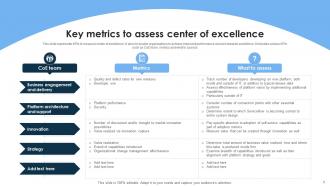
CoE performance metrics include stakeholder satisfaction scores, project delivery timelines, cost savings achieved, knowledge transfer effectiveness, and adoption rates of standardized processes. These measurements enable organizations to assess operational efficiency, resource optimization, and strategic value delivery, with many enterprises finding that balanced scorecards combining financial, operational, and innovation indicators ultimately provide the most comprehensive performance visibility.
Organizations ensure knowledge transfer and retention within CoEs through structured documentation systems, mentorship programs, cross-functional training initiatives, and regular knowledge-sharing sessions. These approaches streamline institutional learning by creating comprehensive repositories, facilitating peer-to-peer collaboration, and establishing succession planning protocols, with many enterprises finding that systematic knowledge management ultimately delivers operational continuity and competitive advantage.
Best practices for engaging stakeholders in a CoE include establishing clear communication channels, defining specific roles and responsibilities, creating regular feedback mechanisms, implementing transparent governance structures, and developing shared success metrics. These approaches streamline collaboration by fostering accountability, building trust, and ensuring alignment across departments, with many organizations finding that consistent stakeholder involvement ultimately delivers faster adoption and sustainable operational excellence.
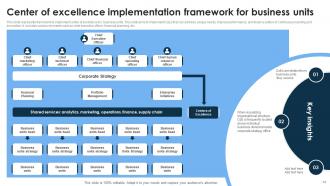
A CoE facilitates cross-functional collaboration by establishing shared standards, creating unified communication channels, and implementing structured knowledge-sharing frameworks across departments. Through regular cross-departmental workshops, standardized processes, and collaborative project methodologies, teams from finance, operations, and technology can seamlessly coordinate efforts, ultimately delivering faster project completion and enhanced organizational efficiency.
Technologies that enhance CoE effectiveness include cloud platforms, collaboration tools, data analytics solutions, automation software, and knowledge management systems. These technologies streamline operations by enabling real-time collaboration, centralizing expertise, and automating routine processes, with many organizations finding that strategic technology integration delivers faster decision-making, improved resource allocation, and measurable competitive advantage.
A CoE contributes to employee training by establishing standardized curricula, creating mentorship programs, developing certification pathways, and facilitating knowledge-sharing sessions across departments. Through centralized expertise and best practices, organizations streamline skill development, accelerate competency building, and enhance career progression opportunities, ultimately delivering higher employee engagement and improved organizational capabilities.
Leadership drives CoE success by establishing clear vision, securing necessary resources, and fostering cross-functional collaboration throughout the organization. Effective leaders champion the CoE's strategic value, remove operational barriers, and ensure alignment with broader business objectives, with many organizations finding that strong executive sponsorship significantly accelerates knowledge sharing, standardization adoption, and measurable performance improvements.
A CoE adapts by maintaining flexible governance structures, continuously monitoring industry trends, and regularly reassessing strategic priorities based on market feedback. Through agile methodologies and cross-functional collaboration, organizations can pivot their CoE focus areas, update best practices, and realign resource allocation, with many companies finding that adaptive CoEs deliver sustained competitive advantage.
**INPUT**: What are the differences between a CoE and a traditional department? **OUTPUT**: A CoE differs from traditional departments through cross-functional collaboration, strategic knowledge sharing, standardized best practices, and enterprise-wide influence rather than siloed operations. While traditional departments focus on specific functional tasks, CoEs streamline organizational capabilities by promoting innovation, reducing redundancies, and accelerating decision-making across multiple business units, ultimately delivering enhanced operational efficiency and competitive advantage.
-
The templates are easy to get, and the chat customer support is excellent.
-
Amazing slides! Unique, attractive, and easy to understand.