


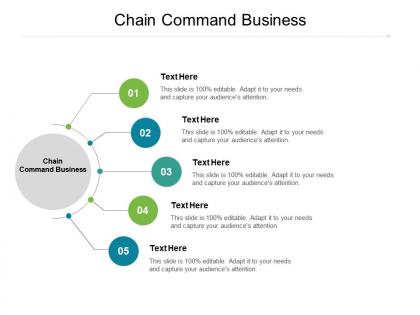
Chain command business ppt powerpoint presentation gallery vector cpb
You must be logged in to download this presentation.




Try Before you Buy Download Free Sample Product
 Impress Your
 Audience
 100%
100% Editable
 Save Hours
 of Time


Our Chain Command Business Ppt Powerpoint Presentation Gallery Vector Cpb are topically designed to provide an attractive backdrop to any subject. Use them to look like a presentation pro.
People who downloaded this PowerPoint presentation also viewed the following :
Chain command business ppt powerpoint presentation gallery vector cpb with all 2 slides:
Use our Chain Command Business Ppt Powerpoint Presentation Gallery Vector Cpb to effectively help you save your valuable time. They are readymade to fit into any presentation structure.

FAQs for Chain command business ppt powerpoint presentation
Honestly, most places screw this up because they skip the basics. Map out who reports to who first - sounds simple but it's where everything falls apart. You'll want standard procedures so your different locations aren't doing completely different things. Communication channels are huge too, both up and down the chain. Training programs help keep quality consistent, and you need some way to hold people accountable at each level. I'd start by looking at your current setup and finding where communication breaks down or where people don't know who's actually in charge of decisions.
Dude, you really need solid communication that goes both ways - regular one-on-ones, clear reporting, consistent formats. Information gets so twisted as it moves through each level. I've literally watched a CEO's vision turn into complete nonsense by the time it hits the front desk lol. Try cascading briefings where managers explain stuff to their teams. Create feedback loops too so problems can bubble back up. Oh and train your middle managers properly - they're honestly make-or-break for this whole thing. Without them knowing how to actually communicate, everything falls apart.
Ugh, the worst part is how slow everything gets when you need to move quickly. Market shifts happen and info has to crawl up the chain, get blessed by executives, then work its way back down - meanwhile your competition already grabbed the opportunity. Plus your front-line people see what customers actually want but can't do anything about it without a million approvals. Everyone ends up frustrated, honestly. What works is setting up some kind of emergency channels for urgent stuff and letting your middle managers make the smaller calls without all the red tape. Otherwise you're just stuck watching opportunities slip away.
Honestly, tech is totally changing how companies work - everyone can see the same data now instead of waiting for updates from their boss's boss. Quick decisions? You don't have to go through five people anymore. Dashboards show you everything happening right away, which is actually pretty crazy compared to how slow things used to be. But here's what I've learned - you still need rules about who can decide what. Otherwise it gets messy fast. Set up those boundaries early so people know when they can just go for it versus when they need to ask permission first.
Honestly, communication is everything - if info can't flow up and down smoothly, you're screwed. Being decisive helps too because when leaders hesitate, it creates these awful bottlenecks. Trust is huge since people won't follow orders well if they don't believe in you. You've also got to own your failures, not just successes. Delegation matters because... well, obviously you can't be everywhere. Oh and micromanaging kills morale faster than anything. I'd start by figuring out where your communication breaks down first - that's usually the root of most problems anyway.
Ugh, chain command structures are the worst for morale. People get so frustrated when they can't share ideas without going through like three different managers first. Your team ends up feeling completely disconnected from any real decisions. Plus everyone gets stuck in their little boxes with zero room to grow - super demotivating. I mean, who wants to feel like their voice doesn't count? If you're stuck managing in that setup, maybe try some informal ways for people to give feedback. Give them more freedom on smaller decisions too. Won't fix everything but it helps people feel less trapped.
Look, if you don't train people on chain of command, you're gonna have chaos. Document who can decide what first - that's your foundation. Then run through real scenarios with your team so they actually know when to escalate vs when they can just handle it themselves. Honestly, I've seen too many places where everything gets bottlenecked because nobody knows the rules. Or even worse - someone makes a huge decision they had no business making. It's basically like playing telephone with your business decisions, which never ends well. Get everyone on the same page about authority levels and you'll save yourself so many headaches.
Yeah, totally doable but you gotta be smart about it. Set up some innovation channels that skip the usual red tape - think Google's 20% time or hackathons where ideas go straight to the top. Your middle managers are probably the biggest roadblock tbh, so train them to champion ideas instead of killing them. Skip-level meetings help too so good thinking doesn't get buried. Oh and create clear "experiment zones" where people know they can try stuff without waiting for approval from like five different people. Just make sure someone senior protects these spaces from getting bogged down in process later.
Start with the person directly - don't run to your boss right away unless it's really bad. Have that awkward conversation first. Document everything though, trust me on this one. Give them a chance to fix it before you escalate things up the chain. When you do need to involve higher-ups, go step by step through your management structure rather than jumping levels. Focus on what they're doing wrong, not attacking them personally. Oh, and keep your manager in the loop even if you're handling it yourself. They absolutely hate being blindsided by drama they didn't know about.
Honestly, data analytics is a game-changer for chain businesses. You get real-time visibility into everything happening across locations - no more guessing games. Spotting bottlenecks becomes way easier, and you can track your KPIs properly. The best part? You'll catch patterns that would fly under the radar otherwise, like certain stores tanking during specific seasons. Information flows up the chain smoother too. I'd start with basic dashboard reporting for your main metrics - nothing fancy at first. Then maybe add some predictive stuff later to forecast trends. Trust me, making decisions with actual data beats going with your gut every time.
Honestly, the biggest game-changer is breaking down those rigid department walls and letting people actually make decisions. Cross-functional teams work way better than the old-school silos. Give your middle managers some real power - they shouldn't have to run upstairs for every little thing. I saw one company completely turn around just by letting regional folks approve bigger purchases without corporate breathing down their necks. Set up feedback loops too, like skip-level meetings. Your frontline people know what customers actually want, so let them respond fast. Start small - find your worst bottlenecks and give those teams room to figure things out locally.
Honestly, chain of command can make or break customer service. Clear hierarchies help because your team knows exactly who to bug when they're stuck. But here's what I've seen - too many approval layers just tick people off. Nobody wants to wait while their issue gets passed up three different management levels. Your front-line people need real power to fix stuff, not just take notes and promise callbacks. The trick is giving them enough authority to handle most problems without turning everything into a committee decision. Works way better than the whole "let me check with my supervisor" dance.
Dude, remote work totally messes with traditional hierarchy stuff. Managers can't just pop by your desk anymore - they're basically flying blind without those little check-ins and body language cues. Communication gets all weird and delayed since everything goes through Slack or whatever. Plus accountability becomes this whole thing when you can't see if people are actually working. Your managers will need to get super intentional about scheduling regular one-on-ones. Oh, and daily standups are clutch for keeping everyone aligned. Clear escalation rules help too, otherwise problems just sit there festering.
Honestly, I'd flatten that hierarchy first - push decisions down to where people actually do the work. Pick a pilot team and give them clear goals but let them figure out how to get there. Those departmental silos everyone hates? Break them down so teams can actually collaborate. Your managers need to become coaches instead of just barking orders, which is awkward at first but works way better. Oh, and completely change how you measure success - focus on what gets delivered and how fast, not whether people followed some rigid process. Start with one department and see what sticks before rolling it out everywhere.
Amazon's warehouse supervisors got way more power to make calls on the spot - helped them crush those crazy holiday rushes. Military special ops barely check with anyone because hesitation gets people killed. Netflix lets employees spend company money on pretty much anything that makes sense (wild but it works). Then there's Spotify breaking into tiny "squads" instead of this massive corporate ladder thing. Honestly, most companies could cut approval chains in half. Figure out what truly needs a boss's signature vs what your team already knows how to handle.
-
Great designs, Easily Editable.