


ChatGPT Transforming Content Creation With AI ChatGPT CD
Introducing our cutting-edge PPT Deck titled, ChatGPT Transforming content creation with AI. Elevate your content creation processing by leveraging the OpenAI ChatGPT tool Additionally, our OpenAI chatgpt ppt presentation offers several benefits for content creation due to its advanced natural language processing capabilities. It also includes help to formulate email content for business. Furthermore, our Content SEO PPT assists in creating blogs and articles for websites. This deck also covers how the generative AI tool can help in creating content for different social media platforms Lastly, our Generative AI module highlights the future potential impact of ChatGPT on content creation and also showcases the impact of the Generative AI tool on content creation jobs. Get access now.
Introducing our cutting-edge PPT Deck titled, ChatGPT Transforming content creation with AI. Elevate your content creation ..












































-

- Google Slides is a new FREE Presentation software from Google.
- All our content is 100% compatible with Google Slides.
- Just download our designs, and upload them to Google Slides and they will work automatically.
- Amaze your audience with SlideTeam and Google Slides.
-

Want Changes to This PPT Slide? Check out our Presentation Design Services
-

- WideScreen Aspect ratio is becoming a very popular format. When you download this product, the downloaded ZIP will contain this product in both standard and widescreen format.
-

- Some older products that we have may only be in standard format, but they can easily be converted to widescreen.
- To do this, please open the SlideTeam product in Powerpoint, and go to
- Design ( On the top bar) -> Page Setup -> and select "On-screen Show (16:9)” in the drop down for "Slides Sized for".
- The slide or theme will change to widescreen, and all graphics will adjust automatically. You can similarly convert our content to any other desired screen aspect ratio.
Compatible With Google Slides

Get This In WideScreen
You must be logged in to download this presentation.


Do you want to remove this product from your favourites?
PowerPoint presentation slides
Deliver this complete deck to your team members and other collaborators. Encompassed with stylized slides presenting various concepts, this ChatGPT Transforming Content Creation With AI ChatGPT CD is the best tool you can utilize. Personalize its content and graphics to make it unique and thought-provoking. All the fifty nine slides are editable and modifiable, so feel free to adjust them to your business setting. The font, color, and other components also come in an editable format making this PPT design the best choice for your next presentation. So, download now.

People who downloaded this PowerPoint presentation also viewed the following :
Content of this Powerpoint Presentation
Slide 1: This slide introduces ChatGPT Transforming Content Creation with AI. State Your Company Name and begin.C
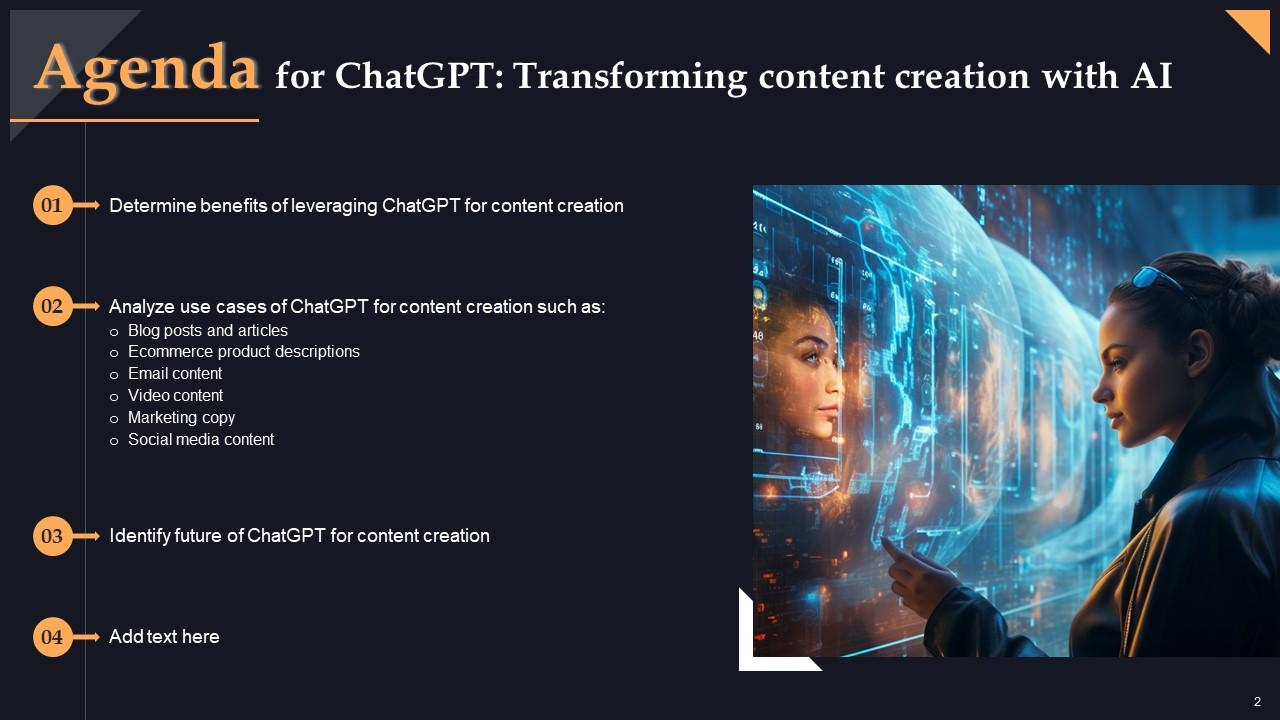
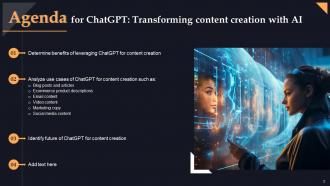
Slide 2: This slide is an Agenda slide. State your agendas here.
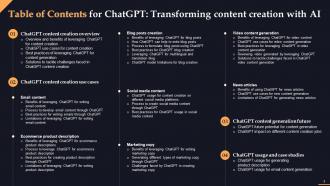
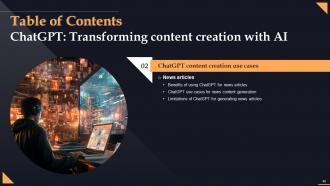
Slide 3: This slide shows a Table of Contents for the presentation.
Slide 4: This slide is an introductory slide.
Slide 5: This slide showcases overview of ChatGPT that can help organization in content generation for different platforms.
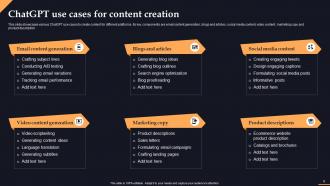
Slide 6: This slide shows various ChatGPT use cases to create content for different platforms.
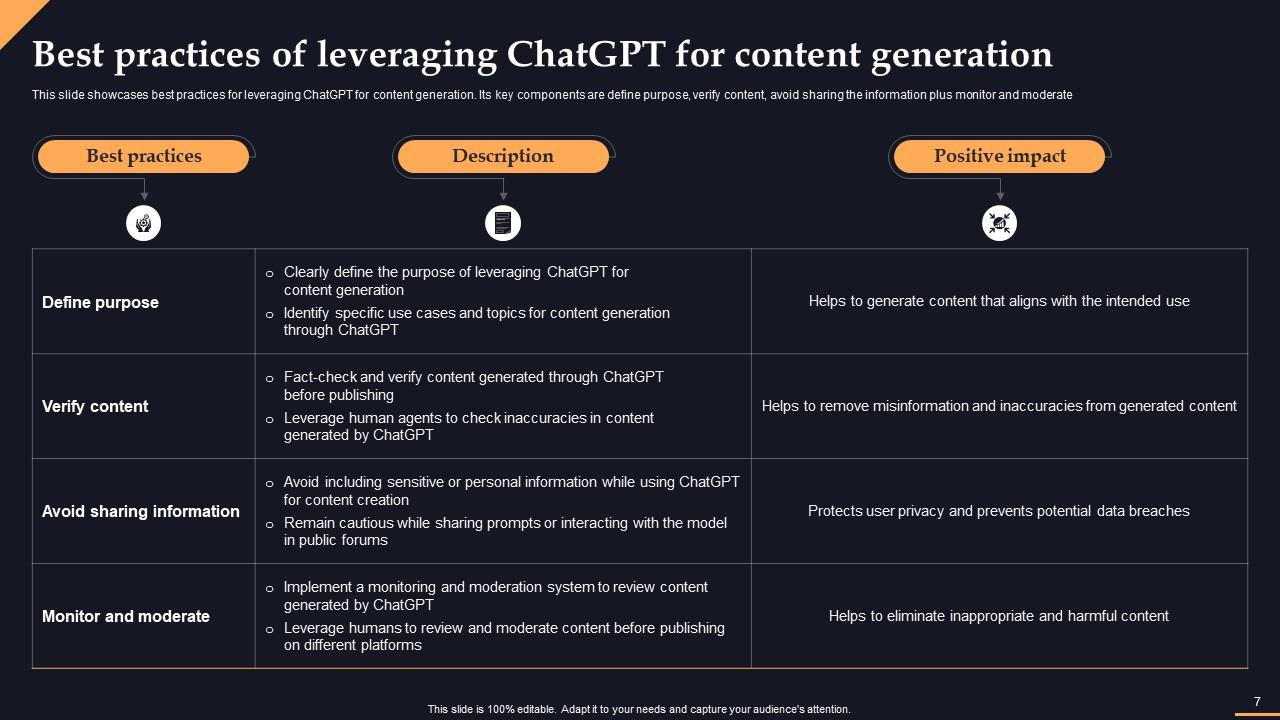
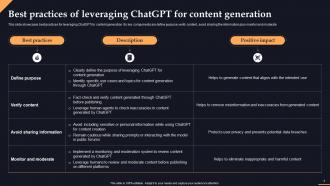
Slide 7: This slide puts best practices for leveraging ChatGPT for content generation.
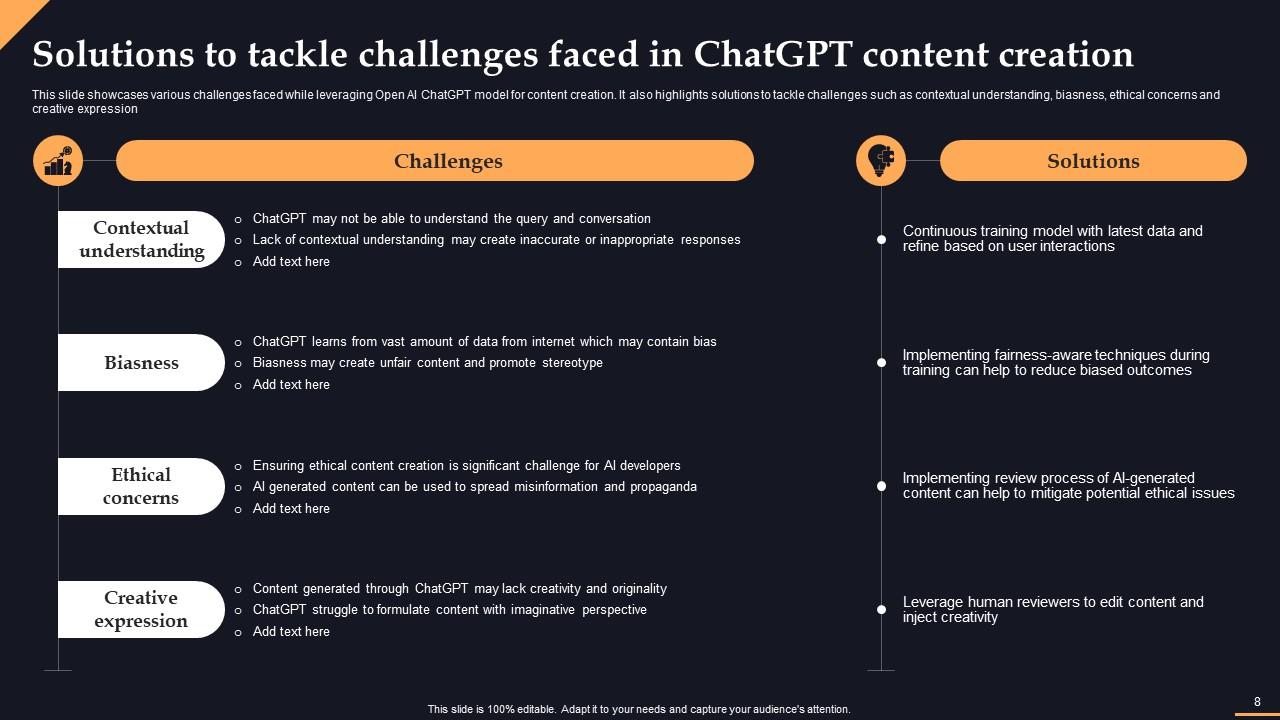
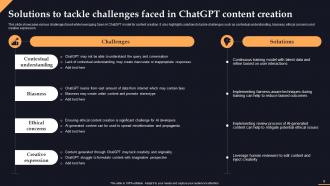
Slide 8: This slide mentions various challenges faced while leveraging Open AI ChatGPT model for content creation.
Slide 9: This slide is an introductory slide.
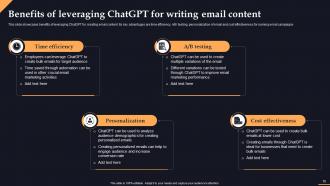
Slide 10: This slide showcases marks the leveraging of ChatGPT for creating email content.
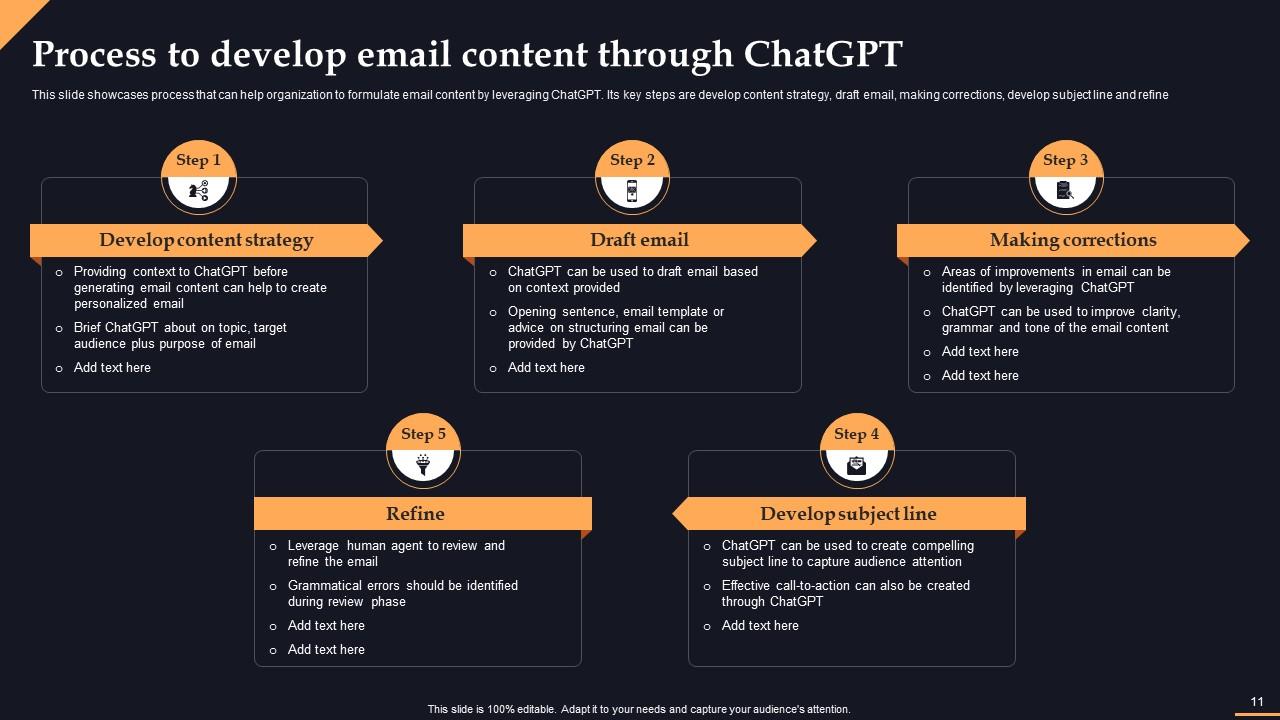
Slide 11: This slide entails process that can help organization to formulate email content by leveraging ChatGPT.
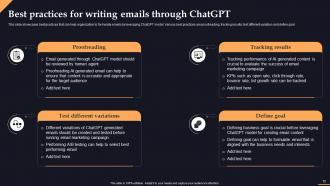
Slide 12: This slide elaborates best practices that can help organization to formulate emails by leveraging ChatGPT model.
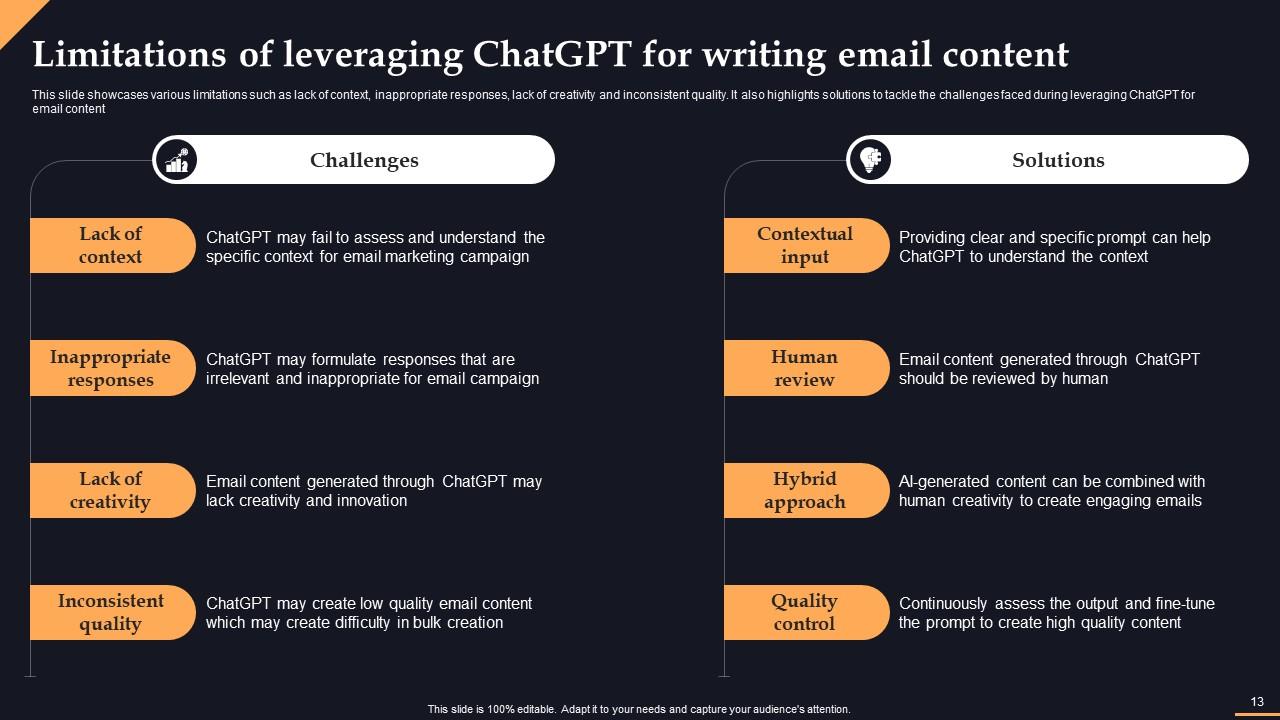
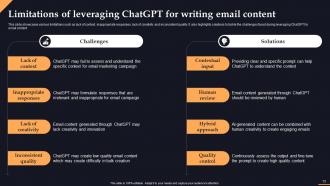
Slide 13: This slide caters to various limitations such as lack of context, inappropriate responses, lack of creativity and inconsistent quality.
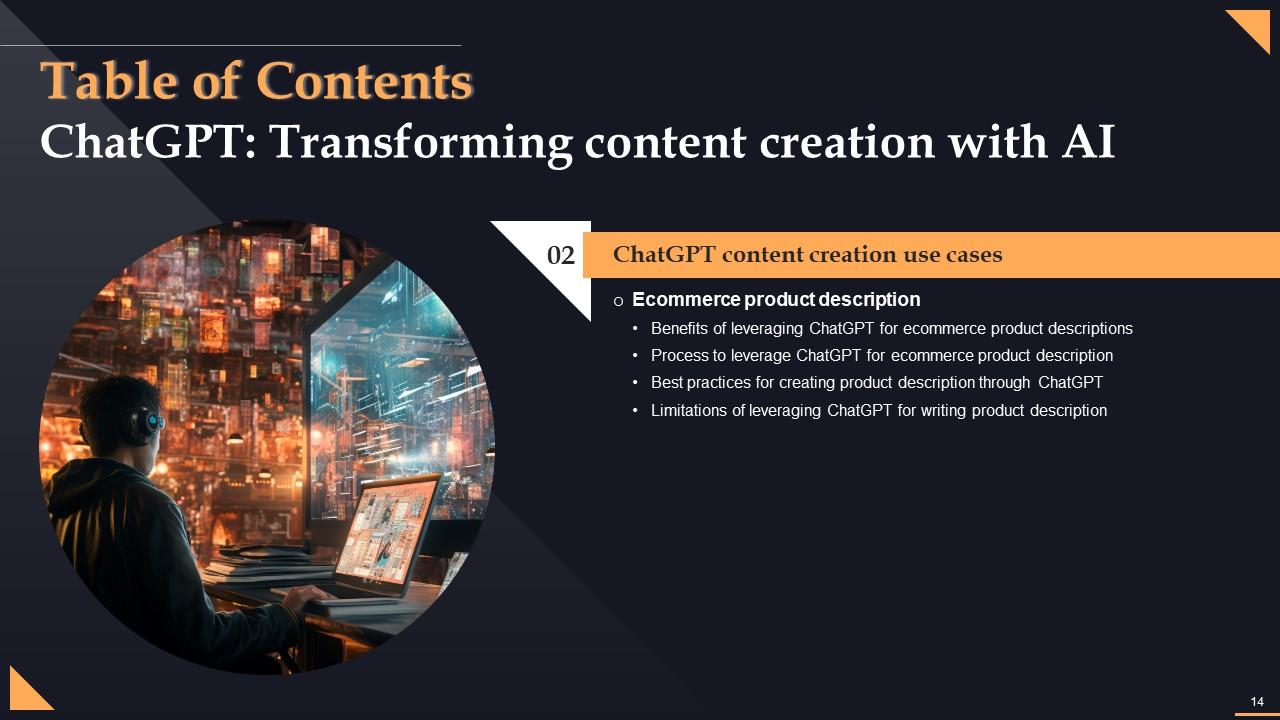
Slide 14: This slide is an introductory slide.
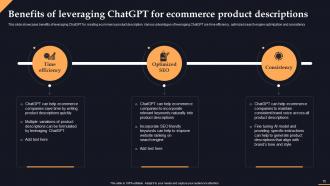
Slide 15: This slide consists benefits of leveraging ChatGPT for creating ecommerce product description.
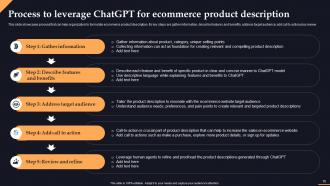
Slide 16: This slide highlights the process that can help organization to formulate ecommerce product description.
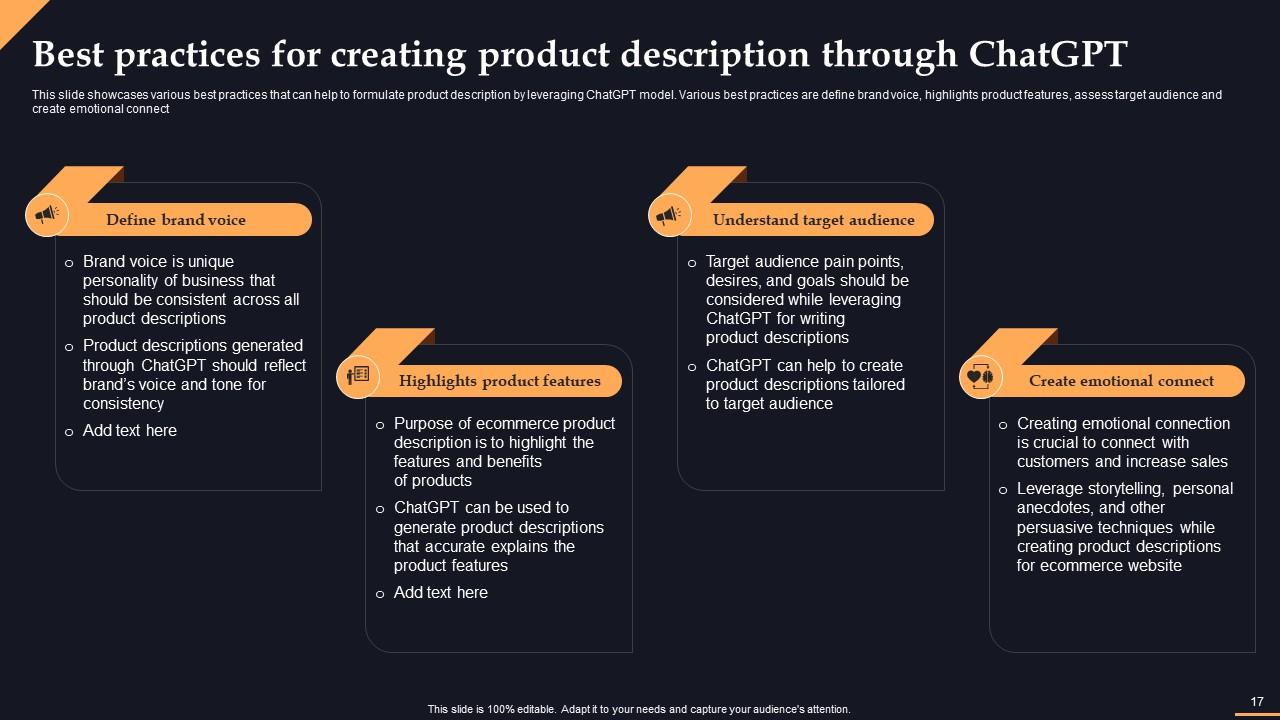
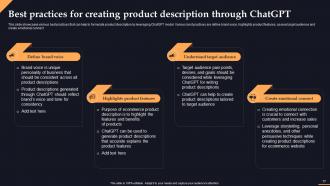
Slide 17: This slide illustrates various best practices that can help to formulate product description by leveraging ChatGPT model.
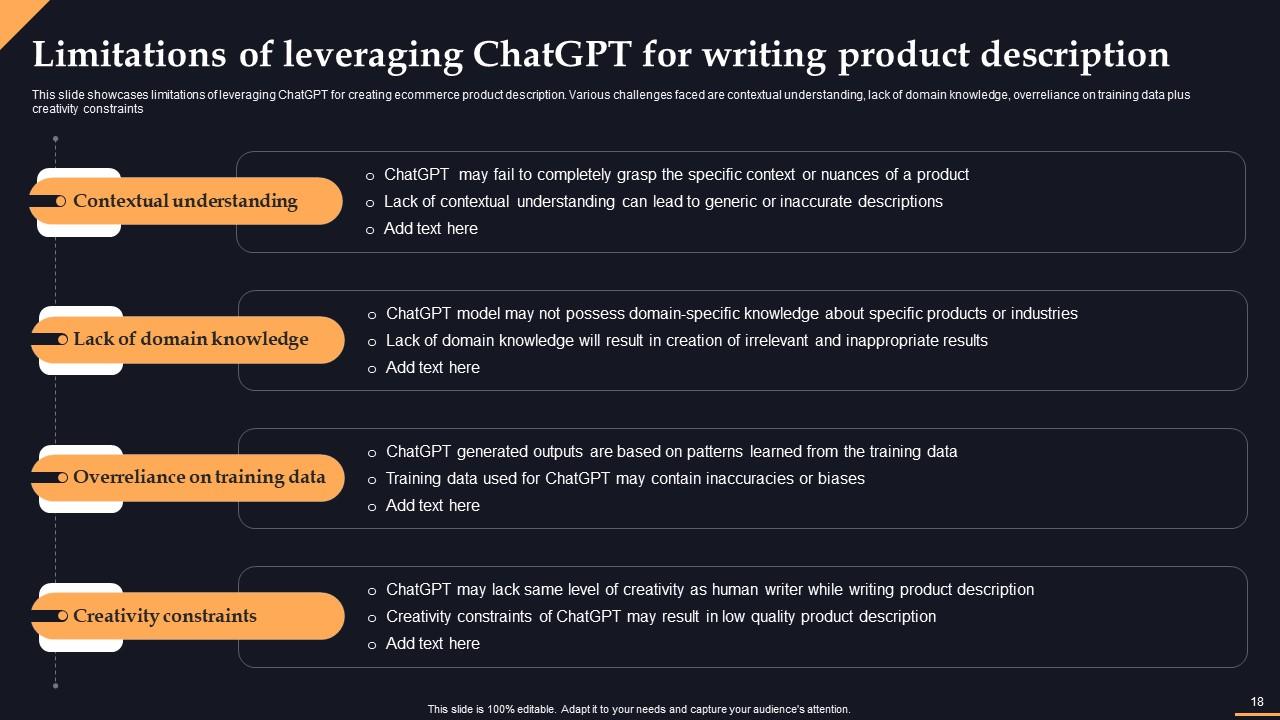
Slide 18: This slide focuses on the limitations of leveraging ChatGPT for creating ecommerce product description.
Slide 19: This slide is an introductory slide.
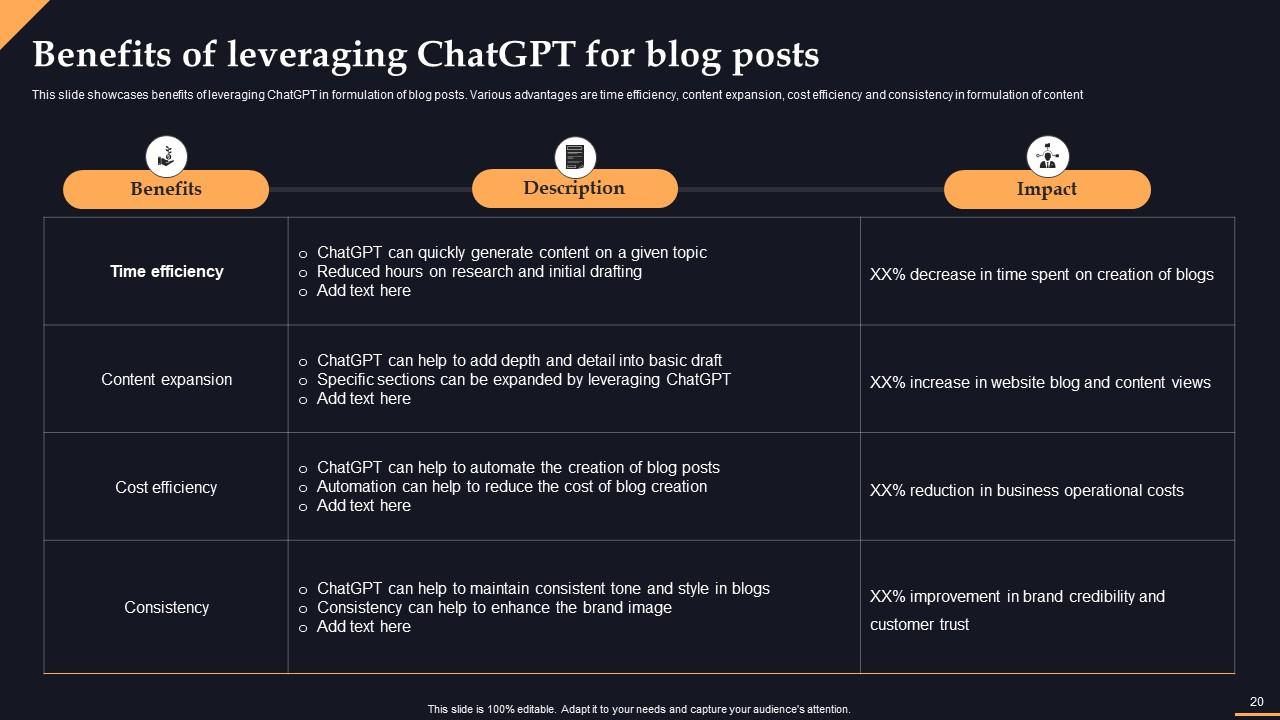
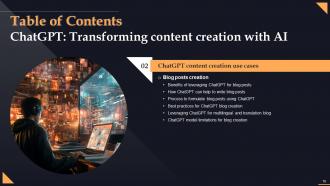
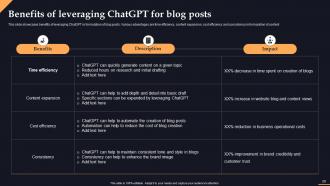
Slide 20: This slide showcases benefits of leveraging ChatGPT in formulation of blog posts.
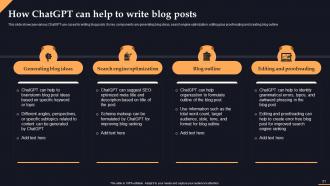
Slide 21: This slide shows various ChatGPT use cases for writing blog posts.
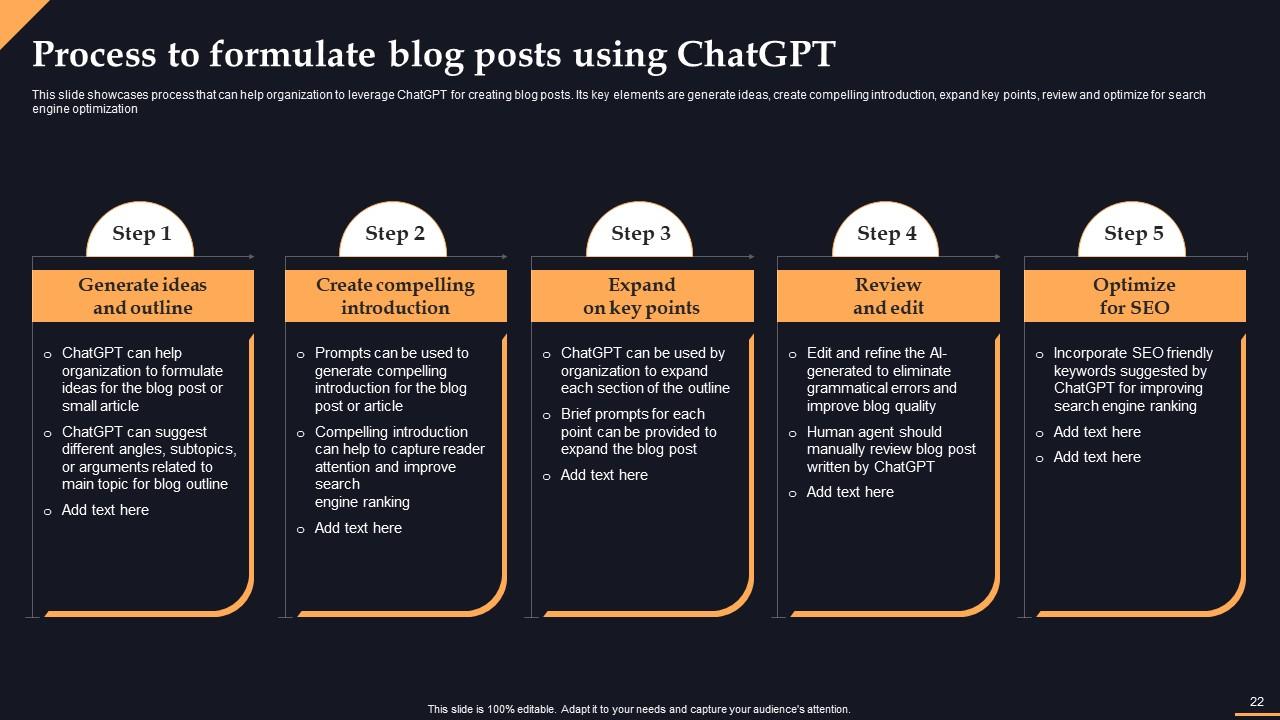
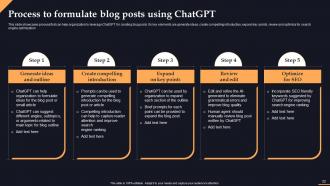
Slide 22: This slide entails process that can help organization to leverage ChatGPT for creating blog posts.
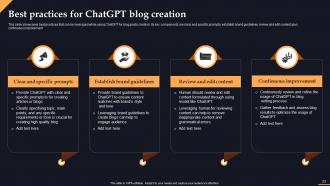
Slide 23: This slide depicts best practices that can be leveraged while using ChatGPT for blog posts creation.
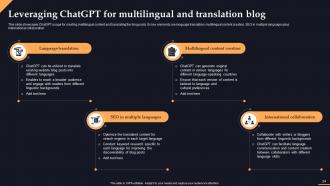
Slide 24: This slide describes ChatGPT usage for creating multilingual content and translating the blog posts.
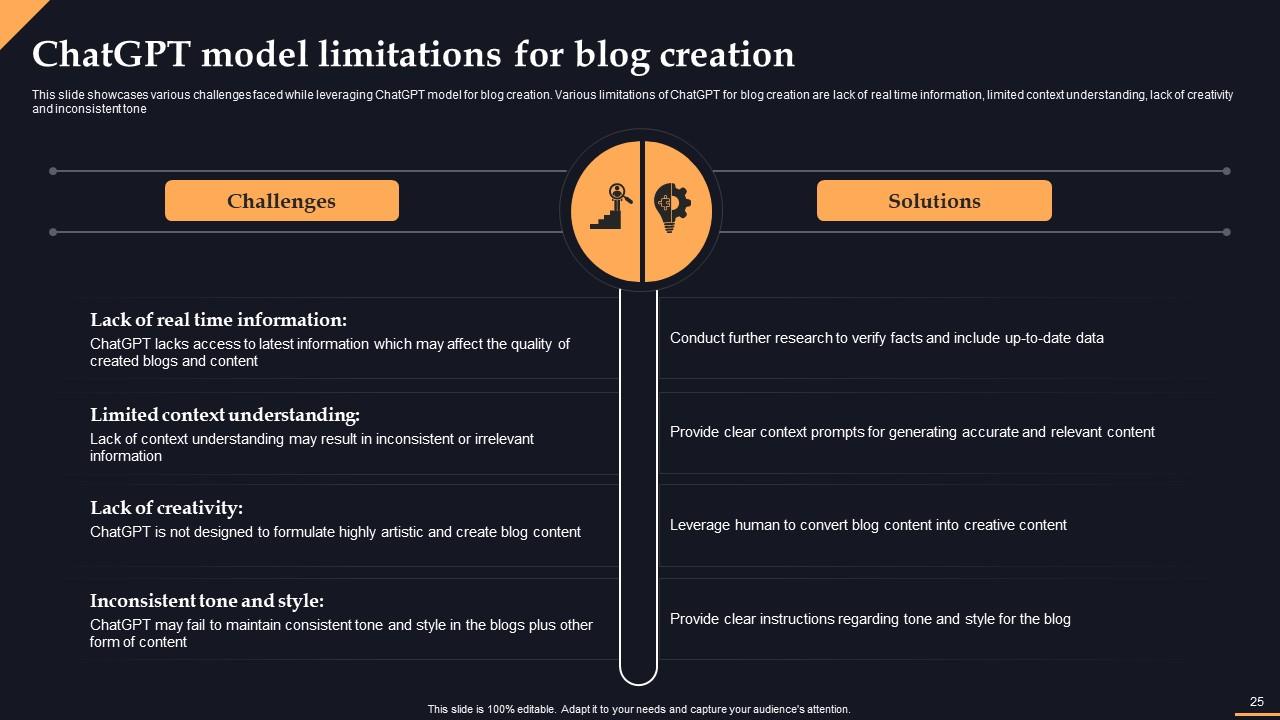
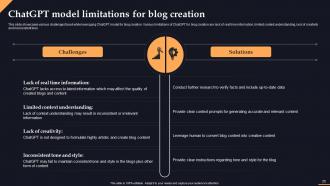
Slide 25: This slide marks various challenges faced while leveraging ChatGPT model for blog creation.
Slide 26: This slide is an introductory slide.
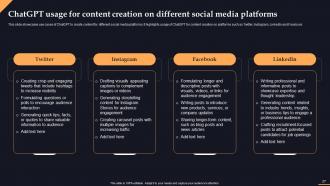
Slide 27: This slide showcases use cases of ChatGPT to create content for different social media platforms.
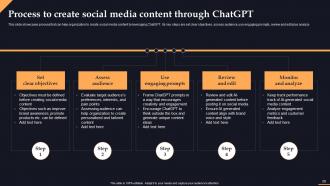
Slide 28: This slide shows process that can help organization to create social media content by leveraging ChatGPT.
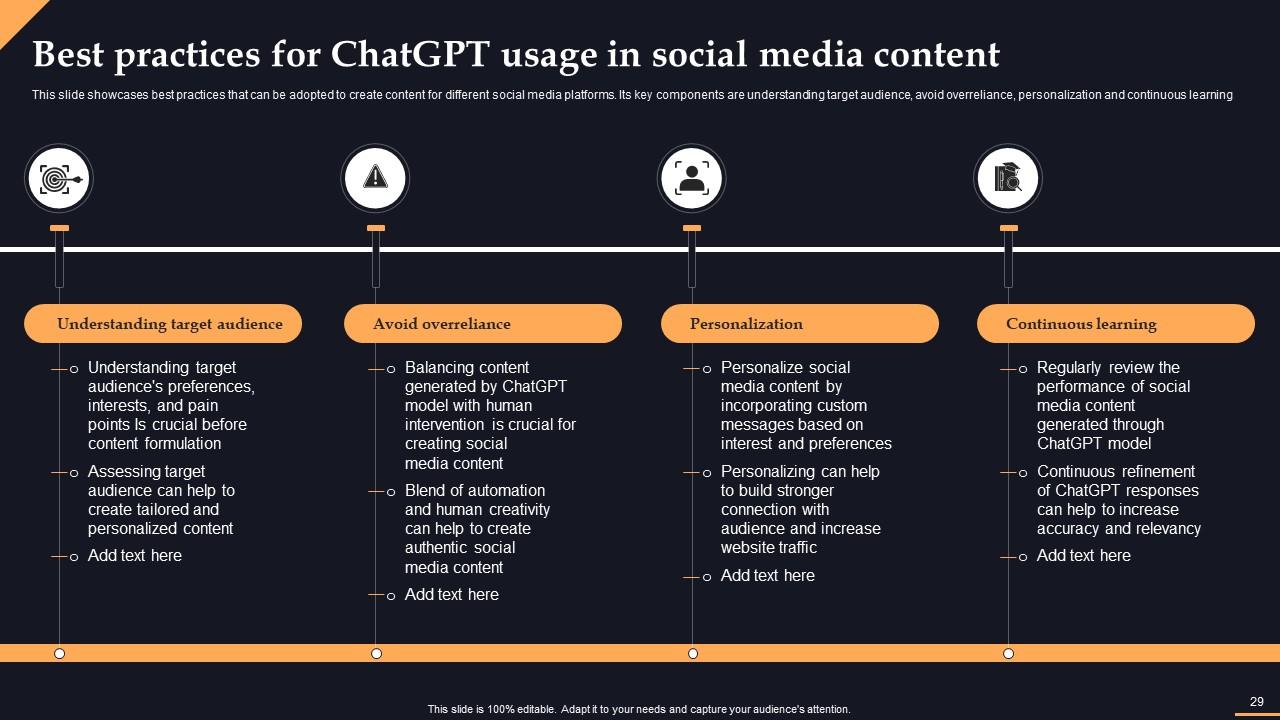
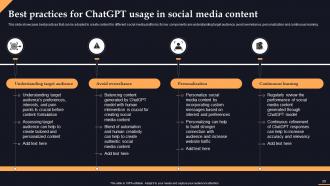
Slide 29: This slide elaborates best practices that can be adopted to create content for different social media platforms.
Slide 30: This slide is an introductory slide.
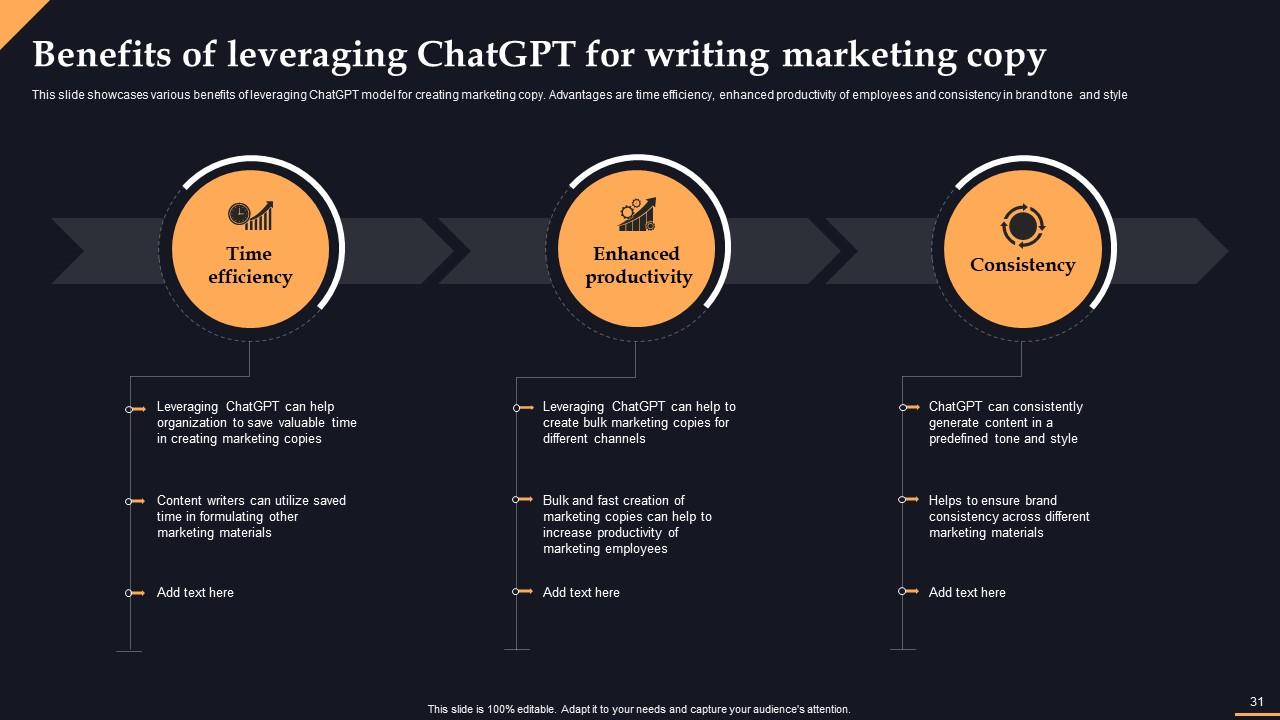
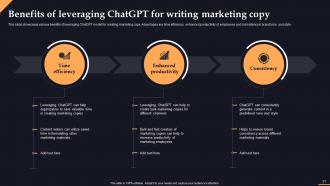
Slide 31: This slide contains various benefits of leveraging ChatGPT model for creating marketing copy.
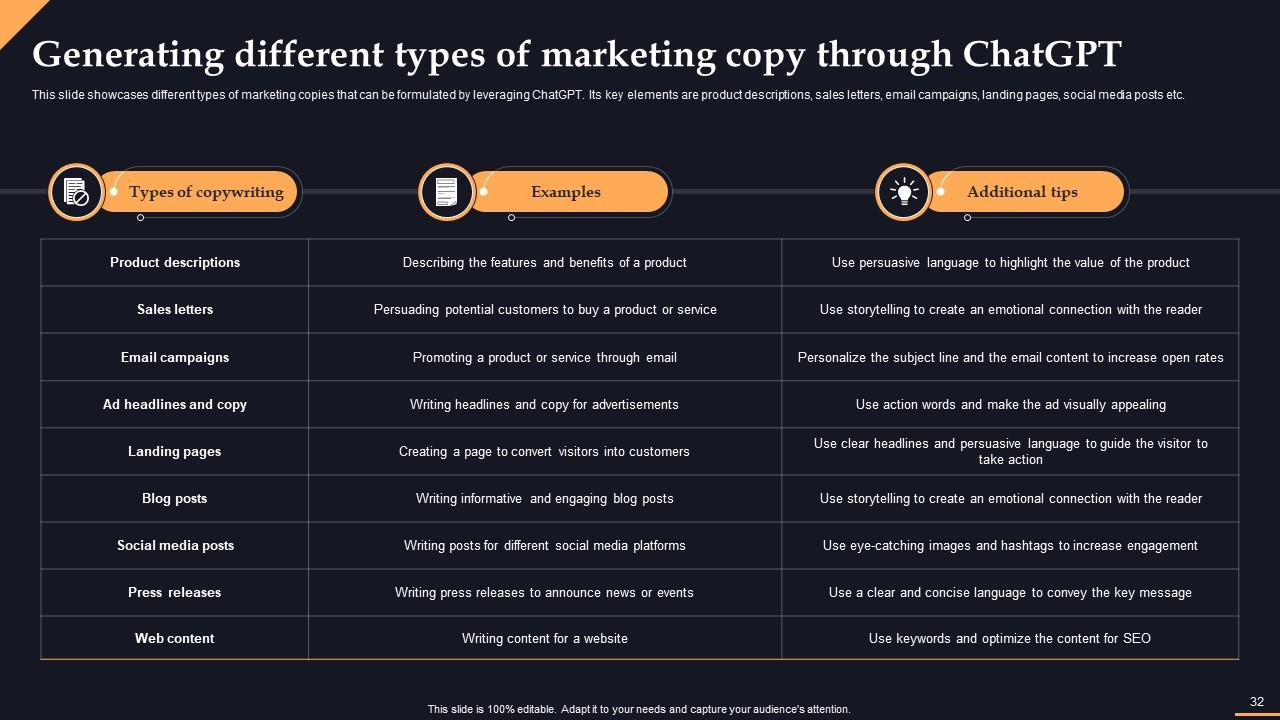
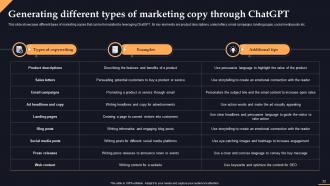
Slide 32: This slide caters to different types of marketing copies that can be formulated by leveraging ChatGPT.
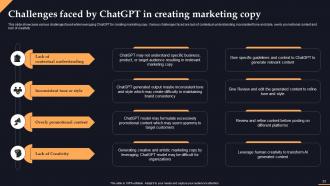
Slide 33: This slide pertains to various challenges faced while leveraging ChatGPT for creating marketing copy.
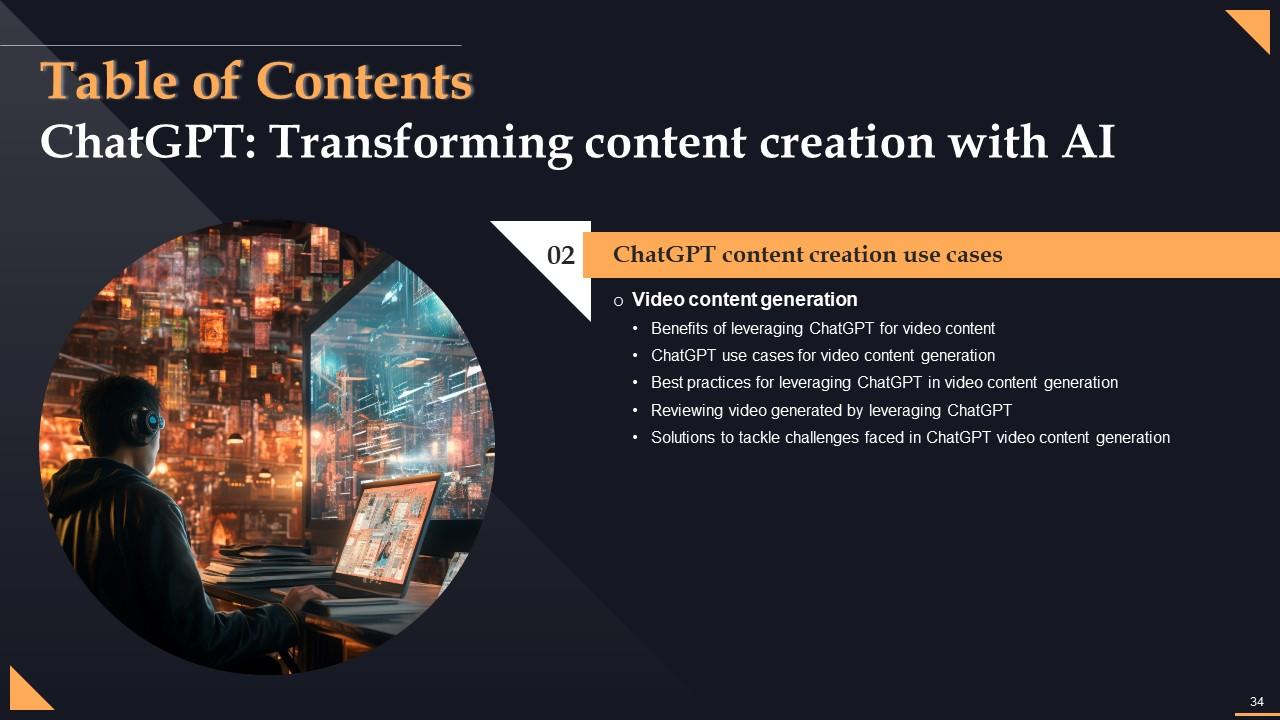
Slide 34: This slide is an introductory slide.
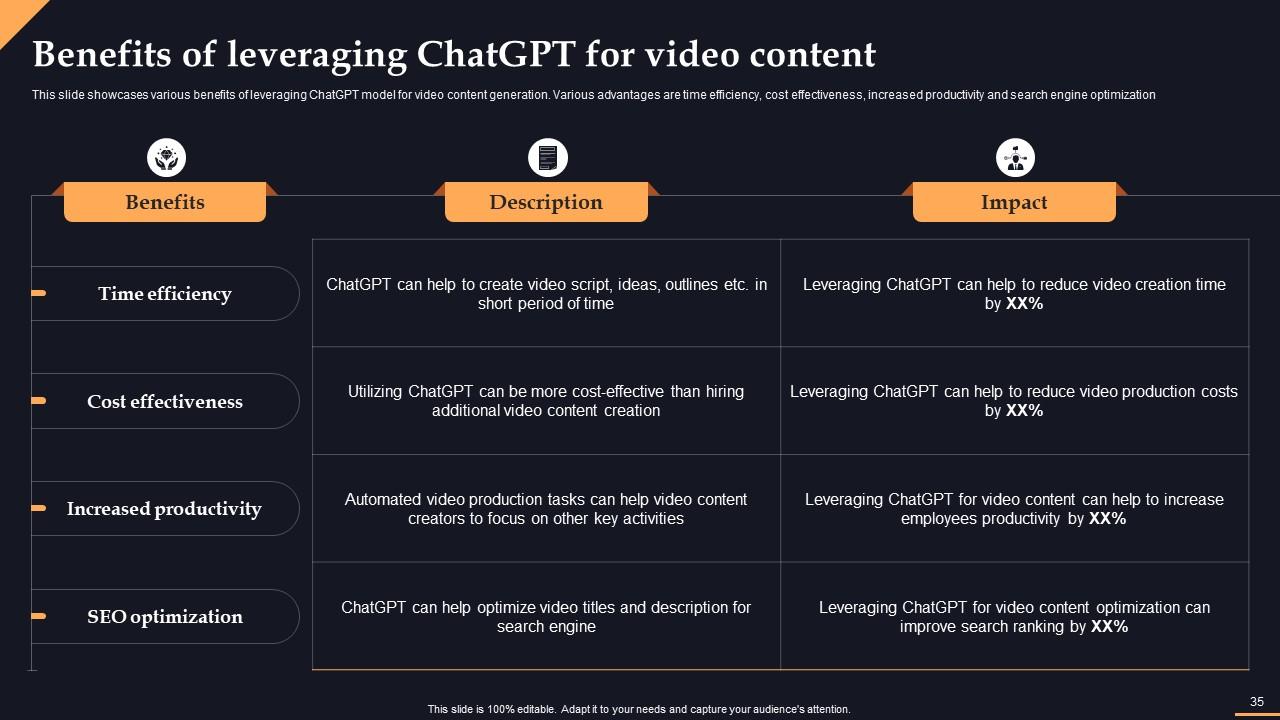
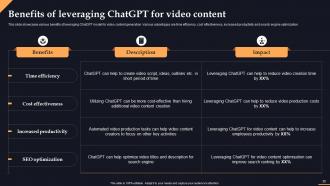
Slide 35: This slide showcases various benefits of leveraging ChatGPT model for video content generation.
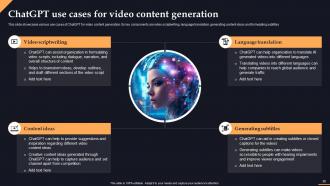
Slide 36: This slide shows various use cases of ChatGPT for video content generation.
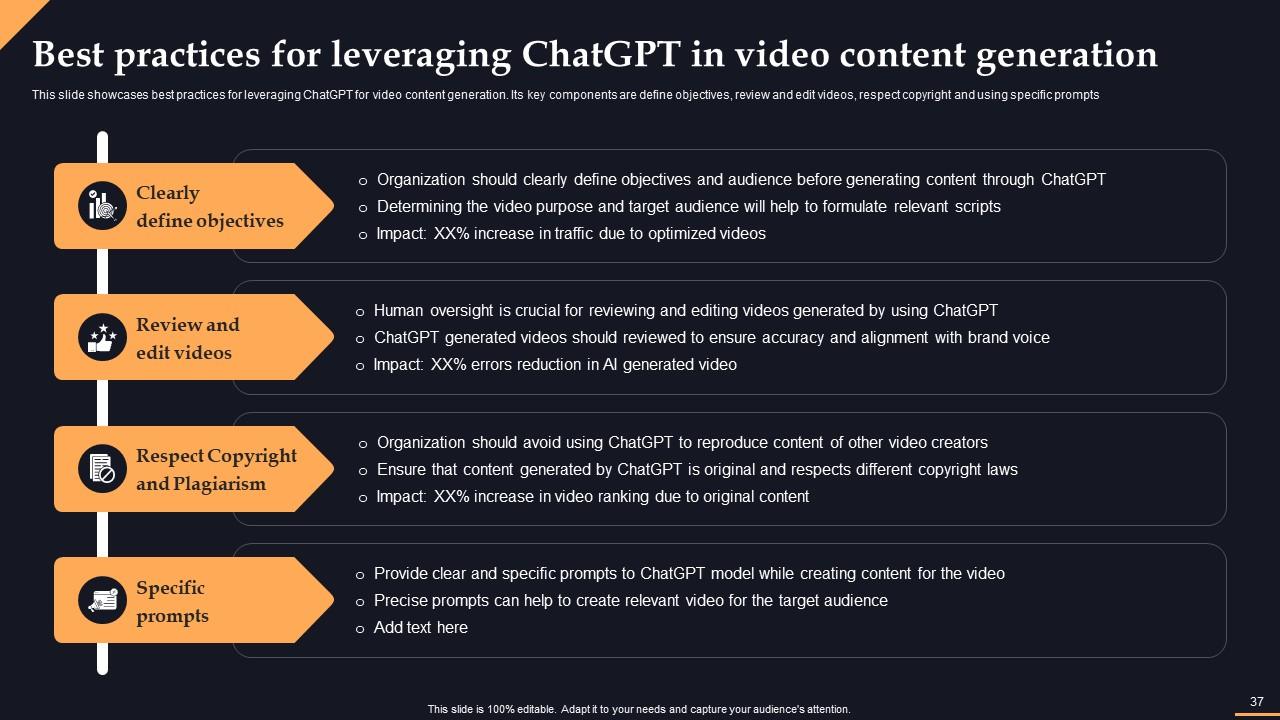
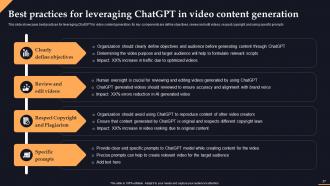
Slide 37: This slide marks best practices for leveraging ChatGPT for video content generation.
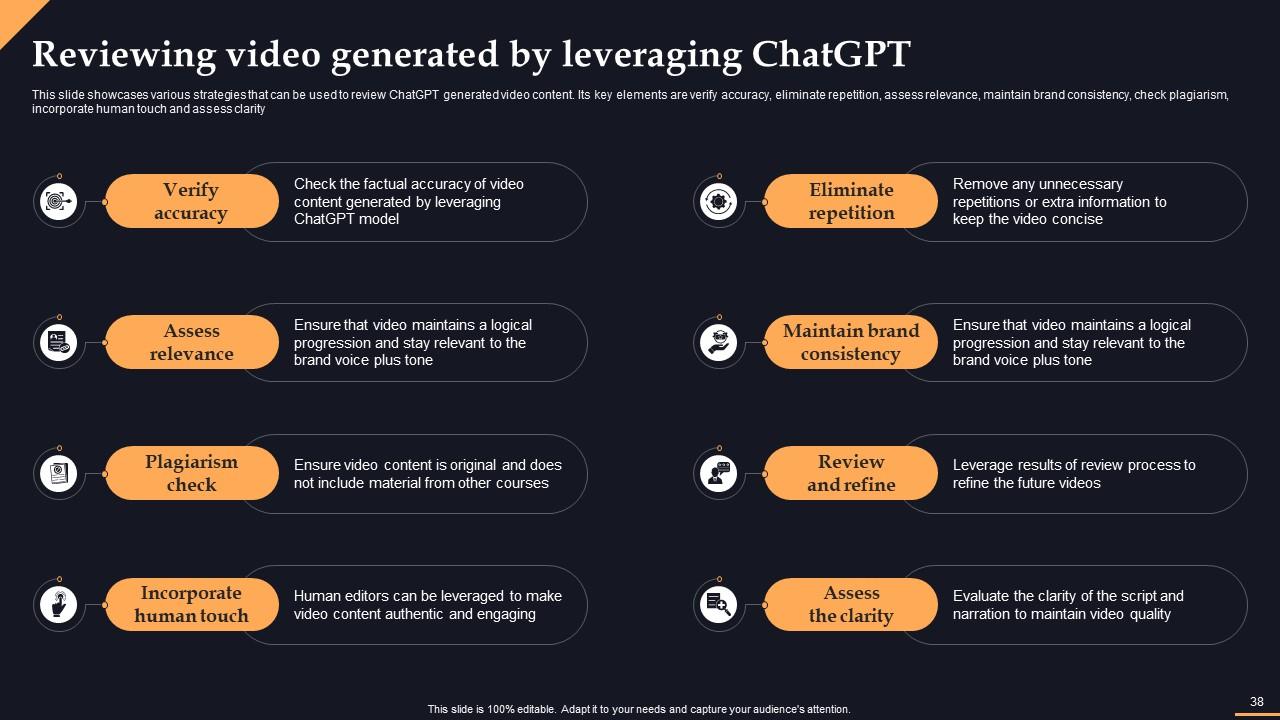
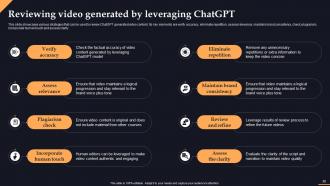
Slide 38: This slide consists various strategies that can be used to review ChatGPT generated video content.
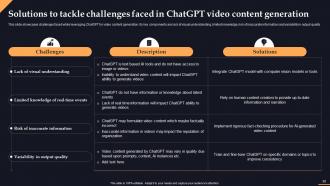
Slide 39: This slide caters to challenges faced while leveraging ChatGPT for video content generation.
Slide 40: This slide is an introductory slide.
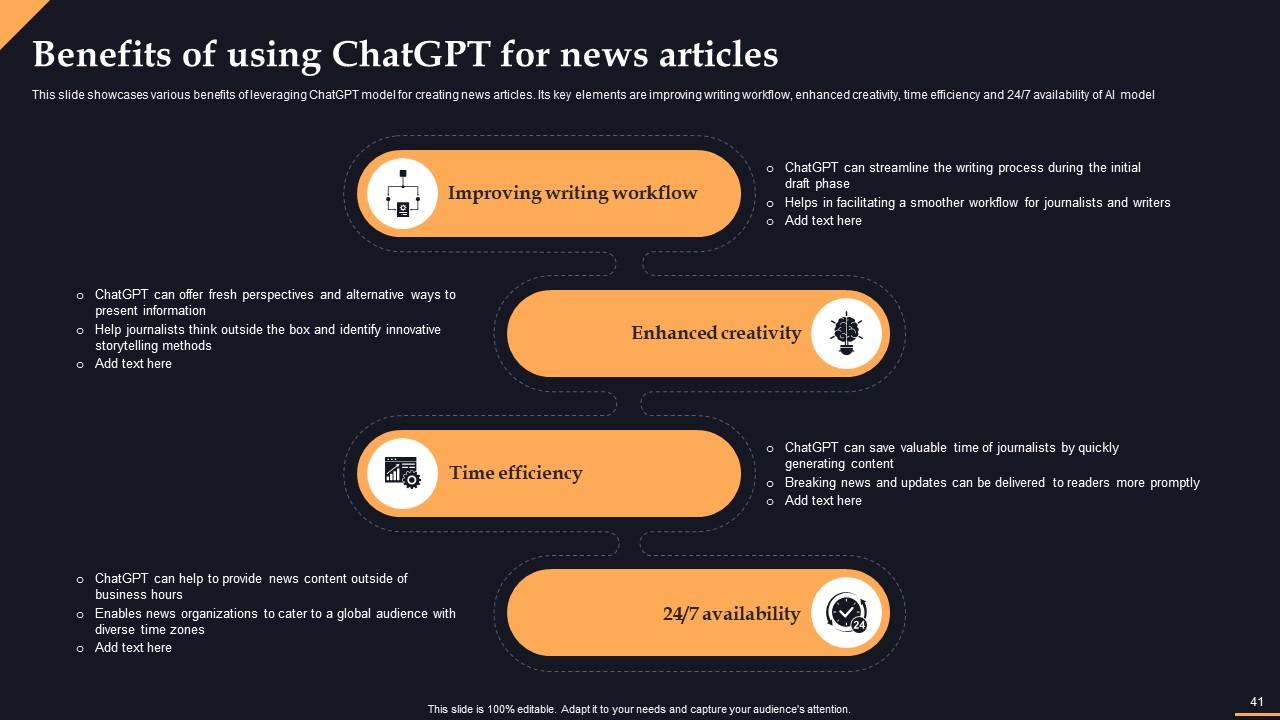
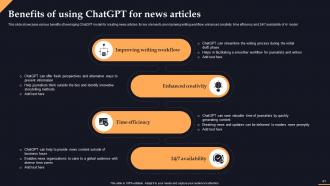
Slide 41: This slide entails various benefits of leveraging ChatGPT model for creating news articles.
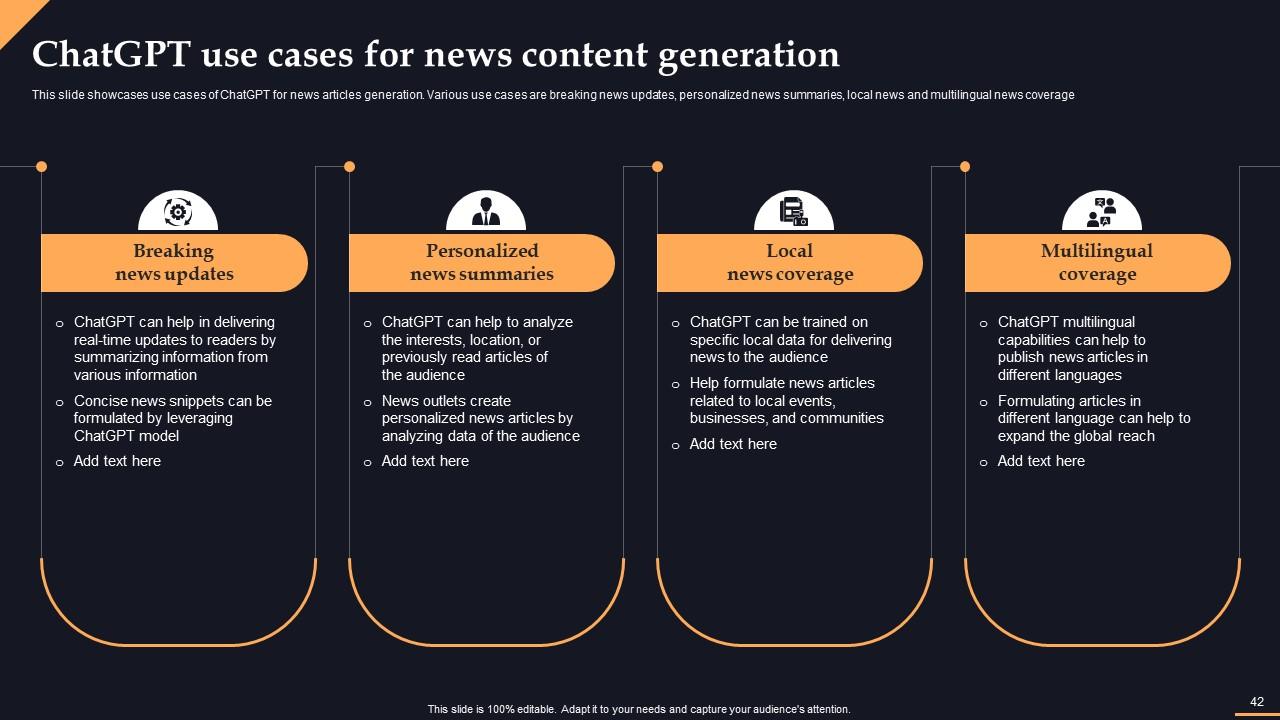
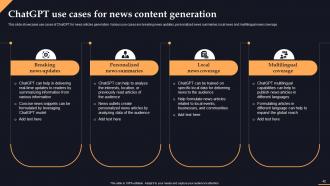
Slide 42: This slide puts the use cases of ChatGPT for news articles generation.
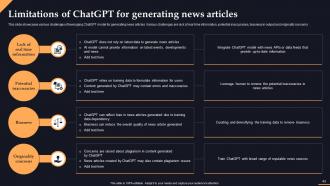
Slide 43: This slide shows various challenges of leveraging ChatGPT model for generating news articles.
Slide 44: This slide is an introductory slide.
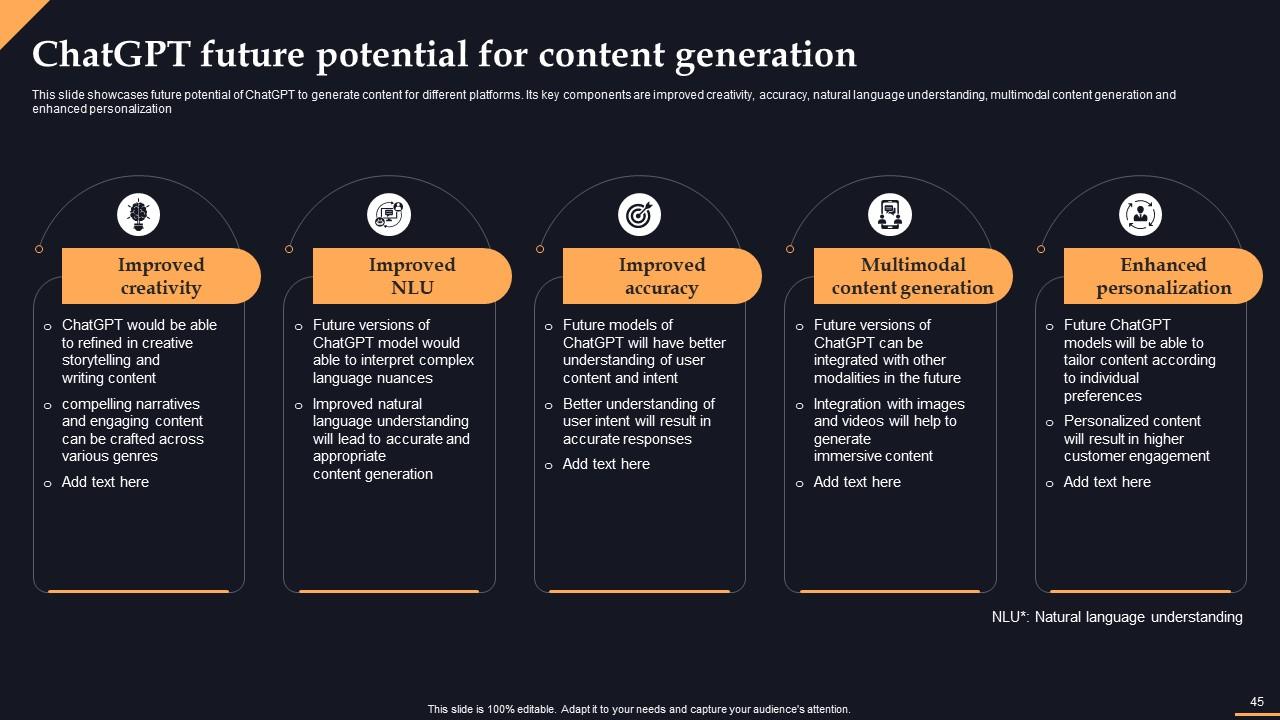
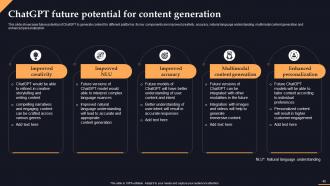
Slide 45: This slide marks the future potential of ChatGPT to generate content for different platforms.
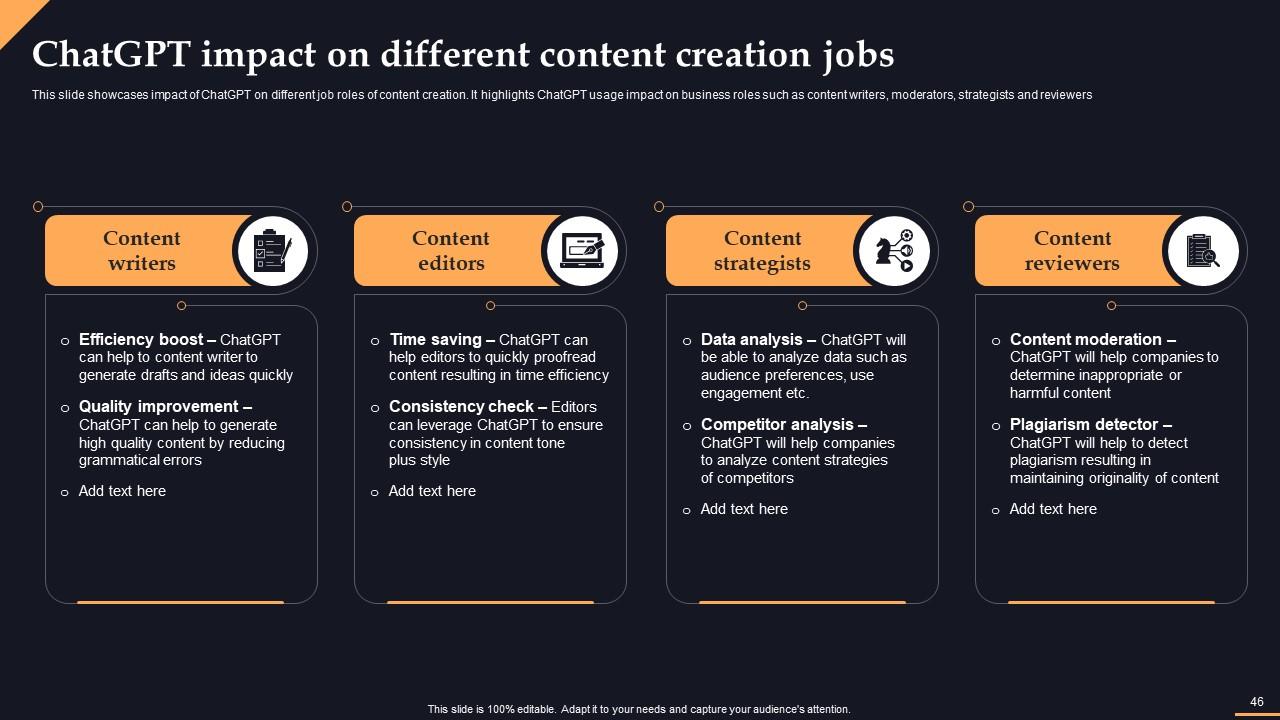
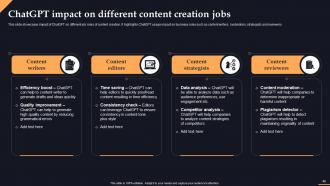
Slide 46: This slide focuses on the impact of ChatGPT on different job roles of content creation.
Slide 47: This slide is an introductory slide.
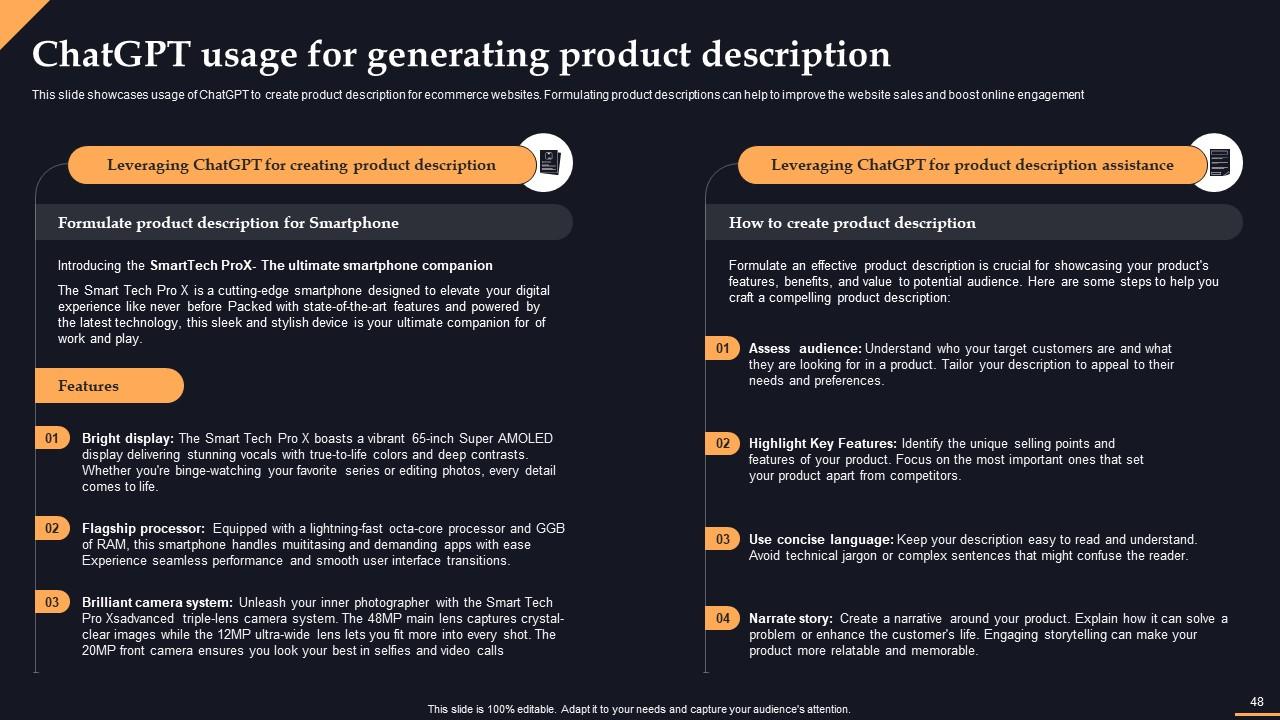
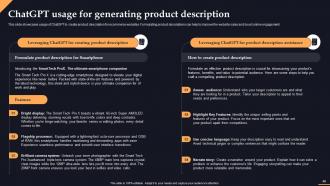
Slide 48: This slide puts usage of ChatGPT to create product description for ecommerce websites.
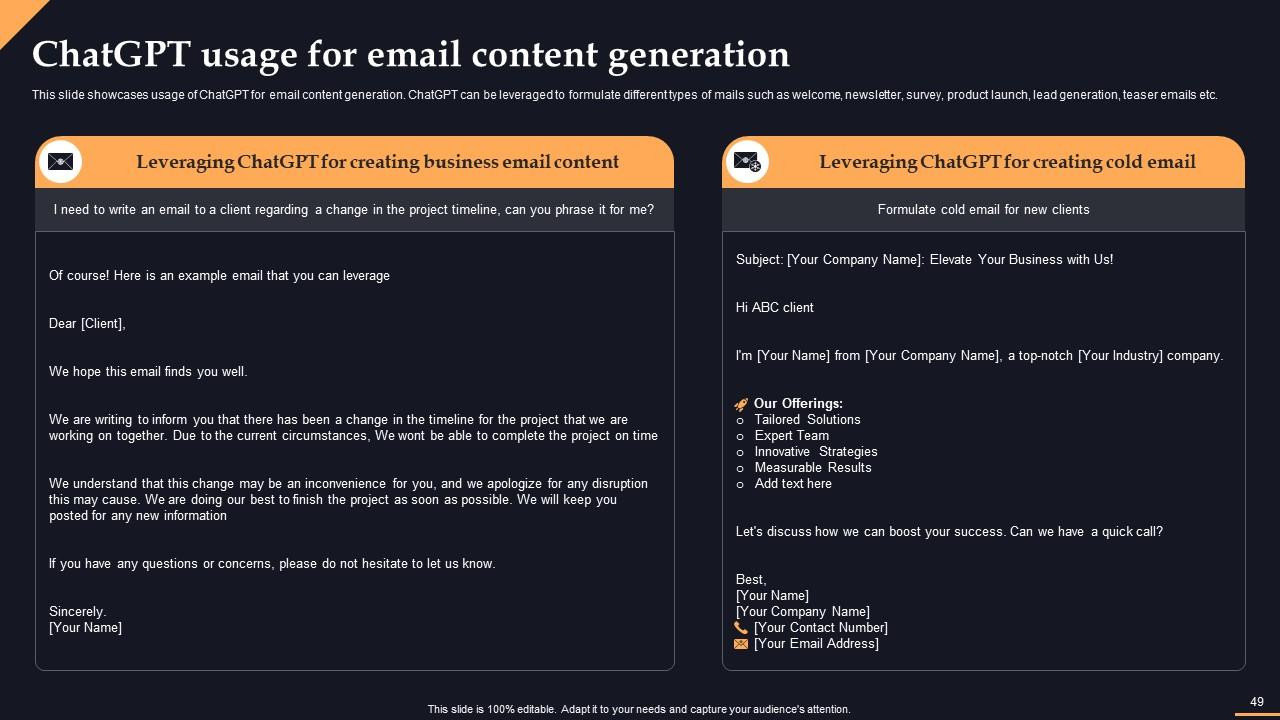
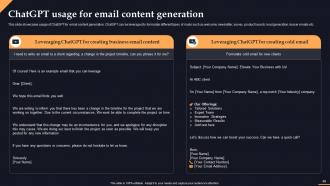
Slide 49: This slide decribes usage of ChatGPT for email content generation.
Slide 50: This slide shows all the icons included in the presentation.
Slide 51: This slide is titled Additional Slides for moving forward.
Slide 52: This slide shows Post-It Notes. Post your important notes here.
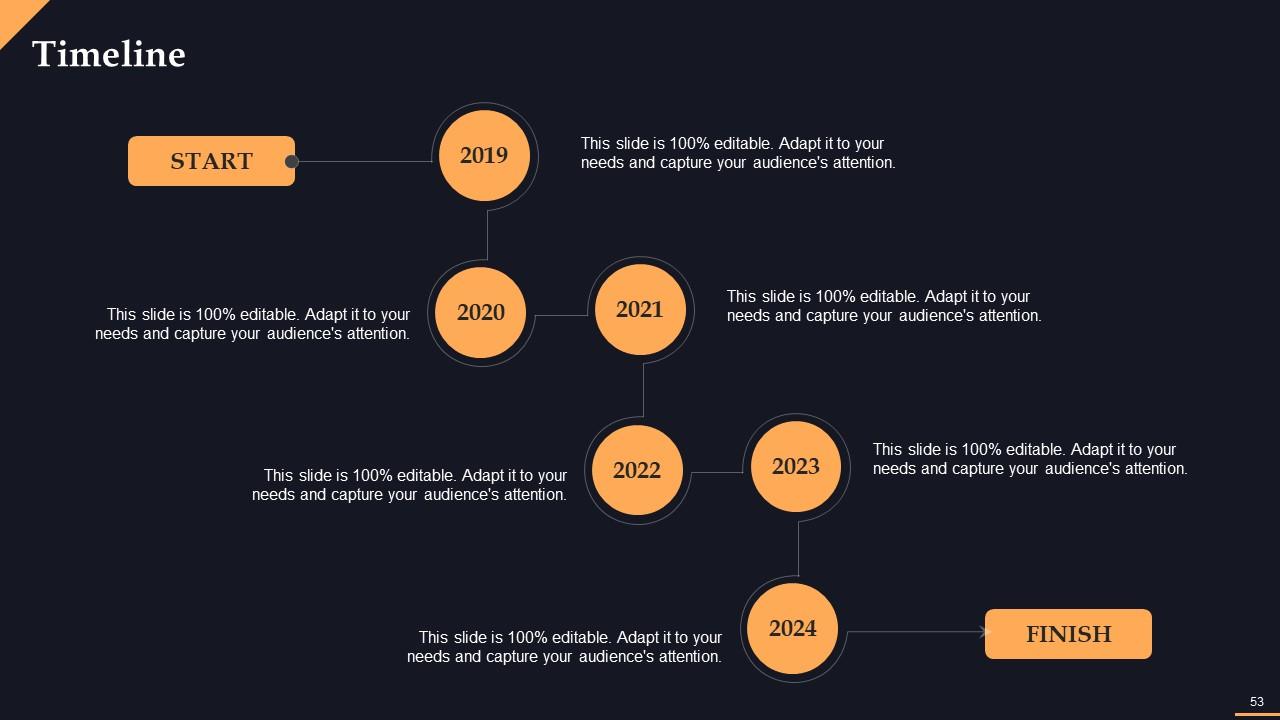
Slide 53: This slide is a Timeline slide. Show data related to time intervals here.
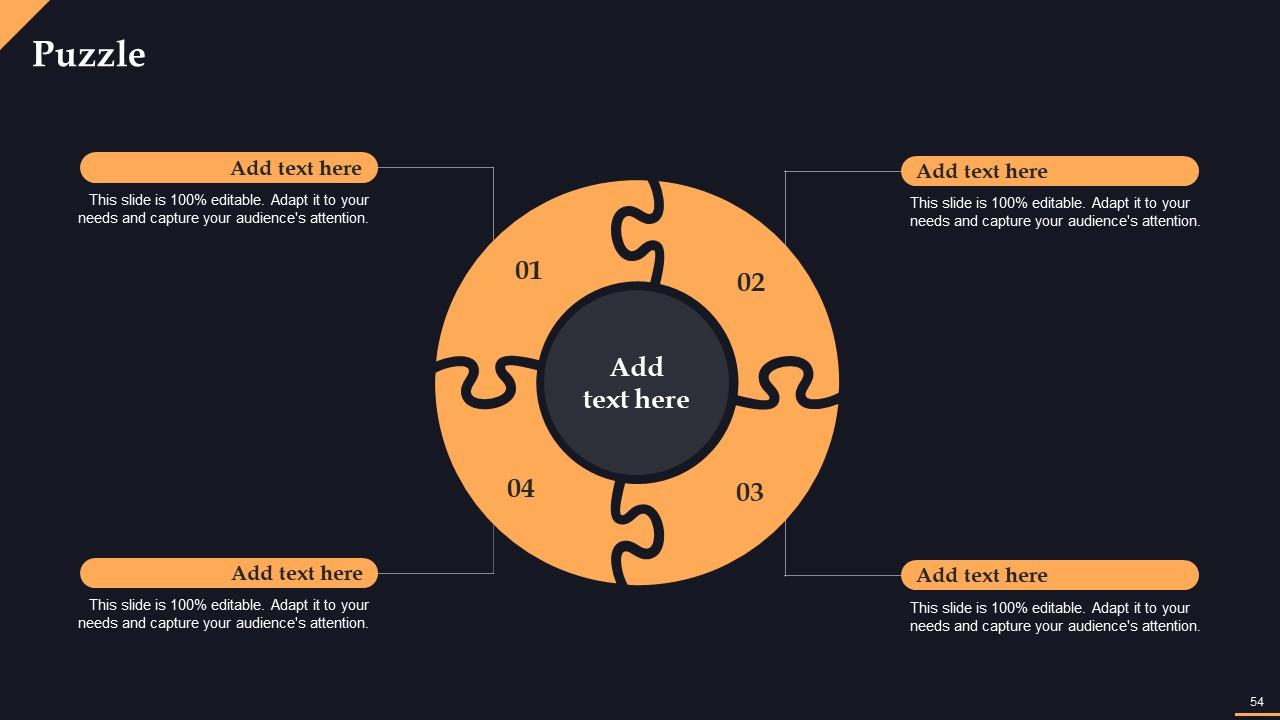
Slide 54: This slide contains a Puzzle with related icons and text.
Slide 55: This slide is a financial slide. Show your finance-related stuff here.
Slide 56: This slide depicts a Venn diagram with text boxes.
Slide 57: This slide presents a Roadmap with additional text boxes.
Slide 58: This slide is Our Target slide. State your targets here.
Slide 59: This slide is a thank-you slide with address, contact numbers, and email address.
ChatGPT Transforming Content Creation With AI ChatGPT CD with all 68 slides:
Use our ChatGPT Transforming Content Creation With AI ChatGPT CD to effectively help you save your valuable time. They are readymade to fit into any presentation structure.
-
My search for complete decks ended with SlideTeam. Such a surplus collection of HD PowerPoints. Moreover, their standard and widescreen formats have helped me in delivering bullseye presentations.
-
Loved the fact that SlideTeam provides clean, high-definition, and professional PowerPoint products.
