


CIO Role In Digital Transformation Powerpoint Presentation Slides





Try Before you Buy Download Free Sample Product
 Impress Your
Audience
 100%
Editable
 Save Hours
of Time


IT can use digital transformation to strengthen internal connections and influence strategy and purchasing decisions. IT is now enabling business transformation, assisting organizations in competing, growing, and innovating. Here is a professionally designed template on CIO Role in Digital Transformation that will analyze the professionals challenges, a detailed study of the roles and skills related to IT Professionals before and during COVID-19, and study upskilling requirements for primary IT professionals roles. This presentation provides information on IT professional challenges related to technical skills, the role of IT professionals before and during pandemics, and the impact of the IT skill gap on digital businesses. This presentation also covers details on upskilling roles for professionals related to data and analytics, cybersecurity, application architecture and infrastructure operations, and cloud. Additionally, this PowerPoint presentation provides information related to post upskilling such as essential skills to survive in a post-pandemic economy, opportunities for IT professionals after upskilling, and the benefit of IT professional upskilling to the organization. Get access to this insightful template and download it now.
People who downloaded this PowerPoint presentation also viewed the following :
Content of this Powerpoint Presentation
Slide 1: This slide introduces CIO Role in Digital Transformation. State Your Company Name and begin.
Slide 2: This slide states Agenda of the presentation.
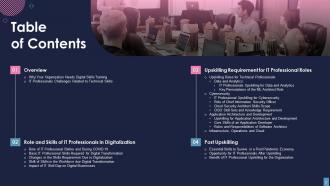
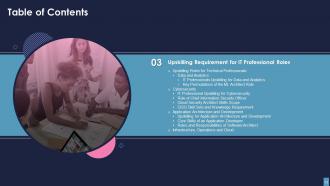
Slide 3: This slide presents Table of Content for the presentation.
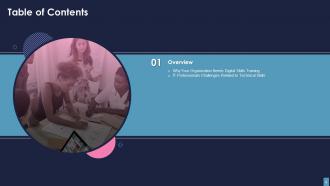
Slide 4: This slide displays two topics to be covered in the template under 'Overview".
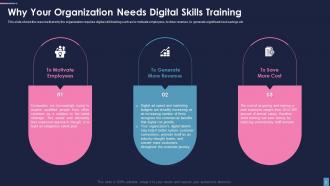
Slide 5: This slide shows the reasons that why the organization requires digital skill training.
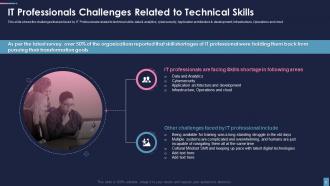
Slide 6: This slide shows the challenges that are faced by IT Professionals related to technical skills.
Slide 7: This slide displays five topics to be covered in the template under 'Role and Skills of IT Processionals in Digitalization'.
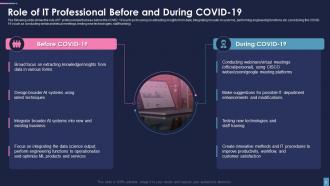
Slide 8: This slide shows the role of IT professionals before and during the COVID 19.
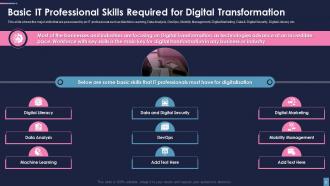
Slide 9: This slide shows the major skills that are possessed by an IT professional.
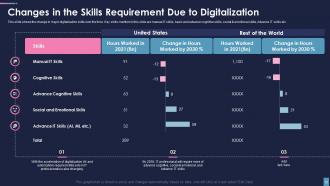
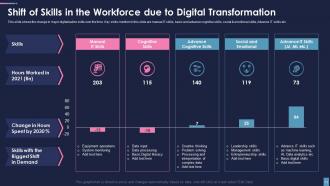
Slide 10: This slide shows the change in major digitalization skills over the time.
Slide 11: This slide shows the change in major digitalization skills over the time.This graph/chart is linked to excel.
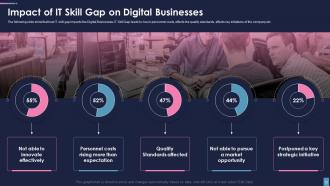
Slide 12: This slide shows how IT skill gap impacts the Digital Businesses.
Slide 13: This slide displays four topics to be covered in the template under 'Upskilling Requirement for IT Professional Roles'.
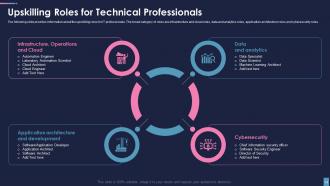
Slide 14: This slide provides information about the upskilling roles for IT professionals.
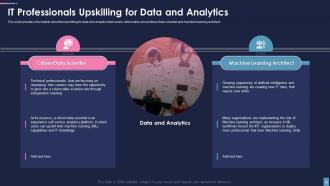
Slide 15: This slide provides information about the upskilling for data and analytics.
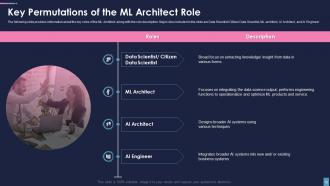
Slide 16: This slide provides information about the key roles of the ML Architect.
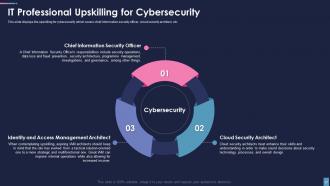
Slide 17: This slide displays the upskilling for cybersecurity.
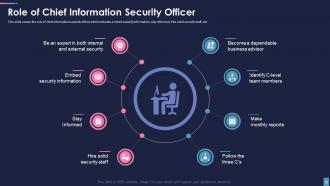
Slide 18: This slide covers the role of chief information security officer.
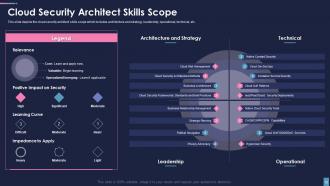
Slide 19: This slide depicts the cloud security architect skills scope.
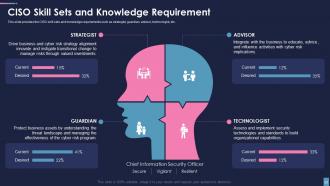
Slide 20: This slide provides the CISO skill sets and knowledge requirements.
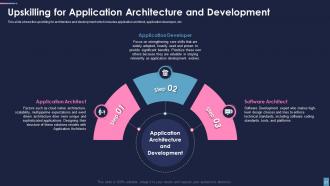
Slide 21: This slide shows the upskilling for architecture and development.
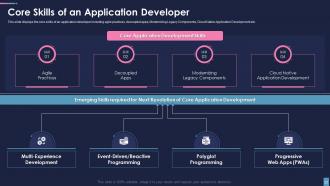
Slide 22: This slide displays the core skills of an application developer.
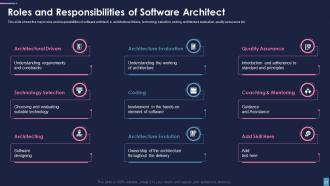
Slide 23: This slide shows the major roles and responsibilities of software architect i.e. architectural drivers etc.
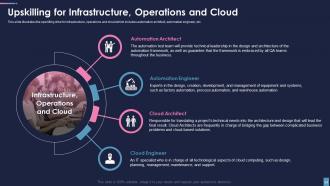
Slide 24: This slide illustrates the upskilling drive for infrastructure, operations and cloud.
Slide 25: This slide displays three topics to be covered in the template under 'Post Upskilling'.
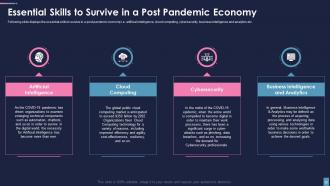
Slide 26: This slide displays the essential skills to survive in a post pandemic economy i.e. artificial intelligence etc.
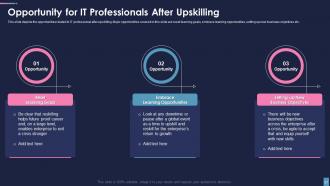
Slide 27: This slide depicts the opportunities related to IT professional after upskilling.
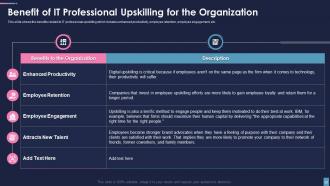
Slide 28: This slide shows the benefits related to IT professional upskilling.
Slide 29: This slide displays Icons for CIO Role in Digital Transformation.
Slide 30: This slide is titled as Additional Slides for moving forward.
Slide 31: This is About Us slide to show company specifications etc.
Slide 32: This slide depicts Venn diagram with text boxes.
Slide 33: This is Our Team slide with names and designation.
Slide 34: This is Our Goal slide. State your firm's goals here.
Slide 35: This slide contains Puzzle with related icons and text.
Slide 36: This slide shows Post It Notes. Post your important notes here.
Slide 37: This slide presents Roadmap with additional textboxes.
Slide 38: This slide displays Column chart with two products comparison.
Slide 39: This is a Thank You slide with address, contact numbers and email address.
CIO Role In Digital Transformation Powerpoint Presentation Slides with all 44 slides:
Use our CIO Role In Digital Transformation Powerpoint Presentation Slides to effectively help you save your valuable time. They are readymade to fit into any presentation structure.












FAQs for CIO Role In Digital Transformation
Honestly, you're juggling three big roles: strategic visionary, change enabler, and tech orchestrator. The real trick is matching digital projects to actual business needs - don't just chase shiny new toys (though I get the temptation). Most of your time goes to managing stakeholders and building teams that actually work together. Your infrastructure has to handle the changes too. Data governance and security can't be afterthoughts either. ROI tracking is crucial but kind of a pain. My advice? Pick one high-impact project that's not super complex first - builds credibility fast.
Honestly, start with figuring out what the business actually wants to accomplish - revenue goals, customer stuff, the real meat. Don't just chase cool tech because it's shiny (guilty as charged on that one). Meet with other executives regularly and connect your digital projects directly to business outcomes. Make a simple scorecard showing how each initiative impacts actual business metrics. Growth, cost cuts, better customer experience - whatever moves the needle. Then communicate everything in business speak, not tech jargon. Way too many CIOs get lost in the technical weeds and forget to translate.
Dude, you absolutely need leadership on board or you're screwed. I'm talking real support - not just them nodding in meetings while secretly rolling their eyes. Your CEO and C-suite folks have to actually champion this stuff, communicate why it matters, and show everyone they mean business. Too many CIOs I know got burned because executives talked a big game but never followed through. You'll want to keep them looped in on progress regularly. Get them making key decisions with you. When leadership is genuinely engaged, teams follow. Without it? Good luck getting anyone to adopt the changes.
Start with figuring out what legacy stuff you actually have - some systems are genuinely critical, others are just habits nobody wants to break. Map the data flows first because dependencies get weird fast. I'd prioritize by ROI and risk, not whatever looks coolest. APIs and middleware work great as bridges instead of ripping everything out at once (learned that the hard way). Run systems in parallel during transitions so you're not gambling on untested connections. Pick one system to start with, prove it works, then expand from there.
Track revenue from your new digital stuff and customer satisfaction scores - that's the business side covered. System uptime and how many people actually use your new tools matter on the tech front. Honestly, don't waste time on flashy metrics like "apps deployed" because they mean nothing. Connect everything back to real business results. That's what actually matters. I'd do quarterly check-ins where you compare before/after numbers. Makes it way easier to show if this whole transformation thing is working or just burning cash.
Look, people won't take risks if they're scared of getting fired for failing. Give your teams some actual time to mess around with new ideas - yeah, some will flop but that's fine. Mix up departments on projects because silos kill creativity. The whole "fail fast, learn faster" thing actually works when leadership backs it up. Oh and definitely celebrate wins publicly, even small ones. People love that recognition stuff. Find a couple innovation cheerleaders in each department first though - they'll spread the vibe way better than any top-down memo ever could.
So you're gonna need to be part tech guru, part business strategist, part people whisperer. Master data analytics and emerging tech, but honestly the communication piece is what separates good CIOs from great ones. Half your day will be translating geek-speak for executives who just want to know if it'll make money. Change management is brutal - people hate new systems even when they're obviously better. You'll also be juggling cybersecurity, vendor relationships, and customer experience stuff. My advice? Figure out what you suck at most right now and start there.
Honestly, cybersecurity runs the show when you're doing any digital transformation stuff. Every decision becomes this constant back-and-forth of "is this new cloud thing worth the security headache it might cause?" Super draining, but what can you do. I learned to bake security into everything from the start - yeah, it means longer timelines and fatter budgets, but way better than dealing with a breach later. You'll have way more meetings about risk appetite too (joy). Seriously though, get tight with your CISO early on. Having security people in planning meetings saves you so much pain down the line.
Dude, translate all that tech jargon into stuff they actually care about - money saved, revenue up, whatever keeps them awake at night. Get department heads on your side first so they can sell it internally for you. Quick wins are everything here, seriously. Show results fast and often to build credibility. Oh and this is huge - make them part of the planning process. Nobody likes having change shoved down their throat, but if they help create the vision? Totally different story. I swear half the battle is just good storytelling about what's possible.
Honestly, stop treating data like decoration. Pick metrics that actually matter - adoption rates, how much faster processes run, whether customers are happier. Too many tech leaders fall in love with pretty charts that nobody acts on. Real-time stuff is where it's at if you want to pivot quickly. Set up alerts so you're not constantly checking dashboards (been there, exhausting). Your executives need the story, not spreadsheet vomit. Think of it this way - you're trying to make smarter bets with your transformation money, not just prove you collected a bunch of numbers.
Honestly, most people either rush in without getting anyone on board, or they overthink it forever and never actually do anything. The worst part though? Treating it like just a tech upgrade when you're basically asking people to completely change how they work. I've watched so many of these projects crash because nobody explained why we're doing this in the first place. Employees just see more work coming their way. Start small - get some quick wins first. Bring your key people into the planning from the beginning. And seriously, budget way more time for training than you think you'll need. People need tons of support during transitions.
Dude, the CIO thing is wild - you basically stop being "the IT guy" and become this strategic leader driving innovation everywhere. Way less time dealing with server crashes, way more time in boardrooms talking business strategy with other execs. Instead of just keeping lights on, you're hunting for tech that creates new revenue or makes customers happier. You become this translator between what's technically possible and what actually makes business sense. Honestly? It's pretty exciting stuff. Oh, and start making friends outside IT now - you'll be collaborating with everyone once you make the jump.
Dude, digital transformation basically makes you a real business partner instead of just "the IT guy." You're suddenly in rooms with the CEO and CMO talking revenue and customer stuff - way more interesting than server maintenance, honestly. Every department starts coming to you because they need tech to hit their numbers. Budget meetings, board presentations, strategic planning - you name it. The trick is dropping the tech jargon and talking their language. Focus on ROI and competitive advantage instead of specs. Oh, and you'll actually have opinions that matter now, which is pretty cool.
Look for projects that actually move the revenue needle or fix stuff that'll break your business if ignored. Map everything to real outcomes first - I've watched too many teams chase fancy tech that nobody asked for, and it's painful. Build a simple grid: impact vs effort. Share it with leadership so when they inevitably dump random requests on you (and they will), everyone sees the tradeoffs. Quick wins are your friend since they buy you breathing room for the big scary projects later. Oh, and whatever's giving your CEO nightmares? Yeah, that goes to the top of your list.
Honestly, I'd focus on cloud infrastructure and AI/ML stuff first - that's your foundation. Data analytics is huge too because how else are you gonna know what's actually working? API management sounds boring but trust me, skip it and you'll hate yourself later (been there). Low-code platforms can save your team so much time, especially if you're drowning in requests. Pick maybe 2-3 things max that actually fit what you're trying to do. Don't just grab whatever's trending on tech Twitter. Start small, show it works, then build from there. Way less painful that way.
-
Thanks to SlideTeam, we have an ideal template to present all the info we need to cover. Their slides give our numbers and projections a more clear and enchanting look.
-
“Excellent information with easy access.”