

Clean technology anaerobic digestion process 743 ppt powerpoint master slide




Try Before you Buy Download Free Sample Product
 Impress Your
 Audience
 100%
100% Editable
 Save Hours
 of Time


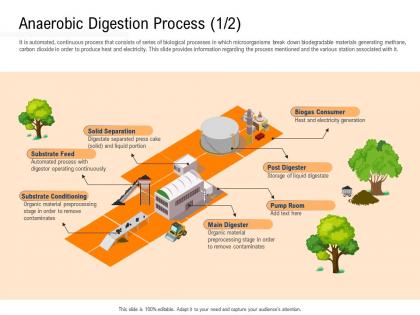
It is automated, continuous process that consists of series of biological processes in which microorganisms break down biodegradable materials generating methane, carbon dioxide in order to produce heat and electricity. This slide provides information regarding the process mentioned and the various station associated with it.
People who downloaded this PowerPoint presentation also viewed the following :
Clean technology anaerobic digestion process 743 ppt powerpoint master slide with all 2 slides:
Use our Clean Technology Anaerobic Digestion Process 743 Ppt Powerpoint Master Slide to effectively help you save your valuable time. They are readymade to fit into any presentation structure.

FAQs for Clean technology anaerobic digestion process 743 ppt
Anaerobic digestion delivers significant environmental advantages including reduced methane emissions from landfills, renewable biogas production, nutrient-rich digestate for soil enhancement, and minimized groundwater contamination risks. This technology enables municipalities and agricultural operations to transform organic waste streams into valuable resources while decreasing carbon footprints, with many waste management facilities finding substantial reductions in disposal costs and regulatory compliance burdens.
Anaerobic digestion operates through four distinct biochemical stages: hydrolysis breaks down complex organic matter, acidogenesis converts materials into organic acids, acetogenesis produces acetate and hydrogen, and methanogenesis generates methane and carbon dioxide. Through specialized bacterial communities working sequentially, waste treatment facilities, agricultural operations, and municipal systems achieve organic waste reduction, renewable energy production, and nutrient recovery, ultimately delivering sustainable waste management solutions while creating valuable biogas for energy generation.
Organic materials best suited for anaerobic digestion include food waste, agricultural residues, livestock manure, sewage sludge, and energy crops like corn silage. These feedstocks deliver optimal biogas production through high carbon-to-nitrogen ratios, biodegradability, and consistent availability, with many waste management facilities and farms finding that strategic feedstock combinations maximize energy output while reducing disposal costs.
Microorganisms are the biological engines driving anaerobic digestion, with acidogenic bacteria breaking down organic matter into acids, while methanogenic archaea convert these acids into biogas containing methane and carbon dioxide. These specialized microbial communities enable waste treatment facilities, agricultural operations, and municipal plants to transform organic waste into renewable energy, ultimately delivering sustainable waste management and clean electricity generation.
Anaerobic digestion reduces greenhouse gas emissions by capturing methane that would otherwise escape from organic waste decomposition, converting it into renewable energy, and producing digestate that replaces synthetic fertilizers. Through these processes, facilities achieve significant emission reductions while generating clean electricity and heat, with many waste management operations and agricultural facilities finding that implementing anaerobic digestion systems delivers both environmental benefits and operational cost savings.
Anaerobic digestion technologies include continuous stirred-tank reactors, upflow anaerobic sludge blankets, anaerobic membrane bioreactors, plug-flow digesters, and covered lagoon systems. These systems enhance waste management by converting organic materials into renewable biogas, reducing methane emissions, and producing nutrient-rich digestate, with agricultural facilities and wastewater treatment plants increasingly finding competitive advantages through energy independence.
Anaerobic digestion facilitates nutrient recovery by breaking down organic waste into biogas and nutrient-rich digestate, which contains nitrogen, phosphorus, and potassium essential for plant growth. This process enables agricultural operations, municipal facilities, and food processors to transform waste streams into valuable fertilizers, reducing disposal costs while creating sustainable revenue sources and supporting circular economy practices.
Common challenges in anaerobic digestion implementation include high capital costs, complex technical requirements, feedstock variability, regulatory compliance, and skilled operator shortages. While these obstacles can initially seem daunting, many municipalities and agricultural facilities find that strategic partnerships, phased implementation approaches, and government incentives help overcome barriers, ultimately delivering sustainable waste management and renewable energy generation that enhances operational efficiency.
Biogas applications include electricity generation, heat production, vehicle fuel, industrial process heating, and natural gas grid injection. Through purification and upgrading processes, farms, wastewater treatment facilities, and manufacturing plants convert biogas into renewable energy sources, reducing operational costs while achieving carbon neutrality goals, with many facilities finding significant energy independence and revenue generation opportunities.
Anaerobic digestion systems integrate into existing waste management through retrofitting current facilities, establishing pre-sorting protocols, and creating biogas collection infrastructure alongside traditional processing methods. Many municipalities and industrial facilities find that strategic combination with composting operations, wastewater treatment plants, and landfill diversion programs streamlines waste flows while generating renewable energy, ultimately delivering cost reduction and enhanced environmental compliance.
Economic incentives for anaerobic digestion include government tax credits, renewable energy certificates, feed-in tariffs, carbon credit revenues, and waste disposal cost reductions. These financial mechanisms enable businesses to offset initial capital investments while generating ongoing revenue streams, with many manufacturing facilities, food processors, and agricultural operations finding that digesters deliver energy cost savings and create additional income sources, ultimately providing competitive advantage in an increasingly sustainability-focused marketplace.
Larger anaerobic digestion facilities typically achieve greater efficiency through economies of scale, optimized feedstock mixing, enhanced temperature control, and reduced per-unit operational costs. While smaller installations offer flexibility and lower capital requirements, industrial-scale operations in agriculture, waste management, and food processing sectors deliver superior biogas yields, consistent energy output, and improved cost-effectiveness, ultimately providing stronger returns on investment and competitive advantage.
Regulatory considerations for anaerobic digestion plants include environmental permits, waste handling licenses, biogas safety standards, digestate disposal regulations, and local zoning compliance. These requirements streamline project approval by ensuring proper waste classification, emission controls, and grid connection standards, with many renewable energy developers finding that early regulatory engagement accelerates permitting and delivers competitive operational advantages.
Anaerobic digestion supports circular economy initiatives by converting organic waste into renewable energy and nutrient-rich digestate, creating closed-loop systems that minimize waste and maximize resource recovery. Manufacturing facilities, agricultural operations, and municipal waste management systems increasingly adopt this technology to reduce disposal costs, generate clean energy, and produce valuable fertilizers, ultimately delivering both environmental benefits and operational savings.
Current anaerobic digestion innovations include advanced biogas upgrading systems, AI-powered process optimization, co-digestion with agricultural waste, enhanced microbial communities, and integrated renewable energy systems. These technologies streamline operations by maximizing methane production, reducing processing times, and improving energy output quality, with many waste management facilities and agricultural operations finding that strategic combinations ultimately deliver greater cost efficiency and enhanced sustainability outcomes.
-
Best way of representation of the topic.
-
Visually stunning presentation, love the content.
-
Colors used are bright and distinctive.
-
The content is very helpful from business point of view.
-
Informative presentations that are easily editable.