

Cloud Architecture And Security Review Powerpoint Presentation Slides




Try Before you Buy Download Free Sample Product
 Impress Your
 Audience
 100%
100% Editable
 Save Hours
 of Time


This complete PowerPoint presentation provides strategies for the organizations to manage multi cloud complexity and successfully manage functions, automation, security, and regulations to take advantage of the multi cloud environment flexibility. Check out our professionally designed Cloud Architecture and Security Review template. The main aim of this module is to implement different strategies and solutions to remove complexity from the multi cloud environment. It covers a brief introduction to IT and the problems faced by the company due to complex multi cloud services, such as no decision making power regarding its services, the large amount spent on cloud services, etc. It also covers the solutions for visibility management in multi cloud, such as detailed response time analytics, identification of worst-performing apps, and many more. This presentation also includes a training schedule for IT professionals and a Cloud Management Platform that helps manage, optimize and govern the cloud with Data Protection Multi Cloud Data Encryption. It also covers the cost management dashboard interface along with the Removing Complexity and Cloud Performance Tracking Dashboard. Build a powerful template like this for yourself and book a free demo with our research team now.
People who downloaded this PowerPoint presentation also viewed the following :
Content of this Powerpoint Presentation
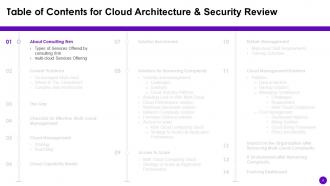
Slide 1: This slide introduces Cloud Architecture & Security Review. State your company name and begin.
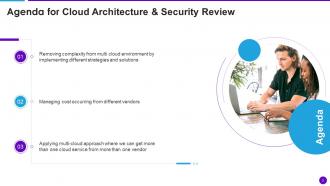
Slide 2: This slide states Agenda of the presentation.
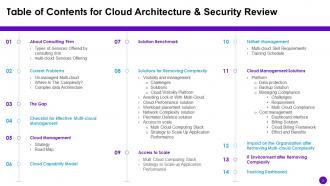
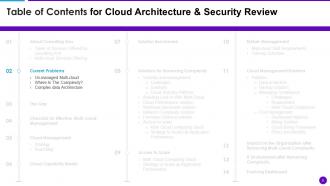
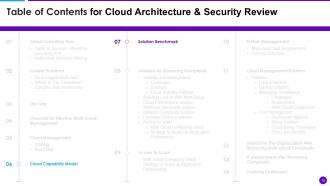
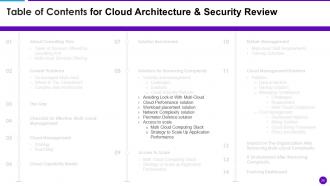
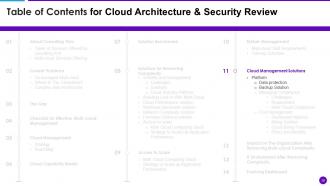
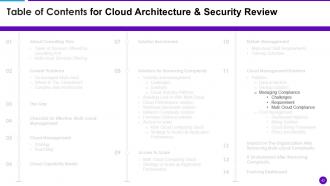
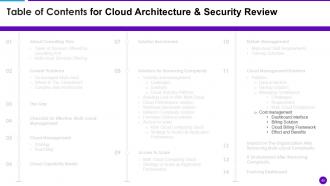
Slide 3: This slide presents Table of Content for the presentation.
Slide 4: This slide highlights title for topics that are to be covered next in the template.
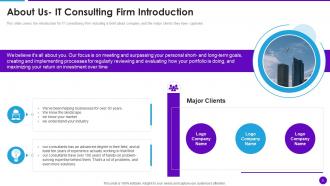
Slide 5: This slide displays the introduction for IT consultancy firm including a brief about company.
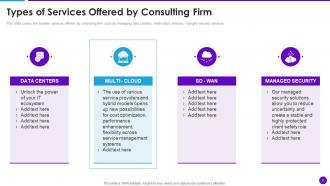
Slide 6: This slide represents Types of Services Offered by Consulting Firm.
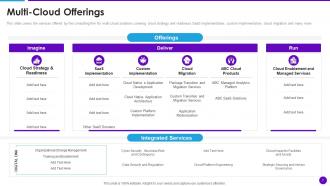
Slide 7: This slide covers the services offered by the consulting firm for multi cloud solutions.
Slide 8: This slide highlights title for topics that are to be covered next in the template.
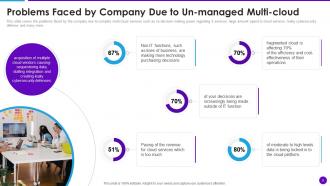
Slide 9: This slide showcases Problems Faced by Company due to Un-Managed Multi-Cloud.
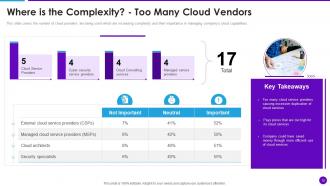
Slide 10: This slide shows increasing complexity and its importance in managing company’s cloud capabilities.
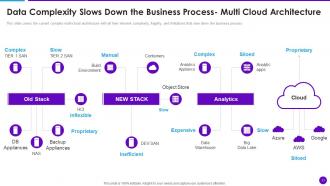
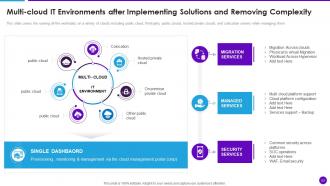
Slide 11: This slide presents current complex multi-cloud architecture with all their inherent complexity.
Slide 12: This slide highlights title for topics that are to be covered next in the template.
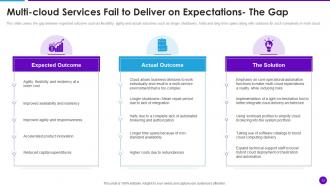
Slide 13: This slide covers the gap between expected outcome such as flexibility, agility and actual outcomes.
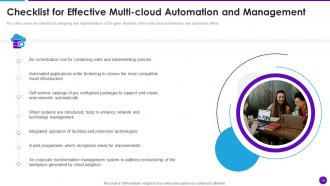
Slide 14: This slide displays Checklist for Effective Multi-Cloud Automation and Management.
Slide 15: This slide highlights title for topics that are to be covered next in the template.
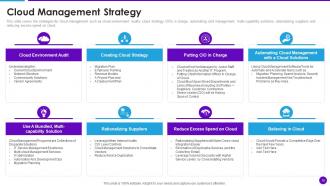
Slide 16: This slide covers the strategies for cloud management such as cloud environment audits, cloud strategy, etc.
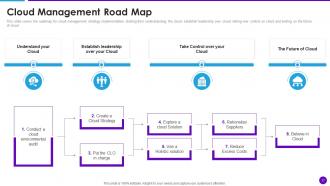
Slide 17: This slide represents roadmap for cloud management strategy implementation.
Slide 18: This slide highlights title for topics that are to be covered next in the template.
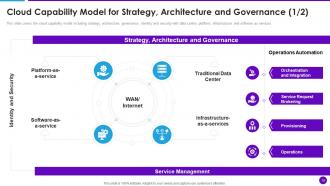
Slide 19: This slide showcases Cloud Capability Model for Strategy, Architecture and Governance.
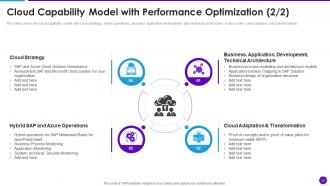
Slide 20: This slide presents Cloud Capability Model with Performance Optimization.
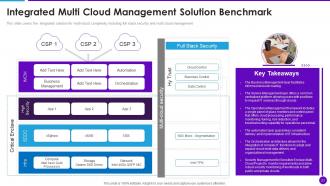
Slide 21: This slide displays Integrated Multi Cloud Management Solution Benchmark.
Slide 22: This slide highlights title for topics that are to be covered next in the template.
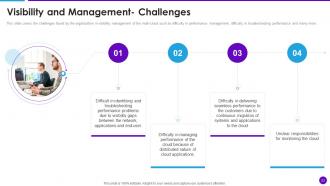
Slide 23: This slide represents challenges faced by the organization in visibility management of the multi-cloud.
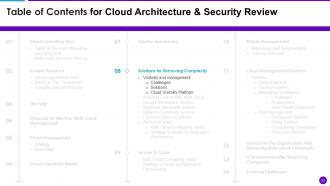
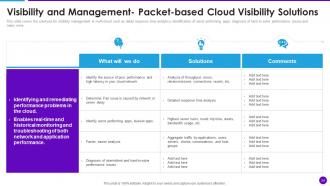
Slide 24: This slide showcases solutions for visibility management in multi-cloud.
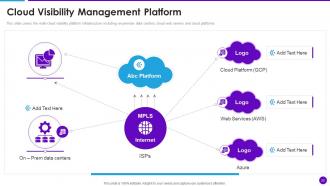
Slide 25: This slide covers the multi-cloud visibility platform infrastructure including on-premise data centers, cloud web servers and cloud platforms.
Slide 26: This slide highlights title for topics that are to be covered next in the template.
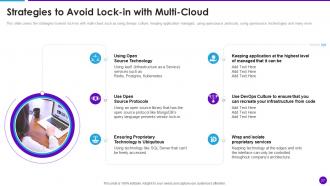
Slide 27: This slide shows Strategies to Avoid Lock-in with Multi-Cloud.
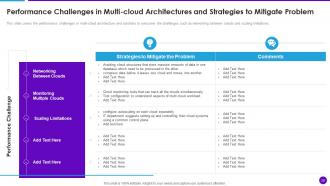
Slide 28: This slide presents performance challenges in multi-cloud architecture and solutions to overcome the challenges.
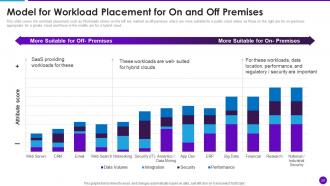
Slide 29: This slide displays Model for Workload Placement for On and Off Premises.
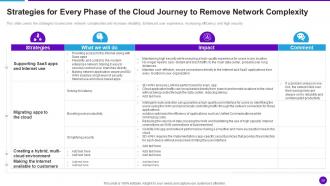
Slide 30: This slide represents strategies to overcome network complexities and increase reliability.
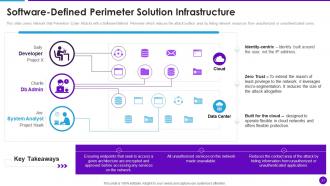
Slide 31: This slide covers Network that Prevent Cyber Attacks with a Software Defined Perimeter .
Slide 32: This slide highlights title for topics that are to be covered next in the template.
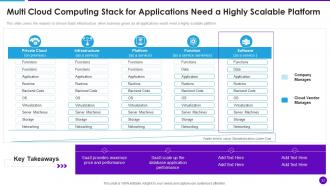
Slide 33: This slide shows reasons to choose SaaS infrastructure when business grows.
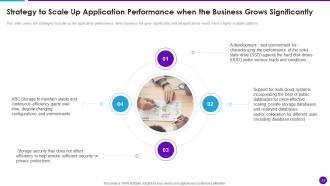
Slide 34: This slide presents Strategy to Scale Up Application Performance when the Business Grows Significantly.
Slide 35: This slide highlights title for topics that are to be covered next in the template.
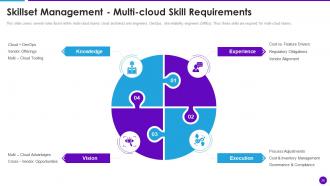
Slide 36: This slide displays several roles found within multi-cloud teams.
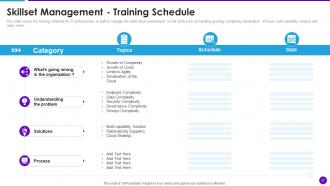
Slide 37: This slide represents training schedule for IT professionals or staff to manage the multi-cloud environment.
Slide 38: This slide highlights title for topics that are to be covered next in the template.
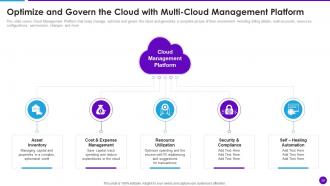
Slide 39: This slide showcases Optimize and Govern the Cloud with Multi-Cloud Management Platform.
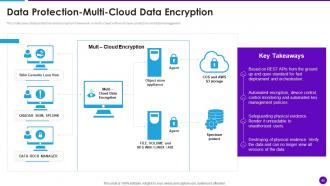
Slide 40: This slide covers data protection and encryption framework in multi-cloud.
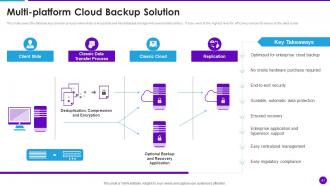
Slide 41: This slide shows the data backup solution process where data is Accessible.
Slide 42: This slide highlights title for topics that are to be covered next in the template.
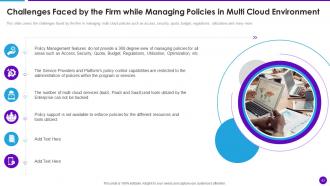
Slide 43: This slide presents Challenges Faced by the Firm while Managing Policies in Multi Cloud Environment.
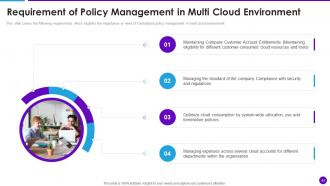
Slide 44: This slide displays Requirement of Policy Management in Multi Cloud Environment.
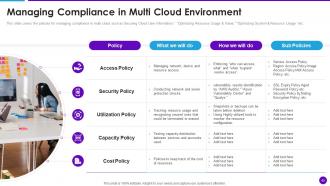
Slide 45: This slide represents Managing Compliance in Multi Cloud Environment.
Slide 46: This slide highlights title for topics that are to be covered next in the template.
Slide 47: This slide showcases Cost Management Dashboard in Cloud Management Platform.
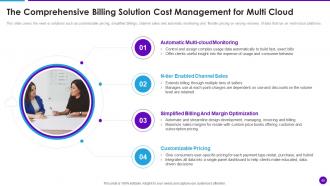
Slide 48: This slide covers the need or solutions such as customizable pricing, simplified billings, channel sales, etc.
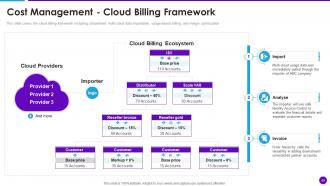
Slide 49: This slide shows the cloud billing framework including streamlined multi-cloud data importation.
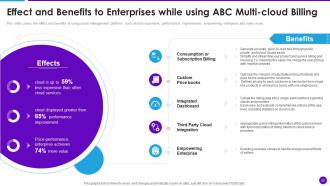
Slide 50: This slide presents Effect and Benefits to Enterprises while using ABC Multi-Cloud Billing.
Slide 51: This slide highlights title for topics that are to be covered next in the template.
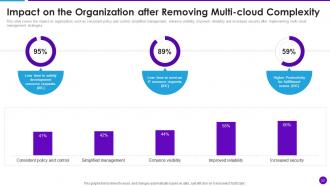
Slide 52: This slide displays Impact on the Organization after Removing Multi-Cloud Complexity.
Slide 53: This slide represents the running all the workloads on a variety of clouds.
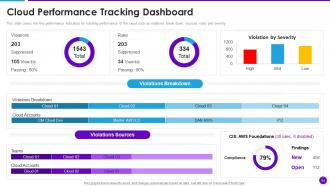
Slide 54: This slide showcases the Key performance indicators for tracking performance of the cloud.
Slide 55: This slide contains all the icons used in this presentation.
Slide 56: This slide is titled as Additional Slides for moving forward.
Slide 58: This is Our Mission slide with related imagery and text.
Slide 59: This is a Timeline slide. Show data related to time intervals here.
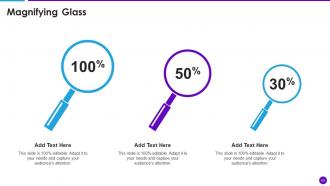
Slide 60: This slide showcases Magnifying Glass to highlight information, specifications etc
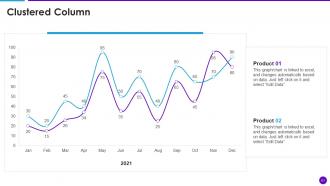
Slide 61: This slide provides Clustered Column chart with two products comparison.
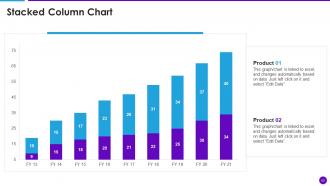
Slide 62: This slide represents Stacked Column chart with two products comparison.
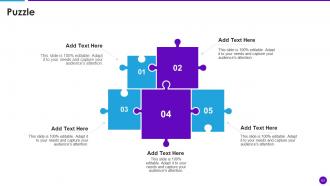
Slide 63: This slide contains Puzzle with related icons and text.
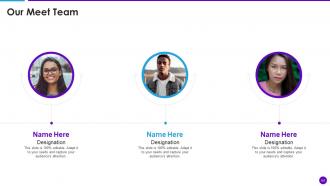
Slide 64: This is Our Team slide with names and designation.
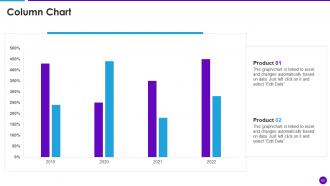
Slide 65: This slide displays Column chart with two products comparison.
Slide 66: This is a Thank You slide with address, contact numbers and email address.
Cloud Architecture And Security Review Powerpoint Presentation Slides with all 71 slides:
Use our Cloud Architecture And Security Review Powerpoint Presentation Slides to effectively help you save your valuable time. They are readymade to fit into any presentation structure.






FAQs for Cloud Architecture And Security Review
So basically you want defense in depth, least privilege, and zero trust - assume everything's already compromised. Encrypt your data everywhere, lock down identity management tight. Network segmentation is clutch so one breach doesn't wreck everything. Think of it like your house - you wouldn't just lock the front door and peace out, right? Monitor and log everything so you actually know what's going on. Oh and start with IAM policies first, that's usually the biggest mess anyway. Work outward from there once you've got that sorted.
So encryption is basically what saves your butt if someone tries to steal your data - it scrambles everything so hackers just see gibberish. You want it protecting your stuff both when it's moving around and sitting in storage. Most cloud services do this automatically now, thank god, because managing those encryption keys yourself is honestly such a pain. Just make sure you're using something solid like AES-256. Oh and figure out who actually controls the keys - sometimes it's you, sometimes it's them. Check your settings to be sure everything's turned on properly.
Misconfigured storage buckets are the biggest nightmare - someone always leaves an S3 bucket wide open. Weak identity management gets you too. APIs are super vulnerable since everything runs through them in cloud setups. Here's the thing people don't get: there's this "shared responsibility" thing where you think AWS or whoever handles security, but you're still on the hook for your data and configs. Most breaches? Human error, not the actual infrastructure failing. Oh, and definitely audit your permissions first - that's where I'd start. Multi-factor authentication everywhere, obviously.
Dude, multi-tenancy is tricky because you've got all these customers sharing the same stuff. Data can leak between tenants if you're not careful. Plus there's privilege escalation risks and that annoying "noisy neighbor" thing where one tenant messes with security for everyone else. You'll need solid isolation - network segmentation, proper access controls, encryption everywhere. Think of it like managing apartments where nobody can spy on their neighbors (though honestly, some apartment managers totally suck at this). Zero-trust approach works best, and audit those boundaries regularly or you'll regret it later.
So basically you need to nail three things. Start with authentication - OAuth 2.0, API keys, that whole deal to verify who's actually hitting your endpoints. Rate limiting is huge too, prevents people from hammering your APIs into the ground. Honestly, just get an API gateway if you don't have one already - they handle most of this stuff automatically and you'll thank yourself later. Don't forget TLS encryption for everything in transit, and set up monitoring to catch weird traffic patterns. Oh, and audit what you've got first - focus on the APIs touching sensitive data before you go crazy securing everything.
So IAM is like having a bouncer for your cloud stuff - decides who gets in and what they can touch. You create user accounts, give them specific permissions, set up policies so people only access what they need for work. Kind of like handing out keys to certain rooms instead of giving everyone the master key (which honestly never ends well). Everything gets logged too, so you can see who did what and when. Oh, and always start with minimal permissions then add more as needed. Way easier than trying to take stuff away later - people get weirdly attached to permissions they don't even use.
Look, security policies are just your basic guardrails - they control who gets into what and how your data moves around. Without them? You're gonna have a total mess of random configurations that'll make you want to cry during audits. Document what you've got right now first. Then build policies around access control, data handling, network stuff, and whatever compliance headaches you're dealing with. Oh and make sure they actually work with how your team operates day-to-day, not some perfect world scenario that doesn't exist.
First thing - map out what regulations you actually need to hit (GDPR, HIPAA, whatever applies to your industry). Most big cloud providers already have the certifications you'll need, so pick one that matches up. Here's the thing though - just because AWS or Azure is compliant doesn't mean YOU automatically are. They handle the infrastructure stuff, but you're still on the hook for data handling, user access, configurations... basically everything you build on top. Document everything as you go. Set up proper data governance from day one. And yeah, audit regularly - you'll thank yourself later when compliance review time comes around.
Encrypt everything first - data sitting around, moving between systems, all of it. Don't build your own key management though, just use what your cloud provider offers (made that mistake once, not fun). Set up IAM with minimal permissions only. MFA is non-negotiable. Rotate those credentials regularly too. Network segmentation helps tons - keep sensitive stuff isolated in private subnets. You need monitoring and logging running 24/7 so you actually know what's going on. Oh, and definitely do security audits and pen testing regularly. Better to find problems yourself than let hackers do it for you.
Okay so threat modeling is basically where you map out your cloud setup and figure out where hackers might try to get in. Walk through everything like you're the bad guy - check data flows, trust boundaries, all those entry points. I know it sounds paranoid but you'd be surprised what you miss otherwise. Think misconfigured IAM roles, sketchy API endpoints, data leaking between services. The whole thing's pretty eye-opening tbh. Just start by documenting your components and flows, then brainstorm what could break at each step. It's like being your own worst enemy but in a good way.
Honestly, containers are pretty great for security. Your apps run in separate sandboxes, so if hackers break into one, they can't easily jump around your whole system. The best part? Everything's consistent - no more wondering if some random server config is creating vulnerabilities. Updates are way smoother too since you just swap out images instead of patching individual machines. I'd probably start with containerizing just one service first though, see how your monitoring tools handle it. Way less painful than diving in headfirst with everything at once.
Look, network segmentation is your best bet for stopping attackers from bouncing around your cloud setup once they're in. Map out how your data actually flows first - sounds boring but you'll thank me later. Then use VPCs and security groups to create strict boundaries. Different workloads shouldn't talk unless you explicitly say they can. It's like having separate rooms instead of one massive warehouse where everything's exposed. Cloud stuff is all interconnected by default, so you really need those walls between your sensitive data and everything else.
So cloud incident response is way trickier because you're sharing control with your provider. Your team used to handle everything soup to nuts, but now you've got to work within their protocols too. Auto-scaling can actually wipe out evidence if you don't catch it fast enough - learned that one the hard way! Logs are scattered everywhere across different services. Everything's ephemeral so your forensics game has to change completely. Oh, and definitely map out who does what between you and the cloud provider beforehand. Trust me on that one.
Function-level permissions are your main focus here since you don't have servers to lock down. Give each function the bare minimum IAM roles it needs - I know it's tempting to just slap admin access on everything but resist that urge. Third-party libraries are where attacks usually come from, so audit those dependencies. Logging becomes super important because functions disappear after running. Don't forget API gateway security and input validation. The weird part? Network security basically doesn't exist anymore, so you'll need to think in terms of identity controls instead.
First thing - dig into their certifications like SOC 2 and ISO 27001, plus whatever's specific to your industry. Ask for their penetration testing reports too (decent providers won't hesitate to share). Here's the thing though - everyone's been breached at some point, so what really matters is how they handled it. Look at their incident response history. Check out their encryption, access controls, and where they actually store your data geographically. Oh, and don't just trust their marketing materials. Run your own security tests or get a third-party audit for anything mission-critical.
-
Mesmerized with the fantastic collection! Super sleek, relevant infographics.
-
My team has been relying on SlideTeam’s professional PPT designs for a while now. It has greatly sped up quality work at my organization. So thanks!