

Coca cola company profile overview financials and statistics from 2014-2018




Try Before you Buy Download Free Sample Product
 Impress Your
 Audience
 100%
100% Editable
 Save Hours
 of Time


Our Coca Cola Company Profile Overview Financials And Statistics From 2014-2018 enable access to the facts. You won't have to make a guess.
People who downloaded this PowerPoint presentation also viewed the following :
Coca cola company profile overview financials and statistics from 2014-2018 with all 78 slides:
Give them the guidelines with our Coca Cola Company Profile Overview Financials And Statistics From 2014-2018. Help them decide future actions.
FAQs for Coca cola company profile overview financials and
Coca-Cola's pivotal milestones include its 1886 founding by Dr. John Pemberton, international expansion beginning in 1928, the iconic contour bottle introduction in 1915, global Olympic sponsorships starting in 1928, and strategic acquisitions like Minute Maid in 1960. These developments transformed Coca-Cola from a local pharmacy drink into a global beverage empire, establishing brand recognition across 200+ countries while diversifying its portfolio to capture evolving consumer preferences and market opportunities.
Coca-Cola's branding strategy has evolved from simple product advertising to emotional storytelling, global cultural integration, and digital engagement across multiple touchpoints. The company transitioned from focusing solely on taste and refreshment to building lifestyle connections, with campaigns like "Share a Coke" and "Open Happiness" ultimately delivering deeper consumer relationships and sustained market leadership.
Coca-Cola's primary product lines include sparkling soft drinks, water and hydration beverages, sports and energy drinks, juice and plant-based beverages, tea and coffee products, and dairy alternatives. These diversified categories enable the company to capture multiple market segments across different consumer preferences and occasions, with many retailers finding that this comprehensive portfolio drives consistent foot traffic, enhances shelf presence, and ultimately delivers sustained revenue growth in an increasingly competitive beverage landscape.
Coca-Cola approaches sustainability through water stewardship programs, recyclable packaging initiatives, carbon footprint reduction, renewable energy adoption, and sustainable sourcing practices. The company has committed to collecting and recycling equivalent packaging by 2030, while implementing water conservation technologies across manufacturing facilities, ultimately delivering operational efficiency and enhanced brand reputation in an increasingly environmentally-conscious market.
Innovation drives Coca-Cola's product development through continuous flavor experimentation, health-conscious reformulations, sustainable packaging solutions, and advanced beverage technologies. The company leverages consumer insights, digital analytics, and market research to create products like Coca-Cola Zero Sugar and plant-based bottles, ultimately delivering diversified portfolios that meet evolving consumer preferences while maintaining competitive advantage.
Coca-Cola adapts its marketing through localized messaging, culturally relevant campaigns, regional product variations, and targeted digital strategies that resonate with specific demographics and preferences. Through partnerships with local influencers, festivals, and community events, the company maintains global brand consistency while delivering personalized experiences, ultimately strengthening market penetration and customer loyalty across diverse regions.
Health-conscious consumer trends have significantly transformed Coca-Cola's product portfolio, driving expansion into zero-sugar varieties, natural beverages, water brands, and functional drinks with added vitamins or minerals. The company has strategically diversified beyond traditional sodas, launching products like Coca-Cola Zero Sugar, smartwater, and honest organic teas, while reformulating existing drinks to reduce sugar content, ultimately enabling sustained market relevance in an increasingly health-focused beverage landscape.
Coca-Cola manages its supply chain through strategic partnerships with bottling companies, advanced logistics optimization, and sustainable sourcing initiatives across raw materials and packaging. The company enhances efficiency by leveraging data analytics for demand forecasting, implementing water stewardship programs, and establishing local production facilities, ultimately delivering reduced costs, minimized environmental impact, and improved product availability worldwide.
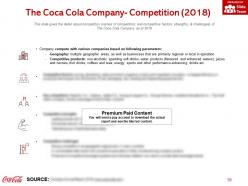
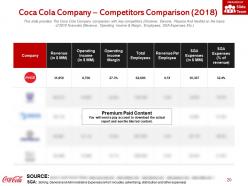
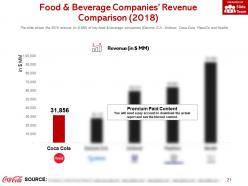
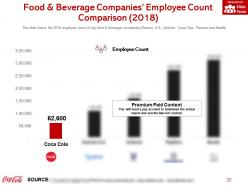
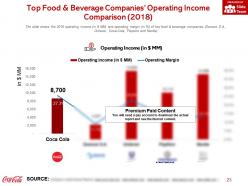
Coca-Cola's major competitors include PepsiCo, Nestlé, Dr Pepper Snapple Group, Red Bull, and Monster Beverage Corporation, spanning carbonated drinks, energy beverages, and water segments. The company differentiates itself through extensive global distribution networks, iconic brand recognition, strategic marketing partnerships with major sporting events, and diversified product portfolios, ultimately delivering consistent market leadership and customer loyalty across multiple beverage categories worldwide.
Coca-Cola leverages digital marketing through personalized campaigns, interactive social media content, influencer partnerships, real-time engagement strategies, and data-driven targeting across multiple platforms. These approaches enable the company to create authentic connections, drive user-generated content, and maintain brand relevance globally, with many campaigns delivering increased customer loyalty and measurable engagement growth across diverse demographics.
Coca-Cola ensures quality control through rigorous ingredient sourcing standards, automated production monitoring systems, comprehensive testing protocols, sterile bottling processes, and supply chain audits. These measures streamline operations by minimizing contamination risks, maintaining consistent taste profiles, and ensuring regulatory compliance, with many beverage manufacturers finding that systematic quality frameworks ultimately deliver enhanced brand reputation and consumer trust.
Coca-Cola supports community initiatives through water stewardship programs, education partnerships, disaster relief efforts, and sustainable packaging initiatives. Through their foundation and local partnerships, organizations worldwide enhance access to clean water, youth development programs, and environmental conservation projects, while ultimately strengthening community relationships and delivering long-term social impact alongside business growth.
Health-conscious preferences, sustainability demands, premiumization trends, digital engagement expectations, and personalized product desires are reshaping Coca-Cola's strategic direction. The company increasingly diversifies beyond traditional sodas into low-sugar options, plant-based beverages, and functional drinks, while investing in eco-friendly packaging and AI-driven customer experiences, ultimately delivering portfolio transformation that meets evolving consumer expectations.
COVID-19 significantly impacted Coca-Cola's operations through reduced away-from-home consumption, supply chain disruptions, and shifting consumer behaviors toward e-commerce and health-conscious products. The company adapted by accelerating digital transformation, streamlining its portfolio to focus on core brands, enhancing direct-to-consumer channels, and investing in smaller package formats, ultimately positioning itself for resilient growth in an increasingly digital marketplace.
Coca-Cola faces evolving health consciousness driving demand for low-sugar alternatives, intensifying competition from craft beverages and energy drinks, sustainability pressures around plastic packaging, and shifting consumer preferences toward functional drinks. These challenges present strategic opportunities, with many beverage companies finding that innovation in healthier formulations, sustainable packaging, and premium offerings ultimately delivers competitive advantage in an increasingly health-focused market.
No Reviews