

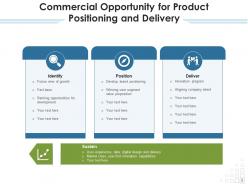
Commercial opportunity data collection situation analysis position brand





Try Before you Buy Download Free Sample Product
 Impress Your
Audience
 100%
Editable
 Save Hours
of Time


Our Commercial Opportunity Data Collection Situation Analysis Position Brand are topically designed to provide an attractive backdrop to any subject. Use them to look like a presentation pro.
People who downloaded this PowerPoint presentation also viewed the following :
Commercial opportunity data collection situation analysis position brand with all 12 slides:
Use our Commercial Opportunity Data Collection Situation Analysis Position Brand to effectively help you save your valuable time. They are readymade to fit into any presentation structure.




FAQs for Commercial opportunity data collection situation
So you'll want to look at market size and growth trends first - that's your foundation. Customer behavior patterns are huge too, plus how your competitors are pricing things. I always end up going down these crazy data rabbit holes with demographic shifts and year-over-year numbers... it's addictive honestly! Don't forget regulatory stuff though - that can totally mess with demand overnight. Economic factors matter just as much. Start broad with the big picture metrics. Then narrow down to whatever's most relevant for what you're actually trying to accomplish.
So demographic shifts totally change who's buying your stuff and how they shop. Look at millennials - they supposedly "killed" the napkin industry but made meal kit services explode. Gen Z doesn't want to buy houses, which is crushing furniture sales but boosting rental and secondhand markets. Your whole customer base just... evolves without you realizing it. You've gotta track this stuff early through census data and surveys, then pivot your products before everyone else figures it out. Honestly, it's kind of crazy how fast these changes happen.
Honestly, start with the basics - SurveyMonkey or Qualtrics for surveys, Google Analytics for web stuff (duh). SPSS and Tableau are clutch if you need to dig deeper than Excel can handle, though Excel's still pretty solid for most things. Brandwatch or Hootsuite Insights are amazing for social listening - like, actually game-changing for understanding what people think. Oh, and SEMrush is great for spying on competitors. My advice? Pick maybe two tools max that fit what you're actually trying to research. Don't go crazy trying to use everything - I learned that the hard way.
So competitive analysis is honestly a game changer - it shows you exactly where the gaps are and what's actually working in your space. You'll spot opportunities others are missing and figure out how to stand out. I mean, it's basically a cheat sheet of what not to do, right? Plus you get realistic expectations. If your main competitor needed 3 years to grab 15% market share, you know what you're dealing with. Track your top 3-5 competitors every quarter and watch their moves. Trust me on this one.
So PESTLE basically makes you step back and look at the big picture stuff - politics, economics, social trends, tech changes, legal stuff, environmental issues. The whole point is catching things you'd miss if you just focused on competitors. Honestly, it feels like information overload when you first try it. But that's kind of the idea since markets are messy and complicated. I'd probably run through it every few months to see what's shifting. You'll definitely spot threats and opportunities that aren't obvious otherwise. Worth the headache, trust me.
Honestly, customer segmentation is a game-changer for understanding your market. Break people into groups based on age, behavior, what they actually need - whatever makes sense for your business. You'll spot trends way easier this way. Like which groups are growing or which ones nobody's paying attention to yet. Way better than pretending everyone wants the same thing, you know? I'd start with maybe 3 or 4 main segments and really dig into how each one behaves differently. Makes your whole strategy so much more targeted instead of just throwing stuff at the wall.
Honestly, new tech completely flips markets on their head. Creates needs people didn't even know they had. Just look at how AI's automating everything, or electric cars making traditional automakers scramble like crazy. The trick? Catch these shifts before everyone else does. I'm always scanning patent filings and watching where VCs are throwing money - those are your early warning signals. Also track regulatory changes, boring as that sounds. Real game-changer is finding tech that solves old problems in totally new ways. Half the time the best opportunities are hiding in plain sight in some random tech forum.
So qualitative stuff gives you the real story behind what people think, but you can't apply it to everyone since you're only talking to like 10 people. Also super subjective - I might read someone's response totally different than you would. Quantitative fixes that with big sample sizes and actual numbers you can trust. But honestly it's expensive as hell and takes forever to set up properly. Plus you miss all the juicy "why" details. I always tell people to do both if they can swing it - start with qualitative to figure out what's actually happening, then use quant to prove it works across your whole audience.
Think of market analysis as your cheat sheet for building stuff people actually want. Look at what's frustrating your customers and where competitors are totally missing the mark. Way smarter than just winging it, honestly. You'll find those underserved niches and feature requests that keep coming up everywhere. Plus you can see exactly where the competition sucks - that's pure gold right there. I always tell people to match up customer complaints with market gaps first. That combo usually reveals the best opportunities. Short version: let the data guide your roadmap instead of your gut.
Set up Google Alerts for your industry stuff and actually follow those LinkedIn thought leaders (don't just connect and ignore them). Trade publications are boring but worth skimming - I usually just read headlines tbh. Talk to customers through quick surveys or calls since they spot changes way before the rest of us catch on. Keep tabs on what competitors are doing. Test small pilots first before dumping money into trends that might flop. Oh, and build both proactive research plus reactive monitoring - you need both working together.
Honestly, the global economy is like a domino effect for your local area. When international markets tank, you'll notice it in how people spend money and how confident businesses feel. Supply chains get messed up, currencies bounce around - all that stuff filters down. It's wild how connected everything is now. Different industries get hit differently though. I'd keep an eye on things like global GDP and trade numbers if you want a heads up. Oh, and major policy shifts too - those can really shake things up before you see the impact locally.
Track your market share against competitors and how fast the whole market's growing. Customer acquisition cost and retention rates are clutch too. Compare your revenue growth to the overall market expansion - that's where you'll see if you're actually winning or just riding the wave. TAM analysis gets me weirdly excited (probably spent too much time in spreadsheets lately), but focus on serviceable addressable market, not the pie-in-the-sky total. Don't forget competitive displacement rates and whether you've got pricing power. Quarterly benchmarking against your top 3 competitors beats waiting for annual reviews every time.
Honestly, Twitter's your best bet for this stuff since people are always going off about brands there. Set up some automated alerts through Brandwatch or just use Google Alerts if you're being cheap about it. Pick maybe 5-10 keywords around your industry, competitors, whatever. You'll start catching complaints and buzz way before any survey would pick it up. I'd also throw in some general market terms - you never know what'll blow up. Give it a few weeks and you'll see patterns emerge. It's pretty wild how much you can learn just from monitoring the chatter.
Okay so first thing - you gotta be transparent about data collection and follow GDPR/CCPA rules. Don't be sketchy about how you're using people's info. Also, please don't target vulnerable groups with predatory stuff. Like seriously, targeting gambling ads to addicts? That's just awful. Think bigger picture too - will your research hurt communities or workers down the line? I always ask myself this: would I be cool with everyone knowing exactly how I collected this data and what I'm doing with it? If the answer's no, then yeah... probably don't do it.
Honestly, just dump all your research data straight into each SWOT section - it makes everything so much clearer. Instead of guessing what you're good at, use those customer surveys to find real strengths and weaknesses. Maybe they love your prices but your support team... yikes. Market data shows you actual opportunities too, not just wishful thinking. Same goes for threats - you'll spot competitors coming before they blindside you. I learned this the hard way, but backing up each SWOT point with actual facts beats making stuff up every time.
-
Unique research projects to present in meeting.
-
Top Quality presentations that are easily editable.
-
The Designed Graphic are very professional and classic.
-
Excellent work done on template design and graphics.
-
Much better than the original! Thanks for the quick turnaround.