

Competence development powerpoint presentation slides





Try Before you Buy Download Free Sample Product
 Impress Your
Audience
 100%
Editable
 Save Hours
of Time


Foster employee engagement and increase employee retention using Competence Development PowerPoint Presentation Slides. Showcase knowledge, skills and tasks that are needed for the people in an organization. Incorporate competence development PPT templates to develop and implement a competency framework for your organization to evaluate performance of the employees. This deck covers topics such as capability assessment, organization structure, current vacancies, job description, recruitment budget, training plan, etc. Add these relevant competence framework PowerPoint slides to identify and plan employee’s personal development needs within the organization. This deck will also help you in reducing the errors in recruitment and selection process. Grab this content-ready competence development PowerPoint templates to bring effectiveness across all the parts of organization. These templates are completely editable. Customize the template as per your need. Change the color, text, icon, and font size as per your requirement. Download professionally designed ready-made competence development PowerPoint presentation to evaluate employee performance. Brave actions ensure good fortune. Our Competence Development Powerpoint Presentation Slides are no exception.
People who downloaded this PowerPoint presentation also viewed the following :
Content of this Powerpoint Presentation
Slide 1: This is an introductory slide for Competence Development. State Your Company Name and begin.
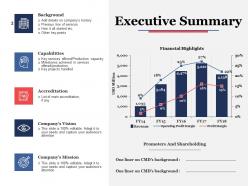
Slide 2: This slide presents an Executive Summary showcasing- Background: Add details on company’s history, Previous line of services, How it all started etc., Other key points. Company’s Mission, Capabilities: Key services offered/Production capacity, Milestones achieved in services offered/production, Key projects handled. Accreditation: List of main accreditation. Company’s Vision, One liner on CMD’s background, One liner on CMD’s background, Promoters and Shareholding, Revenue, Financial Highlights.
Slide 3: This slide presents Key Management to be shown.
Slide 4: This is a Capability Assessment slide in tabular form.
Slide 5: This slide shows Current Organization Structure in hierarchy/org chart form.
Slide 6: This slide presents a Capability Maturity Model.
Slide 7: This slide presents Current Vacancies displaying- Department, Min. Experience Required, Job Position, Roles & Responsibilities.
Slide 8: Thi is a Job Description slide.
Slide 9: This is a Recruitment Budget slide in tabular form.
Slide 10: This slide showcases a Training Plan.
Slide 11: This is Competence Development Icon Slide. Use the icons as per need.
Slide 12: This slide is titled Additional slides for moving forward. You can change/ alter the content as per need.
Slide 13: This is Column chart slide to state product/ entity comparison, specifications etc.
Slide 14: This is an Area Chart to present product/entity comparison, specifications etc.
Slide 15: This slide presents Our Mission. State your mission, vision and goals etc. here.
Slide 16: This is a Comparison slide to compare two entities/ products etc.
Slide 17: This is an About us slide. State team/company specifications here.
Slide 18: This is a Puzzle image slide to show information, specifications etc.
Slide 19: This is a Magnifying glass image slide to show information, scoping aspects etc.
Slide 20: This is an Idea or Bulb image slide to show information, innovative aspects etc.
Slide 21: This is Thank You slide stating Address# street number, city, state, Contact Numbers, Email Address.
Competence development powerpoint presentation slides with all 21 slides:
Don't allow fights to erupt with our Competence Development Powerpoint Presentation Slides. Ensure all hatchets are buried deep.



FAQs for Competence development
Key components include competence assessment and gap analysis, targeted learning objectives, diverse development methods like training and mentoring, implementation timelines, and performance measurement systems. These elements work together by identifying current capabilities, creating structured learning pathways, and tracking progress, with many organizations finding that comprehensive plans ultimately deliver improved employee performance and stronger competitive advantage.
Organizations effectively assess current workforce competencies through comprehensive skills audits, 360-degree feedback systems, performance reviews, competency-based assessments, and gap analysis tools. These methods enable HR teams to identify skill strengths and development needs across departments, ultimately delivering targeted training programs and strategic workforce planning that enhances operational efficiency and competitive advantage.
Mentorship accelerates competence development by providing personalized guidance, knowledge transfer, and skill-building opportunities that enhance employee capabilities and career progression. Through structured mentoring programs, organizations enable faster onboarding, improved performance outcomes, and stronger leadership pipelines, with many companies finding that mentored employees demonstrate higher retention rates and advancement potential.
Technology enhances competence development through personalized learning platforms, virtual reality training simulations, AI-powered skill assessments, mobile learning applications, and real-time performance analytics. These digital tools streamline training delivery by enabling flexible scheduling, tracking progress automatically, and providing immersive experiences, with many organizations finding that employees develop competencies faster while reducing traditional training costs and improving engagement rates.
The most effective training delivery methods include blended learning combining online and in-person sessions, microlearning modules, hands-on workshops, mentoring programs, and simulation-based training. These approaches enhance engagement by accommodating different learning styles, enabling flexible scheduling, and providing real-world application opportunities, with many organizations finding that strategic combinations deliver faster skill acquisition and improved retention rates.
Organizations measure competence development ROI through performance metrics, productivity improvements, employee retention rates, revenue increases, and cost reduction analysis. By tracking pre- and post-training performance data, skill assessments, and business outcomes, companies can quantify training investments against measurable results, with many finding that strategic competence development delivers enhanced operational efficiency and competitive advantage.
Organizations can foster continuous learning through mentorship programs, cross-functional training, regular skill assessments, knowledge-sharing platforms, and learning incentives tied to performance reviews. These strategies enhance employee engagement, retention, and adaptability by creating structured development pathways, encouraging collaboration across departments, and recognizing growth achievements, ultimately delivering improved innovation and competitive advantage in rapidly evolving markets.
Soft skills factor into competence development by enhancing communication, collaboration, adaptability, and leadership capabilities that complement technical expertise. These interpersonal abilities enable professionals to navigate complex workplace dynamics, manage cross-functional teams, and drive organizational change, with many companies finding that employees with strong soft skills deliver superior performance and accelerate career advancement.
Organizations face challenges including identifying skill gaps accurately, securing adequate budget allocation, ensuring employee engagement, measuring program effectiveness, and aligning development with strategic objectives. These obstacles often stem from inadequate needs assessment, competing priorities, and lack of leadership support, with many companies finding that successful programs require dedicated resources, clear communication, and systematic evaluation frameworks to deliver meaningful workforce transformation.
Feedback loops integrate into competence development through regular performance assessments, peer evaluations, mentorship sessions, and real-time project reviews that identify skill gaps and progress. These mechanisms enable organizations to adjust training programs dynamically, accelerate learning cycles, and ensure competencies align with evolving business needs, ultimately delivering more targeted development and faster capability building across teams.
Current trends reshaping workplace competence development include AI-driven personalized learning, microlearning modules, virtual reality training simulations, peer-to-peer knowledge sharing platforms, and continuous skill assessment tools. These approaches streamline learning delivery, enhance engagement, and accelerate skill acquisition, with many organizations finding that strategic combination of digital and collaborative methods ultimately delivers faster upskilling and competitive advantage.
Competence development aligns with career pathing through targeted skill mapping, structured learning pathways, and succession readiness assessments that identify capability gaps across organizational levels. This strategic approach enables companies to build internal talent pipelines while accelerating employee growth, with many organizations finding that integrated development programs reduce external hiring costs and improve leadership continuity.
Cross-functional training enhances organizational competence by breaking down silos, fostering collaboration, developing versatile skill sets, and creating adaptable workforce capabilities. Through strategic cross-departmental programs, organizations streamline communication, accelerate problem-solving, and build comprehensive understanding of business operations, ultimately delivering improved efficiency and competitive advantage in an increasingly complex market environment.
Best practices for tailoring competence development include personalized learning paths, skills gap assessments, mentorship programs, cross-functional projects, and regular feedback sessions. These approaches enhance employee engagement and retention by addressing individual career aspirations, learning styles, and performance goals, with many organizations finding that customized development programs ultimately deliver higher productivity, improved job satisfaction, and stronger competitive advantage.
Organizations ensure competence development relevance by conducting regular skills gap analyses, engaging with industry experts and trend forecasters, and establishing continuous feedback loops with employees and customers. Through agile program design and strategic partnerships with educational institutions, companies like tech firms and financial services can rapidly adapt their training initiatives, ultimately delivering workforce readiness and competitive advantage in dynamic markets.
No Reviews