


Competitive Analysis Methods And Strategy Powerpoint Presentation Slides




Try Before you Buy Download Free Sample Product
 Impress Your
 Audience
 100%
100% Editable
 Save Hours
 of Time


Over the year analyzing the strengths and weakness of our competitors has been always in tradition and the same has become much easier with the coming up of Competitive Analysis Methods and Strategy PowerPoint Presentation Slides. To analyze one’s position with other competitors and keeping a track of the same has become very easy with presentation graphics that serve as an important component of effective strategic planning. The profit margins and other analysis can be tracked with ease and recorded for long in tabular or graphical format in PowerPoint presentation. Whether the core area is product, price, service, quality or strategy; every single aspect can be highlighted and tracked with the easy use of competitive analysis slide layout. Internal and external competitors and their market attractiveness and share has also been dealt carefully in PPT slide. Track their business growth, perform social media analysis and analyze their corporate strategies. Every single aspect of their activity analysis can be tracked and marked using PPT presentation. Guide folks on erecting the apparatus with our Competitive Analysis Methods And Strategy Powerpoint Presentation Slides. It helps install the jig.
People who downloaded this PowerPoint presentation also viewed the following :
Content of this Powerpoint Presentation
Slide 1: This slide introduces Competitive Analysis Methods And Strategy. Add your company name here and proceed.
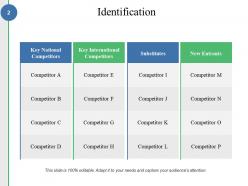
Slide 2: This is an Identification slide with the following sub headings- Key National Competitors, Key International Competitors, Substitutes, New Entrants.
Slide 3: This slide showcases Logos Of Competitors. You can use these or add your own as per your need.
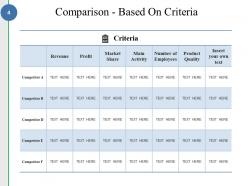
Slide 4: This is Comparison - Based On Criteria slide showing Criteria table. Use it to state your Competitors based on differrent criterias mentioned here.
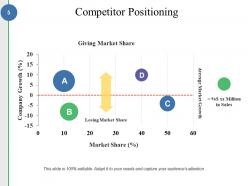
Slide 5: This is Competitor Positioning slide showing Company Growth and Market Share.
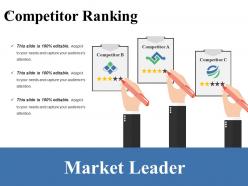
Slide 6: This is Competitor Ranking slide showing Market Leader with imagery and text boxes.
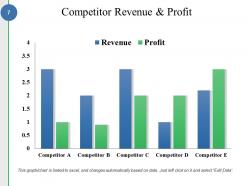
Slide 7: This slide shows Competitor Revenue & Profit in a graphical form.
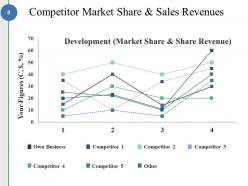
Slide 8: This slide presents Competitor Market Share & Sales Revenues in a graphical form. Mark the following aspects here- Competiors, Own Business, Others.
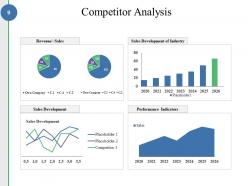
Slide 9: This is Competitor Analysis slide showing the following in a graphical form- Sales Development of Industry, Revenue \ Sales, Performance Indicators, Sales Development.
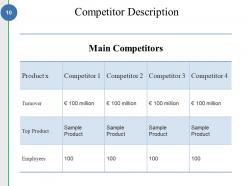
Slide 10: This is Competitor Description table slide. Use it accordingly.
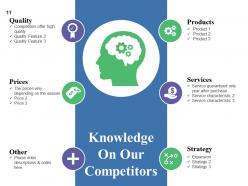
Slide 11: This slide presents Knowledge On Our Competitors with respect to the following factors- Other, Products, Quality, Services, Prices, Strategy, Other.
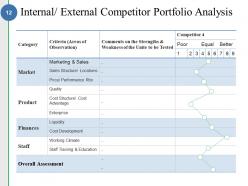
Slide 12: This slide presents Internal/ External Competitor Portfolio Analysis in a tabular form. Add the different categories and make use of it.
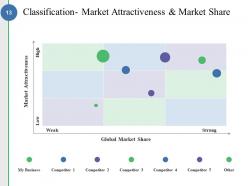
Slide 13: This slide presents Classification- Market Attractiveness & Market Share in a matrix form with these 2 factors to display- Market Attractiveness, Global Market Share.
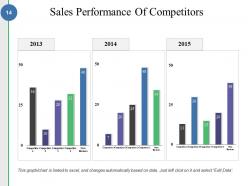
Slide 14: This slide shows Sales Performance Of Competitors in a bar graph/ chart form. Use it to showcase your yearly sales performance.
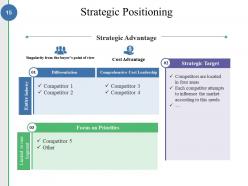
Slide 15: This is Strategic Positioning slide further showing Strategic Advantage.
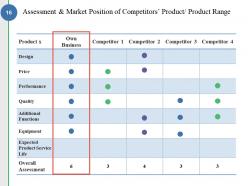
Slide 16: This slide showcases Assessment & Market Position Of Competitors’ Product/ Product Range in a tabular form.
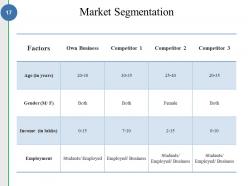
Slide 17: This slide showcases Market Segmentation with Factors to state.
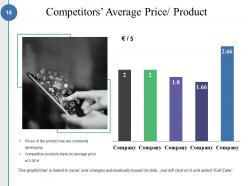
Slide 18: This slide showcases Competitors’ Average Price/ Product in a graphical form. You can state your different companies here.
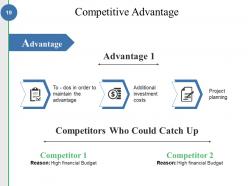
Slide 19: This is Competitive Advantage slide. You can add Competitors and Advantage respectively.
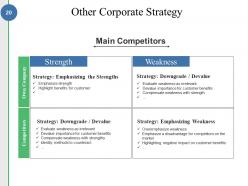
Slide 20: This slide showcases Other Corporate Strategy with- Strength, Weakness, Own Company, Competitors.
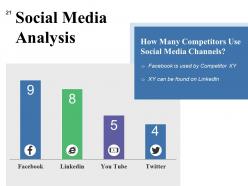
Slide 21: This is Social Media Analysis slide showing comparison of 4 social media handles presented in a graphical form.
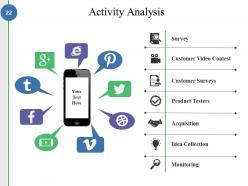
Slide 22: This slide shows Activity Analysis with- Monitoring, Survey, Customer Video Contest, Customer Surveys, Product Testers, Acquisition, Idea Collection.
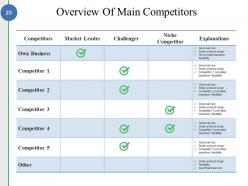
Slide 23: This slide presents Overview of main Competitors in a tabular form. You can add your own data and make use of it.
Slide 24: This is a Coffee break slide to halt. Alter/ modify content as per need.
Slide 25: This slide forwards to Charts & Graphs. Alter/ modify content as per need.
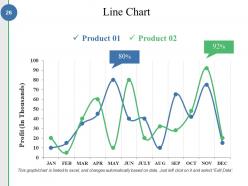
Slide 26: This slide shows a Line Chart for two product comparison.
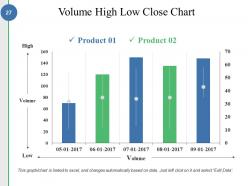
Slide 27: This slide presents Volume High Low Close Chart to show product/ entity comparison, specifications etc.
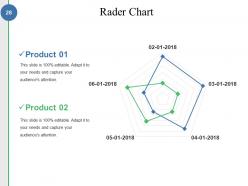
Slide 28: This is a Radar Chart slide to show product/ entity comparison, specifications etc.
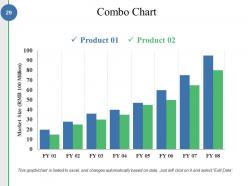
Slide 29: This is a Combo Chart slide to show information, comparison specifications etc.
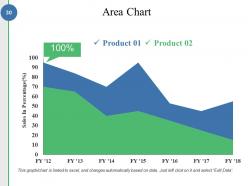
Slide 30: This is an Area Chart slide to show product/ entity growth, comparison, specifications etc.
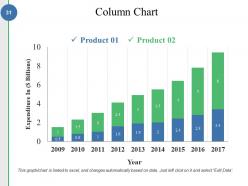
Slide 31: This slide presents a Column Chart for showcasing product/ company growth, comparison etc.
Slide 32: This slide is titled Additional Slides to move forward.
Slide 33: This is Our Mission slide. State company mission here.
Slide 34: This is Our Best Team slide with name, designation etc.
Slide 35: This is About Our Company slide with- Target Audiences, Preferred by Many etc. as examples.
Slide 36: This Our Goal slide. State goals etc. here.
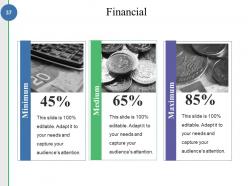
Slide 37: This is a Financial score slide. State financial aspects etc. here.
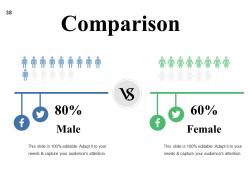
Slide 38: This is a Comparison slide for comparing entities/ products etc. here.
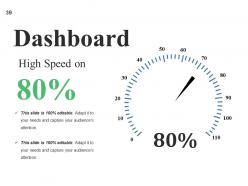
Slide 39: This is a Dashboard slide to state metrics, kpis etc.
Slide 40: This is Our Target slide. State your targets etc. here.
Slide 41: This is a Puzzle image slide to show information, specifications etc.
Slide 42: This is a Quotes slide to convey company messages, beliefs etc. You can change the slide contents as per need.
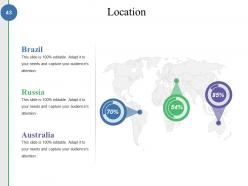
Slide 43: This is a Location slide on a world map image to show global presence, growth etc.
Slide 44: This slide shows Impotant Notes to state information, specifications etc.
Slide 45: This is a Timeline slide to show evolution, growth, milestones etc.
Slide 46: This is a Lego image slide to show information, specifications etc.
Slide 47: This is a Hierarchy image slide to show information, specifications etc.
Slide 48: This is a Mind Map image slide to show information, specifications etc.
Slide 49: This is Silhouettes slide to present people specific information, specifications etc.
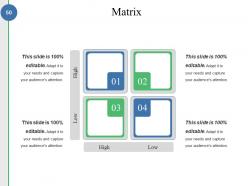
Slide 50: This is a Matrix slide ranging from High to Low.
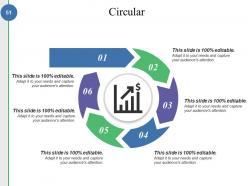
Slide 51: This is a Circular image slide to show information, specifications etc.
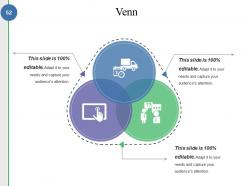
Slide 52: This is a Venn diagram image slide to show information, specifications etc.
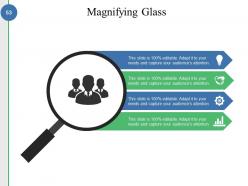
Slide 53: This is a Magnifying glass image slide to show information, scoping aspects etc.
Slide 54: This is a Bulb With Idea image slide to show information, innovative aspects etc.
Slide 55: This is a Thank You slide with Address# street number, city, state, Contact Numbers and Email Address.
Competitive Analysis Methods And Strategy Powerpoint Presentation Slides with all 55 slides:
Ensure all components fit exactly with our Competitive Analysis Methods And Strategy Powerpoint Presentation Slides. It helps construct the ideal formula.



FAQs for Competitive Analysis Methods And Strategy
Effective competitive analysis frameworks include Porter's Five Forces, SWOT analysis, competitor profiling matrices, market positioning maps, and digital intelligence tools. These methodologies streamline strategic planning by identifying market gaps, benchmarking performance metrics, and tracking competitor movements across digital channels, with many organizations finding that combining multiple frameworks delivers comprehensive insights and sustainable competitive advantage.
SWOT analysis can be adapted for competitive positioning by conducting parallel SWOT assessments for key competitors, creating comparative matrices that highlight relative strengths and market gaps. This strategic approach enables organizations to identify untapped opportunities, benchmark their weaknesses against competitor advantages, and develop targeted strategies that exploit competitive blind spots, ultimately delivering clearer differentiation pathways and enhanced market positioning.
Social media serves as a real-time intelligence platform for competitive analysis, enabling businesses to monitor competitor campaigns, customer sentiment, engagement strategies, pricing announcements, and product launches across platforms like LinkedIn, Twitter, and Instagram. Through social listening tools and sentiment analysis, companies can track competitor performance metrics, identify market gaps, and benchmark their own strategies, while financial services firms and retail brands increasingly use these insights to refine positioning and accelerate competitive responses.
Identifying competitor KPIs involves analyzing their financial reports, marketing metrics, customer satisfaction scores, operational efficiency measures, and digital performance data through tools like SEMrush, SimilarWeb, and social media analytics. These strategic indicators enable businesses to benchmark market positioning, pricing strategies, and service delivery standards, with many organizations finding that consistent competitor KPI monitoring ultimately delivers deeper market insights and sustainable competitive advantages.
Porter's Five Forces enhances competitive understanding by systematically analyzing supplier power, buyer power, competitive rivalry, threat of substitutes, and barriers to entry within your industry. This framework enables businesses to identify strategic vulnerabilities, assess market attractiveness, and develop targeted responses to competitive pressures, ultimately delivering clearer positioning strategies and more informed investment decisions across diverse sectors.
Competitor benchmarking improves business strategy by identifying performance gaps, revealing best practices, uncovering market opportunities, and highlighting areas for operational enhancement. Through systematic analysis of competitor pricing, customer service approaches, and product features, organizations can streamline their strategic planning, enhance their competitive positioning, and ultimately deliver superior value propositions that drive market differentiation.
Ethical competitive intelligence requires respecting intellectual property rights, avoiding deceptive practices, protecting confidential information, ensuring data privacy compliance, and maintaining transparency in research methods. Companies should focus on publicly available information, industry reports, and legitimate market research, while establishing clear guidelines that prevent corporate espionage, ultimately building sustainable competitive advantages through honest analysis.
A competitive landscape map helps visualize market positioning by plotting competitors across key dimensions like price, features, market share, and customer segments, revealing positioning gaps and strategic opportunities. Through visual mapping, businesses can identify underserved market segments, benchmark their offerings against rivals, and discover whitespace areas for expansion, ultimately enabling more informed strategic decisions and competitive advantage.
Traditional competitive analysis methods face significant limitations in fast-paced industries, including delayed data collection, static reporting frameworks, reliance on historical information, and inability to capture real-time market shifts. These approaches often miss rapid competitor pivots, emerging threats, and dynamic pricing strategies, with many organizations finding that quarterly assessments become outdated within weeks, ultimately hindering strategic agility and competitive responsiveness.
Qualitative data from customer reviews enriches competitive analysis by revealing unfiltered customer sentiment, identifying service gaps, uncovering unmet needs, and highlighting competitive differentiators that quantitative metrics often miss. These insights enable organizations to understand customer pain points, discover market opportunities, and refine positioning strategies, ultimately delivering more targeted competitive advantages and enhanced customer experiences.
Emerging technologies reshaping competitive analysis include artificial intelligence, machine learning algorithms, social media monitoring tools, predictive analytics platforms, and real-time data visualization systems. These technologies streamline competitor tracking by automating data collection, identifying market patterns, and delivering actionable insights faster than traditional methods, ultimately enabling organizations to respond more strategically to competitive threats and opportunities.
Businesses should conduct competitive analysis quarterly for comprehensive reviews, with monthly monitoring of key competitors and continuous tracking of market changes, pricing shifts, and product launches. This strategic combination of regular deep-dives and ongoing surveillance enables organizations to respond quickly to competitive threats, identify emerging opportunities, and maintain their market position in an increasingly dynamic business landscape.
Best practices for presenting competitive analysis findings include creating executive summaries with key insights, using visual dashboards with competitor positioning maps, developing actionable recommendations with timeline priorities, and tailoring presentations to specific stakeholder needs. These approaches streamline decision-making by highlighting competitive gaps, market opportunities, and strategic implications, with many organizations finding that clear visual frameworks and focused recommendations accelerate strategic planning processes.
Collaboration within industry groups enhances competitive intelligence by providing shared market insights, regulatory updates, trend analysis, and benchmarking data that individual companies cannot access alone. Through strategic partnerships, consortium research, and industry associations, organizations streamline intelligence gathering, reduce costs, and gain broader market perspective, ultimately delivering more comprehensive competitive insights and strategic advantage.
Continuous monitoring ensures competitive analysis remains relevant and actionable by tracking real-time market shifts, competitor strategy changes, and emerging threats or opportunities. This ongoing surveillance enables organizations to adapt quickly to competitive moves, anticipate industry trends, and maintain strategic advantage, with many businesses finding that regular monitoring delivers faster response times and more informed decision-making.
-
Excellent products for quick understanding.
-
Great product with effective design. Helped a lot in our corporate presentations. Easy to edit and stunning visuals.