


Complete Guide For Crafting A Perfect Digital Strategy Powerpoint Presentation Slides Strategy CD V





Try Before you Buy Download Free Sample Product
 Impress Your
 Audience
 100%
100% Editable
 Save Hours
 of Time


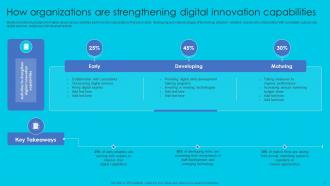
Enhance your marketing focus and streamline your tactical steps with a comprehensive digital strategy. Grab our Complete guide for crafting a perfect Digital Strategy template. It empowers businesses by educating employees about the dynamic digital transformation landscape and showcases techniques to enhance digital innovation capabilities. With our digital transformation deck, marketers gain valuable insights into the most successful tactics. Every aspect of our Digital strategy development PPT equips businesses with the knowledge to structure and execute their digital strategies efficiently, encompassing crucial activities. Additionally, it fosters an intelligent environment, prioritizing data security and elevating the customer experience. Unlock the potential to align your digital strategy with business objectives by referencing the provided use case of our Evolving business strategy module. Download this fully customizable presentation, crafted with extensive research and meticulous design, to embark on your digital transformation journey.
People who downloaded this PowerPoint presentation also viewed the following :
Content of this Powerpoint Presentation
Slide 1: This slide introduces Complete Guide for Crafting a Perfect Digital Strategy. Commence by stating Your Company Name.
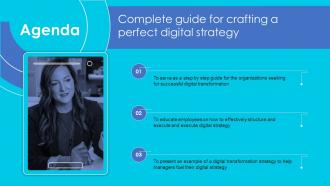
Slide 2: This slide depicts the Agenda of the presentation.
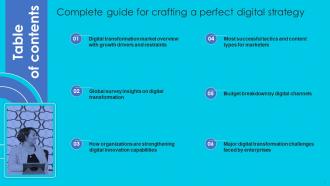
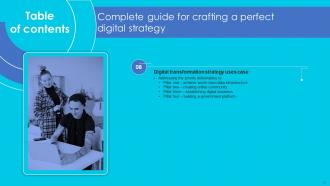
Slide 3: This slide includes the Table of contents.
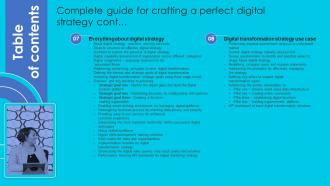
Slide 4: This slide further continues the Table of contents.
Slide 5: This slide depicts the Title for the Topics to be discussed further.
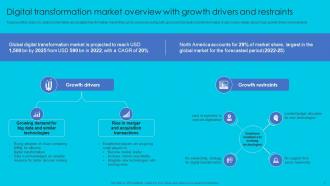
Slide 6: This slide addresses information about digital transformation market that can be used in providing global and domestic market information.
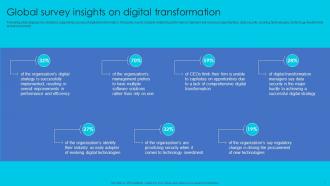
Slide 7: This slide portrays the Global survey insights on digital transformation.
Slide 8: This slide illustrates information about various activities performed by organizations.
Slide 9: This slide shows the Heading for the Contents to be covered next.
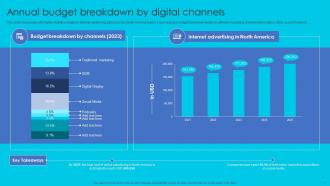
Slide 10: This slide reveals information statistics related to internet advertising spend across North America region.
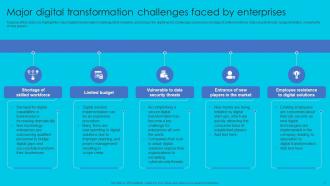
Slide 11: This slide highlights the major digital transformation challenges that marketers are facing in the digital world.
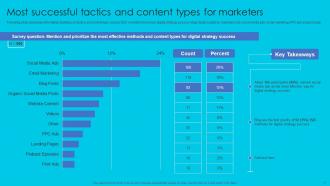
Slide 12: This slide addresses information statistics on tactics and content type used by B2C marketers to ensure digital strategy success.
Slide 13: This slide presents the Title for the Ideas to be discussed further.
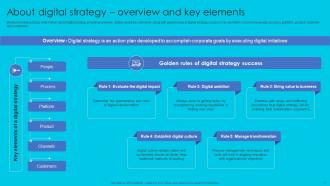
Slide 14: The Mentioned slide portrays information about digital strategy.
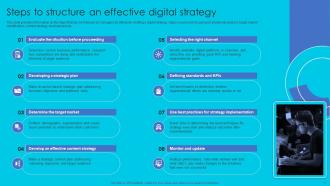
Slide 15: This slide provides information on the steps that can be followed by managers for effectively drafting a digital strategy.
Slide 16: This slide shows different activities that can be performed by managers to identify the potential of their digital strategy.
Slide 17: This slide includes the Heading for the Ideas to be covered next.
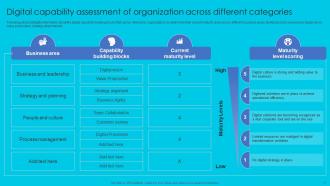
Slide 18: This slide displays the Digital capability assessment of organization across different categories.
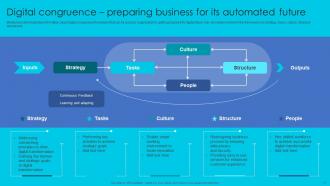
Slide 19: The Mentioned slide illustrates information about digital congruence framework.
Slide 20: This slide contains the Title for the Contents to be discussed further.
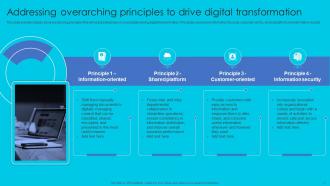
Slide 21: This slide focuses on Addressing overarching principles to drive digital transformation.
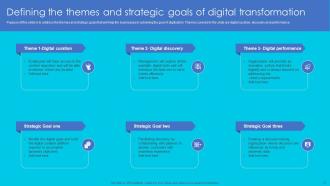
Slide 22: This slide aims to address the themes and strategic goals that will help the businesses in achieving the goal of digitization.
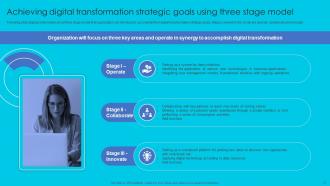
Slide 23: This slide focuses on Achieving digital transformation strategic goals using three stage model.
Slide 24: This slide exhibits the Heading for the Topics to be covered in the upocming template.
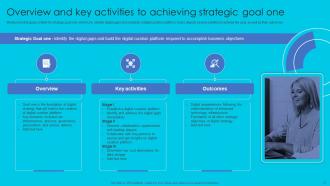
Slide 25: This slide indicates the Overview and key activities to achieving strategic goal one.
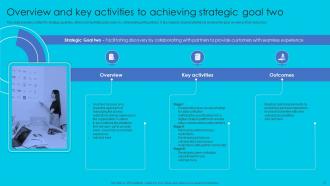
Slide 26: This slide provides context for strategic goal two, which is to facilitating discovery by collaborating with partners.
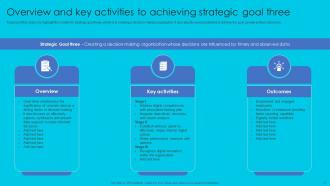
Slide 27: The Purpose of this slide is to highlight the context for strategic goal three, which is to creating a decision-making organization.
Slide 28: This slide shows the Title for the Topics to be discussed further.
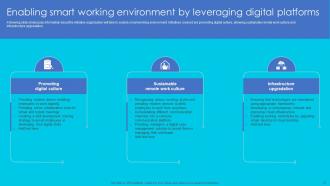
Slide 29: This slide talks about Enabling smart working environment by leveraging digital platforms.
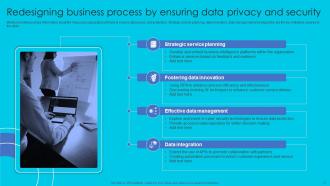
Slide 30: This slide deals with Redesigning business process by ensuring data privacy and security.
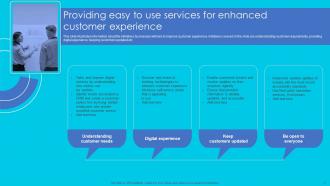
Slide 31: This slide illustrates information about the initiatives businesses will take to improve customer experience.
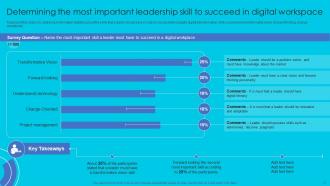
Slide 32: The Purpose of this slide is to addresses information statistics about the skills that a leader should have.
Slide 33: This slide displays the Heading for the Contents to be covered in the upocming template.
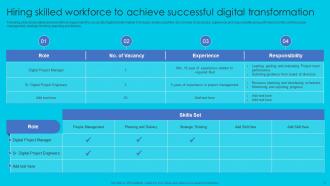
Slide 34: The Following slide shows detail about workforce requirement for successful digital transformation.
Slide 35: The Mentioned slide illustrates training schedule for employees to develop or improve digital skills.
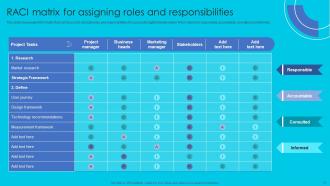
Slide 36: This slide presents the RACI matrix for assigning roles and responsibilities.
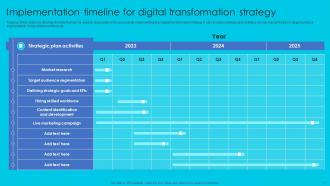
Slide 37: The Purpose of this slide is to illustrate timeline that can be used by organizations.
Slide 38: This slide exhibits the Title for the Ideas to be covered next.
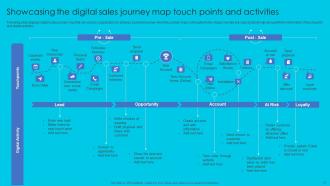
Slide 39: The Following slide displays digital sales journey map that can used by organization to address customer journey.
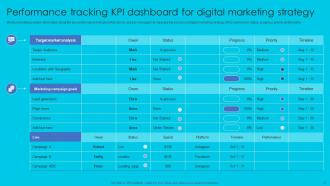
Slide 40: This slide includes the Performance tracking KPI dashboard for digital marketing strategy.
Slide 41: This slide depicts the Heading for the Ideas to be discussed further.
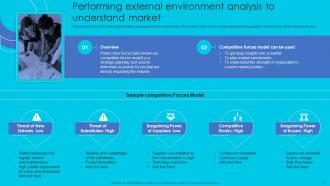
Slide 42: This slide highlights the Porter’s five forces.
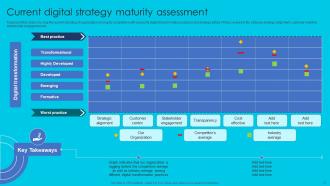
Slide 43: This slide displays the Current digital strategy maturity assessment.
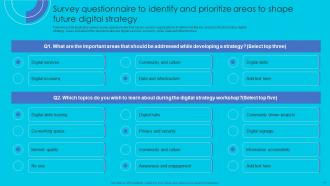
Slide 44: This slide shows the Survey questionnaire to identify and prioritize areas to shape future digital strategy.
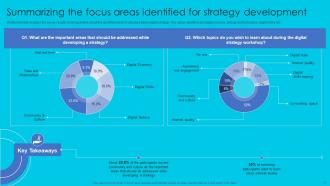
Slide 45: This slide displays the survey results covering details about the identified areas to structure future digital strategy.
Slide 46: This slide contains the Title for the Contents to be covered next.
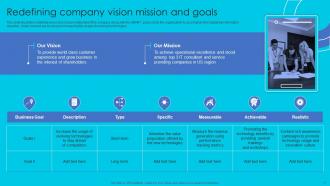
Slide 47: This slide illustrates redefined vision and mission statement of the company along with the SMART goals set by the organization.
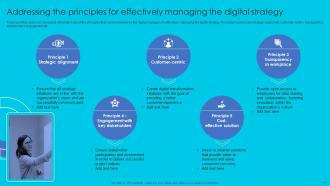
Slide 48: The Purpose of this slide is to showcase information about the principles that can be followed by the digital managers.
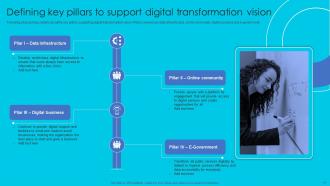
Slide 49: This slide focuses on Defining key pillars to support digital transformation vision.
Slide 50: This slide states the Heading for the Topics to be discussed further.
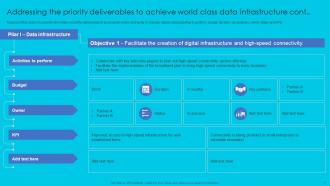
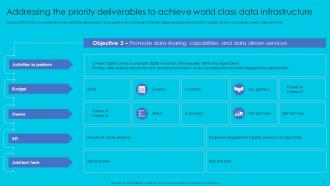
Slide 51: The Purpose of this slide is to provide information about the deliverables to accomplish online community.
Slide 52: This slide shows the deliverables to accomplish online community.
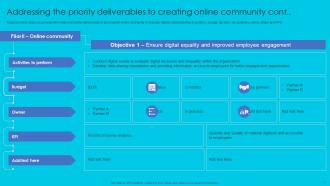
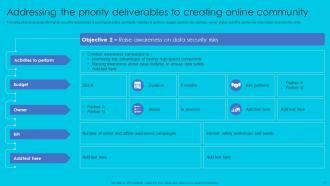
Slide 53: The Purpose of this slide is to provide information about the deliverables to accomplish online community.
Slide 54: The Following slide showcases information about the deliverables to accomplish online community.
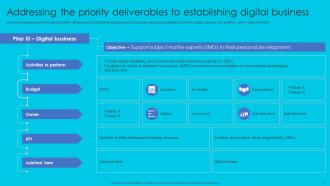
Slide 55: The Mentioned slide provides information about the deliverables to establishing digital business.
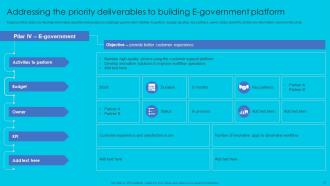
Slide 56: The Purpose of this slide is to illustrate information about the deliverables to building E-government.
Slide 57: This slide displays the Title for the Topics to be covered next.
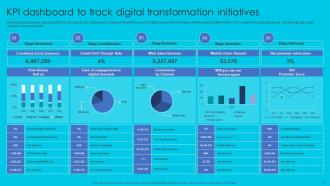
Slide 58: The Following slide provides dashboard to measure the performance of digital transformation initiatives with the help of different KPIs.
Slide 59: This slide is used for depicting some Additional information.
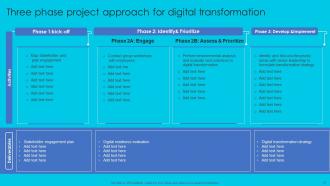
Slide 60: This slide presents the Three phase project approach for digital transformation.
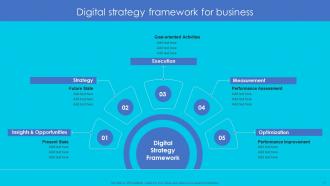
Slide 61: This slide portrays the Digital strategy framework for business.
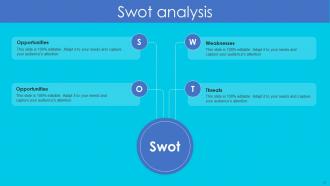
Slide 62: This slide displays the Swot analysis.
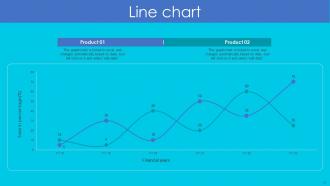
Slide 63: This is the Line chart slide.
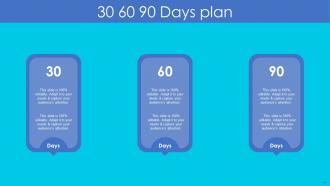
Slide 64: This is the 30 60 90 Days plan slide for effective planning.
Slide 65: This slide incorporates the organization's mission, vision, and goals.
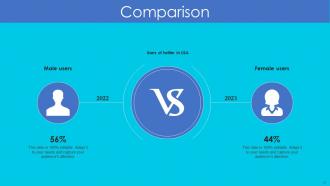
Slide 66: This slide is used for the purpose of Comparison.
Slide 67: This is the Puzzle slide with related imagery.
Slide 68: This is the Venn diagram slide.
Slide 69: This slide elucidates the firm's targets.
Slide 70: This is the Thank You slide for acknowledgement.
Complete Guide For Crafting A Perfect Digital Strategy Powerpoint Presentation Slides Strategy CD V with all 75 slides:
Use our Complete Guide For Crafting A Perfect Digital Strategy Powerpoint Presentation Slides Strategy CD V to effectively help you save your valuable time. They are readymade to fit into any presentation structure.




















FAQs for Complete Guide For Crafting A Perfect Digital Strategy Powerpoint Presentation Slides
**INPUT**: What are the key components of an effective digital strategy? **OUTPUT**: Effective digital strategies include customer experience optimization, data analytics integration, technology infrastructure modernization, digital marketing channels, and operational process automation. These components work together by streamlining customer interactions, enhancing decision-making capabilities, and delivering scalable solutions, with many organizations finding that strategic integration ultimately drives competitive advantage and measurable business growth. [Word count: 54 words]
Businesses can measure digital strategy success through key performance indicators like customer acquisition costs, conversion rates, digital revenue growth, engagement metrics, and operational efficiency improvements. These metrics enable organizations to track ROI across channels, optimize resource allocation, and demonstrate tangible outcomes, with many companies finding that regular measurement drives continuous improvement and competitive advantage.
Data analytics plays a foundational role in digital strategy by providing insights into customer behavior, market trends, operational performance, and competitive positioning. Through predictive modeling and real-time analysis, organizations can optimize marketing campaigns, enhance customer experiences, and streamline resource allocation, ultimately delivering measurable ROI and sustainable competitive advantage in increasingly data-driven markets.
A digital strategy enhances customer engagement by leveraging personalized content, omnichannel experiences, real-time interactions, and data-driven insights to create meaningful touchpoints. Through targeted social media campaigns, mobile apps, and automated customer service, businesses streamline communication while delivering tailored experiences, ultimately building stronger relationships and increasing customer loyalty across all digital platforms.
Common digital strategy pitfalls include neglecting customer research, lacking clear measurable goals, underestimating resource requirements, ignoring employee training needs, and failing to integrate across departments. These oversights often result in fragmented implementations, with many organizations finding that successful strategies require comprehensive change management, realistic timelines, and continuous stakeholder alignment to deliver sustainable competitive advantage.
Organizations align digital strategy with business goals by establishing clear KPIs, conducting comprehensive digital audits, mapping technology investments to revenue objectives, and ensuring cross-departmental collaboration. Through strategic integration, companies streamline operations, enhance customer experiences, and accelerate market responsiveness, with many finding that aligned digital initiatives deliver measurable ROI and sustainable competitive advantage.
Essential technologies for digital strategy include cloud computing platforms, data analytics tools, customer relationship management systems, automation software, and artificial intelligence capabilities. These technologies work together by streamlining operations, enhancing customer experiences, and enabling data-driven decision making, with many organizations finding that strategic integration ultimately delivers competitive advantage and operational efficiency.
Companies should adapt their digital strategy during crisis by prioritizing customer engagement channels, accelerating automation initiatives, and enhancing data-driven decision making capabilities. This strategic pivot enables organizations to maintain operational continuity while reducing costs, with many retail and financial services firms finding that crisis-driven digital transformations ultimately deliver competitive advantages and improved customer experiences.
Best practices for integrating social media into digital strategy include audience segmentation, content calendar development, cross-platform consistency, performance analytics, and community engagement protocols. These approaches streamline brand messaging by aligning social content with business objectives, leveraging platform-specific features, and measuring ROI across channels, with many organizations finding that strategic social integration enhances customer acquisition and brand loyalty.
User experience directly shapes digital strategy by determining platform priorities, resource allocation, and technology investments based on user behavior patterns, accessibility requirements, and engagement metrics. Through UX insights, organizations streamline customer journeys, enhance interface design, and optimize conversion funnels, with many retailers and financial services finding that UX-driven strategies deliver higher customer satisfaction and competitive advantage.
Mobile optimization significantly enhances digital strategy by improving user experiences, increasing search rankings, and expanding market reach across diverse demographics. Through responsive design, faster loading speeds, and intuitive navigation, businesses streamline customer interactions, reduce bounce rates, and capture mobile-first audiences, ultimately delivering higher conversion rates and competitive advantage in an increasingly mobile-centric marketplace.
Storytelling enhances digital marketing by creating emotional connections, increasing engagement rates, and building brand authenticity across multiple touchpoints. Through narrative-driven content, companies streamline customer journeys, improve conversion rates, and foster loyalty, with many brands finding that consistent storytelling delivers measurable ROI and competitive differentiation in crowded digital markets.
SEO serves as a foundational element in digital strategy by enhancing organic visibility, driving qualified traffic, improving user experience, and building long-term brand authority across search platforms. This strategic approach enables businesses to reduce acquisition costs, compete effectively with larger competitors, and deliver measurable ROI, with many organizations finding that strong SEO fundamentally transforms their digital presence and customer reach.
Businesses can leverage customer feedback in digital strategy development through social listening tools, survey analytics, user behavior tracking, and direct feedback integration into product roadmaps. These insights enable organizations to prioritize digital initiatives, enhance user experiences, and allocate resources strategically, with many companies finding that customer-driven strategies deliver higher engagement rates, improved satisfaction scores, and stronger competitive positioning in increasingly digital markets.
Emerging digital strategy trends include AI-powered automation, hyper-personalization, sustainable technology practices, edge computing, and zero-trust security frameworks. These approaches revolutionize customer experiences by delivering real-time insights, reducing operational costs, and enhancing data security, with many organizations finding that strategic integration ultimately drives competitive advantage in an increasingly digital marketplace.
-
Editable, diversified, compatible with MS PPT and Google Slides, and on top of that finest graphics!! I mean in the words of the famous Ross Geller, “What more do you want!”
-
Out of the box and creative design.