Comprehensive Guide To Raise Designing Community Engagement Action Plan BCT SS

Rating:
80%
Comprehensive Guide To Raise Designing Community Engagement Action Plan BCT SS Comprehensive Guide To Raise Designing Community Engagement Action Plan BCT SS
Slide 1 of 6

or

Favourites Favourites

Try Before you Buy Download Free Sample Product

Audience Impress Your
Audience
Editable 100%
Editable
Time Save Hours
of Time
The Biggest Sale is ending soon in
0
0
:
0
0
:
0
0
Rating:
80%
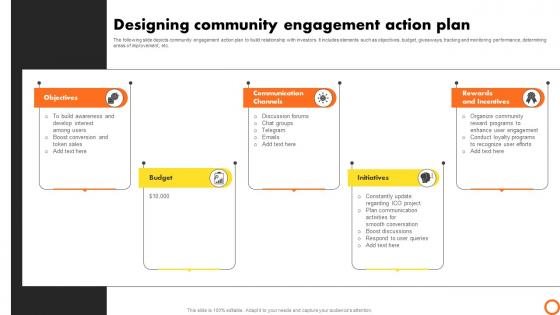
The following slide depicts community engagement action plan to build relationship with investors. It includes elements such as objectives, budget, giveaways, tracking and monitoring performance, determining areas of improvement, etc. Increase audience engagement and knowledge by dispensing information using Comprehensive Guide To Raise Designing Community Engagement Action Plan BCT SS This template helps you present information on Five stages. You can also present information on Community Engagement, Action Plan using this PPT design. This layout is completely editable so personaize it now to meet your audiences expectations.

FAQs for Comprehensive Guide To Raise Designing Community Engagement Action

Effective Community Engagement Action Plans include stakeholder mapping, clear communication channels, measurable objectives, resource allocation, and feedback mechanisms. These components work together by identifying key community voices, establishing consistent dialogue pathways, and creating accountability structures, with many organizations finding that systematic engagement enhances project outcomes and builds lasting community trust.

Organizations can assess current community engagement through surveys, focus groups, attendance analysis, social media metrics, and stakeholder interviews to establish baseline measurements. These assessment methods help identify engagement gaps, community preferences, and communication barriers, with many nonprofits and local governments finding that comprehensive evaluation enables more targeted outreach strategies, ultimately delivering higher participation rates and stronger community relationships.

Effective stakeholder identification strategies include demographic mapping, community asset assessments, partnering with existing organizations, conducting listening sessions, and utilizing social media outreach. These approaches enable organizations to reach underrepresented groups, cultural associations, and local leaders by meeting stakeholders where they are, ultimately building inclusive coalitions that reflect true community diversity and enhance program legitimacy.

Technology enhances community engagement through social media platforms, mobile apps, virtual meeting tools, data analytics systems, and digital feedback mechanisms. These solutions streamline communication, automate outreach processes, and provide real-time insights into community needs, with many organizations finding that digital platforms significantly increase participation rates while reducing operational costs and improving response times.

Communication serves as the foundation for successful Community Engagement Action Plans by ensuring transparency, building trust, and facilitating meaningful dialogue between stakeholders. Effective communication strategies enable organizations to gather valuable feedback, address concerns proactively, and maintain ongoing relationships, with many finding that consistent, multi-channel approaches ultimately deliver stronger community partnerships and sustainable project outcomes.

Organizations measure community engagement impact through quantitative metrics like participation rates, event attendance, and social media engagement, alongside qualitative assessments including stakeholder surveys, focus groups, and community feedback sessions. These measurement approaches enable businesses to track relationship building, program effectiveness, and community satisfaction, with many organizations finding that regular impact assessment drives strategic improvements, enhances resource allocation, and ultimately delivers stronger community partnerships and measurable social outcomes.

Organizations face challenges including unclear stakeholder identification, insufficient resource allocation, lack of measurable objectives, poor communication channels, and inadequate feedback mechanisms when developing Community Engagement Action Plans. These obstacles often stem from limited community understanding and competing organizational priorities, with many institutions finding that early stakeholder mapping and dedicated engagement resources significantly streamline plan development and enhance long-term community relationships.

Community feedback can be incorporated through regular surveys, focus groups, digital platforms for continuous input, advisory committees, and post-event evaluations that directly inform strategy adjustments. These mechanisms enable organizations to adapt their approaches based on real community needs, preferences, and outcomes, with many institutions finding that this iterative process significantly enhances participation rates and delivers more meaningful, sustainable engagement results.

Best practices for inclusive community engagement include multilingual materials, accessible venues, diverse communication channels, flexible meeting formats, and culturally responsive outreach strategies. These approaches enhance participation by removing barriers, accommodating different abilities and schedules, and building trust across demographics, with many organizations finding that inclusive engagement ultimately delivers broader community buy-in and more sustainable outcomes.

A Community Engagement Action Plan aligns with organizational goals by integrating community priorities with strategic objectives, ensuring mutual benefit and shared value creation. Through stakeholder mapping, outcome measurement, and resource coordination, organizations like hospitals, municipalities, and corporations enhance their social impact while advancing business priorities, ultimately delivering sustainable community relationships that strengthen brand reputation and operational effectiveness.

Methods include town halls, focus groups, digital forums, community advisory boards, and collaborative workshops. These approaches facilitate meaningful dialogue by creating structured opportunities for feedback, enabling direct participation in decision-making processes, and building trust through transparent communication, with many organizations finding that regular engagement ultimately delivers stronger community partnerships and more effective program outcomes.

Organizations ensure transparency and build trust by implementing regular community reporting, hosting open public forums, establishing clear feedback mechanisms, and maintaining consistent communication channels about decisions and outcomes. Through accessible reporting dashboards and community advisory boards, many nonprofits, municipalities, and healthcare systems find that proactive disclosure of both successes and challenges ultimately strengthens stakeholder relationships and enhances community support.

Community engagement success metrics include participation rates, sentiment analysis, response times, retention percentages, and conversion rates from engagement to action. These measurements enable organizations to track relationship depth, community growth, and program effectiveness across different demographics and channels, with many nonprofits and corporations finding that combining quantitative data with qualitative feedback ultimately delivers deeper insights and more strategic resource allocation.

Partnerships with local businesses and institutions enhance Community Engagement Action Plans by providing additional resources, expanding reach through established networks, and creating sustainable funding opportunities. These strategic collaborations enable organizations to leverage existing infrastructure, access specialized expertise, and deliver more comprehensive services, with many community initiatives finding that business partnerships significantly increase program effectiveness and long-term viability.

Successful community engagement initiatives include Toyota's neighborhood revitalization programs, Starbucks' local hiring partnerships, Microsoft's digital literacy training centers, healthcare systems' mobile clinic outreach, and retail chains' small business mentorship networks. These strategic community partnerships deliver measurable outcomes through local job creation, skills development, and resource sharing, with many organizations finding that sustained engagement ultimately enhances brand loyalty while addressing genuine community needs.

Ratings and Reviews

80% of 100
Review Form
Write a review
Most Relevant Reviews
  1. 80%

    by Dana Owens

    “Thanks to SlideTeam. Now I can make smart presentations in a fraction of time without any hassle.”
  2. 80%

    by Dudley Delgado

    The presentations are very helpful. I am always able to get appropriate templates for the different topics related to my profession.

2 Item(s)

per page: