


Construction Process Proposal Powerpoint Presentation Slides
Building a business or residential site is a lot more than throwing together an architect with some masons. Today, real estate development is a fast-evolving business sphere. With artful structural designs blended with contemporary functionality, architecture has become an art form in addition to mathematical science. Make an efficient bid for the next project of your construction company with our bid proposal template PowerPoint slides. The Construction Process Proposal PowerPoint Presentation Slides have been professionally designed to put your pitch in the most impressive light. With a smart layout and striking use of the color scheme, this PPT presentation includes all the relevant sections for an impressive project proposal. Introduce your construction consulting firm’s proposal to your clients in a well-composed cover letter showcased in the construction proposal presentation. Provide a comprehensive layout of the building development pitch with an organized table of contents before proceeding into details. An exemplary project of an office tower is used to emphasize the different aspects of the bid for the user’s convenience. A complete overview of the entire slide presentation has been tastefully organized in the proposal outline. Exhibit the different sections of the scope of work involved with the building project using bullet points organized in the context PPT slide in this proposal deck. Present a complete list of all the different services your civil management company provides with distinctly marked headings. Present to your potential clients a payment plan detailing different factors of the job in an easily personalizable tabular format. Convincing a company to invest with your construction firm requires the confidence of its executives in your competence. Additional slides with subject-specific icons and infographics have been added at the end of the presentation to make customization more simple for you. Remember, your firm’s first impression will dictate its lasting impression, make the most of this opportunity with this bid proposal presentation deck.
-

- Google Slides is a new FREE Presentation software from Google.
- All our content is 100% compatible with Google Slides.
- Just download our designs, and upload them to Google Slides and they will work automatically.
- Amaze your audience with SlideTeam and Google Slides.
-

Want Changes to This PPT Slide? Check out our Presentation Design Services
-

- WideScreen Aspect ratio is becoming a very popular format. When you download this product, the downloaded ZIP will contain this product in both standard and widescreen format.
-

- Some older products that we have may only be in standard format, but they can easily be converted to widescreen.
- To do this, please open the SlideTeam product in Powerpoint, and go to
- Design ( On the top bar) -> Page Setup -> and select "On-screen Show (16:9)” in the drop down for "Slides Sized for".
- The slide or theme will change to widescreen, and all graphics will adjust automatically. You can similarly convert our content to any other desired screen aspect ratio.
Compatible With Google Slides

Get This In WideScreen
You must be logged in to download this presentation.


Do you want to remove this product from your favourites?
PowerPoint presentation slides
Download and use the Construction Process Proposal PowerPoint Presentation Slides for your project pitching needs. The icons and graphics can be edited as per user needs. All elements of this PowerPoint layout are completely customizable within the PowerPoint or Google Slides applications. This PPT layout is available in the standard aspect ratio as well as in the wide-screen aspect ratio.

People who downloaded this PowerPoint presentation also viewed the following :
Content of this Powerpoint Presentation
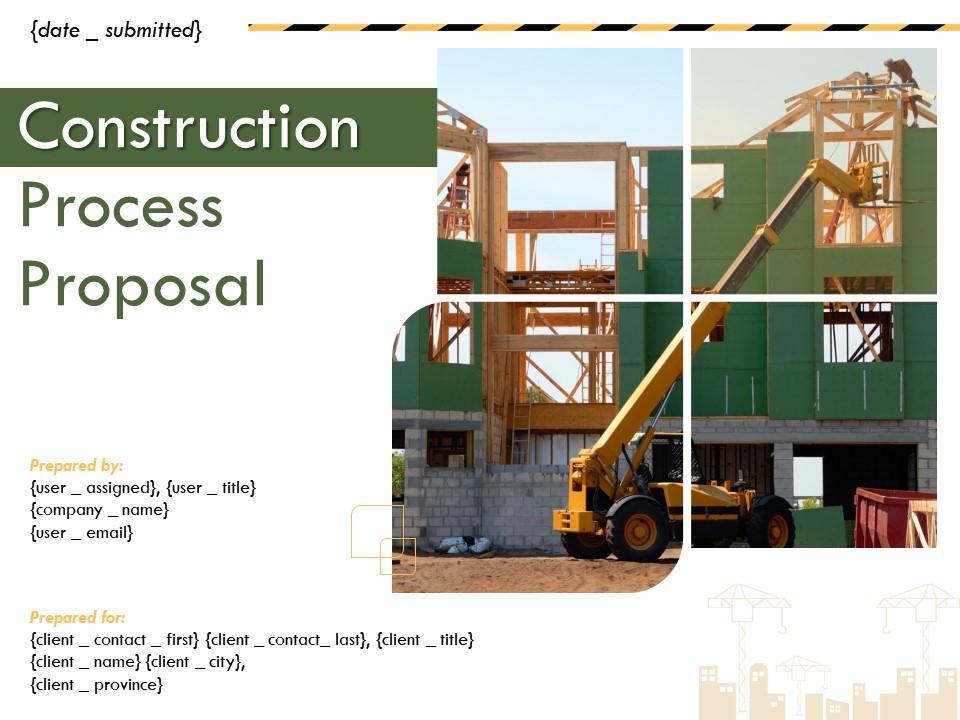
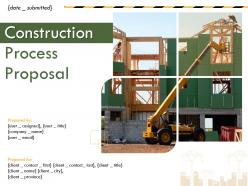
Slide 1: This slide introduces Construction Process Proposal. State Client details and User details.
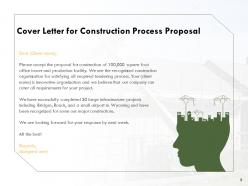
Slide 2: This slide displays Cover Letter for Construction Process Proposal.
Slide 3: This slide shows Project Context and Objectives
Slide 4: This slide describes Project Context and Objectives.
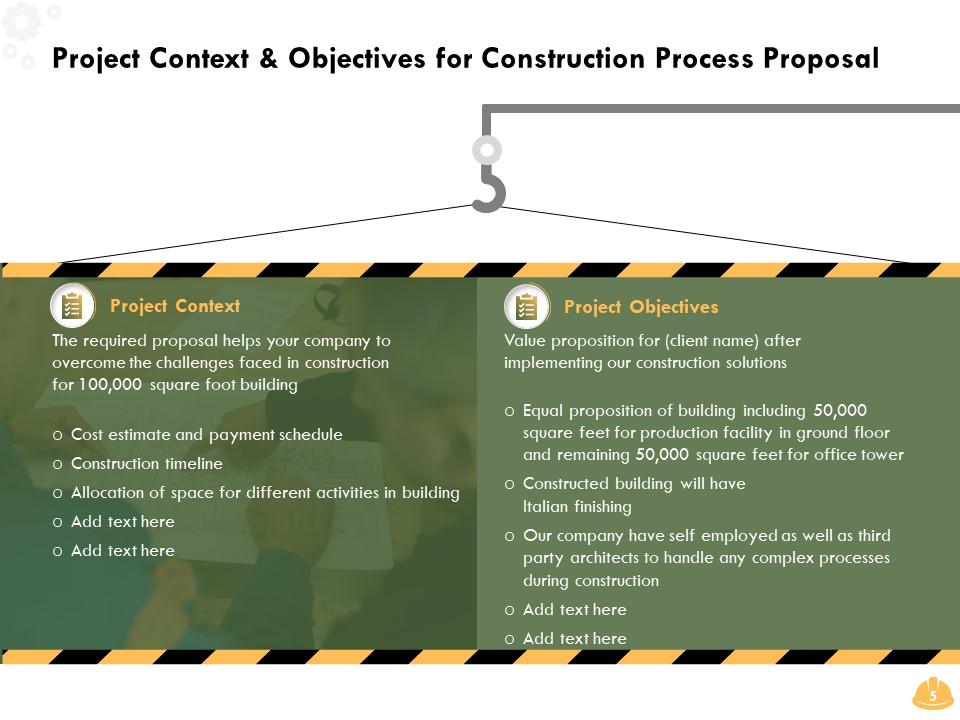
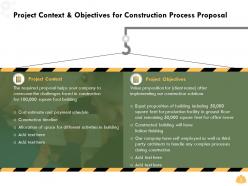
Slide 5: This slide represents Project Context & Objectives for Construction Process Proposal.
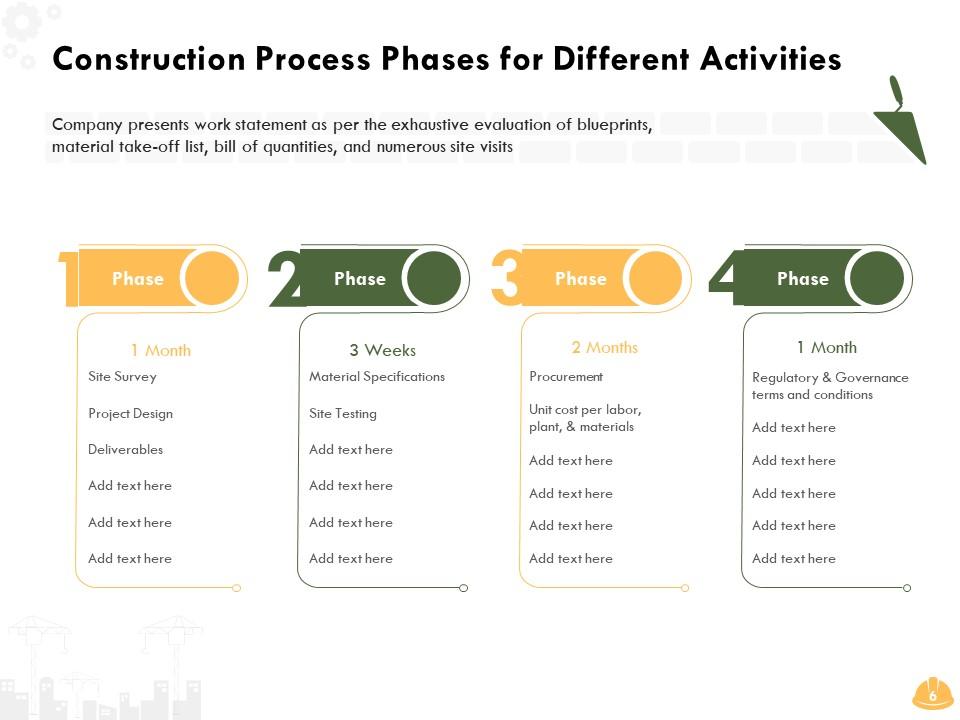
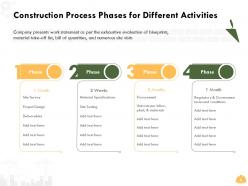
Slide 6: This slide displays Construction Process Phases for Different Activities
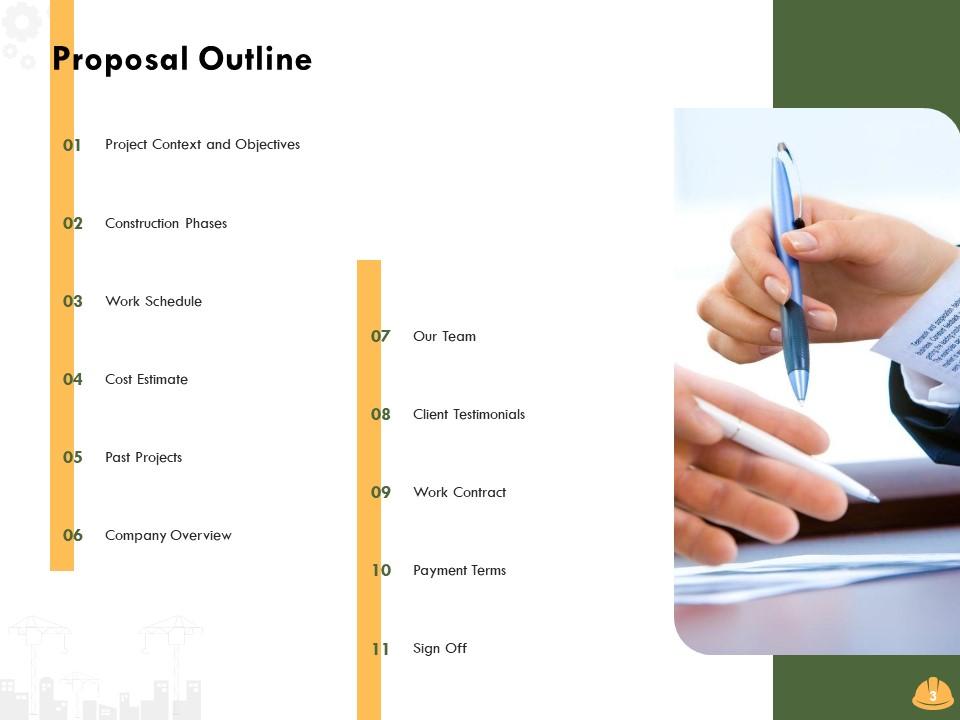
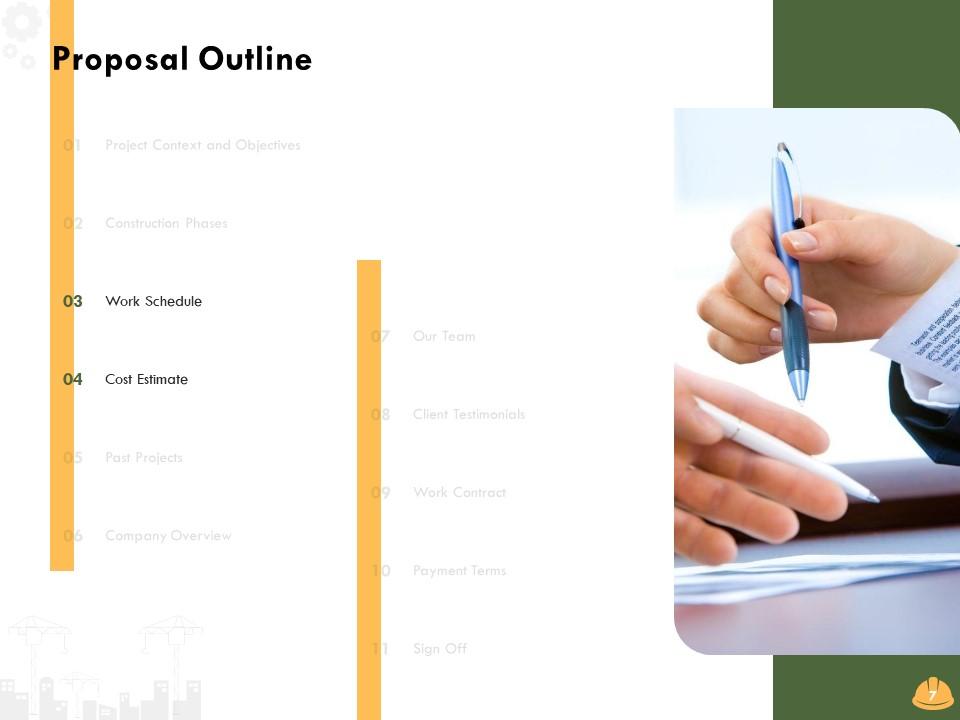
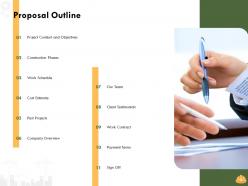
Slide 7: This slide represents Proposal Outline
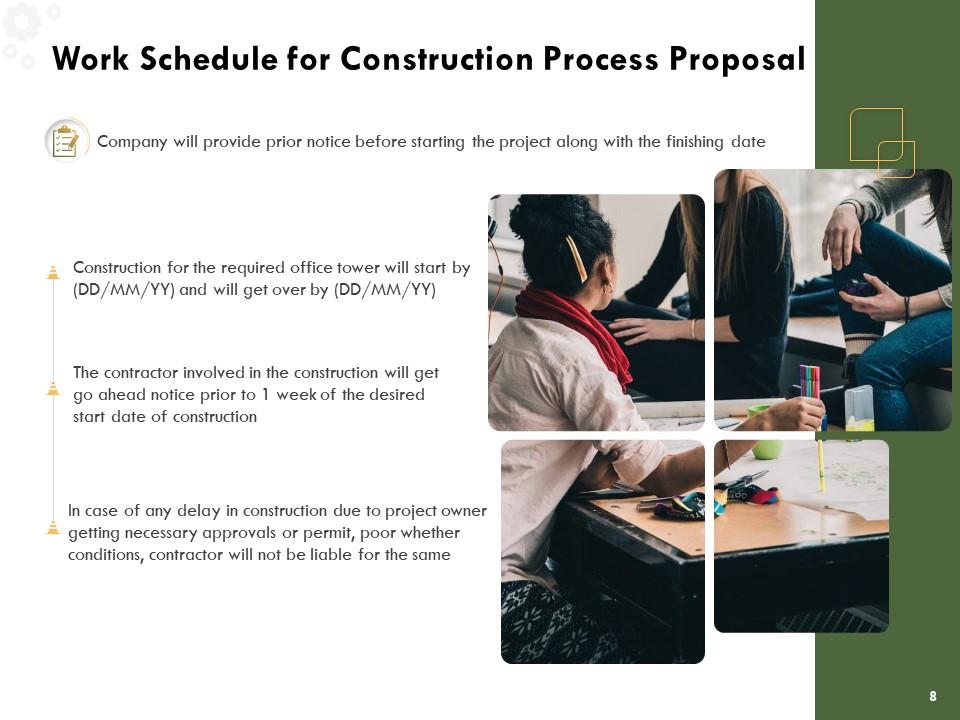
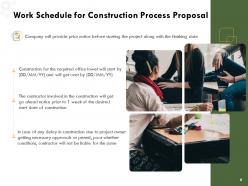
Slide 8: This slide shows Work Schedule for Construction Process Proposal. Company will provide prior notice before starting the project along with the finishing date
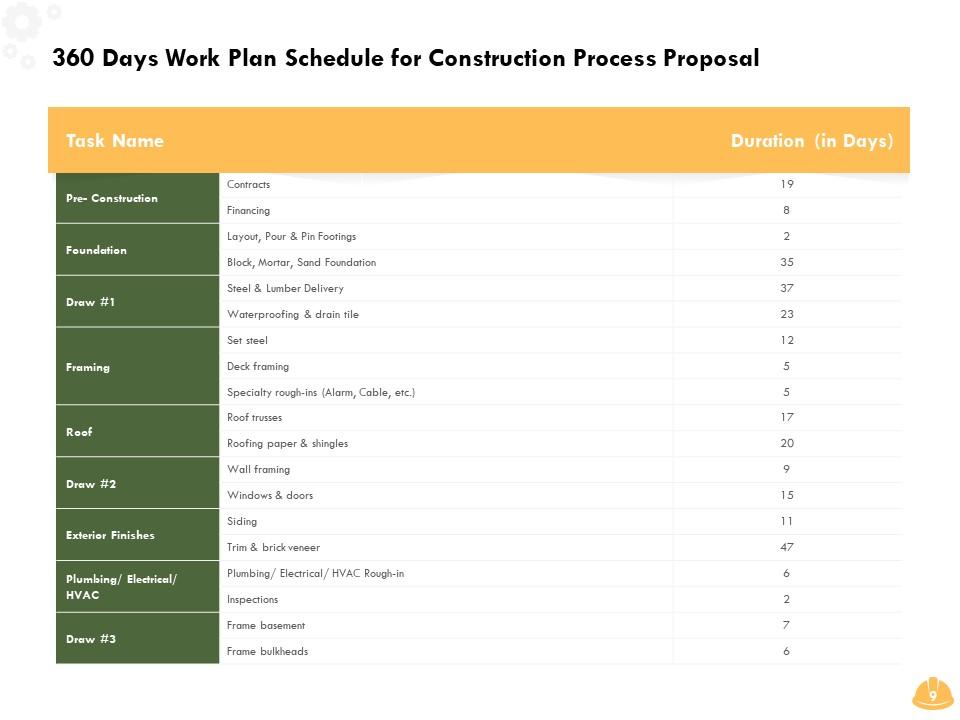
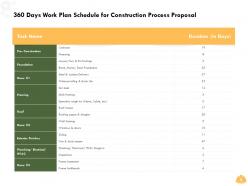
Slide 9: This slide depicts 360 Days Work Plan Schedule.
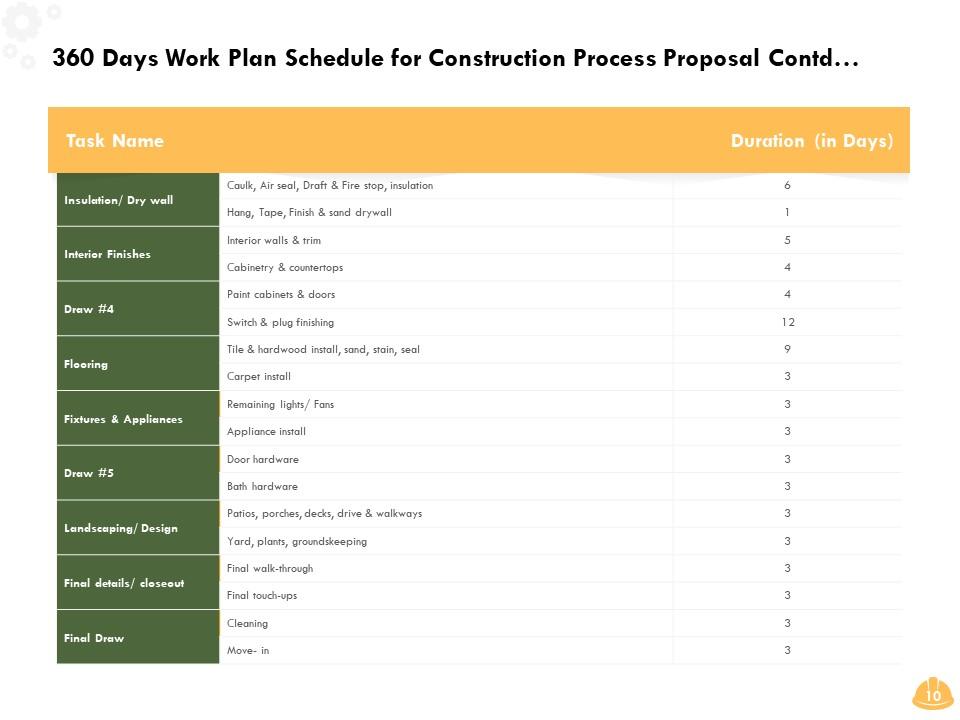
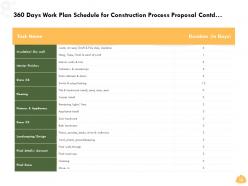
Slide 10: This slide is continued with 360 Days Work Plan Schedule.
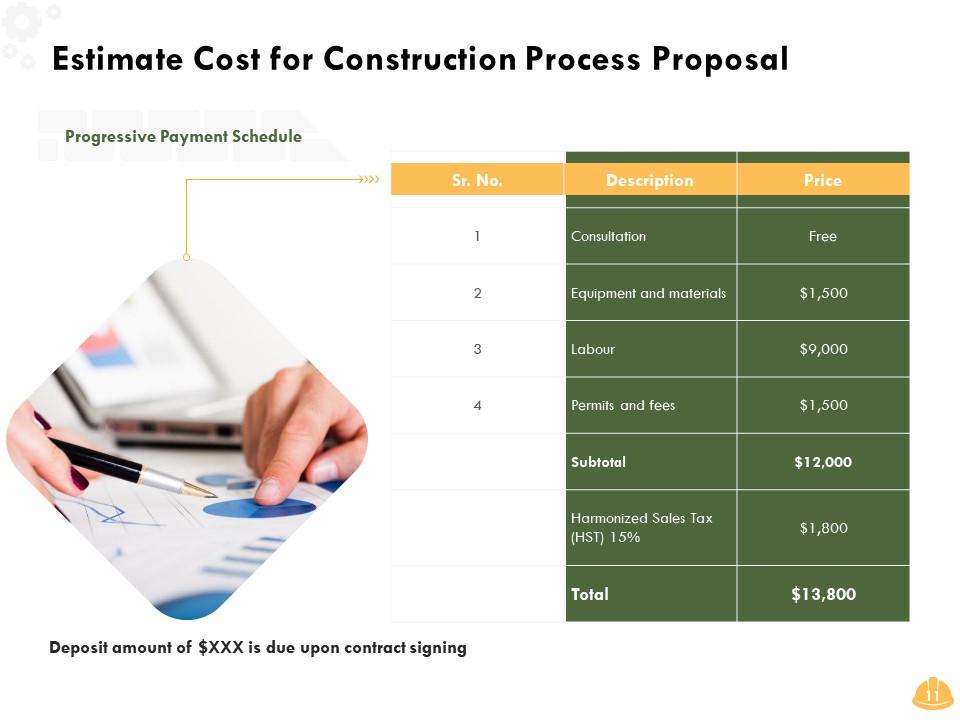
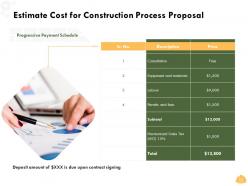
Slide 11: This slide represents Estimate Cost for Construction Process Proposal.
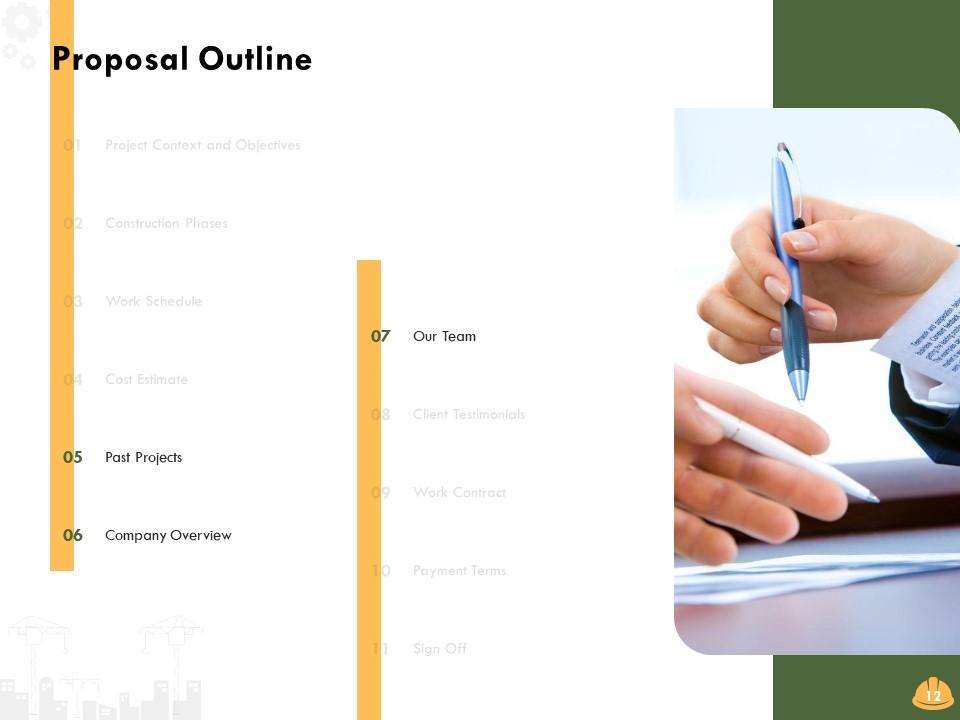
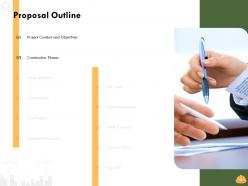
Slide 12: This slide presents Proposal Outline.
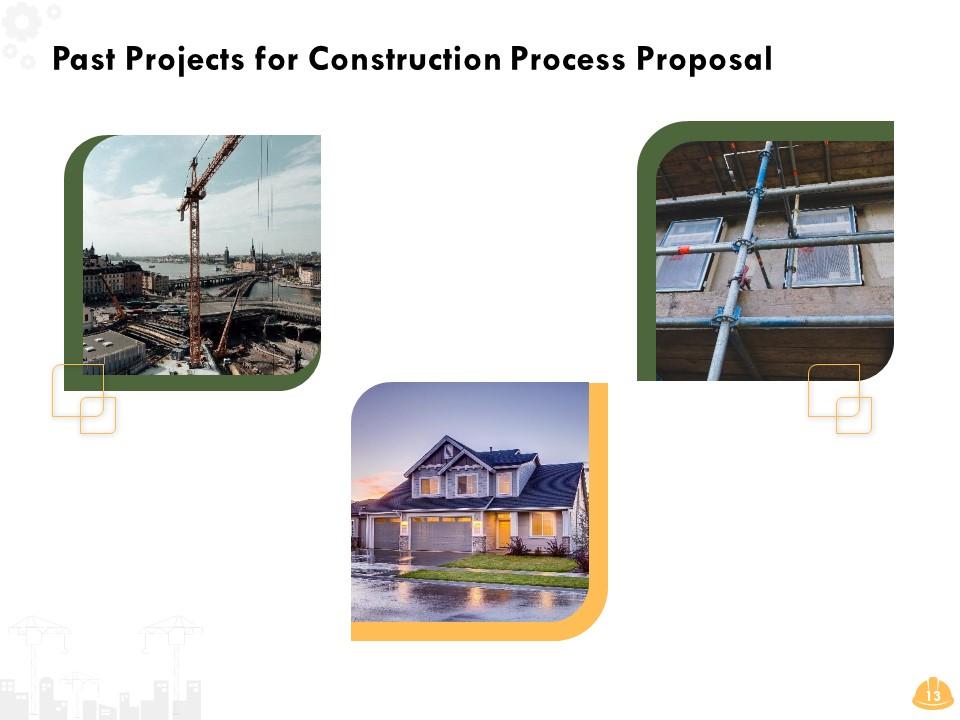
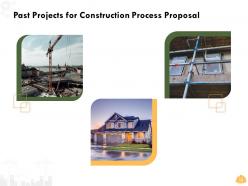
Slide 13: This slide showcases Past Projects for Construction Process Proposal.
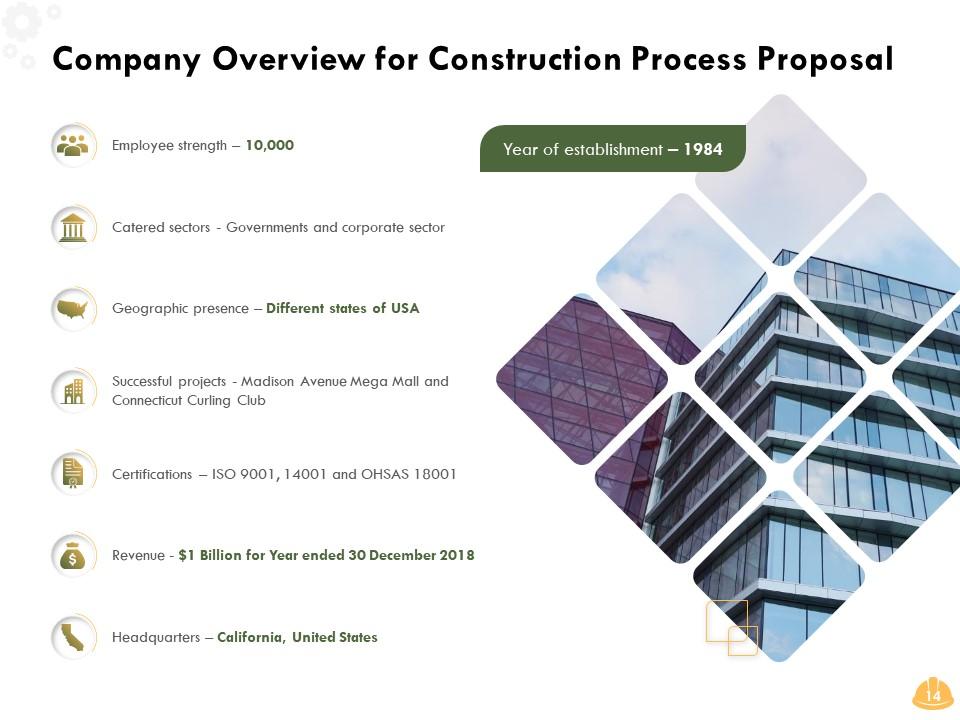
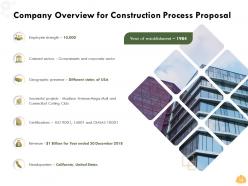
Slide 14: This slide depicts Company Overview for Construction Process Proposal
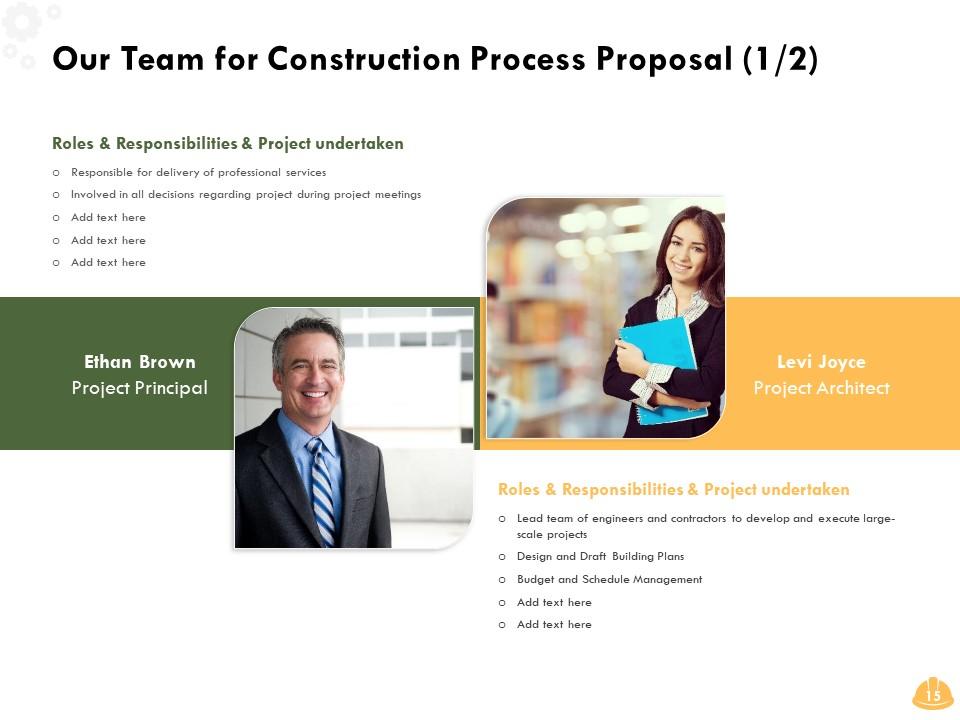
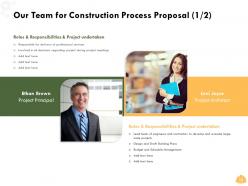
Slide 15: This is Our Team slide with Names and Designations.
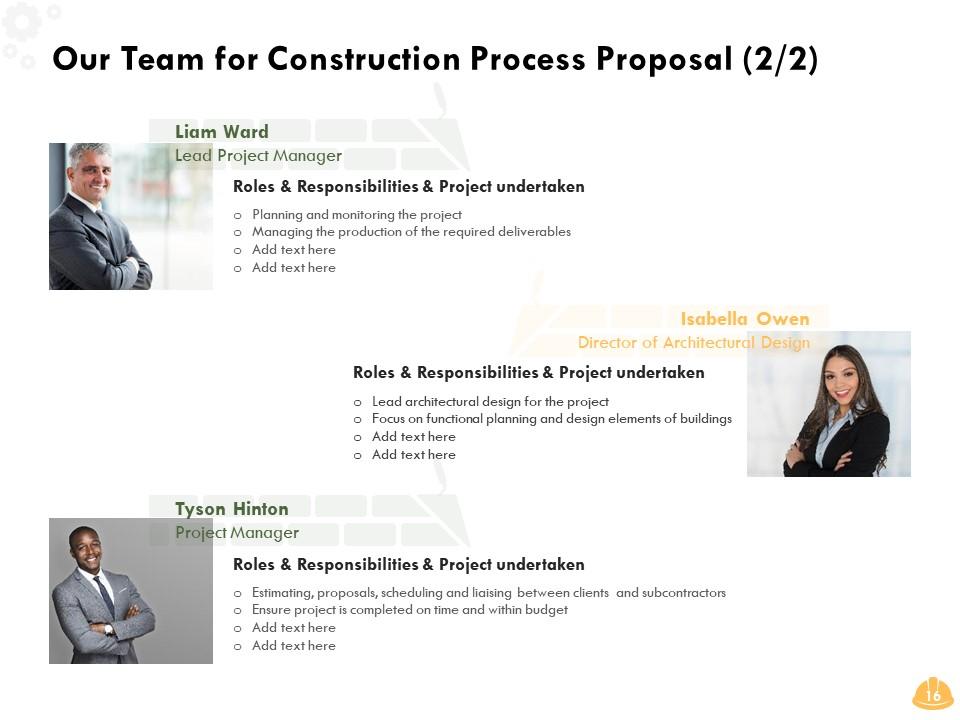
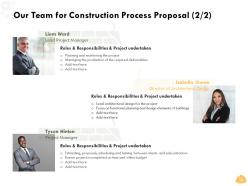
Slide 16: This is Our Team slide with Names and Designations.
Slide 17: This slide displays Proposal Outline.
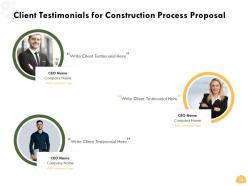
Slide 18: This slide shows Client Testimonials for Construction Process Proposal.
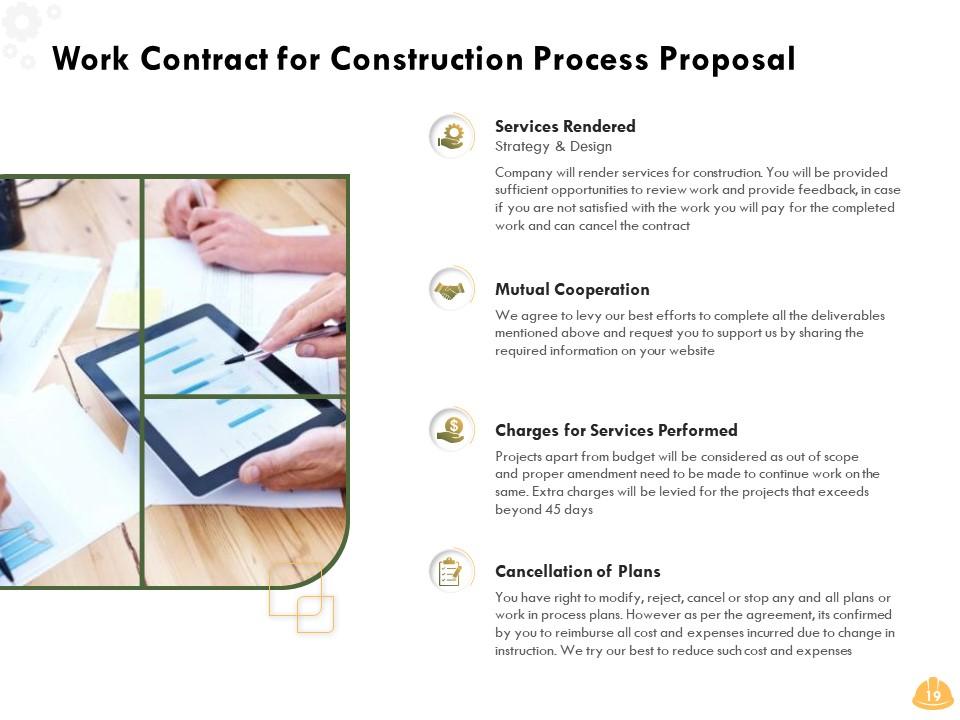
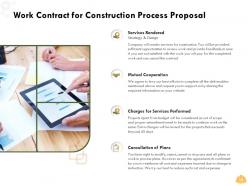
Slide 19: This slide represents Work Contract for Construction Process Proposal. You have right to modify, reject, cancel or stop any and all plans or work in process plans. However as per the agreement, its confirmed by you to reimburse all cost and expenses incurred due to change in instruction. We try our best to reduce such cost and expenses
Slide 20: This slide is continued with Work Contract for Construction Process Proposal.
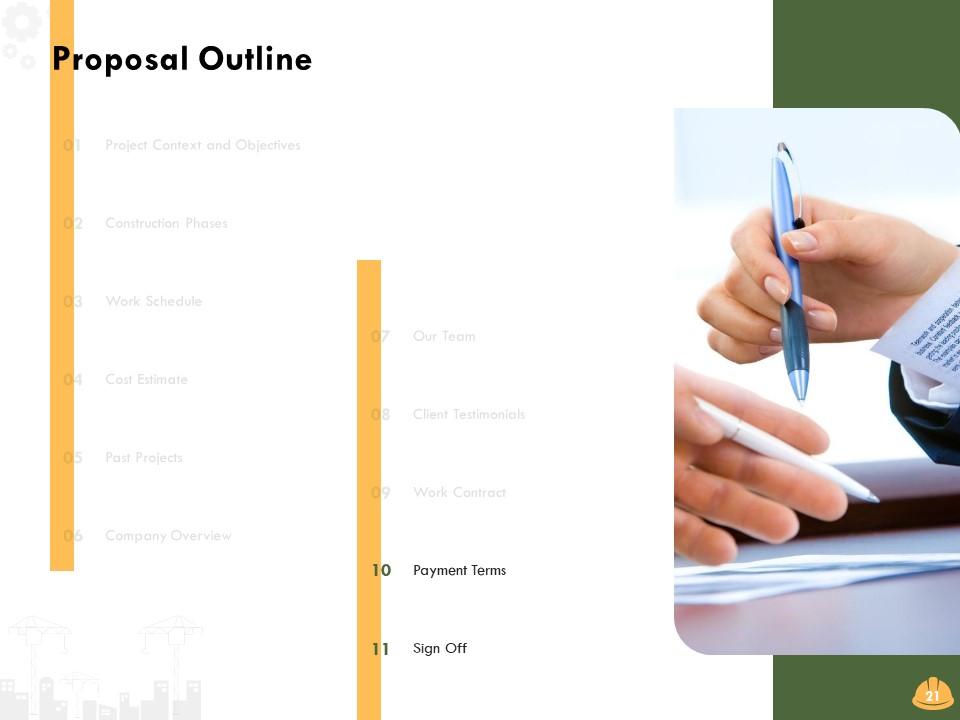
Slide 21: This slide showcases Proposal Outline.
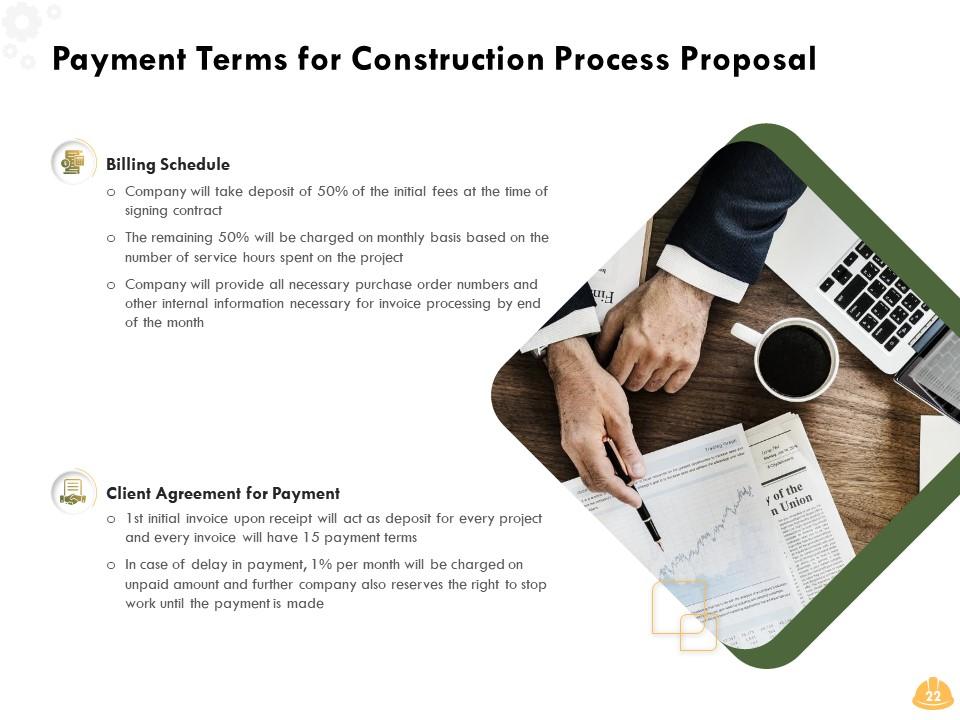
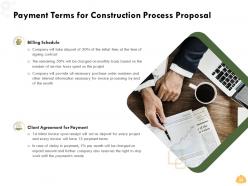
Slide 22: This slide describes Payment Terms for Construction Process Proposal. In case of delay in payment, 1% per month will be charged on unpaid amount and further company also reserves the right to stop work until the payment is made
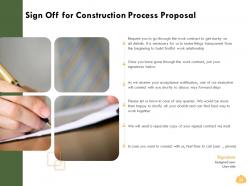
Slide 23: This is Sign Off slide for Construction Process Proposal
Slide 24: This is Contact Us slide with Address and Contact details.
Slide 25: This is Icons Slide for Construction Process Proposal.
Slide 26: This slide is titled as Additional Slides for moving forward.
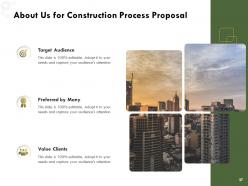
Slide 27: This is About Us slide to showcase Company specifications.
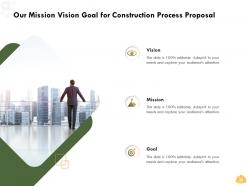
Slide 28: This slide displays Our Mission Vision Goal.
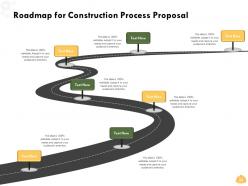
Slide 29: This slide depicts Roadmap process.
Slide 30: This slide showcases Roadmap process.
Slide 31: This slide showcases Roadmap process.
Slide 32: This slide also showcases Roadmap process.
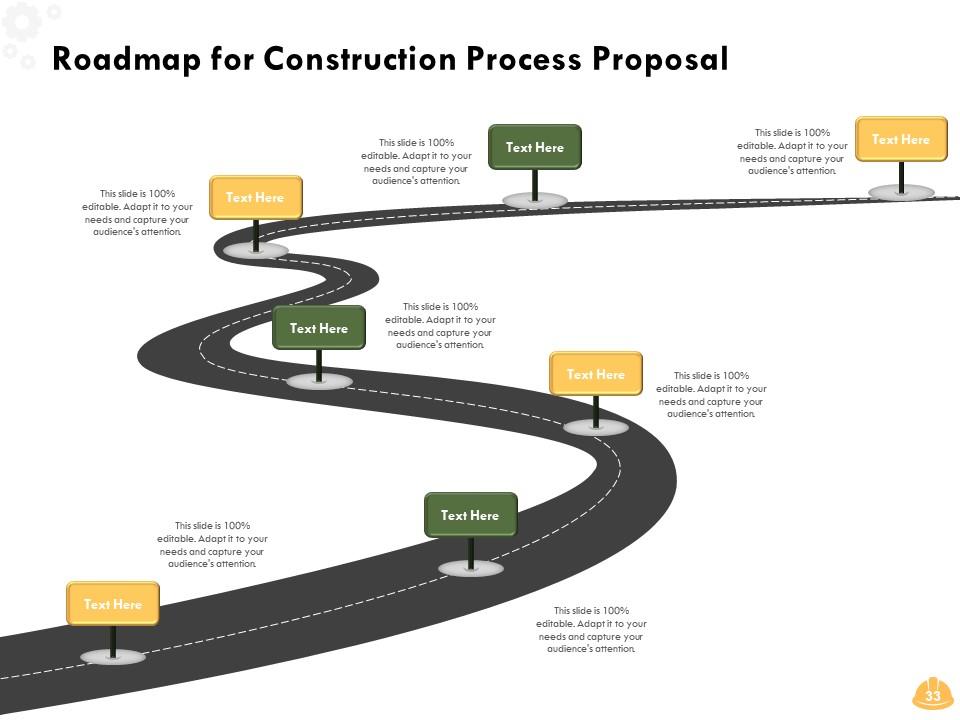
Slide 33: This is another slide depicting Roadmap process.
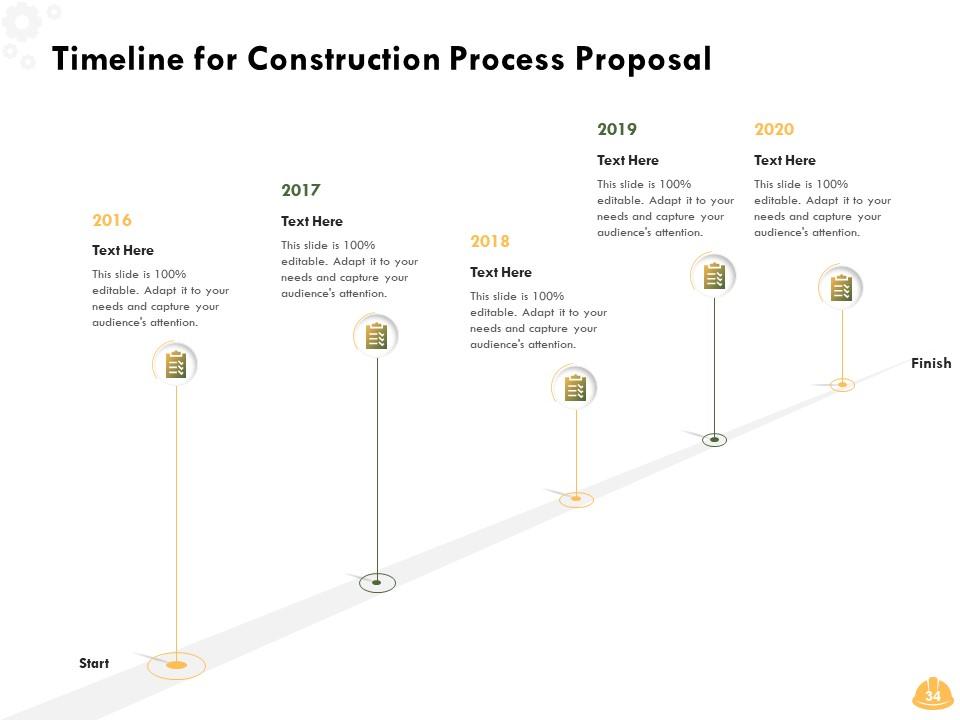
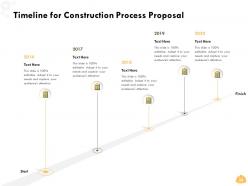
Slide 34: This slide shows Timeline process.
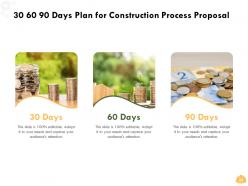
Slide 35: This is 30 60 90 Days Plan slide.
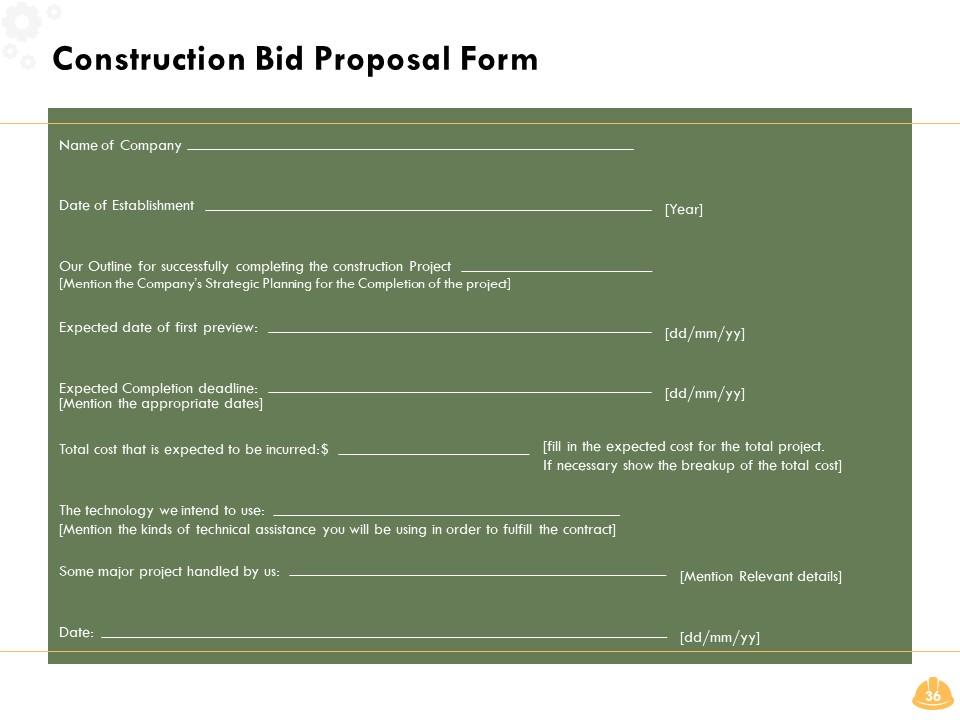
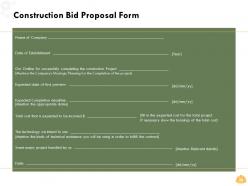
Slide 36: This slide represents Construction Bid Proposal Form.
Construction Process Proposal Powerpoint Presentation Slides with all 36 slides:
Use our Construction Process Proposal Powerpoint Presentation Slides to effectively help you save your valuable time. They are readymade to fit into any presentation structure.
-
Awesome use of colors and designs in product templates.
-
Perfect template with attractive color combination.
