

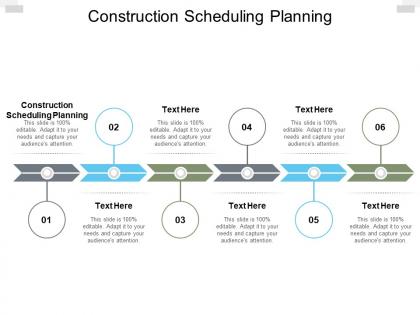
Construction scheduling planning ppt powerpoint presentation slides deck cpb




Try Before you Buy Download Free Sample Product
 Impress Your
Audience
 100%
Editable
 Save Hours
of Time


Be diplomatic to the core with our Construction Scheduling Planning Ppt Powerpoint Presentation Slides Deck Cpb. They help cut down differences.
People who downloaded this PowerPoint presentation also viewed the following :
Construction scheduling planning ppt powerpoint presentation slides deck cpb with all 2 slides:
Cut down differences with our Construction Scheduling Planning Ppt Powerpoint Presentation Slides Deck Cpb. You will be diplomatic to the core.

FAQs for Construction scheduling planning ppt powerpoint presentation
**INPUT**: What are the key components of an effective construction scheduling plan? **OUTPUT**: Key components include resource allocation, task sequencing, timeline milestones, risk assessment buffers, and stakeholder communication protocols. These elements streamline project coordination by minimizing delays, optimizing workforce deployment, and enhancing budget control, with many construction firms finding that integrated scheduling ultimately delivers faster project completion and improved client satisfaction.
Technology enhances construction scheduling through project management software, AI-powered analytics, IoT sensors, mobile applications, and cloud-based platforms. These tools streamline resource allocation, automate timeline adjustments, and provide real-time progress tracking, with many construction firms finding that integrated scheduling systems reduce project delays by 15-30% while improving coordination across teams.
**INPUT**: What strategies can be employed to manage delays in construction schedules? **OUTPUT**: Effective delay management strategies include proactive risk assessment, buffer time allocation, resource reallocation protocols, alternative workflow sequencing, and real-time progress monitoring systems. Through advanced project management software and strategic coordination, construction teams streamline communication, accelerate decision-making, and maintain flexibility, with many organizations finding that these integrated approaches ultimately minimize costly overruns while delivering projects closer to original timelines. [Word count: 60 words]
Critical path methods influence construction project timelines by identifying the longest sequence of dependent activities, determining minimum project duration, and highlighting tasks where delays directly impact completion dates. Through CPM analysis, construction managers optimize resource allocation, coordinate subcontractor schedules, and proactively address potential bottlenecks, with many large-scale projects finding that this strategic approach reduces delays and enhances overall efficiency.
Resource allocation plays a critical role in construction scheduling by determining workforce distribution, equipment deployment, material procurement timelines, and budget management across project phases. Effective resource allocation enables contractors to minimize delays, optimize productivity, and reduce costs, with many construction firms finding that strategic resource planning ultimately delivers faster project completion and improved profit margins.
Gantt charts enhance construction project visualization by displaying task sequences, timeline dependencies, resource allocation, and milestone tracking in a clear visual format. Through color-coded progress bars and interconnected workflows, project managers can immediately identify bottlenecks, coordinate subcontractor schedules, and communicate project status to stakeholders, ultimately delivering improved coordination and reduced delays.
Construction scheduling assists budget management by enabling precise resource allocation, preventing cost overruns through timeline adherence, and facilitating early identification of potential delays that could inflate expenses. Through detailed milestone tracking, construction teams streamline labor deployment, minimize equipment idle time, and coordinate material deliveries more efficiently, with many contractors finding that structured scheduling ultimately delivers 10-15% cost savings while maintaining project quality standards.
Seasonal weather changes significantly impact construction scheduling by affecting material performance, worker safety conditions, and project timelines, requiring contractors to adjust concrete pours, roofing installations, and exterior work around temperature and precipitation patterns. Many construction firms increasingly leverage weather forecasting technologies and flexible scheduling frameworks to minimize delays, optimize resource allocation, and maintain project momentum, ultimately delivering more predictable timelines and reduced costs.
Best practices for communicating construction schedules include using visual timelines, providing regular progress updates, establishing clear milestone markers, customizing reports for different stakeholder groups, and maintaining transparent change notifications. These approaches streamline project coordination by enhancing stakeholder alignment, minimizing miscommunication, and enabling proactive decision-making, with many construction firms finding that consistent communication protocols ultimately deliver improved project outcomes and stronger client relationships.
Risk management integrates into construction scheduling through contingency planning, buffer time allocation, resource redundancy strategies, and scenario-based timeline modeling. Construction teams enhance project resilience by identifying potential delays like weather disruptions or material shortages, building flexible schedules that accommodate uncertainties, and maintaining alternative resource channels, ultimately delivering more predictable project outcomes.
Traditional scheduling methods rely on manual processes, paper-based charts, and basic software with limited real-time updates and collaboration capabilities. Modern techniques leverage cloud-based platforms, AI-driven optimization, mobile integration, and real-time data synchronization, enabling construction teams to streamline project coordination, minimize delays, and enhance resource allocation across multiple sites simultaneously.
Construction managers can use feedback loops by continuously collecting data from field operations, comparing actual progress against planned timelines, and adjusting schedules based on real-world conditions and resource availability. These iterative processes enable proactive identification of delays, optimize resource allocation across multiple project phases, and improve future scheduling accuracy, with many construction firms finding that systematic feedback integration reduces project overruns and enhances overall delivery performance.
Unexpected scope changes can significantly delay project timelines, increase costs, disrupt resource allocation, and create cascading effects across interdependent tasks. While these changes present challenges, they also offer opportunities for enhanced project value, with many construction firms finding that robust change management processes, flexible scheduling software, and clear stakeholder communication protocols ultimately deliver better project outcomes and stronger client relationships.
Labor laws and regulations significantly impact construction scheduling through mandated work hour limits, required rest periods, overtime restrictions, and safety compliance requirements. These regulations require project managers to build buffer time, stagger shifts strategically, and coordinate with union requirements, with many construction companies finding that proactive compliance planning actually enhances worker productivity and reduces costly project delays.
**INPUT**: What software tools are recommended for effective construction scheduling? **OUTPUT**: Recommended construction scheduling software includes Microsoft Project, Primavera P6, Smartsheet, Procore, and Buildertrend, each offering unique project management capabilities. These platforms streamline timeline coordination, resource allocation, and milestone tracking, with many construction firms finding that integrated scheduling tools reduce project delays by 15-20% while enhancing communication between contractors, subcontractors, and clients. **Word count: 58 words**
No Reviews