


Consumer behavior assessment model decision making buying process





Try Before you Buy Download Free Sample Product
 Impress Your
Audience
 100%
Editable
 Save Hours
of Time


Our Consumer Behavior Assessment Model Decision Making Buying Process are topically designed to provide an attractive backdrop to any subject. Use them to look like a presentation pro.
People who downloaded this PowerPoint presentation also viewed the following :
Consumer behavior assessment model decision making buying process with all 15 slides:
Use our Consumer Behavior Assessment Model Decision Making Buying Process to effectively help you save your valuable time. They are readymade to fit into any presentation structure.






FAQs for Consumer behavior assessment model decision
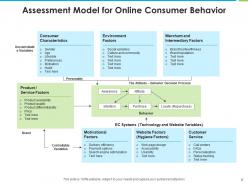
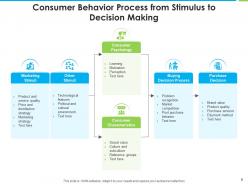
The consumer decision-making process includes problem recognition, information search, evaluation of alternatives, purchase decision, and post-purchase evaluation. These stages streamline marketing strategies by identifying customer pain points, optimizing touchpoints, and enhancing satisfaction metrics, with many retail and financial services organizations finding that mapping these stages delivers improved conversion rates and stronger customer loyalty.
Information search significantly influences consumer choices by expanding available options, enabling price and feature comparisons, and building confidence through reviews and recommendations. Through digital platforms and social media, consumers access peer feedback, expert opinions, and detailed product specifications, ultimately making more informed purchasing decisions while reducing post-purchase regret and increasing satisfaction levels.
External factors significantly shape consumer decisions through social media recommendations, peer reviews, cultural norms, family opinions, and influencer endorsements. These influences create powerful social proof that drives purchasing behaviors, with many retailers and brands finding that leveraging community testimonials, user-generated content, and strategic partnerships ultimately delivers higher conversion rates and stronger customer trust.
Marketers can effectively identify consumer problem recognition through social media monitoring, customer surveys, search trend analysis, focus groups, and behavioral data tracking. These methods reveal unmet needs by capturing consumer complaints, questions, and search patterns across platforms like Google and social channels, enabling brands to position solutions strategically when consumers first acknowledge their needs.
Businesses can enhance perceived value through competitive comparisons, detailed product demonstrations, customer testimonials, transparent pricing breakdowns, and highlighting unique differentiators like warranties or exclusive features. These techniques work by building trust, reducing purchase anxiety, and clearly communicating benefits, with many retailers and service providers finding that combining social proof with hands-on experiences significantly increases conversion rates.
Cultural and psychological factors significantly influence consumer preferences by shaping values, beliefs, perception filters, and emotional responses throughout the decision-making process. These factors manifest differently across demographics, with luxury brands finding success through aspirational messaging while value-oriented retailers leverage practical benefits, ultimately enabling companies to tailor marketing strategies and product positioning for enhanced customer engagement and competitive advantage.
Brand loyalty significantly streamlines the consumer decision-making process by reducing information search, limiting consideration sets, and accelerating purchase decisions. Loyal customers in sectors like automotive, technology, and retail often bypass extensive comparison shopping, moving directly from need recognition to brand selection, ultimately delivering faster purchasing cycles and higher customer lifetime value for businesses.
Emotions significantly influence consumer decisions by triggering initial awareness, shaping consideration preferences, and driving final purchase choices through psychological connections with brands. Through emotional marketing, retailers leverage fear, joy, and trust to guide customers from discovery to loyalty, with many financial services and automotive companies finding that emotional storytelling ultimately delivers stronger customer relationships and increased conversion rates.
AI aids in understanding consumer behavior through predictive analytics, sentiment analysis, behavioral tracking, personalization algorithms, and real-time data processing. These technologies streamline customer insights by analyzing purchase patterns, social media interactions, and browsing behaviors, with retailers and financial services finding that AI-driven analytics ultimately deliver enhanced targeting accuracy and improved customer experiences.
Online reviews fundamentally transform information search by providing real-time, peer-generated insights that supplement traditional marketing materials, enabling consumers to access authentic experiences, compare product performance across multiple perspectives, and evaluate credibility through reviewer profiles. This shift streamlines decision-making while reducing purchase uncertainty, with many consumers finding that review aggregation delivers faster, more confident purchasing decisions and enhanced post-purchase satisfaction.
Businesses can simplify final purchase decisions through transparent pricing, streamlined checkout processes, multiple payment options, clear return policies, and strategic urgency indicators like limited-time offers. These approaches reduce friction by eliminating decision paralysis, building trust, and accelerating conversions, with many retailers finding that simplified experiences ultimately deliver higher completion rates and customer satisfaction.
Post-purchase evaluation significantly influences future consumer behavior by shaping brand loyalty, repurchase intentions, and word-of-mouth recommendations through satisfaction or dissatisfaction experiences. When consumers feel their expectations were met or exceeded, they're more likely to become repeat customers and brand advocates, while negative experiences drive them toward competitors, ultimately affecting long-term customer lifetime value and market positioning.
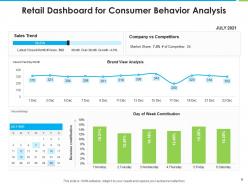
Companies can use metrics including conversion rates, time-to-purchase, cart abandonment rates, customer acquisition costs, and decision funnel analytics to analyze consumer decision-making efficiency. These measurement tools enhance understanding by tracking behavioral patterns, identifying friction points, and optimizing customer journeys, with many retail and e-commerce organizations finding that streamlined decision processes ultimately deliver faster conversions and improved customer experiences.
Segmentation and targeting enhance consumer decision-making by delivering personalized experiences, reducing choice overload, and presenting relevant options that align with specific needs and preferences. Through data-driven insights, retailers streamline product discovery, customize messaging, and optimize touchpoints, with many organizations finding that targeted approaches increase conversion rates, reduce decision fatigue, and ultimately accelerate purchase decisions.
Innovative consumer decision-making tools include AI-powered recommendation engines, virtual try-on platforms, comparison aggregators, social proof analytics, and personalized shopping assistants. These technologies streamline purchase decisions by analyzing preferences, visualizing products virtually, and consolidating reviews, with many retail and e-commerce organizations finding that enhanced decision support ultimately delivers improved customer satisfaction and reduced return rates.
-
Graphics are very appealing to eyes.
-
Unique design & color.
-
Innovative and attractive designs.
-
Awesome presentation, really professional and easy to edit.