

Consumer segmentation powerpoint presentation slides




Try Before you Buy Download Free Sample Product
 Impress Your
 Audience
 100%
100% Editable
 Save Hours
 of Time


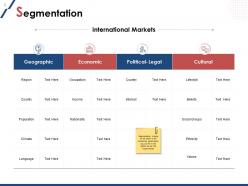
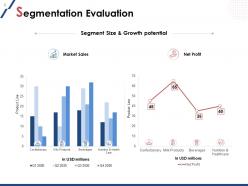
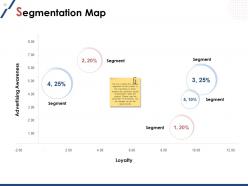
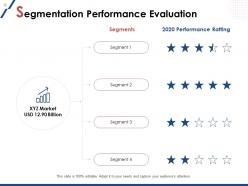
Determine the steps to understand the customer’s demographics and their requirements with the help of our content ready Consumer Segmentation PowerPoint Presentation Slides. By using this engaging and reliable market segmentation evaluation PPT themes, you can explain how to retain more customers. Use the customer segmentation layout PowerPoint graphics to elaborate on the qualitative and quantitative assessment of the market. With the aid of the consumer market mapping presentation templates, you can portray the ways to identify the specific needs and wants of the customer groups. Take the assistance of market segmentation strategies PPT visual and implement the different plans to deliver the good quality of products to the customers. Employ this professionally designed market targeting PowerPoint layout and portray the steps to generate brand awareness towards the audience. Hence, download our ready-to-use segmentation performance evaluation PPT complete deck and showcase strategies of creating value for customers.
People who downloaded this PowerPoint presentation also viewed the following :
Consumer segmentation powerpoint presentation slides with all 24 slides:
Use our Consumer Segmentation Powerpoint Presentation Slides to effectively help you save your valuable time. They are readymade to fit into any presentation structure.








FAQs for Consumer segmentation
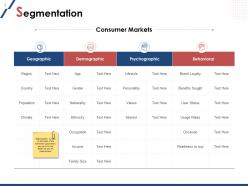
Key factors influencing consumer segmentation include demographics, psychographics, behavioral patterns, geographic location, and digital engagement preferences. These elements work together by enabling personalized marketing campaigns, targeted product development, and optimized customer experiences, with many retailers and financial services finding that strategic combination of these factors delivers improved conversion rates and competitive advantage.
Demographic data enables segmented marketing strategies by categorizing audiences based on age, income, location, education, and lifestyle preferences, allowing brands to tailor messaging, channels, and product positioning accordingly. Through targeted campaigns, companies like retail chains segment by age groups while financial services focus on income brackets, ultimately delivering higher engagement rates, improved conversion metrics, and more efficient resource allocation across diverse customer segments.
Psychographic segmentation analyzes consumer lifestyles, values, attitudes, interests, and personality traits to understand purchase motivations beyond demographics. This approach enables brands to create targeted messaging, develop products aligned with consumer values, and predict buying patterns, with companies like Nike and Apple leveraging psychographics to build emotional connections and drive loyalty.
Businesses can leverage geographic segmentation by analyzing regional preferences, climate variations, cultural differences, and local market conditions to tailor product features, pricing strategies, and distribution channels. Companies like McDonald's adapt menus regionally, while retailers adjust inventory seasonally, ultimately delivering more relevant customer experiences and enhanced market penetration across diverse territories.
Effective consumer segmentation tools include CRM platforms, analytics software like Google Analytics, survey tools, social media analytics, and machine learning algorithms for behavioral analysis. These methodologies streamline market research by identifying distinct customer groups, personalizing marketing campaigns, and optimizing product positioning, with many retail and financial services organizations finding that strategic segmentation ultimately delivers higher conversion rates and competitive advantage.
Behavioral segmentation focuses on consumer actions, purchase patterns, brand loyalty, and engagement levels rather than basic characteristics like age or income. This approach enables organizations to predict future behaviors more accurately, create targeted marketing campaigns, and personalize customer experiences, with many retailers and financial services finding that behavioral insights deliver significantly higher conversion rates and customer retention.
Companies face challenges including data quality issues, integration across multiple touchpoints, resource constraints, rapidly changing consumer behaviors, and organizational alignment. These obstacles often result in inconsistent messaging, ineffective targeting, and reduced ROI, with many retailers and financial services finding that overcoming segmentation hurdles ultimately delivers enhanced customer experiences and competitive advantage.
Companies ensure inclusivity by incorporating demographic diversity, cultural preferences, accessibility needs, and socioeconomic factors into their segmentation frameworks, while regularly auditing for bias and representation gaps. This strategic approach enables organizations across retail, financial services, and healthcare to create more personalized experiences, expand market reach, and build stronger customer relationships, ultimately delivering competitive advantage in increasingly diverse markets.
Digital marketing revolutionizes consumer segmentation by enabling real-time data collection, behavioral tracking, precise demographic targeting, and personalized campaign delivery across multiple channels. Through advanced analytics and AI-driven insights, businesses can create micro-segments, predict consumer preferences, and optimize marketing spend, ultimately delivering higher conversion rates and enhanced customer experiences.
Small businesses can undertake consumer segmentation affordably through online survey tools, social media analytics, customer interviews, email segmentation analysis, and Google Analytics insights. These cost-effective methods enable retailers, restaurants, and service providers to identify distinct customer groups, tailor marketing messages, and optimize resource allocation, ultimately delivering higher conversion rates and customer satisfaction while competing more effectively against larger competitors.
Businesses should track conversion rates, customer lifetime value, engagement metrics, retention rates, and revenue per segment to measure segmentation success. These metrics enable organizations to assess targeting effectiveness, optimize marketing spend, and identify high-value segments, with many companies finding that well-segmented campaigns deliver significantly higher ROI and stronger customer relationships.
Consumer trends drive segmentation strategy evolution by introducing new behavioral patterns, shifting demographic priorities, and creating digital touchpoints that require fresh analytical approaches. Modern trends like sustainability consciousness, mobile-first preferences, and personalized experiences enable companies to develop more granular segments, with retail and financial services organizations finding that trend-responsive segmentation delivers enhanced customer targeting and competitive positioning.
Ethical consumer segmentation requires transparent data collection practices, avoiding discriminatory profiling based on protected characteristics, and ensuring fair pricing across segments. Businesses must balance personalization with privacy rights, obtain proper consent for data usage, and prevent segments from reinforcing social biases, with many organizations finding that ethical approaches ultimately enhance customer trust and long-term loyalty.
Segmentation improves loyalty and retention by enabling personalized experiences, targeted communications, and tailored product offerings that resonate with specific customer needs and preferences. Through strategic segmentation, companies deliver relevant marketing messages, customized service levels, and focused loyalty programs, with retailers and subscription services finding significantly higher retention rates when addressing distinct customer groups rather than broad audiences.
Successful consumer segmentation spans diverse industries, with Nike targeting athletic performance versus lifestyle consumers, Starbucks differentiating between convenience-focused and experience-seeking customers, and Amazon personalizing recommendations through behavioral data analysis. These strategic approaches enable companies to deliver tailored messaging, optimize product development, and enhance customer experiences, with many organizations finding that targeted segmentation ultimately drives higher conversion rates and customer loyalty.
-
Great quality slides in rapid time.