

Content Marketing Campaign Development Plan Guide To Develop Advertising Campaign




Try Before you Buy Download Free Sample Product
 Impress Your
Audience
 100%
Editable
 Save Hours
of Time


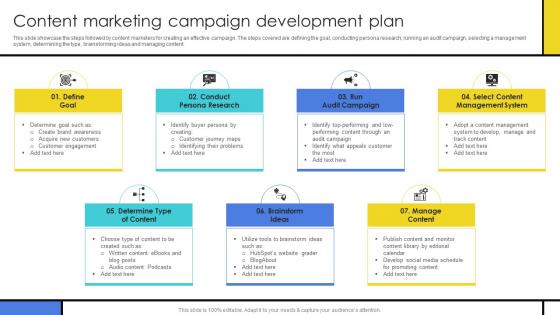
This slide showcase the steps followed by content marketers for creating an effective campaign. The steps covered are defining the goal, conducting persona research, running an audit campaign, selecting a management system, determining the type, brainstorming ideas and managing content.
People who downloaded this PowerPoint presentation also viewed the following :
Content Marketing Campaign Development Plan Guide To Develop Advertising Campaign with all 6 slides:
Use our Content Marketing Campaign Development Plan Guide To Develop Advertising Campaign to effectively help you save your valuable time. They are readymade to fit into any presentation structure.






FAQs for Content Marketing Campaign Development Plan Guide To
Okay so you need five things really: solid goals that actually matter to your business, knowing exactly who you're targeting and what bugs them, content that matches where people are in buying mode, posting it where your audience hangs out, and tracking if it's working. Most people mess up by skipping the research part - they just guess what sounds good instead of finding out what people actually want. Oh and don't go crazy with posting schedules. Weekly quality beats daily burnout every time. Check what content you've already got first before making new stuff from zero.
So first thing - dig into whatever customer data you've got. Analytics, surveys, sales stuff. Build out those buyer personas with real demographics and what actually bugs these people. Social media insights are clutch too (I'm guilty of spending hours just analyzing audience demos lol). Check out who your competitors are targeting - might find some gaps there. But honestly? The best move is just talking to actual customers to see if you're right about all this. You want to get specific enough that your content actually hits different instead of being generic fluff.
Look, page views are pretty useless if nobody's actually reading your stuff. Track time on page and bounce rate first - that tells you if people care. Social shares and comments are gold too. For business stuff, focus on leads, email signups, and actual sales from each piece. CTR to your landing pages matters way more than most people think. Oh, and definitely set up UTM codes on everything so you can see which content actually makes money. I learned that one the hard way! Mix of engagement + conversion metrics gives you the real story.
Figure out what you actually want to achieve first - like if you're trying to drive sales, lean heavy into product tutorials and success stories. Consistency matters way more than being perfect, so pick a posting schedule you won't hate yourself for later. I usually recommend a basic spreadsheet to plan 2-3 months out, mixing evergreen stuff with seasonal content. Don't forget to throw in different formats - blogs, videos, whatever keeps people interested. Oh, and save about 20% of your calendar for random opportunities that come up. You'll thank me later when something trending happens.
Okay so SEO is literally everything for content marketing - without it, nobody finds your stuff. I made this mistake once and spent forever creating content that just sat there getting zero views. Super frustrating. You've gotta do keyword research first, then build your content calendar around what people actually search for. Don't just slap keywords on after you're done writing. Topics, headlines, the whole structure should match search intent. That way you're not just guessing what your audience wants - you know because the data tells you. Start with keywords, then create.
Honestly, you're probably sitting on a goldmine already. Take that blog post you wrote last month - chop it up into carousel slides for Instagram, pull the best quotes for Twitter posts, maybe film yourself talking through the main points. One piece of content can go SO much further than you think. Also, dig through your older stuff and update it with new examples or data. Sometimes I'll take three related posts and mash them into one big guide, or do the opposite and break something long into smaller chunks. Just audit what you've got first - you'd be surprised how much you can repurpose without starting from scratch.
Don't just copy-paste the same post everywhere - that's lazy and doesn't work. Each platform needs its own version. Take your blog post and chop it up differently: LinkedIn gets carousel slides, Twitter becomes a thread, Instagram stories for visual stuff. Yeah, it's extra work but actually gets results. Post when people are online (sounds obvious but you'd be surprised). Each platform has different peak times. Also, your call-to-action should feel natural to where you're posting it - what works on Twitter sounds weird on LinkedIn. Honestly? Start with just 2-3 platforms you can nail instead of spreading yourself too thin.
Start with a brand style guide covering voice, visuals, and messaging - basically everything your team touches. Templates are a lifesaver here. Trust me, you don't want people creating content from scratch every single time. Give everyone access to the same asset library with approved stuff. Have someone be the brand police (sounds harsh but someone's gotta do it). Regular content reviews before posting help catch things early. The real trick? Document it all upfront so you're not making random decisions later when you're stressed and three coffees deep.
Honestly, start with WordPress or HubSpot for your main site - they're both solid. Buffer's my go-to for scheduling social posts because consistency is everything. You absolutely need Google Analytics tracking (learned this the hard way). Canva will save your life for graphics, trust me on that one. Mailchimp handles email stuff pretty well, though ConvertKit's good too. Oh, and get Trello or something similar or you'll lose track of deadlines fast. Most have free tiers so you can test without spending money upfront.
Okay so here's the thing - stories just stick in people's heads way better than random facts and figures. Your audience wants characters they can actually relate to, not boring product specs (trust me on this one). Stories make complex stuff easier to understand too. They also make your brand feel more human instead of like some corporate robot. People share good stories naturally, so you'll get more organic reach without trying as hard. Just focus on your customer's actual journey - what problems are they dealing with? Frame everything around their struggles and wins rather than just listing features.
Oh man, where do I start? The worst thing you can do is skip figuring out who you're actually talking to - like, get specific about your audience or you'll be shouting into the void. Don't just post random stuff without a plan (been guilty of this myself lol). Also, stop being so salesy all the time - people will tune you out fast. Your posting schedule matters too, but honestly the analytics thing trips up so many people. You could create the most brilliant post ever, but if nobody sees it because you didn't share it right? Total waste.
So first thing - run contests and ask for reviews, use branded hashtags, that kind of stuff. When customers post photos, repost them (with permission obviously). People absolutely eat it up when you feature their content. I'd start with your most engaged followers and reach out to them directly. Success stories work great too. Oh and make it super easy for people to participate - like don't make them jump through hoops. You can even build whole campaigns around user stories if you want to go bigger with it.
Ask questions in your posts - like, actually ask stuff people want to answer. Polls work great too. I've noticed behind-the-scenes content gets way more comments than polished posts, probably because it feels more real? User-generated campaigns are clutch - get people sharing their own photos with your hashtag. Live videos are amazing for engagement since people can chat with you right then. Oh, and respond fast when someone comments! Even just hitting them with a heart emoji shows you're actually there. Make everything feel like you're starting a conversation, not just posting random stuff.
Honestly, forget what you *think* worked and just look at the actual data. Your analytics will show engagement rates, clicks, conversions - all that good stuff. I know it's brutal when your favorite post totally bombed, but numbers don't lie. Check which topics and formats actually got results, plus what times worked best for posting. Once you figure that out, you can match it up with different audience segments. Oh, and next time? Set up tracking from day one so you're not frantically trying to piece everything together after the fact.
Oh man, there's some crazy good examples out there. HubSpot basically built their whole business around educational blog content - they'd solve your marketing problems first, then casually mention their software. Dollar Shave Club's launch video went viral because it was actually hilarious, not because they threw money at it. And Red Bull? They're not even an energy drink company anymore - they're basically a media empire obsessed with extreme sports content. The wild part is all of this actually drove sales, not just views. I think the trick is helping people solve real problems first, then naturally sliding in how your product fits.
-
Out of the box and creative design.
-
The content is very helpful from business point of view.