

Content Marketing Plan Powerpoint Ppt Template Bundles





Try Before you Buy Download Free Sample Product
 Impress Your
Audience
 100%
Editable
 Save Hours
of Time


Our Content Marketing Plan Powerpoint Ppt Template Bundles are topically designed to provide an attractive backdrop to any subject. Use them to look like a presentation pro.
People who downloaded this PowerPoint presentation also viewed the following :
Content Marketing Plan Powerpoint Ppt Template Bundles with all 19 slides:
Use our Content Marketing Plan Powerpoint Ppt Template Bundles to effectively help you save your valuable time. They are readymade to fit into any presentation structure.












FAQs for Content Marketing Plan Powerpoint
Key components include content strategy alignment, audience personas, editorial calendars, distribution channels, and performance metrics. These elements work together by ensuring consistent messaging, targeting specific demographics, maintaining regular publication schedules, and measuring ROI, with many organizations finding that strategic integration across these components delivers enhanced brand visibility and measurable customer engagement.
Audience personas influence content marketing strategy by guiding topic selection, tone development, channel prioritization, and messaging frameworks that resonate with specific customer segments. These detailed profiles enable marketers to create targeted content addressing unique pain points, preferences, and behaviors, with retail brands and B2B companies finding significantly higher engagement rates and conversion outcomes.
Keyword research shapes content marketing plans by identifying high-value search terms, understanding audience intent, analyzing competitor strategies, and revealing content gaps in your market. This strategic foundation enables businesses to create targeted content that ranks higher in search results, attracts qualified leads, and addresses specific customer pain points, ultimately delivering improved organic visibility and enhanced conversion rates.
Content should be updated regularly based on performance metrics, audience behavior, and industry trends, with evergreen pieces refreshed quarterly and trending topics updated weekly or monthly. Many organizations find that consistent publishing schedules, combined with strategic refreshing of high-performing content, drives better engagement and search visibility, ultimately delivering sustained audience growth and competitive advantage.
Content marketing metrics should include website traffic, engagement rates, lead generation, conversion rates, and brand awareness indicators like social media mentions and search rankings. These measurements enable businesses to optimize their strategies by identifying high-performing content, understanding audience preferences, and demonstrating ROI, with many organizations finding that tracking comprehensive metrics across multiple channels ultimately delivers better resource allocation and competitive advantage.
Social media integration amplifies content marketing through cross-platform distribution, community engagement, real-time feedback collection, and audience insights gathering. These platforms enable brands to repurpose blog content into visual posts, facilitate direct customer conversations, and leverage user-generated content, with many organizations finding that strategic social media integration increases content reach by 300% while building stronger customer relationships and driving measurable conversions.
Effective content repurposing strategies include transforming blog posts into infographics, converting webinars into podcast episodes, breaking down whitepapers into social media series, adapting case studies for different industry contexts, and creating video summaries from written content. These approaches streamline content creation while maximizing reach, with many organizations finding that strategic repurposing reduces production costs by 60% while expanding audience engagement across multiple channels.
Aligning content marketing goals with business objectives involves mapping content strategies to specific revenue targets, customer acquisition metrics, brand awareness benchmarks, and operational efficiency goals. Through strategic audience segmentation and performance tracking, organizations streamline their messaging across sales funnels, enhance customer engagement throughout buyer journeys, and ultimately deliver measurable ROI while supporting broader growth initiatives.
Content creation and distribution tools include content management systems like WordPress, social media schedulers such as Hootsuite, design platforms like Canva, analytics tools including Google Analytics, and email marketing solutions such as Mailchimp. These technologies streamline workflows by automating posting schedules, centralizing asset management, and tracking performance metrics, ultimately enabling marketing teams to scale their efforts while maintaining consistent brand messaging across multiple channels.
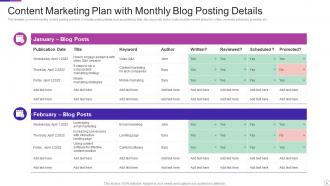
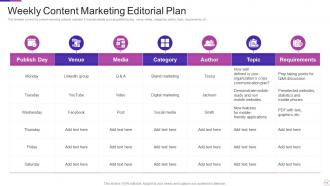
A content calendar is essential for maintaining consistency, strategic alignment, and measurable growth across all marketing channels, enabling teams to plan campaigns, coordinate resources, and track performance systematically. Organizations develop effective calendars by mapping content themes to business objectives, scheduling regular publication dates, and incorporating seasonal trends, with many finding that structured planning delivers improved engagement rates and streamlined workflow management.
Content prioritization depends on audience demographics, preferences, and consumption behaviors, with blogs excelling for detailed information seekers, videos engaging visual learners, and infographics simplifying complex data. Strategic audience research reveals that B2B professionals often prefer whitepapers and case studies, while consumer audiences gravitate toward social media content and interactive formats, ultimately delivering higher engagement and conversion rates.
Businesses can leverage user-generated content by encouraging customer reviews, showcasing social media posts, creating branded hashtag campaigns, featuring customer testimonials, and repurposing authentic customer stories across marketing channels. This approach builds trust through authentic peer endorsements while reducing content creation costs, with retail brands and service companies finding that UGC increases engagement rates and drives conversions more effectively than traditional advertising.
Content marketing SEO strategies include keyword optimization, creating comprehensive pillar content, building topic clusters, earning quality backlinks, and optimizing for featured snippets. These approaches enhance search visibility by establishing topical authority, improving user engagement metrics, and generating organic link acquisition, with many organizations finding that consistent, value-driven content ultimately delivers higher rankings and sustainable organic traffic growth.
Storytelling makes content more engaging by creating emotional connections, simplifying complex concepts through relatable narratives, and making information memorable through character-driven scenarios. Through strategic storytelling approaches, organizations enhance audience retention, build brand authenticity, and drive deeper engagement, with many finding that narrative-based content generates significantly higher shares and conversions than traditional formats.
Common pitfalls include lack of audience research, inconsistent messaging, unrealistic timelines, insufficient resource allocation, and neglecting performance measurement. These oversights undermine content effectiveness by creating irrelevant messaging, confusing brand positioning, and missed opportunities, with many organizations finding that strategic planning and clear success metrics ultimately deliver stronger engagement and measurable ROI.
-
Wonderful ideas and visuals. I'm really pleased with the templates, which are unique and up to date.
-
Stunning collection! With a wide variety of options available, I was able to find a perfect slide for my presentation. Thank you, SlideTeam!