

Controlling Practical Drift In High Reliability Organizations PPT Template ACP





Try Before you Buy Download Free Sample Product
 Impress Your
Audience
 100%
Editable
 Save Hours
of Time


Enhance your presentations with our Controlling Practical Drift in High Reliability Organizations PowerPoint Template. This expertly designed deck offers insightful slides, visuals, and frameworks to effectively communicate strategies for maintaining operational excellence and minimizing risks. Perfect for professionals seeking to elevate their organizational reliability.
People who downloaded this PowerPoint presentation also viewed the following :
Controlling Practical Drift In High Reliability Organizations PPT Template ACP with all 41 slides:
Use our Controlling Practical Drift In High Reliability Organizations PPT Template ACP to effectively help you save your valuable time. They are readymade to fit into any presentation structure.


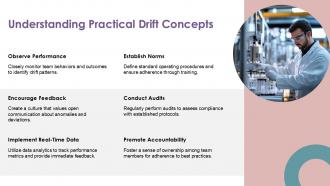

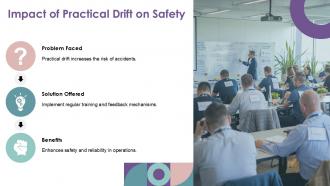










FAQs for Controlling Practical Drift In High Reliability Organizations
High Reliability Organizations exhibit preoccupation with failure, reluctance to simplify interpretations, sensitivity to operations, commitment to resilience, and deference to expertise. These characteristics enable HROs to maintain exceptional safety records by continuously monitoring for weak signals, adapting to unexpected conditions, and empowering frontline decision-making, with many organizations in aviation, healthcare, and nuclear power finding that this approach significantly reduces catastrophic failures while enhancing operational performance.
Organizations identify practical drift through systematic monitoring approaches including safety audits, performance metrics analysis, incident trend tracking, employee feedback systems, and behavioral observations. These measurement strategies enable institutions like aviation companies, nuclear facilities, and healthcare systems to detect gradual deviations from established protocols, ultimately delivering enhanced safety outcomes and operational reliability while maintaining competitive advantage in high-stakes environments.
Leadership in HROs prevents practical drift by establishing clear safety protocols, maintaining rigorous oversight of operational procedures, and fostering a culture where employees feel empowered to speak up about deviations. Through consistent modeling of safety-first behaviors and regular system audits, leaders in organizations like nuclear facilities, aviation, and healthcare ensure that convenience never compromises reliability, ultimately delivering sustained operational excellence.
Frontline employees can identify and mitigate practical drift through structured feedback systems, regular safety huddles, anonymous reporting mechanisms, cross-training rotations, and empowerment programs that reward proactive risk identification. These engagement strategies streamline communication between operational levels and management, with many healthcare systems and aviation organizations finding that frontline insights significantly enhance safety protocols and operational reliability.
Organizations can implement regular safety audits, continuous training programs, standardized checklists, real-time monitoring systems, and clear accountability measures to maintain protocol adherence. These strategies work by creating systematic oversight, reinforcing safety cultures, and identifying drift early, with many high-stakes industries like aviation, healthcare, and nuclear power finding that consistent reinforcement ultimately delivers sustained compliance and operational excellence.
Organizational culture significantly influences practical drift through leadership attitudes toward safety protocols, communication patterns around risk reporting, and reward systems that prioritize efficiency over compliance. In high-reliability organizations like hospitals and nuclear facilities, cultures emphasizing psychological safety enable employees to report deviations without fear, while performance-focused cultures may inadvertently encourage shortcuts, ultimately determining whether drift becomes normalized or corrected.
Effective training methodologies for maintaining high reliability standards include simulation-based exercises, cross-functional team drills, error analysis workshops, continuous competency assessments, and scenario-based learning programs. These approaches enhance operational consistency by reinforcing critical procedures, developing crisis response capabilities, and building organizational resilience, with many high-stakes industries finding that integrated training systems ultimately deliver improved safety outcomes and sustained performance excellence.
Real-time data and analytics enable organizations to monitor practical drift by tracking performance metrics, identifying deviation patterns, and providing immediate alerts when procedures stray from established standards. Through advanced monitoring systems, healthcare facilities, nuclear plants, and aviation operations can detect subtle changes in compliance rates, response times, and safety protocols, while predictive analytics help anticipate drift before it becomes critical, ultimately maintaining operational reliability.
Common signs of practical drift include gradual deviations from established procedures, increasing tolerance for minor safety violations, informal workarounds becoming standard practice, and declining adherence to documentation requirements. Organizations often notice these warning signs through audit findings, incident reports, and employee feedback, with many high-reliability sectors like healthcare and aviation finding that early detection systems help maintain operational standards and prevent systemic failures.
HROs balance flexibility with protocol adherence through adaptive capacity frameworks, dynamic risk assessment protocols, structured decision-making hierarchies, and cross-functional response teams that enable real-time adjustments within defined safety boundaries. These approaches streamline operations by empowering frontline staff with guided discretion, maintaining systematic oversight, and preserving core safety standards, with many aviation and healthcare organizations finding that controlled flexibility ultimately enhances both reliability and operational effectiveness.
Industries that have successfully controlled practical drift, including aviation, nuclear power, healthcare, and manufacturing, demonstrate that robust oversight systems, continuous training, standardized protocols, and cultural accountability are essential. These sectors achieve reliability through regular audits, simulation-based training, and blame-free reporting systems, with many organizations finding that combining technological monitoring with human-centered safety cultures ultimately delivers sustainable operational excellence and competitive advantage.
Cross-functional teams enhance practical drift detection by combining diverse operational perspectives, systematic monitoring across departments, and collaborative problem-solving approaches that identify deviations before they become systemic. These teams leverage varied expertise from operations, safety, engineering, and management to spot inconsistencies, challenge assumptions, and implement corrective measures, with many high-reliability organizations finding that interdisciplinary oversight delivers faster identification and more comprehensive solutions.
Continuous improvement processes are vital for managing practical drift because they create systematic mechanisms for detecting deviations, reassessing procedures, and realigning practices with safety standards. These processes enable organizations to identify emerging gaps between intended protocols and actual operations, while fostering a culture of proactive adjustment rather than reactive correction, ultimately maintaining operational integrity and reliability.
Regulatory frameworks significantly impact practical drift management in HROs by establishing mandatory compliance standards, requiring systematic documentation of deviations, and mandating regular audits that detect incremental changes from established procedures. These frameworks enable organizations across aviation, healthcare, and nuclear sectors to maintain operational discipline through structured oversight, standardized reporting mechanisms, and corrective action protocols, ultimately delivering enhanced safety performance and regulatory compliance while preventing the gradual erosion of critical safety margins.
Effective communication strategies include regular safety briefings highlighting drift examples, storytelling sessions sharing near-miss incidents, visual dashboards tracking procedure adherence, peer-to-peer discussions about observed deviations, and leadership walkarounds encouraging open dialogue. These approaches enhance organizational transparency by creating psychological safety, normalizing error reporting, and fostering collective responsibility, with many high-reliability organizations finding that combination storytelling and data visualization delivers sustained behavioral change and stronger safety cultures.
-
“I've always gotten excellent slides from them and the customer service is up to the mark.”
-
Like always a great experience with you guys. Always there on the drop of hat to help.