

Corporate Environment Powerpoint Presentation Slides





Try Before you Buy Download Free Sample Product
 Impress Your
 Audience
 100%
100% Editable
 Save Hours
 of Time


Adapt to the changing needs of the dynamic market using these Corporate Environment PowerPoint Presentation Slides. Take advantage of these environmental analysis PPT templates to show numerous factors affecting the business such as political, legal, social, and technological factors. Take the assistance of these environmental analysis PowerPoint visuals to showcase the significance of preserving the natural environment. Utilize these business factors PowerPoint slideshow to reveal the technological factors such as the pace of technology, technology transfer, research & development, etc. Ensure that your company is fulfilling its social responsibility using this business environment analysis PowerPoint deck. Moreover, adhere to corporate regulations and emphasize on ethical practices using these environmental assessment PowerPoint infographics. Present numerous factors including industry competitors, demand size, supply, suppliers, distribution chain, inflation, interest rates, exchange rates that impact the business. Download these eye-catching business environment PPT layouts to establish a strong foundation for your organization.
People who downloaded this PowerPoint presentation also viewed the following :
Content of this Powerpoint Presentation
Slide 1: This slide introduces corporate Environment. State your company name and begin.
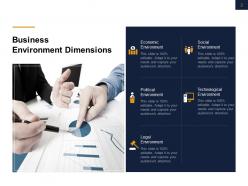
Slide 2: This slide showcases Business Environment Dimensions describing- Business Environment, Economic Environment, Political Environment, Legal Environment, Social Environment.
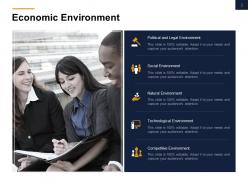
Slide 3: This slide describes Economic Environment.
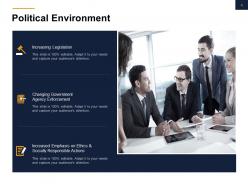
Slide 4: This slide showcases Political Environment with Increasing Legislation, Changing Government Agency Enforcement, Increased Emphasis on Ethics & Socially Responsible Actions.
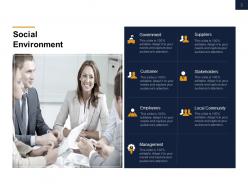
Slide 5: This slide describes the Social Environment with Government, Customer, Stakeholders, Suppliers, Management, employees etc.
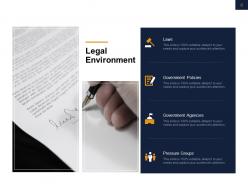
Slide 6: This slide showcases Legal Environment describing- Laws, Government Policies, Governement agencies, Pressure groups etc.
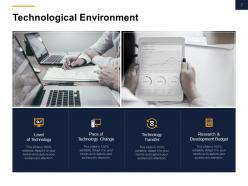
Slide 7: This slide describes Technological Environment with- Research & Development Budget, Level of Technology, Technology Transfer, Pace of Technology Change.
Slide 8: This is corporate Environmental Icons Slide.
Slide 9: This slide displays Graphs & Charts.
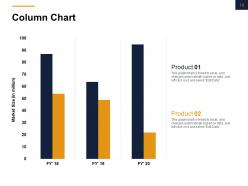
Slide 10: This slide displays Stacked Bar chart with product comparison.
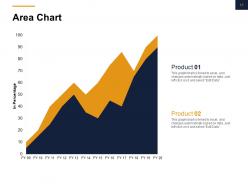
Slide 11: This slide showcases Area Chart with product comparison.
Slide 12: This slide is titled as Additional Slides for moving forward.
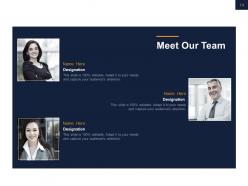
Slide 13: This is Our Team slide with names and designation.
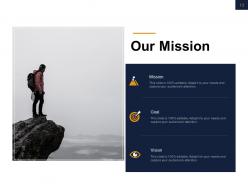
Slide 14: This is Our Mission slide with Vision, Mission and Goals.
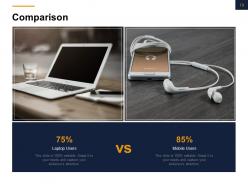
Slide 15: This slide showcases Comparison between wahtsapp users, twitter users, facebook users.
Slide 16: This is Financial slide showcasing Minimum, Medium, Maximum.
Slide 17: This is five years Timeline slide.
Slide 18: This slide is titled as Post it Notes. Post your important notes.
Slide 19: This is Quotes slide.
Slide 20: This is Thank You slide with address, email address and contact number.
Corporate Environment Powerpoint Presentation Slides with all 20 slides:
Convert the cynics with our Corporate Environment Powerpoint Presentation Slides. They will genuinely feel like following your directions.






FAQs for Corporate Environment
Key characteristics of a positive corporate environment include open communication, collaborative teamwork, employee recognition programs, professional development opportunities, and inclusive leadership practices. These elements work together by fostering trust, enhancing productivity, and reducing turnover, with many organizations finding that such environments ultimately deliver improved employee satisfaction, stronger performance outcomes, and sustainable competitive advantage.
Company culture influences employee productivity and satisfaction by establishing shared values, communication patterns, recognition systems, and work environments that either motivate or hinder performance. Organizations with positive cultures, especially in sectors like technology and financial services, experience higher engagement, lower turnover, and improved collaboration, ultimately delivering competitive advantage through enhanced workforce performance.
Effective communication shapes corporate environments by fostering transparency, building trust, aligning teams with organizational goals, and creating collaborative workflows across departments. Through clear channels and consistent messaging, organizations enhance employee engagement, reduce misunderstandings, and accelerate decision-making processes, with many companies finding that strategic communication ultimately delivers improved productivity and stronger workplace culture.
Leadership styles significantly influence workplace atmosphere by shaping communication patterns, decision-making processes, employee engagement levels, and organizational culture. Transformational leaders often create collaborative, innovative environments where teams feel empowered and valued, while autocratic approaches can streamline operations but may reduce creativity, with many organizations finding that adaptive leadership delivers optimal employee satisfaction and productivity.
Organizations can implement comprehensive diversity and inclusion strategies including inclusive recruitment practices, unconscious bias training, mentorship programs, employee resource groups, and equitable promotion policies. These initiatives streamline organizational culture by enhancing employee engagement, expanding talent pools, and improving decision-making processes, with many companies finding that diverse teams deliver significantly better innovation outcomes and competitive advantage.
Remote work settings transform corporate culture dynamics by reducing spontaneous interactions, altering communication patterns, and shifting from presence-based to results-focused evaluation methods. While this presents challenges in maintaining team cohesion and informal mentoring, many organizations find that remote environments enhance flexibility, inclusivity, and work-life integration, ultimately delivering broader talent access and improved employee satisfaction when managed strategically.
Maintaining cohesive corporate environments in hybrid workplaces presents challenges including communication gaps, cultural dilution, unequal collaboration opportunities, inconsistent employee experiences, and reduced spontaneous interactions. While these obstacles require strategic attention, organizations increasingly find that structured communication protocols, deliberate culture-building initiatives, and inclusive technology solutions streamline hybrid integration, ultimately delivering enhanced flexibility and competitive talent advantages.
Physical workspace design significantly influences employee well-being through natural lighting, ergonomic furniture, quiet zones, open collaboration areas, and flexible layouts that reduce stress while promoting movement. These design elements enhance productivity, foster spontaneous interactions, and support diverse work styles, with many organizations finding that thoughtfully designed spaces ultimately deliver improved employee satisfaction, stronger team dynamics, and enhanced creative problem-solving capabilities.
**INPUT**: What measures can be taken to ensure psychological safety in a corporate environment? **OUTPUT**: Psychological safety measures include open communication channels, regular feedback sessions, conflict resolution protocols, inclusive leadership training, and transparent decision-making processes. These approaches streamline team dynamics by encouraging honest dialogue, minimizing fear of retaliation, and fostering collaborative problem-solving, with many organizations finding that employees ultimately deliver enhanced innovation and performance.
Corporate social responsibility significantly enhances employees' perceptions by creating meaningful work experiences, fostering pride in organizational values, and demonstrating commitment to broader societal impact. Through CSR initiatives, companies strengthen employee engagement, attract top talent seeking purpose-driven employers, and build workplace cultures centered on shared values, ultimately delivering higher retention rates and improved organizational reputation.
Employee recognition and rewards significantly enhance corporate morale by increasing engagement, reducing turnover, fostering loyalty, and improving overall job satisfaction across teams. Through strategic recognition programs, organizations streamline retention efforts, boost productivity, and create positive workplace cultures, with many companies finding that consistent acknowledgment delivers stronger performance, enhanced collaboration, and ultimately sustainable competitive advantage.
Organizations can effectively manage conflict through proactive communication protocols, structured mediation processes, clear escalation pathways, and regular team-building initiatives that address issues before they escalate. These approaches streamline resolution by promoting transparency, encouraging collaborative problem-solving, and establishing consistent feedback mechanisms, with many companies finding that systematic conflict management ultimately delivers improved employee satisfaction, enhanced productivity, and stronger workplace relationships.
Onboarding processes significantly shape initial perceptions by establishing cultural expectations, demonstrating organizational values, providing clarity on roles and responsibilities, and facilitating meaningful connections with colleagues and leadership. Through comprehensive orientation programs, structured mentorship, and clear communication channels, companies create positive first impressions that enhance employee confidence, accelerate integration, and ultimately deliver higher retention rates and faster productivity ramp-up times.
Feedback mechanisms drive continuous improvement by creating transparent communication channels, identifying cultural gaps, and enabling real-time adjustments to workplace practices. Through regular surveys, peer reviews, and leadership assessments, organizations can address issues proactively, enhance employee engagement, and strengthen alignment with core values, ultimately delivering more adaptive cultures and improved retention rates.
Signs of a toxic corporate environment include poor communication, lack of transparency, high employee turnover, micromanagement, and absence of career development opportunities. These issues can be addressed by implementing regular feedback systems, promoting open dialogue, investing in leadership training, and establishing clear growth pathways, with many organizations finding that proactive cultural initiatives significantly enhance employee satisfaction and retention.
No Reviews