

Corporate financial debt restructuring powerpoint presentation slides




Try Before you Buy Download Free Sample Product
 Impress Your
 Audience
 100%
100% Editable
 Save Hours
 of Time


A process that allows multiple private and public organizations to lower their debt and improve their financial deficit by the means of asset transfer, equity exchange or increased payment time is known as debt restructuring. The following presentation provides an overview of the entire process of debt restructuring and how an organization can use it as tool to lower the debt. Initially this presentation provides an overview of the organization, its services and financial performance. These financial parameters can be revenues, gross profit, net profit and earning per share. Once the overview is provided the following the organization then needs to perform an in depth analysis of its current financial performance Multiple key aspect of the performance are covered such as the Income Statement, balance sheet, cash flow statement and other key ratios are captured. These ratios can be Price to Earning Ratio, Stock Turnover Ratio, Account Receivable Ratio, Creditor Turnover Ratio, Return on Equity and Account Payable Ratio. Once the financial performance is analyzed multiple options that can help the organization to recover from their debts are considered. These methods can be Merger and Acquisition, Debt Restructuring, Financial Restructuring and Bankruptcy. After Identifying multiple methods, a comparative analysis of these options is performed. After careful analysis debt restructuring is chosen to be the best option for the organization. After choosing debt restructuring as an option the organization initially studies the entire process of the same. The organization first goes through stabilization phase in which various pain points of the organization are identified and existing debt are reviewed. After that in preparation stage multiple regulatory requirements are identified and communication method for shareholder are considered. In the final stage Implementation, the actual process of debt restructuring begins as three major ways of debt restructuring transfer of Asset, Exchange of equity and Increase in payment time are studied. In the end multiple risk associated to debt restructuring are evaluated and mitigation strategies for the same are considered. The impact of debt restructuring is also evaluated and multiple KPIs Key performance indicators are decided to study the overall effect of debt restructuring.
People who downloaded this PowerPoint presentation also viewed the following :
Content of this Powerpoint Presentation
Slide 1: This slide introduces Corporate Financial Debt Restructuring. State your Company name and begin.
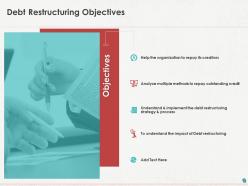
Slide 2: This slide displays Debt Restructuring Objectives
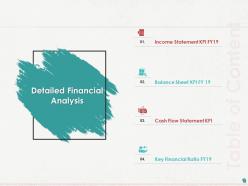
Slide 3: This slide displays Table of Content of the presentation.
Slide 4: This slide displays Table of Content
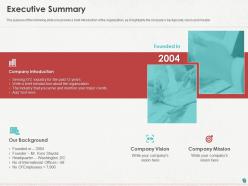
Slide 5: The purpose of the following slide is to provide a brief introduction of the organization, as it highlights the company’s background, vision and mission
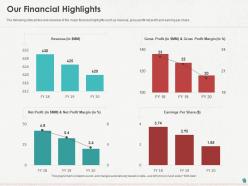
Slide 6: The following slide prides and overview of the major financial highlights such as revenue, gross profit net profit and earning per share
Slide 7: This slide displays Table of Content.
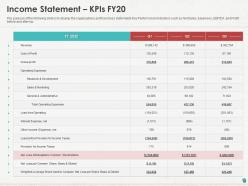
Slide 8: The purpose of the following slide is to display the organizations profit and loss statements Key Performance Indicators such as Revenues, COGS , Operating Profit and Net Profit
Slide 9: The purpose of the following slide is to display the organizations profit and loss statements Key Performance Indicators such as Net Sales, Expenses , EBITDA and Profit before and after tax
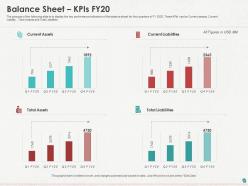
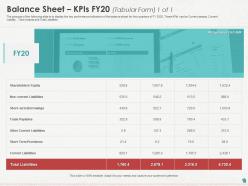
Slide 10: The purpose of this slide is to display the key performance indicators of the balance sheet for four quarters of FY 2020.
Slide 11: This slide displays the key performance indicators of the balance sheet for four quarters of FY 2020. These KPIs can be Current assets, Current Liability , Total Assets and Total Liabilities
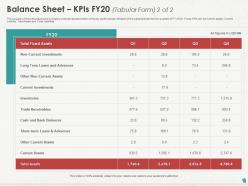
Slide 12: The purpose of the following slide is to display a tabular representation of the key performance indicators of the balance sheet for four quarters of FY 2020. These KPIs can be Current assets, Current Liability, Total Assets and Total Liabilities
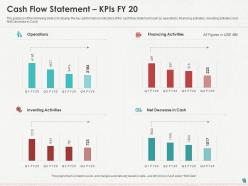
Slide 13: The purpose of the following slide is to display the key performance indicators of the cash flow statement such as operations, financing activates, investing activates and Net Decrease in Cash
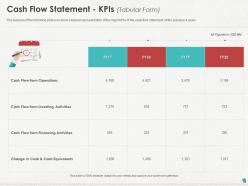
Slide 14: The purpose of this slide is to show a tabular representation of the major KPIs of the cash flow statement of the previous 4 years
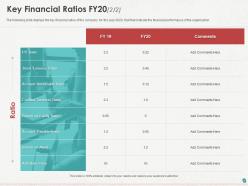
Slide 15: This slide displays the key financial ratios of the company for the year 2020, that that indicate the financial performance of the organization
Slide 16: The following slide displays the key financial ratios of the company for the year 2020, that that indicate the financial performance of the organization.
Slide 17: This slide displays Table of Content
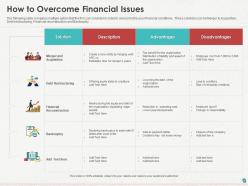
Slide 18: This slide compares multiple option that the firm can consider in order to overcome the poor financial conditions . These solutions can be Merger & Acquisition, Debt restructuring, Financial reconstruction and Bankruptcy
Slide 19: This slide analyzes merger and acquisition as an option for the organization to repay the bad debts and overcome financial issues that the firm has been facing . The provided timeline analyses the process timeline of the merger process and the graph analyses the success rate in market
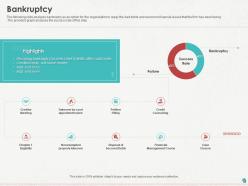
Slide 20: This slide analyzes bankruptcy as an option for the organization to repay the bad debts and overcome financial issues that the firm has been facing .The provided graph analyses the success rate of this step
Slide 21: The following slide analyzes debt restructuring as an option for the organization to repay the bad debts and overcome financial issues that the firm has been facing.
Slide 22: The following slide analyzes bankruptcy as an option for the organization to repay the bad debts and overcome financial issues that the firm has been facing.
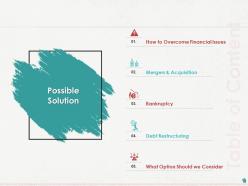
Slide 23: This slide displays Table of Content.
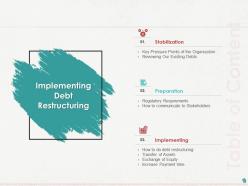
Slide 24: The purpose of the following slide is to show three key stages of the process of the debt Restructuring that are stabilization ,preparation and restructuring
Slide 25: This slide describes Stabilization.
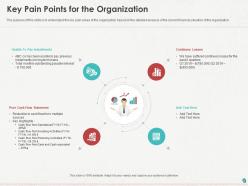
Slide 26: The purpose of this slide is to understand the key pain areas of the organization based on the detailed analysis of the current financial situation of the organization
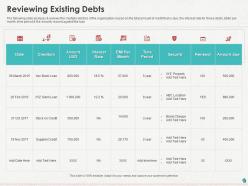
Slide 27: The following slide analyzes & reviews the multiple debtors of the organization-based on the total amount of credit that is due, the interest rate for these debts, EMIs per month, time period & the security issued against the loan
Slide 28: This slide shows Preparation.
Slide 29: The Purpose of this slide is to show the regulatory requirements that the organization needs to meet in order to initiate the process of debt restructuring
Slide 30: The purpose of the following slide is to highlight the main communication channels that the organization uses to spread the message across multiple stakeholders
Slide 31: This slide displays Restructuring.
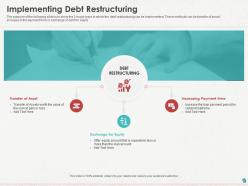
Slide 32: The purpose of the following slide is to show the 3 major ways in which the debt restructuring can be implemented. These methods can be transfer of asset, increase in the payment time or exchange of debt for equity
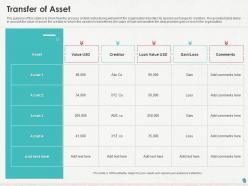
Slide 33: The purpose of this slide is to show how the process of debt restructuring will work if the organization transfers its asset in exchange for creditors.
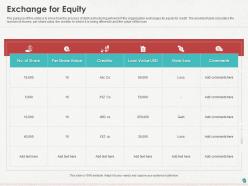
Slide 34: The purpose of this slide is to show how the process of debt restructuring will work if the organization exchanges its equity for credit.
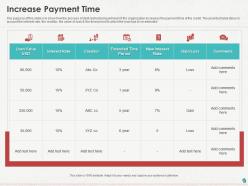
Slide 35: The purpose of this slide is to show how the process of debt restructuring will work if the organization increases the payment time of the credit.
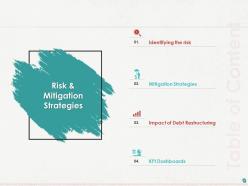
Slide 36: This slide displays Table of Content.
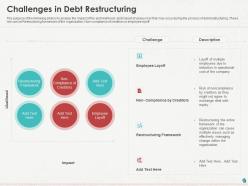
Slide 37: This slide analyze the impact of the and likelihood and impact of various risk that may occur during the process of debt restructuring. These risk can be Restructuring framework of the organization, Non-compliance of creditors or employee layoff
Slide 38: This slide shows multiple mitigation plans for effectively managing the risk within the organization. The provided table analyzes the risk its Impact/Likelihood and mitigation plan for it
Slide 39: The following slide displays the impact of the debt restructuring on the organization as the provided graph shows the forecasted creditors and losses for the next 4 years
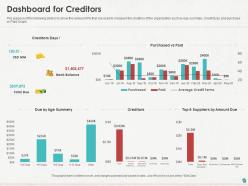
Slide 40: The purpose of the following slide is to show the various KPIs that are used to measure the creditors of the organization such as Age summary, Credit Dyas and purchase vs Paid Graph
Slide 41: This slide analyzes multiple assets of the company that can be used by the organization in exchange of debt. This slide analyses the procurement cost of major asset and their cost of maintenance
Slide 42: This is Corporate Financial Debt Restructuring Icons Slide
Slide 43: This slide is titled as Additional Slides for moving forward.
Slide 44: This slide reminds of Coffee Break
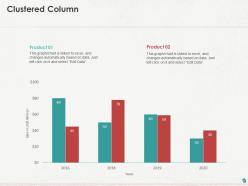
Slide 45: This slide displays Clustered Column chart for product comparison.
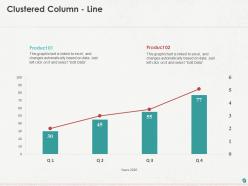
Slide 46: This slide shows Clustered Column - Line chart for product comparison.
Slide 47: This is 30 60 90 Days plan slide.
Slide 48: This is Quotes slide to represent important and motivational quote.
Slide 49: This is Our Team slide with Names and Designations.
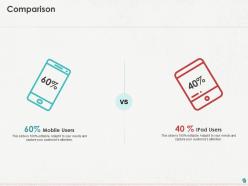
Slide 50: This slide displays Comparison of mobile and Ipad users.
Slide 51: This is Financial slide.
Slide 52: This slide displays Mission &Vision.
Slide 53: This is Thank You slide with Address, Contact number and Email address.
Corporate financial debt restructuring powerpoint presentation slides with all 53 slides:
Use our Corporate Financial Debt Restructuring Powerpoint Presentation Slides to effectively help you save your valuable time. They are readymade to fit into any presentation structure.




















FAQs for Corporate financial debt restructuring
Look, the big warning signs are pretty obvious - missed debt payments, cash flow tanking, or your debt ratios going completely nuts. Also watch for breaking loan covenants or burning through reserves way too fast. Banks pulling back? Credit rating drops? Yeah, that's your cue something's gotta change. Honestly, I learned this the hard way - don't wait until you're totally screwed to have these conversations. Multiple red flags popping up? Get your finance people together now and figure out restructuring before things get uglier.
So basically, secured debt holders get first dibs because they've got actual collateral - like banks that can grab your assets if things go sideways. Unsecured creditors? They're stuck waiting at the back of the line for whatever's left. Banks and secured lenders can basically strong-arm the whole process since they control real stuff. Meanwhile bondholders and suppliers usually get hammered with way bigger losses. It's pretty unfair honestly, but that's how the pecking order works. First thing you gotta do is figure out who owns what type of debt - that'll shape your whole game plan.
Look, when you're drowning in debt, financial advisors are like having a really good coach on your team. They'll dig into your numbers and figure out what's actually doable vs. what's just fantasy (spoiler: most people are way too optimistic). These guys negotiate with creditors for you and create restructuring plans that don't suck. They also wrangle all the different people involved - lawyers, accountants, your lenders. Honestly, the sooner you bring one in, the better. They catch solutions you'd never think of on your own.
First thing - list out everyone who matters: lenders, suppliers, customers, employees, investors. Then model how different debt scenarios mess with payment terms and your credit rating. People absolutely despise surprises way more than just hearing bad news upfront, so be straight with them. Run some tests on your vendor relationships if you're gonna stretch payment cycles. Maybe reach out directly to key customers to see how they're feeling about everything. Oh, and create some kind of matrix showing who gets hit when - that way you can fix relationship problems before they completely screw up your whole restructuring plan.
So there's a few ways companies usually handle this stuff. Payment deferrals and interest rate cuts are where most start - easier sells to creditors. Principal haircuts come next, but that's when creditors actually lose money so it gets messy. Debt-to-equity swaps are wild though - basically you're giving creditors pieces of your company instead of cash. Sometimes they'll just sell assets or find new money to refinance everything. Oh, and definitely talk to creditors early while you still have some leverage, not when you're already drowning.
So the big thing is transparency - public companies have to tell the SEC and shareholders literally everything, but private ones can negotiate quietly. Public companies are constantly filing 8-Ks for every little development, which honestly makes deals messier since everyone's watching. Way more regulatory oversight too. Private firms just work with their lenders behind closed doors, which is so much cleaner. Oh and public companies usually need shareholder approval for major restructuring stuff, which adds another layer of complexity. If you're working with a public company, just build in extra time for all the disclosure requirements and potential market drama.
Honestly, get your lawyers involved ASAP - this stuff gets messy fast. Three big things to watch: don't accidentally trigger any loan acceleration clauses (that'll torpedo everything), stay compliant with securities laws if you're public, and nail down rock-solid documentation. The paperwork part is actually huge - you need crystal clear terms on payments, collateral, defaults, all that. My buddy's company got burned because they rushed through the covenant review and missed something obvious. Short version: one screw-up here can drag you into years of litigation, so don't try to DIY it.
So debt restructuring is basically when you renegotiate with creditors to get better terms - lower rates, longer payment schedules, maybe even converting some debt to equity. Think of it as buying yourself time and breathing room. Your cash flow improves since you're not bleeding money on huge debt payments every month. That freed-up cash? Now you can actually invest in growing the business instead of just staying afloat. Here's the thing though - you've got to do this before you're desperate. Wait too long and creditors won't be nearly as willing to work with you.
Yeah, debt restructuring will ding your credit in the short run - no way around that. Rating agencies basically see it as "oh crap, they're in trouble" and usually knock you down 1-3 notches. Honestly though, if it actually fixes your cash flow problems, you can bounce back pretty fast. Companies I've worked with typically recover within 12-18 months if they don't mess it up. The trick is being upfront with the agencies from day one. Show them a solid recovery plan that isn't total fantasy, then actually follow through on it.
Ugh, this is tough but doable. Talk to your team first before anyone else - they'll hear rumors anyway. Don't sugarcoat the mess you're in, but hammer home how this restructuring actually saves jobs long-term. Investors want hard numbers and milestones they can measure, so give them that. The messaging has to match across both groups though - any mixed signals will totally screw you over later. I'd set up regular check-ins so people aren't stuck wondering what's happening next. Honestly, people respect honesty way more than corporate speak.
Look, creditor pushback is gonna be your biggest headache - those guys will fight you on everything. Legal fees will eat into your cash flow too, which sucks when you're already tight. Multiple stakeholder groups means everyone's pulling different directions, and honestly? Sometimes these talks just fall apart completely and you end up in bankruptcy anyway. Your credit rating's definitely taking a hit, so future financing gets way more expensive. Oh, and get good restructuring advisors involved ASAP - don't try doing this alone. Keep talking to all your creditor groups throughout, even when it gets uncomfortable.
Ugh, international insolvency is such a headache - you're dealing with totally different rules depending on where each subsidiary sits. Every country has its own creditor protection stuff and cross-border recognition standards. The UNCITRAL Model Law helps coordinate things, plus there's regional treaties like the EU Insolvency Regulation. But what's annoying is something that works perfectly in one place can totally blow up in another because of different creditor priorities. Honestly, I'd map out all your jurisdictions right away and get local lawyers involved from the start - trust me on this one.
GM's probably the biggest one - they used Chapter 11 in 2009 to wipe out like $30B in debt but kept running normally. Marvel's another crazy example, went from bankrupt in the late 90s to Disney paying $4B for them. Airlines do this stuff constantly though. American used bankruptcy to completely redo their labor deals and dump $20B in obligations, then merged with US Airways right after. The key thing they all did? Stayed in control of day-to-day operations while basically forcing creditors to accept way less money. Pretty ruthless but it works if you can pull it off.
Dude, timing is everything here. Jump too early and creditors think you're panicking over nothing. But wait too long? You're basically just begging at that point. I've watched companies screw this up both ways - some freak out after one rough quarter, others literally wait until they've got like three days left before default (which is just brutal). You want that goldilocks moment where you still have maybe 6-12 months of cash left. That way you can actually negotiate instead of just hoping they'll throw you a bone. Creditors need to be worried enough to take you seriously, but you still need some cards to play.
Dude, negotiation is make-or-break here. Come armed with solid financials and realistic payment plans - don't wing it. Some creditors will work with you, others are total hardasses. Focus on the big players first since they basically control the outcome. Your pitch needs to show them why restructuring beats bankruptcy for their bottom line. Maybe they get better recovery rates, maybe they keep a good client relationship going. Either way, you're selling them on why keeping you alive is worth it. Build momentum with the flexible ones first, then use that to pressure the stubborn creditors into reasonable terms.
-
Designs have enough space to add content.
-
Very unique and reliable designs.
-
Excellent products for quick understanding.
-
Informative presentations that are easily editable.