

Corporate governance guidelines and structure of the company powerpoint presentation slides





Try Before you Buy Download Free Sample Product
 Impress Your
Audience
 100%
Editable
 Save Hours
of Time


Corporate governance relates to the laws, procedures and mechanisms under which businesses are regulated. Governance guidelines and structure include managing various corporate needs, such as owners, senior management, consumers, suppliers, financiers, the government, and the environment. Here is an efficiently designed Corporate Governance Guidelines and Structure of the Company template that will be helpful for the company that wants to analyze their stakeholder governance guidelines, etc. Also, this report can be used by the company that wants to explore and study governance policies, understand share ownership guidelines and analyze the essential elements of remuneration structure. This presentation provides details on the companys overview and structure, business strategies, competitive advantage, management structure, and duties and responsibilities. Further, this presentation provides details on corporate governance guidelines, duties and responsibilities of board members, and mandatory board practices of the company. This also covers information on corporate governance policies of the company, supplier guiding principles, board engagement with the key stakeholders, share ownership guidelines and responsibilities of the remuneration committee and executive remuneration structure of the company. Download it now.
People who downloaded this PowerPoint presentation also viewed the following :
Content of this Powerpoint Presentation
Slide 1: This slide introduces Corporate Governance Guidelines and Structure of the Company. State Your Company Name and begin.
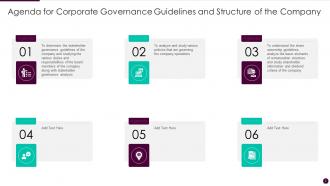
Slide 2: This slide shows Agenda for Corporate Governance Guidelines and Structure of the Company.
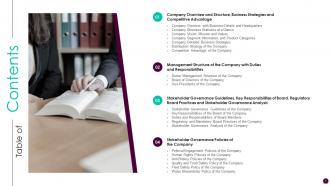
Slide 3: This slide presents Table of Content for the presentation.
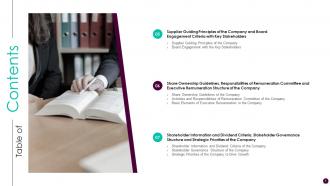
Slide 4: This is another slide continuing Table of Content for the presentation.
Slide 5: This slide shows title for topics that are to be covered next in the template.
Slide 6: This slide displays Company Overview with Business Details and Headquarters.
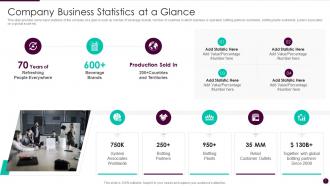
Slide 7: This slide represents basic statistics of the company at a glance such as number of beverage brands, number of countries in which business is operated, etc.
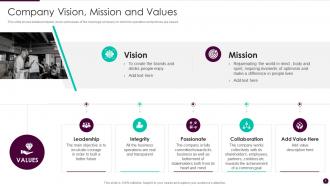
Slide 8: This slide shows detailed mission, vision and values of the beverage company on which its operation and policies are based.
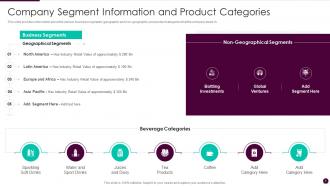
Slide 9: This slide showcases Company Segment Information and Product Categories.
Slide 10: This slide displays strategies that are followed by the company in order to gain competitive advantage.
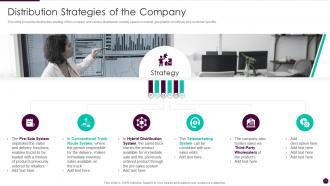
Slide 11: This slide shows the distribution strategy of the company and various distribution models.
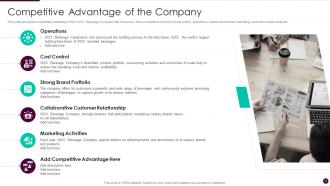
Slide 12: This slide represents competitive advantage of the XXXX Beverage Company that it has over other competitors.
Slide 13: This slide shows title for topics that are to be covered next in the template.
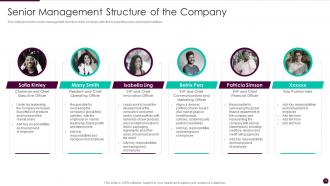
Slide 14: This slide showcases Senior Management Structure of the Company.
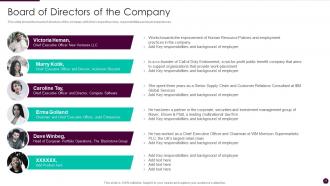
Slide 15: This slide presents board of directors of the company with their respective roles.
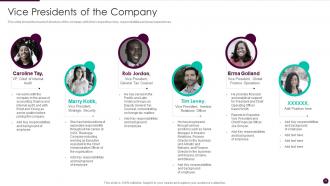
Slide 16: This slide displays Vice Presidents of the Company with their respective roles, responsibilities and past experiences.
Slide 17: This slide shows title for topics that are to be covered next in the template.
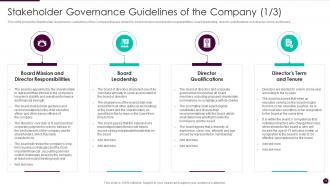
Slide 18: This slide presents Stakeholder Governance Guidelines of the Company.
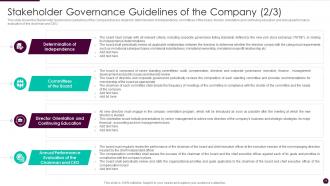
Slide 19: This is another slide continuing Stakeholder Governance Guidelines of the Company.
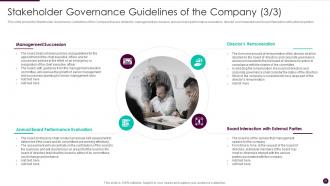
Slide 20: This is another slide continuing Stakeholder Governance Guidelines of the Company.
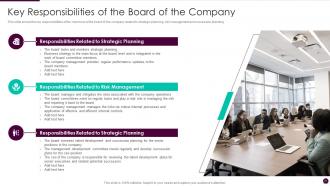
Slide 21: This slide displays Key Responsibilities of the Board of the Company.
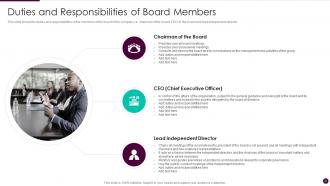
Slide 22: This slide represents Duties and Responsibilities of Board Members.
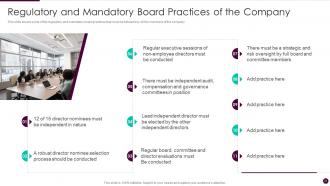
Slide 23: This slide showcases Regulatory and Mandatory Board Practices of the Company.
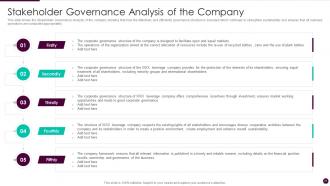
Slide 24: This slide displays Stakeholder Governance Analysis of the Company.
Slide 25: This slide shows title for topics that are to be covered next in the template.
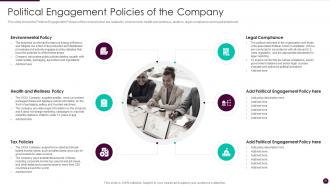
Slide 26: This slide presents Political Engagement Policies of the Company.
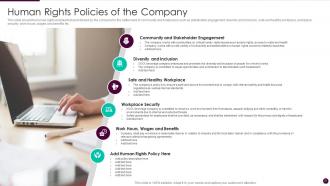
Slide 27: This slide displays human rights policies that are followed by the company for the betterment of community and employees such as stakeholder engagement, diversity and inclusion.
Slide 28: This slide represents the anti bribery policies that are followed by the company along with the relevant details of the policy.
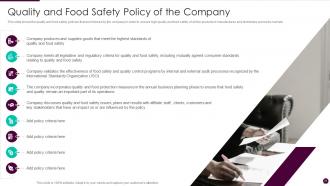
Slide 29: This slide showcases Quality and Food Safety Policy of the Company.
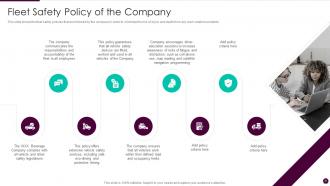
Slide 30: This slide presents fleet safety policies that are followed by the company in order to minimize the risk of injury.
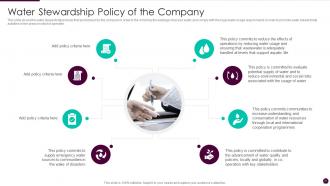
Slide 31: This slide displays water stewardship policies that are followed by the company.
Slide 32: This slide shows title for topics that are to be covered next in the template.
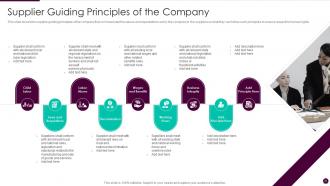
Slide 33: This slide presents supplier guiding principles of the company that communicate the values and expectations.
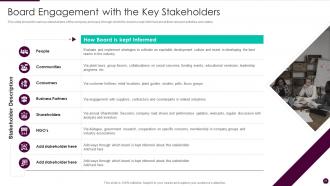
Slide 34: This slide displays various stakeholders of the company and ways through which the board is kept informed.
Slide 35: This slide shows title for topics that are to be covered next in the template.
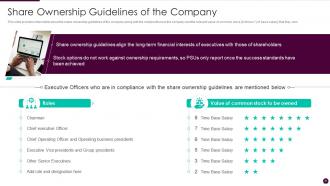
Slide 36: This slide presents Share Ownership Guidelines of the Company.
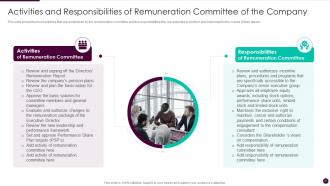
Slide 37: This slide represents Activities and Responsibilities of Remuneration Committee of the Company.
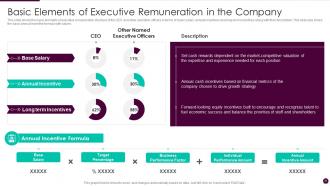
Slide 38: This slide showcases Basic Elements of Executive Remuneration in the Company.
Slide 39: This slide shows title for topics that are to be covered next in the template.
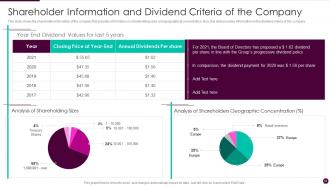
Slide 40: This slide presents Shareholder Information and Dividend Criteria of the Company.
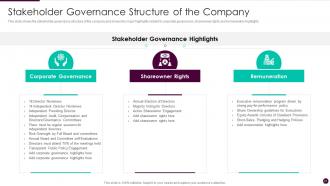
Slide 41: This slide displays Stakeholder Governance Structure of the Company.
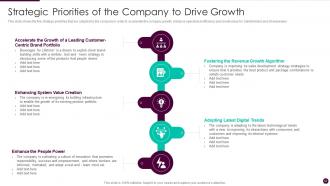
Slide 42: This slide represents five strategic priorities that are adopted by the company in order to accelerate the company growth.
Slide 43: This slide showcases Icons for Corporate Governance Guidelines and Structure of the Company.
Slide 44: This slide is titled as Additional Slides for moving forward.
Slide 45: This is Our Mission slide with related imagery and text.
Slide 46: This is About Us slide to show company specifications etc.
Slide 47: This is Our Target slide. State your targets here.
Slide 48: This slide presents Roadmap with additional textboxes.
Slide 49: This slide shows Post It Notes. Post your important notes here.
Slide 50: This is a Timeline slide. Show data related to time intervals here.
Slide 51: This slide contains Puzzle with related icons and text.
Slide 52: This slide depicts Venn diagram with text boxes.
Slide 53: This is a Quotes slide to convey message, beliefs etc.
Slide 54: This is a Thank You slide with address, contact numbers and email address.
Corporate governance guidelines and structure of the company powerpoint presentation slides with all 59 slides:
Use our Corporate Governance Guidelines And Structure Of The Company Powerpoint Presentation Slides to effectively help you save your valuable time. They are readymade to fit into any presentation structure.




















FAQs for Corporate governance guidelines and structure of the company
Focus on accountability, transparency, fairness, and responsibility first. Your board needs real oversight of management - not just rubber-stamping everything. Shareholders deserve proper access to info and actual rights. Honestly, most companies just check boxes here, but the smart ones actually follow through. You'll need solid internal controls and regular risk assessments too. Executive pay should make sense and connect to real performance (this one's where a lot of boards totally fail). Start by auditing what you're doing now against these basics. That'll show you the biggest gaps to tackle.
So basically, good corporate governance makes companies perform better because the board actually does its job overseeing management. Risks get caught early, money gets spent smarter, and you avoid those massive screw-ups that tank stock prices. Investors love this stuff - well-governed companies usually trade higher because there's more trust. The transparency draws in better talent too. Honestly, I think most people underestimate how much this matters. If you're looking at investments, check out board independence first. Also peek at how they structure executive pay - that tells you a lot about whether leadership's interests align with yours.
So boards are like your company's watchdogs - they hire and fire CEOs, set big picture strategy, and make sure management isn't doing anything sketchy with investor cash. They're supposed to grill executives on finances, risks, major moves. Basically "adult supervision" though honestly some boards suck at this part. They also decide executive pay and handle regulatory stuff. If you're dealing with board drama, just be super transparent and come prepared. Nothing pisses them off more than surprises, and they love detailed materials that spell out what could go right or wrong.
Honestly, start with publishing detailed board meeting minutes and clear exec compensation reports - that stuff matters more than people think. Get some independent directors who'll actually push back instead of just nodding along. Third-party audits help catch problems before they blow up. Regular shareholder updates are huge too. The trick is being upfront about everything instead of waiting for someone to ask. I'd probably tackle executive pay transparency first since it's pretty straightforward, then add other pieces. Way less overwhelming than trying to fix everything at once.
Honestly, the difference is huge. Private companies can pretty much structure their boards however they want - way more flexibility there. But once you go public? You're looking at SEC filings, independent directors, audit committees, the whole Sarbanes-Oxley mess. Most public companies need majority independent boards plus tons of transparency requirements. The regulatory stuff alone will make your head spin. If your clients are thinking about going public, just make sure they know what they're signing up for - the governance costs and complexity jump dramatically.
So here's the deal - good corporate governance basically decides who's on the hook when risks pop up. You need clear lines of responsibility and regular check-ins with leadership. Otherwise it's just chaos where everyone's pointing fingers when stuff hits the fan. The board has to actually care about this stuff, not just rubber-stamp whatever gets put in front of them. Short version: if people can't escalate problems easily or don't know whose job it is to fix things, you're screwed when real issues surface. Structure matters way more than most companies think.
Honestly? Most companies totally blow it when it comes to treating stakeholders fairly - they only care about shareholders. Start with transparency in your decision-making and financial stuff. You need solid accountability for leadership and actual conflict of interest policies that get enforced (not just written down somewhere). Don't forget whistleblower protections - those are huge. Environmental and social responsibility should be part of everything, not an afterthought. Oh, and clear codes of conduct that people actually follow. I'd audit what you have now first and tackle the biggest gaps.
Look, AI can catch problems before they hit your board meetings - risk monitoring, compliance stuff, you know. Blockchain's where it gets interesting though. Creates these tamper-proof records for voting and decisions that auditors actually love for once. Start simple with something like board voting or expense approvals first. Don't go crazy trying to overhaul everything at once. The efficiency gains are real once you get rolling, plus your data integrity gets way better across the whole system. Automated compliance reporting is honestly a game-changer too.
Ugh, honestly the biggest pain is always money and culture shock. Companies have to shell out for new systems and training - it's not cheap. Then suddenly you're forcing formal processes on people who've been doing things casually forever, and they hate it. Feels like unnecessary red tape to them. Board stuff gets weird too when you're mixing independent directors with industry experts. Oh, and smaller companies? They're totally screwed because they don't have the budget but regulators still expect compliance. I'd say start simple - basic policies and board reviews first.
Dude, regulatory rules totally dictate how companies can run things in different countries. The US and UK are crazy strict about board independence - Sarbanes-Oxley made sure of that. Germany's more about getting workers involved through their co-determination thing. Disclosure and audit stuff varies wildly too. Some places spell out exactly what you need to do, others let you wing it as long as you explain why. The EU's on this huge sustainability kick right now which is... a lot. Honestly? Map out each country's rules before you dive in. What's just "good practice" somewhere might be straight-up required elsewhere.
Look, stakeholder engagement is massive for corporate governance. You get insights from way more than just shareholders - employees, customers, communities, suppliers, basically everyone your company affects. It helps you dodge those "oh shit, we didn't see that coming" disasters that destroy companies overnight. Honestly, I've seen too many businesses crash because they only listened to the boardroom. Regular check-ins with these groups leads to smarter decisions and you'll catch problems before they explode. Regulators love seeing this transparency too. My advice? Map out your key stakeholders and set up consistent ways to hear from them. Trust me, it'll save you headaches later.
Honestly, think of governance as the backbone that makes CSR actually work instead of just being marketing BS. Your board has to watch over sustainability stuff and balance what everyone wants - not just investors making bank. Without good governance, CSR is basically meaningless fluff. You need clear policies, ways to measure progress, and someone actually held accountable for results. I'd start by getting your board to take on real ESG responsibilities with regular check-ins. It's those guardrails that'll keep everything legit and measurable.
Get a basic board going first - even just you plus a few advisors works. Monthly meetings are plenty, but actually write down what you decide (boring but investors eat that up later). Set clear roles from the start and throw in some basic policies around money stuff and conflicts of interest. Trust me, adding governance later is such a pain compared to just doing it right away. The transparency thing is huge though - make a simple update system or dashboard so people know what's happening. Otherwise you'll spend half your time answering "how are things going?" texts.
Dude, you've got way more say than you'd expect! Vote on board stuff and big decisions at those annual meetings. Small shareholders can band together and actually move the needle - it's wild. File proposals for things like capping exec pay or pushing board diversity. Sure, the big institutional guys have more clout, but retail investors are getting louder these days. Don't just sit on your shares doing nothing though. Actually vote, show up to meetings if you can, maybe join some shareholder groups to make your voice bigger.
Okay so audits and compliance are like your company's safety net - they spot issues before everything blows up. External audits make sure your financial stuff is legit and follows all the rules. Internal compliance handles the day-to-day policy stuff. Honestly, I think of them as quality control but for business ethics, if that makes sense? Investors and regulators trust you more when they know someone's actually double-checking your work. The real trick though is using those audit results to fix things instead of just filing them away somewhere.
-
Easy to edit slides with easy to understand instructions.
-
Very well designed and informative templates.