

Corporate Governance Of Information Technology CGIT Powerpoint Presentation Slides





Try Before you Buy Download Free Sample Product
 Impress Your
Audience
 100%
Editable
 Save Hours
of Time


This PowerPoint presentation gives a brief idea about the business problems and the need for IT governance implementation in the company. In this Corporate Governance of Information Technology CGIT PowerPoint, we have discussed the overview of IT governance by covering its life-cycle, risk management, and compliance. In addition, this Information and Communications Technology Governance ICT Governance PPT contains different IT governance frameworks such as COBIT, ITIL, COSO, CMMI, FAIR, and strategic IT governance models. Furthermore, this Corporate Governance of Information Technology CGIT template includes the IT governance framework selection process, its domain such as a framework for the governance of enterprise IT, strategic management, benefits realization, risk optimization, and resource optimization. It also covers the training, budget, and RACI matrix for IT governance implementation. Moreover, this Corporate Governance of Information and Communications Technology PPT caters to effective implementation steps for IT governance in the company and its post-implementation impact. Lastly, this Enterprise Governance of Information Technology EGIT deck comprises the 30-60-90 days plan, an implementation roadmap, and a dashboard. Download our 100 percent editable and customizable template, which is also compatible with Google Slides.
People who downloaded this PowerPoint presentation also viewed the following :
Content of this Powerpoint Presentation
Slide 1: This slide introduces Corporate Governance of Information Technology (CGIT). State your company name and begin.
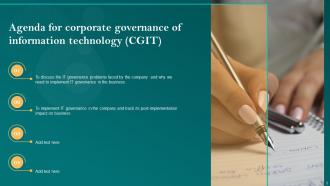
Slide 2: This slide states Agenda of the presentation.
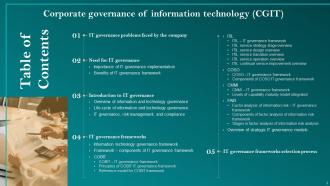
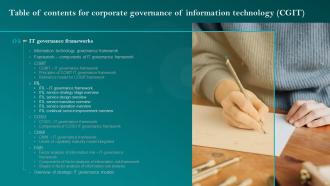
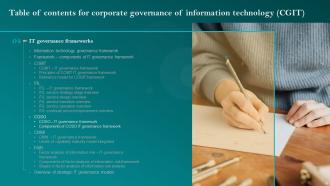
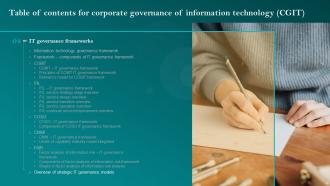
Slide 3: This slide presents Table of Content for the presentation.
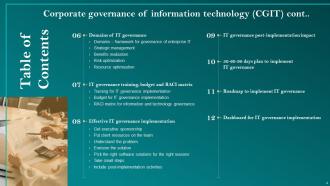
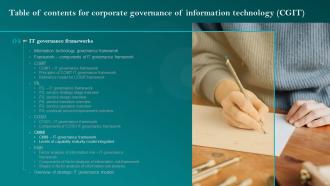
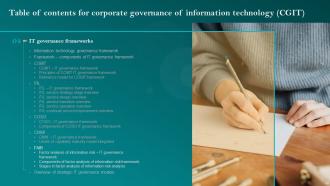
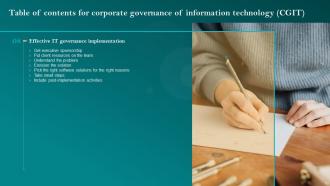
Slide 4: This is another slide continuing Table of Content for the presentation.
Slide 5: This slide highlights title for topics that are to be covered next in the template.
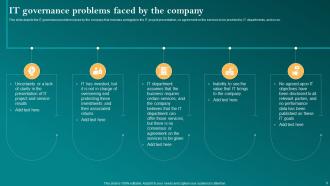
Slide 6: This slide shows IT Governance Problems Faced by the Company.
Slide 7: This slide highlights title for topics that are to be covered next in the template.
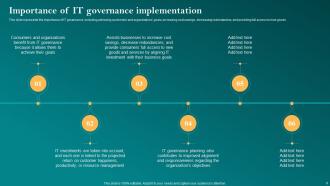
Slide 8: This slide presents Importance of IT Governance Implementation.
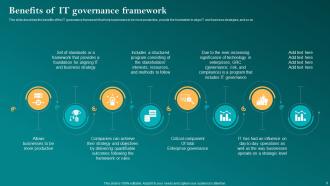
Slide 9: This slide describes the benefits of the IT governance framework.
Slide 10: This slide highlights title for topics that are to be covered next in the template.
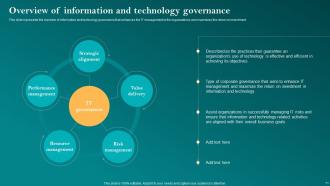
Slide 11: This slide displays Overview of Information and Technology Governance.
Slide 12: This slide represents Life-Cycle of Information and Technology Governance.
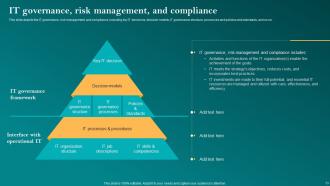
Slide 13: This slide showcases IT Governance, Risk Management, and Compliance.
Slide 14: This slide highlights title for topics that are to be covered next in the template.
Slide 15: This slide describes the IT governance framework that helps define processes.
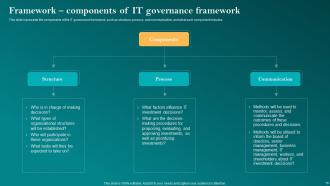
Slide 16: This slide represents the components of the IT governance framework.
Slide 17: This slide highlights title for topics that are to be covered next in the template.
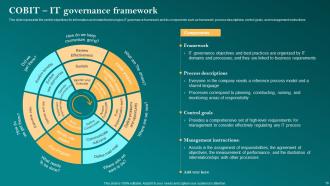
Slide 18: This slide represents the Control Objectives for Information and Related Technologies.
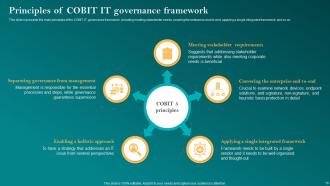
Slide 19: This slide showcases Principles of COBIT IT Governance Framework.
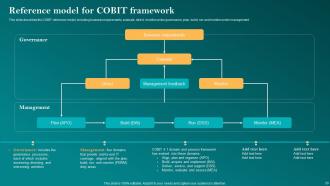
Slide 20: This slide displays Reference Model for COBIT Framework.
Slide 21: This slide highlights title for topics that are to be covered next in the template.
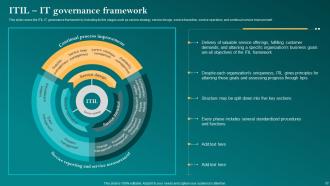
Slide 22: This slide covers the ITIL IT governance framework by including its five stages.
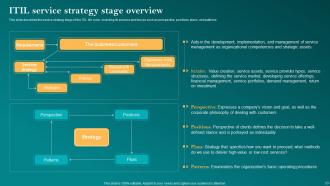
Slide 23: This slide describes the service strategy stage of the ITIL life cycle.
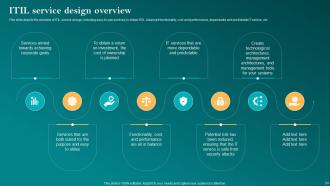
Slide 24: This slide depicts the overview of ITIL service design.
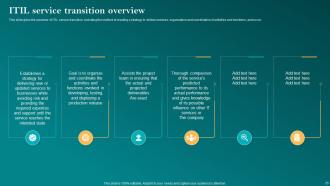
Slide 25: This slide gives the overview of ITIL service transition.
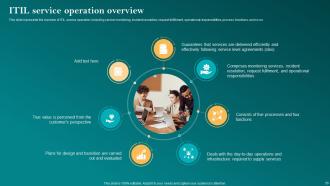
Slide 26: This slide represents the overview of ITIL service operation.
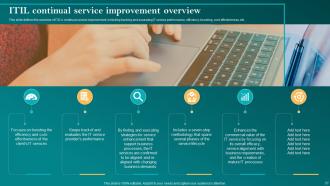
Slide 27: This slide showcases ITIL Continual Service Improvement Overview.
Slide 28: This slide highlights title for topics that are to be covered next in the template.
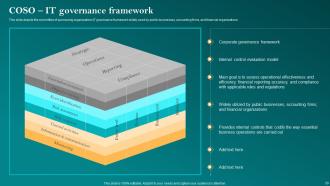
Slide 29: This slide depicts the Committee of Sponsoring Organizations IT governance framework.
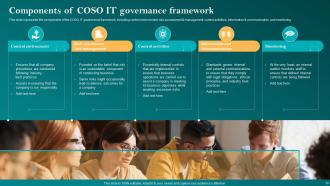
Slide 30: This slide represents Components of COSO IT Governance Framework.
Slide 31: This slide highlights title for topics that are to be covered next in the template.
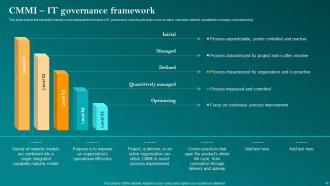
Slide 32: This slide depicts the Capability Maturity Model Integrated framework of IT governance.
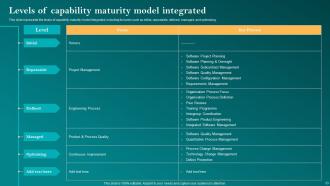
Slide 33: This slide showcases Levels of Capability Maturity Model Integrated.
Slide 34: This slide highlights title for topics that are to be covered next in the template.
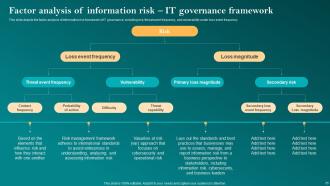
Slide 35: This slide depicts the Factor Analysis of Information Risk framework of IT governance.
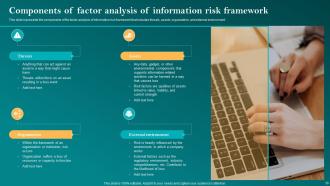
Slide 36: This slide shows Components of Factor Analysis of Information Risk Framework.
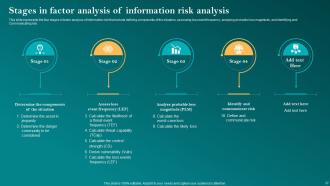
Slide 37: This slide presents Stages in Factor Analysis of Information Risk Analysis.
Slide 38: This slide highlights title for topics that are to be covered next in the template.
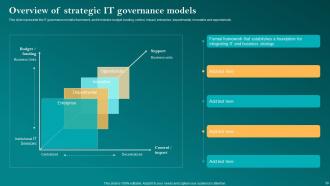
Slide 39: This slide represents the IT governance models framework.
Slide 40: This slide highlights title for topics that are to be covered next in the template.
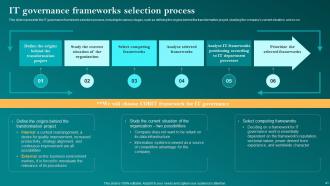
Slide 41: This slide showcases IT Governance Frameworks Selection Process.
Slide 42: This slide highlights title for topics that are to be covered next in the template.
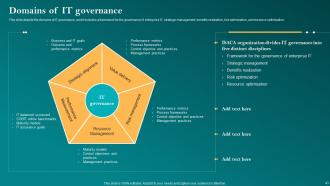
Slide 43: This slide depicts the domains of IT governance, and it includes a framework for the governance of enterprise IT.
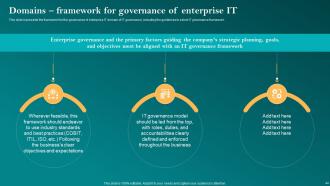
Slide 44: This slide represents the framework for the governance of enterprise IT.
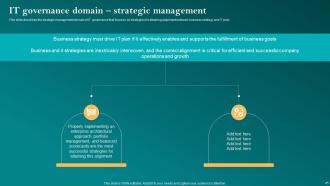
Slide 45: This slide describes the strategic management domain of IT governance.
Slide 46: This slide depicts the benefits realization domain of IT governance.
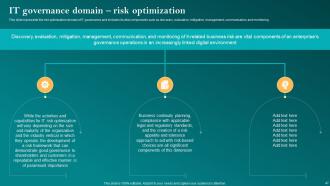
Slide 47: This slide represents the risk optimization domain of IT governance.
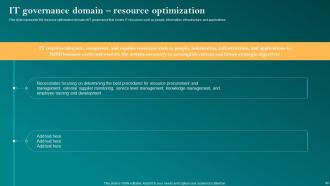
Slide 48: This slide showcases the resource optimization domain of IT governance.
Slide 49: This slide highlights title for topics that are to be covered next in the template.
Slide 50: This slide shows Training for IT Governance Implementation.
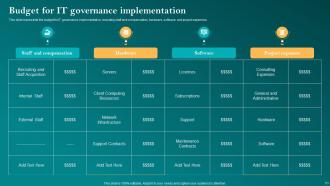
Slide 51: This slide presents Budget for IT Governance Implementation.
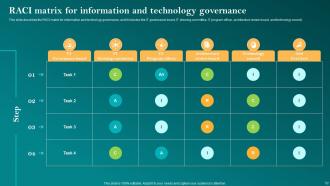
Slide 52: This slide displays RACI Matrix for Information and Technology Governance.
Slide 53: This slide highlights title for topics that are to be covered next in the template.
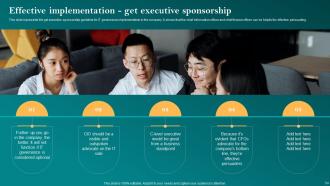
Slide 54: This slide represents the get executive sponsorship guideline for IT governance implementation.
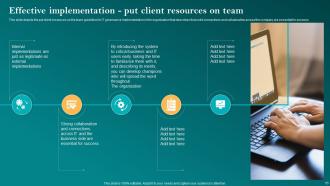
Slide 55: This slide depicts the put client resources on the team guideline for IT governance implementation.
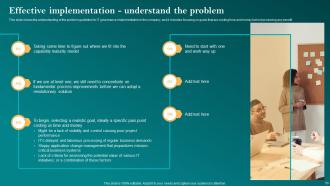
Slide 56: This slide shows the understanding of the problem guideline for IT governance implementation.
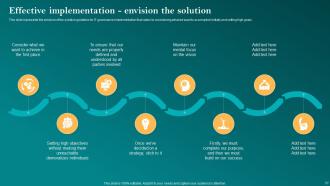
Slide 57: This slide represents the envision of the solution guideline for IT governance.
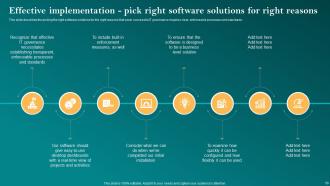
Slide 58: This slide describes the picking the right software solutions for the right reasons.
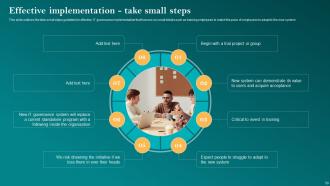
Slide 59: This slide outlines the take small steps guideline for effective IT governance implementation.
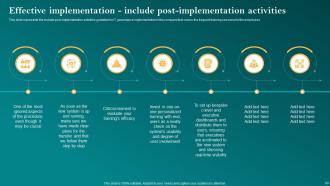
Slide 60: This slide represents the include post-implementation activities guideline for IT governance.
Slide 61: This slide highlights title for topics that are to be covered next in the template.
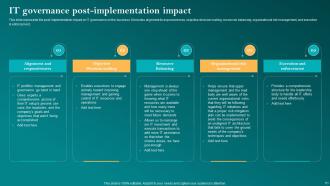
Slide 62: This slide showcases IT Governance Post-implementation Impact.
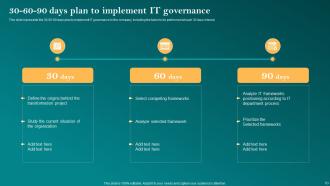
Slide 63: This slide displays 30-60-90 Days Plan to Implement IT Governance.
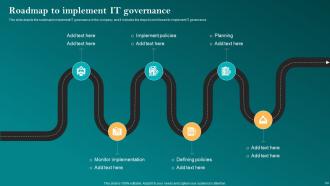
Slide 64: This slide shows Roadmap to Implement IT Governance.
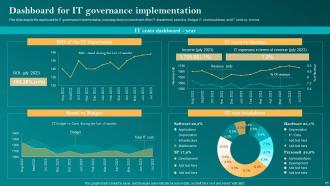
Slide 65: This slide presents Dashboard for IT Governance Implementation.
Slide 66: This slide contains all the icons used in this presentation.
Slide 67: This slide is titled as Additional Slides for moving forward.
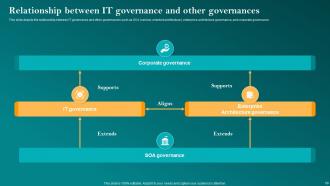
Slide 68: This slide displays Relationship between IT governance and other governances.
Slide 69: This slide showcases Workflow of IT governance process.
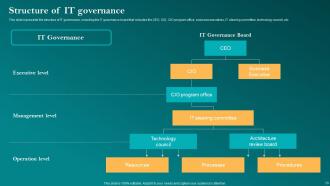
Slide 70: This slide represents Structure of IT governance.
Slide 71: This slide showcases Magnifying Glass to highlight information, specifications etc
Slide 72: This slide displays Mind Map with related imagery.
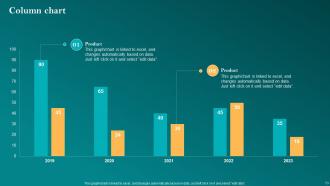
Slide 73: This slide displays Column chart with two products comparison.
Slide 74: This slide contains Puzzle with related icons and text.
Slide 75: This is Our Target slide. State your targets here.
Slide 76: This slide depicts Venn diagram with text boxes.
Slide 77: This slide shows Post It Notes. Post your important notes here.
Slide 78: This is a Thank You slide with address, contact numbers and email address.
Corporate Governance Of Information Technology CGIT Powerpoint Presentation Slides with all 83 slides:
Use our Corporate Governance Of Information Technology CGIT Powerpoint Presentation Slides to effectively help you save your valuable time. They are readymade to fit into any presentation structure.












FAQs for Corporate Governance Of Information Technology CGIT
Look, you need three main things: strategic alignment, risk management, and performance tracking. Map your IT stuff to actual business goals first - seriously, this step alone will show you where you're wasting money. Set up proper oversight with board committees and clear roles between IT and business teams. Cybersecurity and data governance are massive headaches but you can't skip them. Compliance is annoying but whatever, it's required. Performance metrics are your friend here - they prove to executives that IT isn't just burning cash. Without solid measurement, you're basically fighting an uphill battle every budget cycle.
So here's what's worked for me - start by connecting your IT spending directly to whatever your company's actually trying to achieve. Like if customer experience is the big thing, then your IT decisions should focus on customer-facing stuff and analytics. Get business people on your IT steering committee, not just the tech team (seriously, this changed everything for us). Your project prioritization needs both business value AND technical metrics. Set up regular check-ins to see if your tech choices are actually helping hit those strategic goals. Honestly, the whole point is creating processes that force IT and business folks to keep talking about what matters most.
Look, risk management is what keeps IT governance from falling apart. Without it, you're just guessing which threats actually matter and dumping money everywhere. Map out your critical systems first - that's where the real vulnerabilities hide. Your executives need clear visibility into what could break and cost serious cash. Honestly, I've seen too many companies skip this step and regret it later. It helps you prioritize security spending and figure out which compliance stuff you can't ignore. The whole thing gives your board actual data to make smart decisions about tech investments instead of flying blind.
So compliance stuff like SOX or GDPR basically makes you get your IT act together - no more winging decisions. You'll need documented processes, clear roles, audit trails, all that fun paperwork. Honestly though? It actually helps in the long run. Better oversight of where your IT money goes, clearer escalation when things go sideways. The trick is baking compliance right into your governance setup from day one. Way easier than trying to retrofit everything later (learned that one the hard way). It forces better alignment between IT and business goals too.
Get everyone involved from the start - legal, HR, operations, actual users, not just IT people. Write stuff people can actually read (seriously, nobody's getting through 20 pages of tech jargon). You'll want regular reviews since tech moves crazy fast. Have clear consequences spelled out beforehand or nobody takes it seriously. Training sessions when you launch, then yearly refreshers. Oh and definitely test with a small group first - they'll catch the weird stuff that sounds good on paper but totally doesn't work in real life. Saves you from looking like an idiot later.
Track the hard numbers first - project success rates, budget overruns, security incidents, compliance results. That stuff's easy to measure. But honestly? The soft metrics are where you'll really see what's working. Survey people about decision speed and whether IT actually helps them do their job better. Industry benchmarks are useful too, though every company's different. Set up quarterly reviews to look at everything together - I'd probably do it over lunch or something informal so people actually talk. Oh, and don't just collect data for the sake of it. Use what you find to tweak your approach.
Look, you absolutely need everyone on board with IT decisions - and honestly, that's pretty much your whole organization these days. Business leaders, users, IT folks, sometimes even customers. Get them talking early and often. Why? Better requirements, smoother rollouts, fewer disasters later. It also stops IT from going rogue and building shiny toys nobody actually needs (we've all seen that happen). The trick is mapping out your key people for each big project and setting up regular check-ins. Don't just involve them once and disappear.
Honestly, start by mapping out who's making IT decisions right now - you'll probably find some messy gaps. Create an IT steering committee but don't just stuff it with tech people. Pull in business folks too so decisions actually make sense for the company. Document your processes (yeah, boring but necessary) and stick to them. Regular audits help catch problems early. The communication piece is huge though - stakeholders get cranky when they're left in the dark about projects and budgets. Oh, and make sure there's clear reporting to leadership happening regularly. It's kinda like herding cats sometimes, but having structure really does help.
Honestly, the biggest pain points are when IT and business teams aren't on the same page strategically. You'll also run into messy accountability issues - like nobody knows who's actually responsible for what. Risk management gets overlooked way too often. And measuring ROI on IT stuff? Good luck with that nightmare. Here's what actually works: set up clear governance with defined roles first. Your steering committee needs both sides talking regularly (not just monthly check-ins). Consistent reporting helps, plus solid risk processes. The key thing though - and this sounds obvious but people mess it up constantly - is connecting every IT project directly to business goals. Otherwise you're just burning money on shiny tech nobody needs.
Honestly, new tech totally breaks your old governance playbook. AI, blockchain, all that stuff moves way too fast for rigid processes. You'll need frameworks that can actually adapt quickly - like, we're talking algorithmic bias and smart contract bugs that weren't even a thing before. Risk assessments get way more complex too. I'd start by figuring out what emerging tech is actually coming down your pipeline, then see where the governance holes are. The trick is staying flexible while you're still keeping oversight. Otherwise you'll just be playing catch-up forever.
Focus on stuff that actually shows business impact - system availability, project timelines, cost per user. Uptime matters but honestly? Executives care way more about whether IT helps the company grow. Security incidents are huge right now, plus compliance scores and how well your projects match what leadership wants to accomplish. User satisfaction is probably your best metric since unhappy users = unhappy business. Oh and don't go crazy with too many numbers - pick 3-5 things your execs will actually understand and give a damn about, then build from there.
Honestly, you've gotta get leadership to actually care first - nothing works without budget and real support from the top. Train everyone regularly, not just the tech people. Make your policies readable instead of boring legal garbage that sits in a folder somewhere. Build security checks right into your workflows so it happens automatically. Regular assessments help too, and celebrate when people spot issues instead of making them feel bad about it. The whole "security is just IT's problem" mindset has to die - it's literally everyone's job now. Oh, and don't make it so complicated that people just work around it.
Ugh, GDPR and CCPA are such a pain but honestly they've changed everything. You can't just slap privacy controls on later - learned that the hard way at my last job. Build your governance framework with clear data policies and regular audits from the start. Cross-functional teams are mandatory since this hits legal, security, AND operations. The fines are absolutely brutal - we're talking millions - so suddenly the C-suite actually gives a damn about IT governance decisions. First step? Map out where your sensitive data sits and who can access it. Trust me on this one.
Honestly, start with the repetitive compliance stuff - that's where you'll see results fast. Automated reporting saves SO much time, and real-time dashboards actually get executives engaged (shocking, I know). Set up alerts for security issues and policy violations so problems don't blindside you. AI flagging potential issues early is clutch. The audit trails become way cleaner too, which makes everyone's life easier. I'd focus on whatever paperwork is driving your team crazy first. Once you automate that mess, they can actually work on strategy instead of drowning in forms.
Dude, training is everything for IT governance. Without it, your policies just sit there collecting dust while everyone ignores them. Board members need to actually understand tech risks, IT teams have to learn the frameworks, and regular employees need to know their part in data protection stuff. Companies mess this up constantly - they'll roll out some fancy governance program then act shocked when nobody follows it. Can't be a one-and-done thing either. You've got to figure out where people are clueless first, then build programs that actually connect to situations they deal with every day. Makes all the difference honestly.
-
The templates are easy to get, and the chat customer support is excellent.
-
I was really impressed with the presentation I created with their templates. I’ll be using their services moving forward.