

Corporate IT Alignment powerpoint presentation slides




Try Before you Buy Download Free Sample Product
 Impress Your
 Audience
 100%
100% Editable
 Save Hours
 of Time


IT Alignment is crucial for ensuring all available resources are used as effectively as possible. Check out our professionally curated Corporate IT Alignment template. It summarizes the IT alignment within the organization, the steps involved, and the results. Our Corporate Management deck showcases the essential elements of the business and IT alignment model. The features include the necessity of company IT Alignment, issues with the market condition, causes of business and IT misalignment, etc. Our Management Support Systems PPT also discusses the significance of business IT alignment, including its advantages, influence, and effects on business goals and trade. It further exhibits the various stages of business, IT alignment, issues and solutions, corporate management, a checklist, best practices, and vital success factors. Additionally, our Corporate It Alignment module explains the strategies for enterprise IT Alignment, like the strategic alignment model SAM, the SAMM model to measure alignment maturity, the layers model, and the V model. Lastly, it includes the impact of business IT alignment, driving paybacks, a budget, timeline, roadmap, dashboard, and case study. Get instant access to this powerful template.
People who downloaded this PowerPoint presentation also viewed the following :
Content of this Powerpoint Presentation
Slide 1: This slide introduces Corporate IT Alignment. Commence by stating Your Company Name.
Slide 2: This slide depicts the Agenda of the presentation.
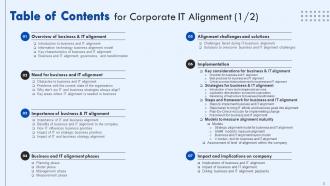
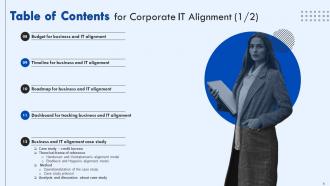
Slide 3: This slide incorporates the Table of Contents.
Slide 4: This is yet another slide continuing the Table of Contents.
Slide 5: This slide highlights the Title for the Topics to be discussed further.
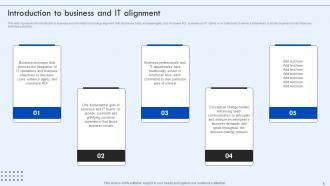
Slide 6: This slide represents the introduction to business and information technology alignment that decreases costs, increases agility, and increases ROI.
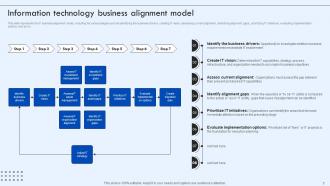
Slide 7: This slide showcases the Information technology business alignment model.
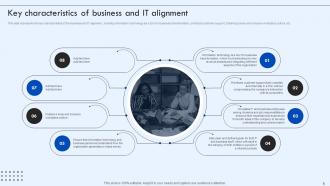
Slide 8: This slide states the Key characteristics of business and IT alignment.
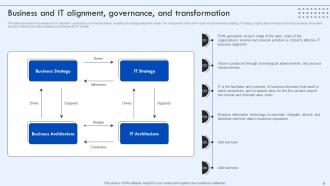
Slide 9: This slide represents the business and IT alignment, governance, and transformation.
Slide 10: This slide elucidates the Heading for the Components to be covered in the following template.
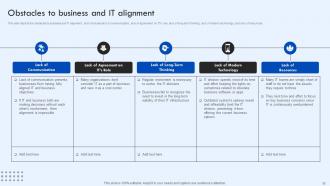
Slide 11: This slide depicts the obstacles to business and IT alignment.
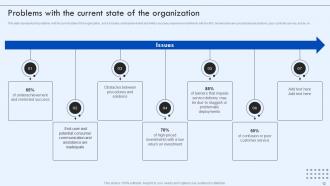
Slide 12: This slide states the Problems with the current state of the organization.
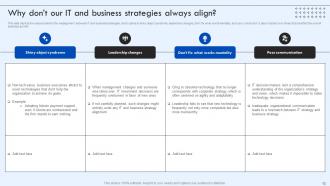
Slide 13: This slide reveals the reasons behind the misalignment between IT and business strategies.
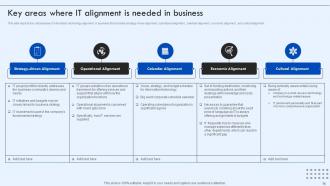
Slide 14: This slide highlights the critical areas of information technology alignment in business.
Slide 15: This slide mentions the Title for the Ideas to be covered further.
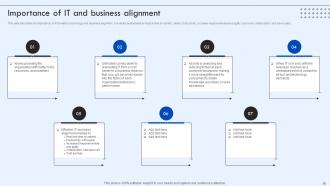
Slide 16: This slide describes the importance of information technology and business alignment.
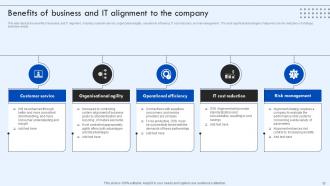
Slide 17: This slide showcases the benefits of business, and IT alignment, including customer service, organizational agility, operational efficiency, etc.
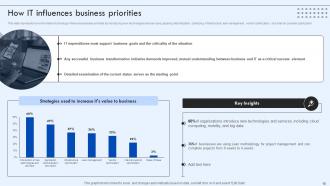
Slide 18: This slide represents how information technology influences business priorities.
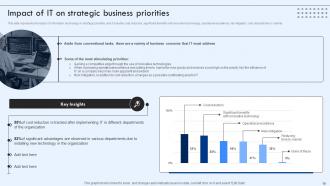
Slide 19: This slide elucidates the Impact of IT on strategic business priorities.
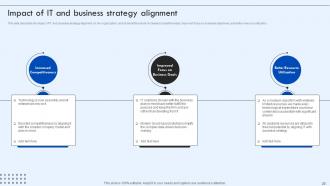
Slide 20: This slide describes the impact of IT and business strategy alignment on the organization.
Slide 21: This slide presents the Heading for the Ideas to be discussed in the following template.
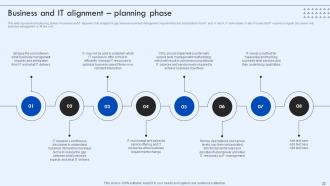
Slide 22: This slide showcases the planning phase of business and IT alignment that bridges the gap between business management requirements and expectations from IT.
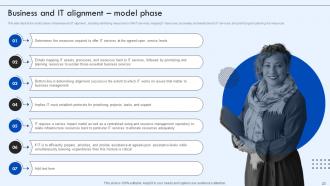
Slide 23: This slide depicts the model phase of business and IT alignment.
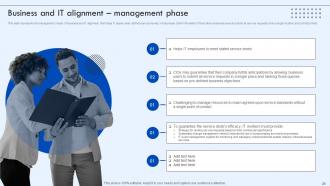
Slide 24: This slide represents the management phase of business and IT alignment that helps IT teams meet defined service levels.
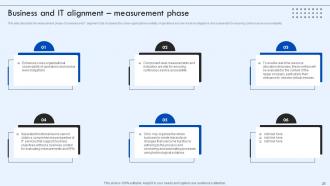
Slide 25: This slide describes the measurement phase of business and IT alignment that increases the cross-organizational visibility of operations and service level obligations and is essential for ensuring continuous service availability.
Slide 26: This slide indicates the Title for the Contents to be covered further.
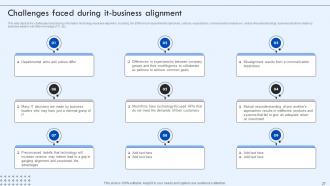
Slide 27: This slide deals with the Challenges faced during it-business alignment.
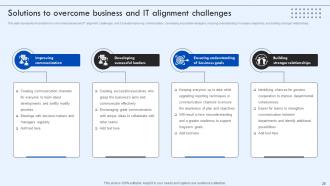
Slide 28: This slide elucidates the solutions to overcome business and IT alignment challenges.
Slide 29: This slide mentions the Heading for the Topics to be discussed in the upcoming template.
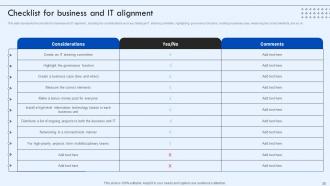
Slide 30: This slide showcases the checklist for business and IT alignment.
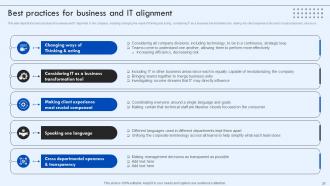
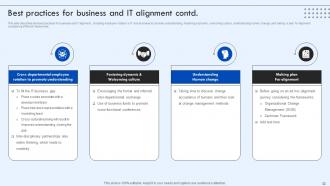
Slide 31: This slide indicates the Best practices for business and IT alignment.
Slide 32: This slide continues the best practices for business and IT alignment.
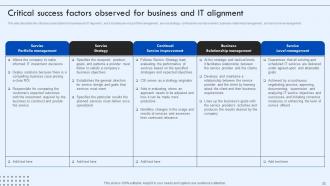
Slide 33: This slide describes the critical success factors for business and IT alignment.
Slide 34: This slide reveals the Title for the Topics to be covered next.
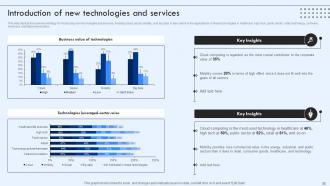
Slide 35: This slide depicts the business strategy for introducing new technologies and services.
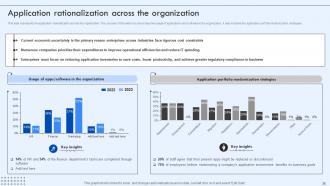
Slide 36: This slide represents the application rationalization across the organization.
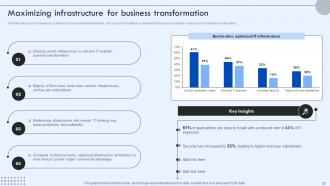
Slide 37: This slide talks about the maximizing infrastructure for business transformation.
Slide 38: This slide reveals the Heading for the Components to be discussed further.
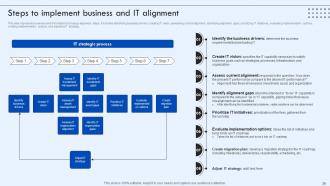
Slide 39: This slide states the Steps to implement business and IT alignment.
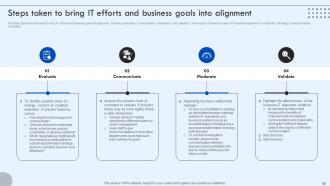
Slide 40: This slid lists the steps to bring IT efforts and business goals into alignment.
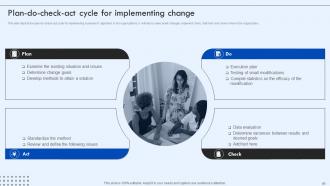
Slide 41: This slide deals with the Plan-do-check-act cycle for implementing change.
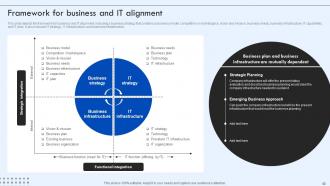
Slide 42: This slide displays the Framework for business and IT alignment.
Slide 43: This slide mentions the Title for the Ideas to be covered further.
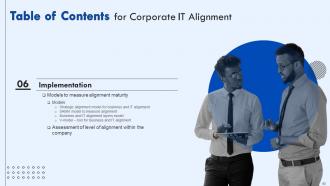
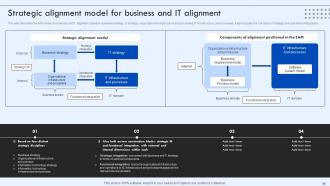
Slide 44: This slide describes the SAM model for business and IT alignment based on business strategy, IT strategy, etc.
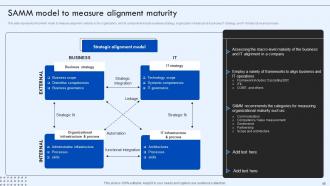
Slide 45: This slide elucidates the SAMM model to measure alignment maturity.
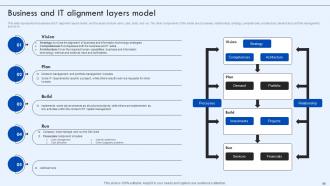
Slide 46: This slide talks about the Business and IT alignment layers model.
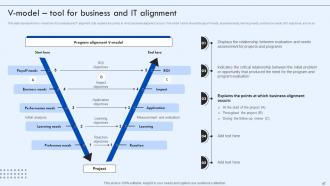
Slide 47: This slide represents the v-model tool for business and IT alignment that explains the points at which business alignment occurs.
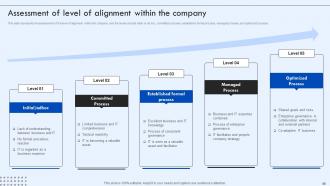
Slide 48: This slide focuses on the Assessment of level of alignment within the company.
Slide 49: This slide indicates the Heading for the Ideas to be discussed in the following template.
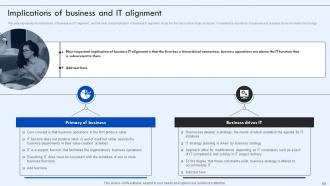
Slide 50: This slide reveals the Implications of business and IT alignment.
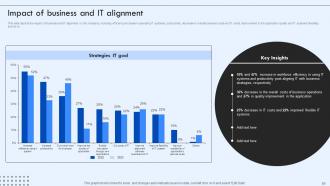
Slide 51: This slide depicts the impact of business and IT alignment on the company.
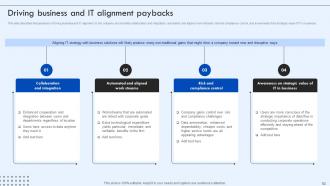
Slide 52: This slide describes the paybacks of driving business and IT alignment to the company.
Slide 53: This slide showcases the Title for the Components to be covered in the forth-coming template.
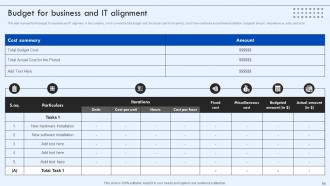
Slide 54: This slide exhibits the Budget for business and IT alignment.
Slide 55: This slide shows the Heading for the Topics to be discussed further.
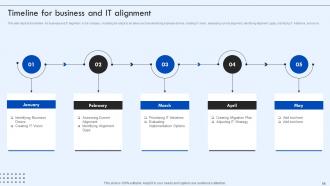
Slide 56: This slide depicts the timeline for business and IT alignment in the company.
Slide 57: This slide states the Title for the Topics to be covered in the next template.
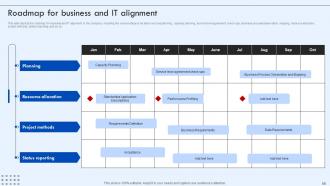
Slide 58: This slide displays the roadmap for business and IT alignment in the company.
Slide 59: This slide incorporates the Heading for the Contents to be discussed next.
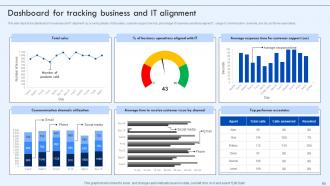
Slide 60: This slide depicts the dashboard for business and IT alignment by covering details of total sales, customer support service, etc.
Slide 61: This slide reveals the Title for the Ideas to be covered further.
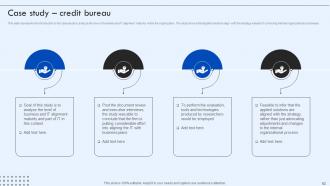
Slide 62: This slide represents the introduction to the case study to analyze the level of business and IT alignment maturity within the organization.
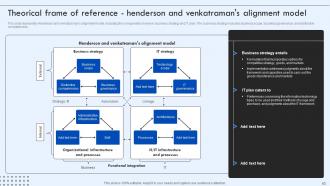
Slide 63: This slide focuses on the Henderson and Venkatraman’s alignment model.
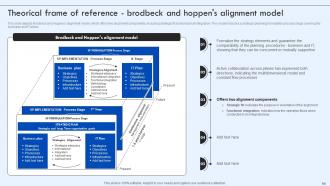
Slide 64: This slide portrays the Brodbeck and Hoppen’s alignment model, which offers two alignment components.
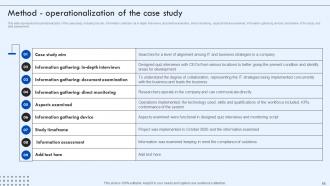
Slide 65: This slide represents the operationalization of the case study.
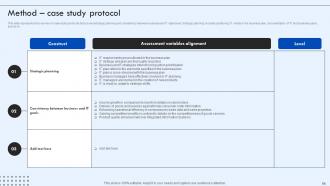
Slide 66: This slide highlights the overview of case study protocols that covers strategic planning and consistency between business and IT objectives.
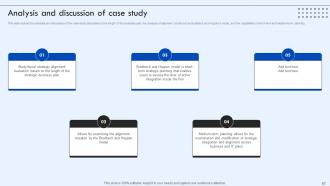
Slide 67: This slide outlines the analysis and discussion of the case study that caters to the length of the business plan.
Slide 68: This is the Icons slide containing all the Icons used in the plan.
Slide 69: This slide is used for showcasing some Additional information.
Slide 70: This is Our team slide. Mention your team-related information here.
Slide 71: This is the 30-60-90 days plan slide for effective planning.
Slide 72: This is the Venn diagram slide.
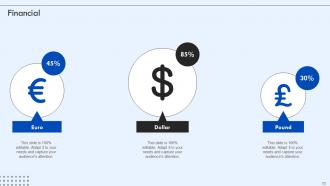
Slide 73: This slide elucidates information related to the Financial topic.
Slide 74: This slide contains the Post it notes for reminders and deadlines.
Slide 75: This is the Puzzle slide with related imagery.
Slide 76: This is the Thank you slide for acknowledgement.
Corporate IT Alignment powerpoint presentation slides with all 81 slides:
Use our Corporate IT Alignment powerpoint presentation slides to effectively help you save your valuable time. They are readymade to fit into any presentation structure.





FAQs for Corporate IT Alignment
So the big thing is getting business and IT people actually talking to each other regularly - not just when something breaks. Make sure your tech spending ties directly to what the business wants to achieve. Most places screw this up because everyone thinks the other side understands their priorities, but they really don't. Also, bring IT into strategic planning from the start instead of as an afterthought (learned this the hard way). Set up monthly meetings between business heads and IT leadership to hash out priorities and blockers. Oh, and create metrics that both sides actually care about tracking.
Track the obvious stuff first - revenue from IT projects, whether you're hitting business goals faster, IT costs vs overall revenue. But honestly? The real tell is when business leaders actually get excited about tech initiatives instead of rolling their eyes. User satisfaction scores matter too, plus how fast you deliver projects. Oh, and if IT gets invited to strategic planning early (not as an afterthought), that's huge. I'd probably start with 3-4 metrics that actually match your business and check them quarterly. Don't overthink it.
Look, you can't have IT alignment without solid communication - it's what connects business needs to actual tech solutions. Regular conversations prevent IT from building fancy systems nobody uses (and we've all worked somewhere with those white elephants). Both sides need to talk openly about priorities and translate tech speak into business value. Goals change constantly, so this can't be a one-time thing. Also, skip the boring status meetings - make these actual discussions where people can push back and ask tough questions. Otherwise you'll just keep missing the mark.
Honestly, it all comes down to leadership actually showing up. The CEO needs to constantly message that IT isn't just the "fix my computer" people - they're strategic partners. Get your executives in those cross-department meetings asking real questions about how systems connect. I've seen this work when leadership sets up regular check-ins between IT and department heads, but you gotta agree on metrics beforehand or it's just talking. Once departments see leadership treating IT as crucial to business goals, the silos start breaking down. Oh, and make sure every department gets how tech actually supports what they're trying to do.
Honestly, the biggest thing is getting your IT people in regular conversations with business leaders. Quarterly meetings work well - review business goals and connect your tech stuff to what actually matters. Don't make the classic mistake of bringing IT in at the last minute. Get them involved from day one on key projects. You'll want shared metrics too, like tracking how system upgrades actually move the needle on revenue or customer happiness. Oh, and start small with just one business unit first. Way easier to prove it works before rolling it out everywhere else.
Honestly, your company culture is gonna make or break this whole thing. When people actually want to collaborate and talk to each other, getting business and IT aligned becomes so much easier. But those places where everyone stays in their own little bubbles? Yeah, that's a nightmare - I've seen it before. People just won't budge on priorities or even basic processes. Here's the thing though: culture decides if your teams genuinely care about working toward the same goals. So maybe check if your workplace actually supports cross-team stuff before diving into any big alignment project.
Honestly, start with enterprise architecture stuff like TOGAF - it maps your business processes to the actual tech systems. BPM tools are solid for visualizing workflows too. API management platforms are clutch though, they make everything talk to each other way smoother. Oh, and basic collaboration tools work wonders - Slack or Teams with some dashboards built in. I've seen companies go crazy trying to implement everything at once and it backfires. Pick one tool that both your IT and business people actually don't hate using, then expand from there. That's the move.
Honestly, communication breakdowns between IT and business teams are the worst culprit. Plus unclear priorities and zero executive support. Legacy systems are another headache - they never want to cooperate with anything new. Start with regular meetings where business folks actually explain their strategic goals instead of just dumping random project requests. Your IT strategy needs to clearly connect to business objectives too. But here's the thing - you absolutely need executives backing this effort. Without them, good luck getting anywhere. Oh, and focus on some quick wins first to get people excited about it.
So data analytics basically lets you stop guessing and start proving your IT stuff actually matters. Track how your tech investments tie to business results - like which systems really drive value and where things get stuck. Honestly, executives eat up those visual dashboards too. The best part? Predictive analytics can catch alignment problems before they blow up your budget. I'd pick maybe 3-5 metrics that directly connect your IT projects to what the business cares about, then just build your reporting from there. Way better than flying blind.
Look, digital transformation basically flips your whole IT strategy upside down. You can't just be the "support the business" team anymore - now you're actually driving innovation, which is pretty cool but also terrifying honestly. Everything moves so much faster and crosses all these department lines. Start by figuring out which business processes are going digital first, then build your IT resources around those. The tricky part? Your team needs to get way more agile because digital stuff doesn't wait for quarterly planning cycles. It's overwhelming at first but once you get the hang of being more business-focused, it clicks.
Quarterly reviews are the bare minimum, but honestly? Depends how crazy your industry gets. Monthly check-ins work better if you're dealing with constant changes or big transitions happening. The trick is catching misalignment before it costs you a fortune to untangle later. I've watched way too many companies stick to their annual planning thing, then act shocked when their tech feels totally disconnected from reality. Schedule recurring blocks with your key people and actually treat them seriously - like any other major business review. Don't just let it slide because "we'll figure it out eventually."
Honestly, just get them in the same room more often. Set up regular meetings where both teams can hash out what's actually important and what roadblocks they're hitting. Put someone from IT directly in each major department - makes a huge difference when there's a real person to talk to instead of submitting tickets into the void. Drop the tech speak completely, nobody outside IT cares about your server architecture. Monthly check-ins work great for staying on track. Oh, and definitely bring business people into IT planning sessions. They need to see why everything takes longer than expected - might cut down on the "can't you just..." requests.
Basically, the CEO sets big picture strategy and wants IT to make it happen. Your CIO takes that vision and figures out the actual tech roadmap - like if the CEO says "grow revenue 30%," the CIO maps out what systems and investments you'll need. CEOs care about business results and ROI from tech spending. CIOs dive deep into implementation stuff - which vendors, what's technically possible, all that. But honestly, they both need to understand each other's world a bit. Regular conversations about how tech can give you an edge over competitors? That's where the magic happens. Short sentences mixed with longer explanations work best here.
Honestly, pick metrics that actually show if IT is helping the business win. Project delivery against business priorities is huge. How much of your IT budget goes to strategic stuff vs just keeping the lights on? User satisfaction matters too - nobody talks about cranky users enough. ROI calculations are a pain but you gotta try. Response time to new business needs is critical. Does your IT roadmap match up with what the business timeline looks like? Don't go crazy though. Pick maybe 3-4 of these that make sense for your company and get some baseline numbers first.
Honestly, training is a game-changer for getting your IT and business teams on the same page. People actually start understanding why certain tech decisions matter when they see the bigger picture connection. Cross-functional training is where the magic happens - no more departments talking past each other like they're speaking different languages. You'll want to cover both technical skills and business context, which sounds obvious but most companies skip the business part. Figure out where your communication gaps are first, then build training around those specific problems. Trust me, it's worth the investment even if it feels like extra work upfront.
-
Fantastic collection of visually appealing PowerPoint templates. They certainly uplift the look of the presentation.
-
The content is very helpful from business point of view.