

Corporate program for improving work team productivity powerpoint presentation slides




Try Before you Buy Download Free Sample Product
 Impress Your
 Audience
 100%
100% Editable
 Save Hours
 of Time


Team building is the process that increases organizational productivity and team cohesiveness. Check out our efficiently designed Corporate Program for Improving Work Team Productivity template that incorporates various slides about organizational team building agendas. It also highlights the challenges faced by the organization while managing the team and showcases statistics of rising attrition rate, hiring cost, time spent on conflict resolution. It also contains a team skill capability assessment matrix that helps in giving scores to each member based on their current competency level. Additionally, it covers a dashboard that provides an overview of statistics related to recent team performance in the form of pie charts and bar graphs. Using the module, you can also devise tactics and strategies for effective team building. It also demonstrates a detailed introduction of new hires and other members to the techniques, procedures and policies. It also talks about building connections between team members and providing training for encouraging team collaboration. Also, it gives you the liberty to monitor the teams performance and the companys financial performance. Customize this template now.
People who downloaded this PowerPoint presentation also viewed the following :
Content of this Powerpoint Presentation
Slide 1: This slide introduces Corporate Program for Improving Work Team Productivity. State Your Company Name and begin.
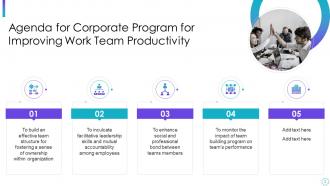
Slide 2: This slide shows Agenda for Corporate Program for Improving Work Team Productivity.
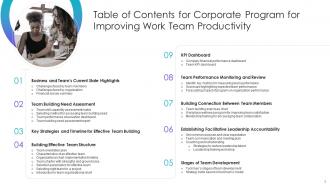
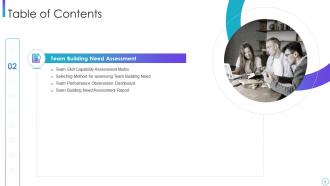
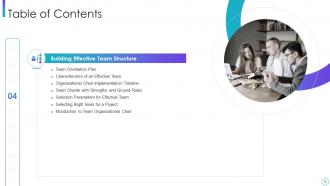
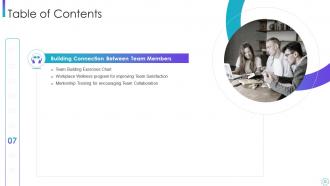
Slide 3: This slide presents Table of Contents for Corporate Program for Improving Work Team Productivity.
Slide 4: This slide shows title for topics that are to be covered next in the template.
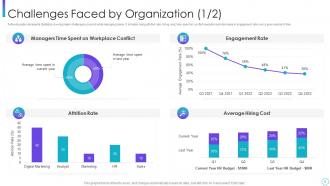
Slide 5: This slide displays Statistics covering major challenges occurred while managing teams.
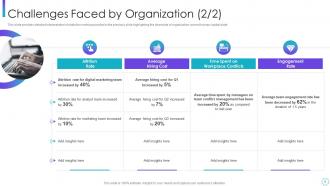
Slide 6: This slide represents interpretation of statistics metrics provided in the previous slide highlighting the downside of organization.
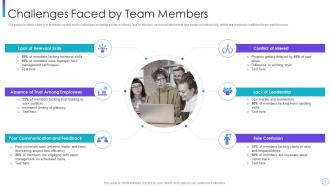
Slide 7: This slide shows current team challenges including absence of trust, lack of effective communication skills, etc.
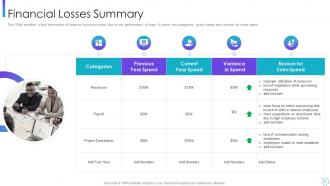
Slide 8: This slide presents brief description of financial losses occurred due to non performance of team.
Slide 9: This slide shows Table of Contents for Action Plan for Enhancing Team Capabilities.
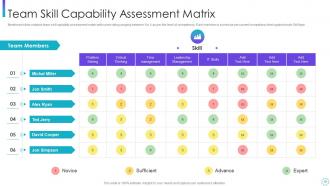
Slide 10: This slide displays team skill capability assessment matrix with score rating ranging between 1 to 4.
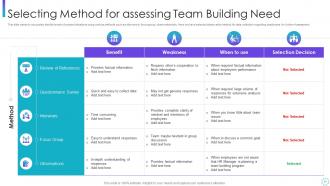
Slide 11: This slide represents Selecting Method for assessing Team Building Need.
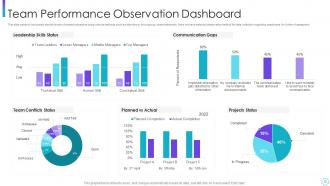
Slide 12: This slide shows overview of statistics related to current team performance based on observation method.
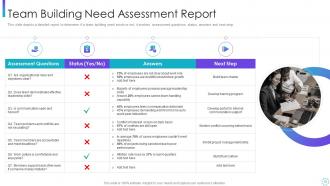
Slide 13: This slide presents detailed report to determine if a team building need exists or not.
Slide 14: This slide shows Table of Contents for Action Plan for Enhancing Team Capabilities.
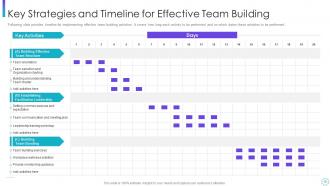
Slide 15: This slide displays Key Strategies and Timeline for Effective Team Building.
Slide 16: This slide represents Table of Contents for Action Plan for Enhancing Team Capabilities.
Slide 17: This slide shows introducing new hires or existing employees to new technologies, procedures and policies.
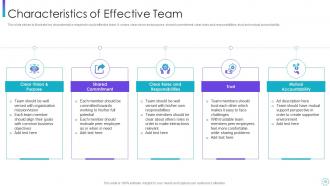
Slide 18: This slide presents key characteristics required to build effective team.
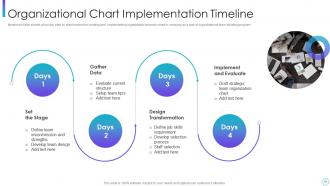
Slide 19: This slide shows four day step by step timeline for creating and implementing organization hierarchy chart.
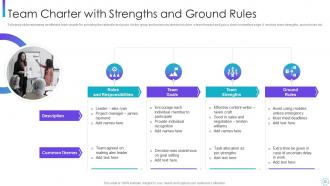
Slide 20: This slide displays effective team charter for providing the rationale and goals for the group.
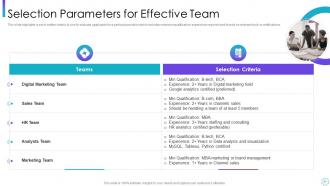
Slide 21: This slide represents set of written criteria to use to evaluate applicants for a particular position which includes minimum qualification, experience required, etc.
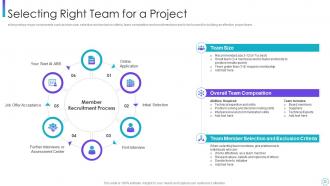
Slide 22: This slide shows major components such as team size, selection and exclusion criteria, team composition, etc.
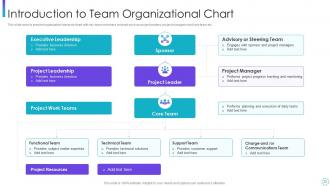
Slide 23: This slide presents present organization hierarchy chart with key team members involved.
Slide 24: This slide shows Table of Contents for Action Plan for Enhancing Team Capabilities.
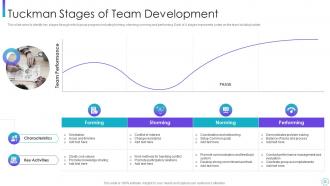
Slide 25: This slide displays key stages through which group progress including forming, storming, norming, etc.
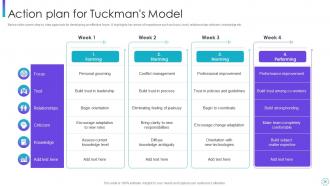
Slide 26: This slide represents step by step approach for developing an effective team.
Slide 27: This slide shows Table of Contents for Action Plan for Enhancing Team Capabilities.
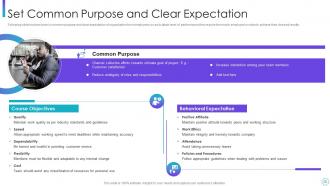
Slide 28: This slide presents team’s common purpose and clear expectation of organization from employees.
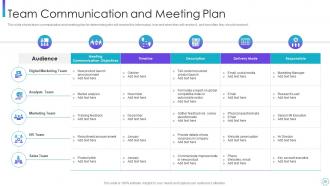
Slide 29: This slide shows team communication and meeting plan for determining who will receive this information.
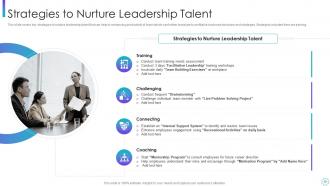
Slide 30: This slide displays key strategies to nurture leadership talent that can help in enhancing productivity.
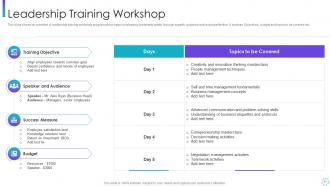
Slide 31: This slide represents an overview of leadership training workshop program which helps in releasing leadership.
Slide 32: This slide shows Table of Contents for Action Plan for Enhancing Team Capabilities.
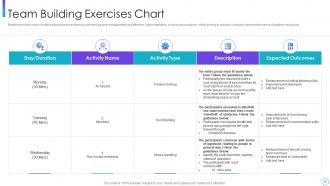
Slide 33: This slide presents multiple exercises for achieving confident people management and effective implementation.
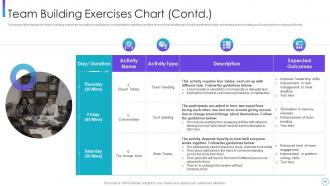
Slide 34: This slide shows key team building exercises including round tables, concentration activities and the human knot challenge.
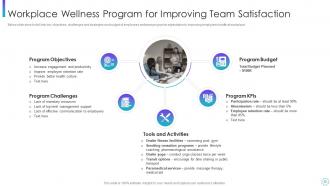
Slide 35: This slide displays Workplace Wellness Program for Improving Team Satisfaction.
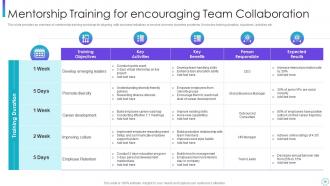
Slide 36: This slide represents Mentorship Training for encouraging Team Collaboration.
Slide 37: This slide shows Table of Contents for Action Plan for Enhancing Team Capabilities.
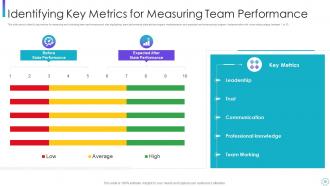
Slide 38: This slide presents Identifying Key Metrics for Measuring Team Performance.
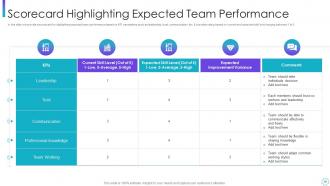
Slide 39: This slide shows Scorecard Highlighting Expected Team Performance.
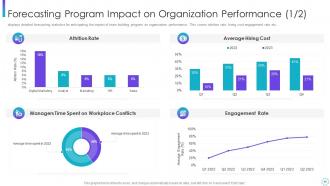
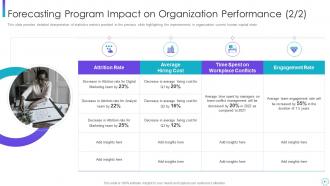
Slide 40: This slide displays Forecasting Program Impact on Organization Performance.
Slide 41: This slide represents interpretation of statistics metrics provided in the previous slide highlighting the improvements in organization.
Slide 42: This slide shows Table of Contents for Action Plan for Enhancing Team Capabilities.
Slide 43: This slide presents interpretation of statistics metrics provided in the previous slide highlighting the improvements in organization.
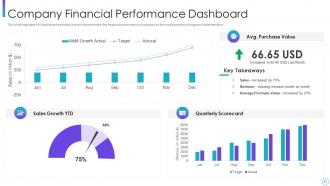
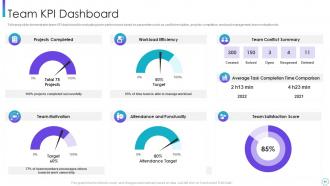
Slide 44: This slide shows KPI dashboard for evaluating team performance based on parameters such as conflict resolution, projects completion, workload management, etc.
Slide 45: This slide displays Icons for Corporate Program for Improving Work Team Productivity.
Slide 46: This slide is titled as Additional Slides for moving forward.
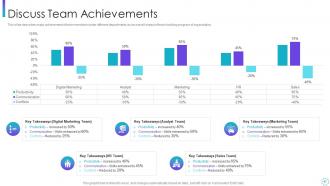
Slide 47: This slide describes major achievement of team members under different departments.
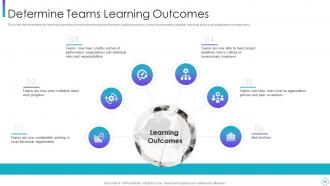
Slide 48: This slide demonstrates key learning outcomes of employees throughout the team building program.
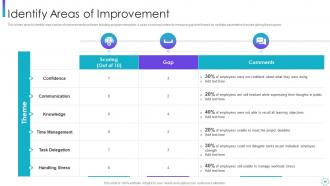
Slide 49: This slides aims to identify major areas of improvement post team building program execution.
Slide 50: This is About Us slide to show company specifications etc.
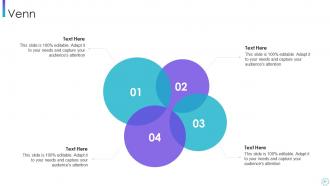
Slide 51: This slide depicts Venn diagram with text boxes.
Slide 52: This slide shows Post It Notes. Post your important notes here.
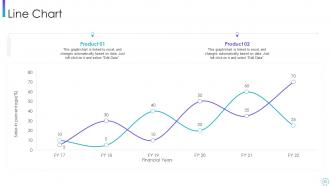
Slide 53: This slide describes Line chart with two products comparison.
Slide 54: This is Our Target slide. State your targets here.
Slide 55: This slide displays Mind Map with related imagery.
Slide 56: This slide contains Puzzle with related icons and text.
Slide 57: This slide presents Roadmap with additional textboxes.
Slide 58: This slide provides 30 60 90 Days Plan with text boxes.
Slide 59: This is a Thank You slide with address, contact numbers and email address.
Corporate program for improving work team productivity powerpoint presentation slides with all 64 slides:
Use our Corporate Program For Improving Work Team Productivity Powerpoint Presentation Slides to effectively help you save your valuable time. They are readymade to fit into any presentation structure.





FAQs for Corporate program for improving work team productivity
Key factors contributing to corporate team productivity include clear communication channels, defined roles and responsibilities, effective leadership, collaborative tools and technology, and regular performance feedback mechanisms. These elements work synergistically to streamline workflows, minimize confusion, and enhance accountability, with many organizations finding that strategic combination of structured processes and supportive management ultimately delivers measurable efficiency gains and competitive advantage.
Different leadership styles significantly impact team performance through varied approaches to motivation, decision-making, and communication, with transformational leaders often driving higher engagement while democratic styles enhance collaboration and innovation. Organizations across sectors like technology and healthcare find that adaptive leadership—combining directive approaches for urgent decisions with collaborative styles for strategic planning—delivers optimal productivity outcomes and sustained performance improvements.
Workplace culture significantly influences team productivity by shaping communication patterns, collaboration levels, decision-making processes, and employee engagement across organizations. A positive culture enhances productivity through open communication, shared accountability, and psychological safety, while toxic environments create barriers through poor communication and low morale, with many companies finding that strategic culture investments ultimately deliver higher performance and competitive advantage.
Effective communication improves team collaboration by establishing clear expectations, reducing misunderstandings, streamlining decision-making processes, and enabling seamless information sharing across departments. Through structured communication channels, organizations enhance project coordination, accelerate problem-solving, and minimize costly delays, with many companies finding that strategic communication frameworks ultimately deliver higher productivity and stronger competitive advantage.
Goal-setting techniques significantly influence team productivity by establishing clear objectives, creating accountability frameworks, and aligning individual efforts with organizational priorities. Through structured approaches like SMART goals and OKRs, teams streamline focus, reduce time wastage, and enhance performance tracking, with many organizations finding that systematic goal-setting delivers measurable productivity gains and improved project completion rates.
**INPUT**: What strategies can be implemented to minimize distractions and enhance focus within teams? **OUTPUT**: Effective distraction-minimization strategies include designated focus hours, structured communication protocols, workspace optimization, technology boundaries, and regular priority alignment sessions. These approaches streamline workflow by reducing interruptions, clarifying expectations, and creating dedicated deep-work environments, with many organizations finding that combining physical workspace design with digital communication guidelines ultimately delivers enhanced productivity and improved project outcomes. [Word count: 58 words]
Team diversity enhances productivity and innovation by combining varied perspectives, experiences, and problem-solving approaches, leading to more creative solutions and comprehensive decision-making. Organizations across sectors like technology, healthcare, and financial services find that diverse teams deliver faster problem resolution, reduce groupthink, and generate breakthrough innovations, ultimately providing significant competitive advantages in increasingly complex markets.
**INPUT**: What are the best practices for conducting productive team meetings? **OUTPUT**: Best practices for productive team meetings include setting clear agendas, defining specific objectives, limiting participant numbers, establishing time boundaries, and encouraging active participation from all attendees. These approaches streamline decision-making by minimizing off-topic discussions, enhancing focus, and ensuring actionable outcomes, with many organizations finding that structured meetings reduce project timelines while improving team alignment and accountability. [Word count: 58 words]
Technology and digital tools enhance team collaboration through unified communication platforms, cloud-based project management systems, real-time document sharing, automated workflow processes, and integrated video conferencing solutions. These technologies streamline coordination by eliminating information silos, accelerating decision-making, and enabling seamless remote collaboration, with many organizations finding that strategic digital integration ultimately delivers faster project completion and improved operational efficiency.
Team productivity can be measured through key performance indicators, time tracking systems, output quality assessments, goal completion rates, and employee engagement surveys. These methods work together by providing quantitative data on efficiency, qualitative insights into collaboration effectiveness, and strategic visibility into resource allocation, with many organizations finding that combining multiple measurement approaches delivers more comprehensive understanding and ultimately enables data-driven improvements.
Employee engagement correlates strongly with team productivity metrics through increased collaboration, reduced absenteeism, higher quality output, and faster project completion rates. Engaged teams in organizations like tech companies and financial services demonstrate 21% higher profitability and 10% better customer ratings, while also showing improved retention and innovation capabilities, ultimately delivering competitive advantage through enhanced operational efficiency.
Teams can address productivity roadblocks through systematic workflow analysis, clear communication protocols, technology automation, regular bottleneck assessments, and strategic resource reallocation. These approaches enable organizations to streamline operations, eliminate redundancies, and enhance collaboration, with many finding that combining process optimization with targeted training ultimately delivers faster project completion and improved team performance.
Regular feedback and performance reviews enhance team effectiveness by identifying skill gaps, aligning individual goals with organizational objectives, and fostering continuous improvement through clear communication channels. Through structured evaluation processes, teams achieve better collaboration, increased accountability, and higher engagement levels, with many organizations finding that consistent feedback cycles ultimately deliver improved project outcomes and stronger employee retention rates.
Remote work presents both productivity challenges and opportunities compared to traditional office settings, with outcomes varying significantly across different industries and team structures. While remote work eliminates commuting time and office distractions, enabling deeper focus and flexibility, it can reduce spontaneous collaboration and require stronger digital communication systems, with many organizations finding that hybrid models ultimately deliver the strategic benefits of both approaches.
Team-building activities improve collaboration and productivity by breaking down communication barriers, fostering trust among colleagues, and creating shared experiences that enhance teamwork dynamics. These structured interactions enable teams to understand diverse working styles, develop problem-solving synergies, and build psychological safety, ultimately delivering stronger project outcomes and increased operational efficiency across departments.
-
Attractive design and informative presentation.
-
Awesome use of colors and designs in product templates.