

Cosmetic Brand Strategy Cascade Template




Try Before you Buy Download Free Sample Product
 Impress Your
Audience
 100%
Editable
 Save Hours
of Time


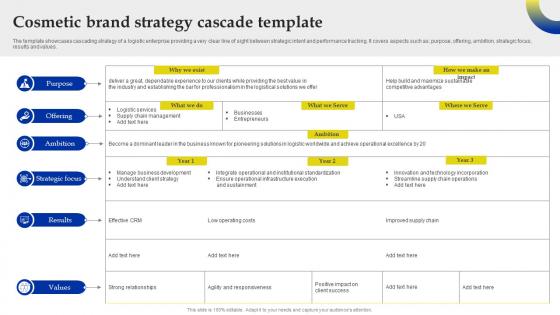
The template showcases cascading strategy of a logistic enterprise providing a very clear line of sight between strategic intent and performance tracking. It covers aspects such as purpose, offering, ambition, strategic focus, results and values.
People who downloaded this PowerPoint presentation also viewed the following :
Cosmetic Brand Strategy Cascade Template with all 6 slides:
Use our Cosmetic Brand Strategy Cascade Template to effectively help you save your valuable time. They are readymade to fit into any presentation structure.






FAQs for Cosmetic Brand
Cosmetic brands should consider demographics, lifestyle preferences, purchasing behavior, beauty concerns, and cultural values when selecting their target audience. Through market research and consumer analysis, brands like Fenty Beauty and CeraVe successfully identify specific segments, enabling them to develop targeted products, messaging, and distribution strategies that ultimately deliver stronger brand loyalty and competitive market positioning.
Cosmetic brands can differentiate through unique ingredient storytelling, targeted niche positioning, sustainable packaging innovations, personalized product experiences, and authentic community building. By focusing on specific consumer segments like clean beauty enthusiasts or mature skin concerns, brands create meaningful connections while delivering superior formulations and customer experiences, ultimately building loyal communities that drive sustainable growth and competitive advantage.
Sustainability plays a central role in modern cosmetic brand strategies through eco-friendly packaging, clean ingredient sourcing, ethical manufacturing practices, and transparent supply chains. These initiatives enhance brand reputation, attract environmentally conscious consumers, and drive competitive advantage, with many beauty companies finding that sustainable practices ultimately deliver stronger customer loyalty and market differentiation.
Storytelling enhances cosmetic brand marketing by creating emotional connections, building brand authenticity, and differentiating products in competitive markets through compelling narratives about ingredient origins, brand founders, or customer transformations. Beauty brands like Fenty Beauty and Glossier leverage personal stories and community experiences to drive engagement, foster loyalty, and ultimately deliver stronger customer relationships and increased sales conversion rates.
Effective digital marketing strategies for cosmetic products include influencer partnerships, user-generated content campaigns, social commerce integration, targeted video tutorials, and personalized email marketing. These approaches enhance brand visibility by leveraging visual storytelling, building authentic customer relationships, and creating interactive shopping experiences, with many beauty brands finding that combining social proof with educational content ultimately delivers higher engagement and stronger customer loyalty.
Brands can leverage influencer partnerships by selecting authentic advocates who align with brand values, creating collaborative content campaigns, and utilizing micro-influencers for targeted audience engagement. Through strategic partnerships with beauty influencers across platforms, cosmetic companies enhance credibility, expand market reach, and drive consumer trust, ultimately delivering increased brand awareness and sales conversions.
Building brand loyalty requires personalized customer experiences, consistent product quality, engaging social media presence, loyalty reward programs, and authentic brand storytelling that resonates with target demographics. These strategies work together by creating emotional connections, delivering reliable value, and fostering community engagement, with many cosmetic brands finding that combining influencer partnerships with data-driven personalization ultimately drives repeat purchases and customer advocacy.
Cosmetic brands can utilize customer feedback through social media monitoring, product reviews analysis, focus groups, surveys, and beta testing programs. These insights enable brands to identify popular ingredients, adjust formulations, develop trending shades, and enhance packaging designs, with many beauty companies finding that customer-driven product refinement significantly increases satisfaction rates and market competitiveness.
Packaging design significantly influences consumer perception by communicating brand values, quality expectations, and target demographics through visual elements, materials, and functionality. Premium cosmetic brands leverage sophisticated packaging to justify higher price points and build emotional connections, with many consumers associating sleek, innovative packaging with product efficacy and brand trustworthiness.
Pricing strategies should reflect your brand's market positioning through premium pricing for luxury positioning, competitive pricing for value positioning, and penetration pricing for accessibility positioning. Strategic alignment between price points and brand messaging enhances customer perception consistency, with luxury cosmetic brands like La Mer commanding higher prices through exclusive positioning, while drugstore brands like Maybelline leverage competitive pricing to maximize market reach and accessibility.
Essential cosmetic brand strategy metrics include brand awareness levels, customer acquisition costs, lifetime value ratios, market share growth, and social media engagement rates. These measurements enable beauty companies to track campaign effectiveness, monitor consumer sentiment shifts, and optimize product positioning strategies, with many cosmetic brands finding that combining traditional sales data with digital analytics ultimately delivers comprehensive performance insights and sustained competitive advantage.
Social media platforms create consistent brand identity through unified visual aesthetics, coordinated messaging across channels, strategic hashtag usage, and regular content scheduling that reinforces core values. Beauty brands like Glossier and Fenty Beauty leverage platform-specific features, user-generated content, and influencer partnerships to maintain cohesive brand narratives, ultimately building stronger customer loyalty and recognition.
Emerging cosmetic trends include clean beauty formulations, personalized skincare solutions, sustainable packaging, inclusive shade ranges, and digital-first marketing strategies. These trends enable brands to capture younger demographics, enhance customer loyalty, and differentiate in competitive markets, with many companies finding that sustainable practices and personalization ultimately deliver stronger brand connections and increased market share.
Technology like augmented reality enhances cosmetic consumer experiences by enabling virtual try-ons, personalized product recommendations, and interactive tutorials that eliminate guesswork from beauty purchases. Through AR applications, beauty brands streamline the shopping process, reduce return rates, and deliver enhanced customer engagement, with retailers like Sephora and L'Oréal finding that virtual experiences ultimately drive higher conversion rates and customer satisfaction.
Inclusive cosmetic brand approaches include diverse shade ranges across skin tones, culturally sensitive marketing campaigns, accessible packaging design, varied price points, and representation in advertising imagery. These strategies enhance market reach by addressing underserved demographics, building authentic customer connections, and ultimately delivering broader consumer appeal and competitive advantage in an increasingly diverse marketplace.
-
Requested a complete pitch deck. Delivered immediately and with high quality well researched content.
-
Crisp and neat slides. Makes it fun and easier to curate presentations.