

COVID Business Survive Adapt And Post Recovery Strategy For Tourism And Leisure Industry Complete Deck




Try Before you Buy Download Free Sample Product
 Impress Your
 Audience
 100%
100% Editable
 Save Hours
 of Time


The PowerPoint template is useful tool in presenting business survival, adapt and post recovery strategies in tourism and leisure sector. It covers details regarding the current scenario assessment by addressing tourism and leisure industry overview analysis, determine international tourists’ arrivals and receipts. It covers details regarding statistics associated to tourism industry. It covers impact assessment of coronavirus spread on various tourism and leisure segment and determine tourist consumption habits during pandemic. It caters response priorities by tour operators and travel agents in terms of readiness assessment to ensure business preparedness during pandemic, recovery strategy by determining travel demand, risk response plan for by tour operators. It caters the role of government in tourism industry revival and relief measures by assisting tour operators, online and offline travel agents, amusement parks and tourist transport sector. It covers details about business survival strategies by tourism and leisure sector such as considering domestic travel as opportunity, handling financial impact, performance management by travel agents and handling unemployment risk in tourism sector. The template covers details about business adapt strategies by travel agents in context to essential communication to consumers, financial response initiatives for tourism sector during pandemic. It focusses on ensuring staff security in order to avoid critical incident, employee assistance program, etc. The template covers details about post recovery strategies by tour operators in terms of addressing future trends in post pandemic in tourism and leisure sector, marketing plan to address future travel demand, communication plan for tourism industry, administrative action plan and commercial action plan. It covers details about customer focused initiatives in by addressing people safety and reservation cancellation policies and consumer focused post COVID recovery initiatives.
People who downloaded this PowerPoint presentation also viewed the following :
Content of this Powerpoint Presentation
Slide 1: This slide introduces Covid Business Survive Adapt and Post Recovery Strategy for Tourism and Leisure Industry. State your company name and begin.
Slide 2: This slide shows Agenda of COVID Business Survive Adapt and Post Recovery Strategy for Tourism and Leisure Industry.
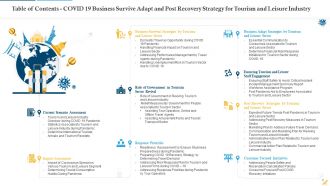
Slide 3: This slide presents Table of Contents - COVID 19 Business Survive Adapt and Post Recovery Strategy for Tourism and Leisure Industry.
Slide 4: This is another slide showing Table of Contents highlighting Current Scenario Assessment.
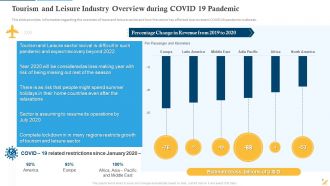
Slide 5: This slide shows Tourism and Leisure Industry Overview during COVID 19 Pandemic.
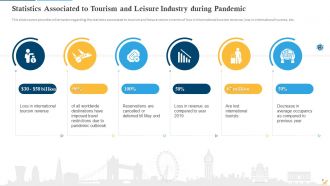
Slide 6: This slide presents Statistics Associated to Tourism and Leisure Industry during Pandemic.
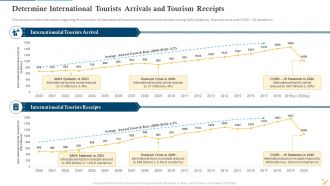
Slide 7: This slide displays Determine International Tourists Arrivals and Tourism Receipts.
Slide 8: This slide represents Table of Contents highlighting Impact Assessment.
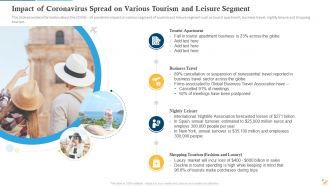
Slide 9: This slide showcases Impact of Coronavirus Spread on Various Tourism and Leisure Segment.
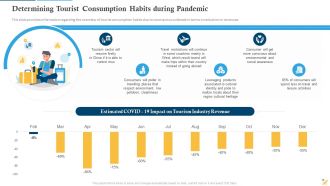
Slide 10: This slide shows Determining Tourist Consumption Habits during Pandemic.
Slide 11: This slide presents Table of Contents highlighting Response Priorities.
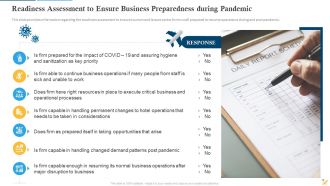
Slide 12: This slide displays Readiness Assessment to Ensure Business Preparedness during Pandemic.
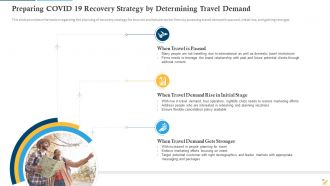
Slide 13: This slide represents Preparing COVID 19 Recovery Strategy by Determining Travel Demand.
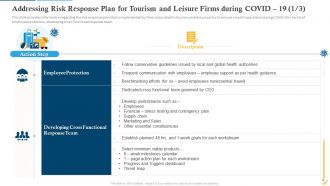
Slide 14: This slide showcases Addressing Risk Response Plan for Tourism and Leisure Firms during COVID – 19.
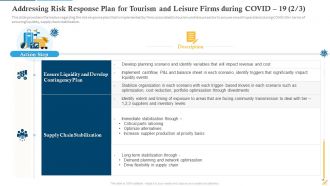
Slide 15: This is another slide showing Addressing Risk Response Plan for Tourism and Leisure Firms during COVID – 19.
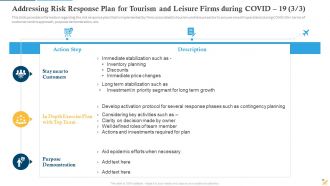
Slide 16: This is another slide presenting Addressing Risk Response Plan for Tourism and Leisure Firms during COVID – 19.
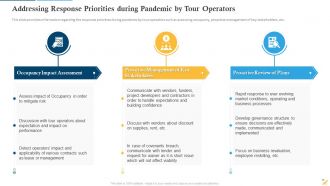
Slide 17: This slide displays Addressing Response Priorities during Pandemic by Tour Operators.
Slide 18: This slide represents Table of Contents highlighting Role of Government in Tourism Sector Revival.
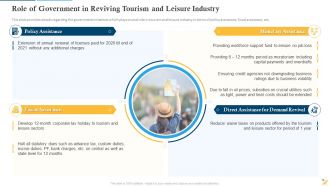
Slide 19: This slide showcases Role of Government in Reviving Tourism and Leisure Industry.
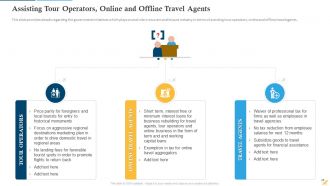
Slide 20: This slide shows Assisting Tour Operators, Online and Offline Travel Agents.
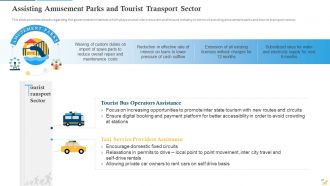
Slide 21: This slide presents Assisting Amusement Parks and Tourist Transport Sector.
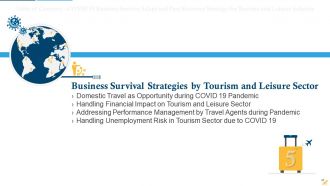
Slide 22: This slide displays Table of Contents highlighting Business Survival Strategies by Tourism and Leisure Sector.
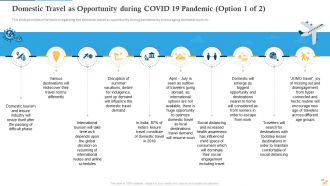
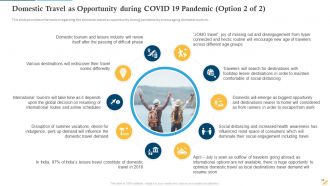
Slide 23: This slide represents Domestic Travel as Opportunity during COVID 19 Pandemic.
Slide 24: This is another slide showing Domestic Travel as Opportunity during COVID 19 Pandemic.
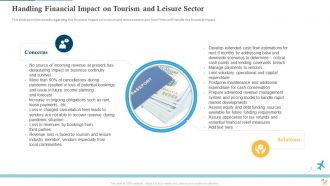
Slide 25: This slide showcases Handling Financial Impact on Tourism and Leisure Sector.
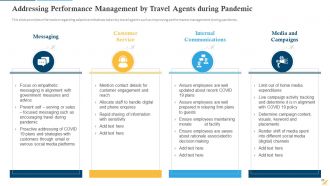
Slide 26: This slide shows Addressing Performance Management by Travel Agents during Pandemic.
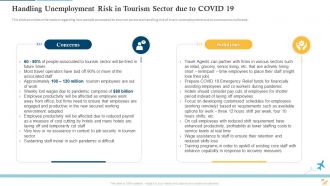
Slide 27: This slide presents Handling Unemployment Risk in Tourism Sector due to COVID 19.
Slide 28: This slide displays Table of Contents - COVID 19 Business Survive Adapt and Post Recovery Strategy for Tourism and Leisure Industry.
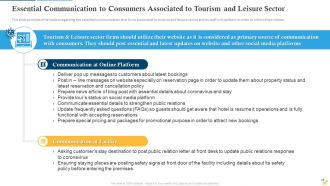
Slide 29: This slide represents Essential Communication to Consumers Associated to Tourism and Leisure Sector.
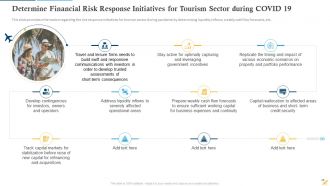
Slide 30: This slide showcases Determine Financial Risk Response Initiatives for Tourism Sector during COVID 19.
Slide 31: This slide showsTable of Contents hihhlighting Ensuring Tourism and Leisure Staff Engagement.
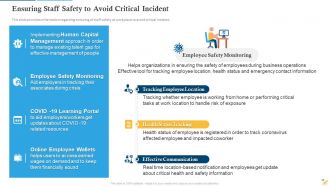
Slide 32: This slide presents Ensuring Staff Safety to Avoid Critical Incident.
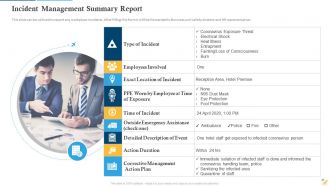
Slide 33: This slide displays Incident Management Summary Report.
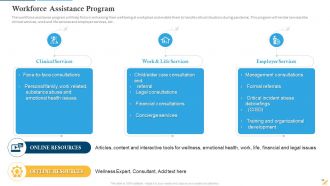
Slide 34: This slide represents Workforce Assistance Program with related icons.
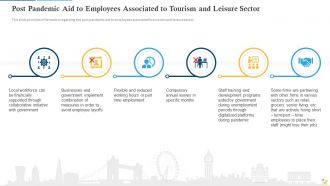
Slide 35: This slide showcases Post Pandemic Aid to Employees Associated to Tourism and Leisure Sector.
Slide 36: This slide shows Table of Contents highlighting Post Recovery Strategies by Tourism and Leisure Sector.
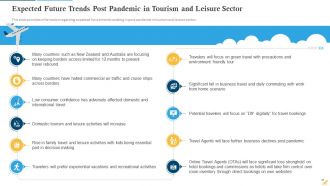
Slide 37: This slide presents Expected Future Trends Post Pandemic in Tourism and Leisure Sector.
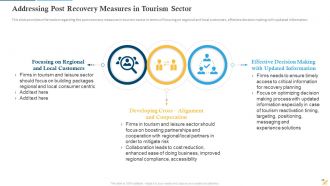
Slide 38: This slide displays Addressing Post Recovery Measures in Tourism Sector.
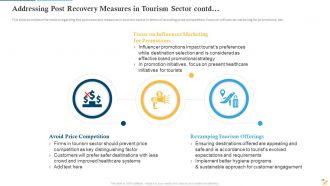
Slide 39: This is another slide continuing Addressing Post Recovery Measures in Tourism Sector.
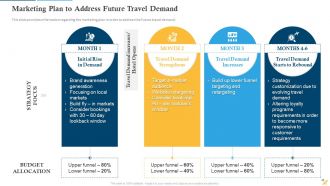
Slide 40: This slide represents Marketing Plan to Address Future Travel Demand.
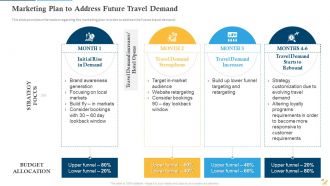
Slide 41: This slide showcases Marketing Plan to Address Future Travel Demand.
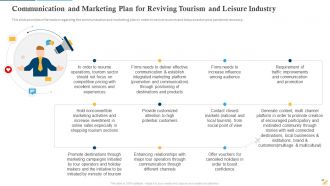
Slide 42: This slide shows Communication and Marketing Plan for Reviving Tourism and Leisure Industry.
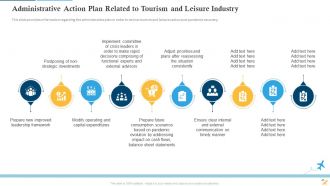
Slide 43: This slide presents Administrative Action Plan Related to Tourism and Leisure Industry.
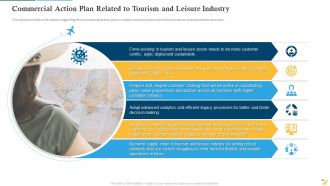
Slide 44: This slide provides information regarding the commercial action plan in order to revive tourism and leisure sector post pandemic recovery.
Slide 45: This slide displays Table of Contents highlighting Customer Focused Initiatives.
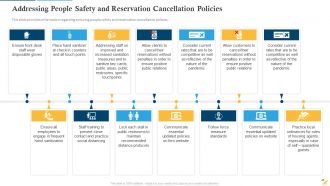
Slide 46: This slide represents Addressing People Safety and Reservation Cancellation Policies.
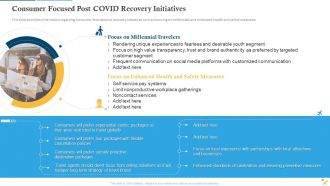
Slide 47: This slide showcases Consumer Focused Post COVID Recovery Initiatives.
Slide 48: This slide displays Icons for COVID Business Survive Adapt and Post Recovery Strategy for Tourism and Leisure Industry.
Slide 49: This slide is titled as Additional Slides for moving forward.
Slide 50: This is Our Mission slide. State your firm's mission here.
Slide 51: This is About Us slide to show company specifications, etc.
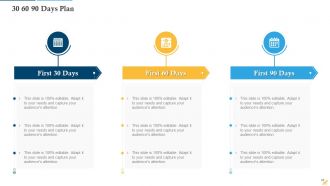
Slide 52: This slide shows 30 60 90 Days Plan with text boxes.
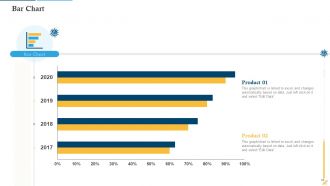
Slide 53: This slide presents Bar Chart with two products comparison.
Slide 54: This slide shows Roadmap for Process Flow.
Slide 55: This is Our Goal slide. Show your firm's goals here.
Slide 56: This is an Idea Generation slide to state a new idea.
Slide 57: This is a Timeline slide. Show time intervals related data here.
Slide 58: This is a Quotes slide to convey message, beliefs, etc.
Slide 59: This is a Comparison slide to state the comparison between products, commodities, etc.
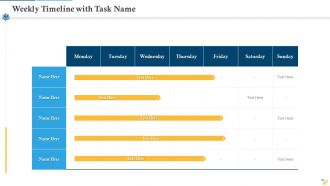
Slide 60: This slide displays Weekly Timeline with Task Name.
Slide 61: This is a Thank You slide with address, contact numbers and email address.
COVID Business Survive Adapt And Post Recovery Strategy For Tourism And Leisure Industry Complete Deck with all 61 slides:
Use our COVID Business Survive Adapt And Post Recovery Strategy For Tourism And Leisure Industry Complete Deck to effectively help you save your valuable time. They are readymade to fit into any presentation structure.

FAQs for COVID Business Survive Adapt And Post Recovery Strategy For Tourism And Leisure
Tourism businesses can enhance traveler confidence through contactless check-ins, enhanced sanitization protocols, flexible booking policies, health certification displays, and virtual pre-arrival services. These measures streamline operations while addressing safety concerns, with hotels, airlines, and tour operators finding that transparent health communications, real-time capacity updates, and digital-first experiences ultimately deliver competitive advantage and improved customer trust.
Destination marketing organizations can effectively communicate safety protocols through multi-channel campaigns featuring certified health badges, real-time safety updates, visual storytelling with video testimonials, and partnerships with trusted travel influencers. These strategies build traveler confidence by showcasing transparent sanitation measures, contactless services, and local health partnerships, with many tourism boards finding that authentic, consistent messaging across digital platforms ultimately drives booking recovery and enhances destination credibility.
Technology serves as a cornerstone of tourism recovery by enabling contactless services, health monitoring systems, digital booking platforms, virtual experiences, and data analytics for demand forecasting. Through mobile check-ins, QR code menus, and AI-powered safety protocols, hotels and attractions streamline operations while ensuring guest safety, ultimately delivering enhanced customer confidence and operational efficiency in an increasingly health-conscious travel environment.
Local communities can be engaged through collaborative planning processes, stakeholder consultations, community-based tourism initiatives, local hiring programs, and cultural preservation projects that integrate resident voices into recovery strategies. These approaches enable destinations to rebuild tourism while supporting local economies, preserving authentic cultural experiences, and ensuring environmental stewardship, with many communities finding that resident involvement creates more resilient and sustainable tourism models.
**INPUT**: What are the best practices for implementing health and safety guidelines in hotels and restaurants? **OUTPUT**: Best practices include enhanced cleaning protocols, contactless check-in systems, staff health monitoring, capacity management, and transparent communication with guests about safety measures. These approaches streamline operations by reducing contact points, building customer confidence, and ensuring compliance, with many hospitality businesses finding that comprehensive safety protocols ultimately deliver competitive advantage and faster recovery in an increasingly health-conscious travel environment.
Tourism operators can tailor their offerings by prioritizing outdoor experiences, contactless services, flexible booking policies, enhanced safety protocols, and personalized local experiences that emphasize authenticity and wellness. Through digital integration and sustainable practices, hotels, tour companies, and destinations are delivering safer interactions, reduced-capacity premium experiences, and nature-focused itineraries, ultimately capturing the growing demand for mindful travel while building long-term customer loyalty.
COVID-19 domestic tourism revival strategies include targeted marketing campaigns, flexible booking policies, health safety certifications, local experience packages, and strategic partnerships with hospitality providers. These approaches streamline recovery by rebuilding consumer confidence, enhancing regional attractions, and delivering personalized experiences, with many destinations finding that emphasizing outdoor activities, cultural heritage tours, and wellness retreats ultimately drives sustainable tourism growth.
Partnerships with health officials enhance tourism safety credibility by providing medical expertise, establishing evidence-based protocols, and offering third-party validation of safety measures. These collaborations enable destinations to implement scientifically-backed guidelines, communicate transparently with travelers, and adapt quickly to changing health conditions, ultimately delivering greater visitor confidence and competitive advantage in recovery markets.
Countries that successfully managed tourism recovery implemented comprehensive safety protocols, strategic marketing campaigns, domestic tourism promotion, flexible booking policies, and strong government-industry partnerships. Nations like New Zealand, Denmark, and Singapore demonstrated that transparent communication, phased reopening strategies, and digital health passports enable sustainable recovery, with many destinations finding that prioritizing traveler confidence ultimately delivers competitive advantage.
Data analytics informs tourism recovery by analyzing visitor patterns, booking trends, seasonal fluctuations, and recovery metrics to guide strategic resource allocation. Through predictive modeling and real-time dashboards, destinations optimize marketing campaigns, adjust capacity planning, and target emerging markets, with many tourism boards finding that data-driven approaches accelerate recovery while minimizing operational risks.
Sustainable tourism principles can be integrated through diversifying destinations, supporting local communities, implementing environmental standards, promoting off-season travel, and developing crisis-resilient infrastructure. These approaches enhance tourism resilience by reducing overtourism, strengthening economic foundations, and creating adaptive capacity, with many destinations finding that sustainable practices deliver long-term competitive advantage and operational stability.
Travel insurance policies play a crucial role in rebuilding consumer confidence by providing comprehensive coverage for COVID-related cancellations, medical expenses, quarantine costs, and trip interruptions. These enhanced policies enable travelers to book with greater assurance, while tourism businesses benefit from increased reservations and reduced cancellation concerns, ultimately accelerating recovery across hospitality sectors.
Tourism marketing strategies should evolve by emphasizing flexible booking policies, transparent health protocols, digital engagement capabilities, crisis communication plans, and diversified market segments to build resilience. These approaches enable destinations to maintain customer trust, adapt messaging quickly during disruptions, and pivot between domestic and international markets, ultimately delivering sustainable recovery and competitive advantage in an increasingly unpredictable travel landscape.
The shift to remote work has significantly reduced business travel demand, with many companies discovering virtual meetings can replace routine trips, conferences moving online, and corporate travel budgets being permanently restructured. However, this presents opportunities for tourism businesses to pivot toward leisure travel, workations, and hybrid business-leisure trips, with hotels and destinations increasingly developing flexible spaces that accommodate remote workers seeking extended stays in new locations.
Tourism businesses can leverage social media by showcasing enhanced safety protocols, highlighting local experiences, partnering with influencers, and creating user-generated content campaigns that build trust and engagement. Through targeted advertising and authentic storytelling, hotels, restaurants, and tour operators are rebuilding customer confidence while demonstrating their commitment to health standards, ultimately driving bookings and enhancing brand loyalty in an increasingly competitive recovery landscape.
-
Easy to edit slides with easy to understand instructions.
-
Awesomely designed templates, Easy to understand.
-
good
-
Unique design & color.
-
Innovative and attractive designs.