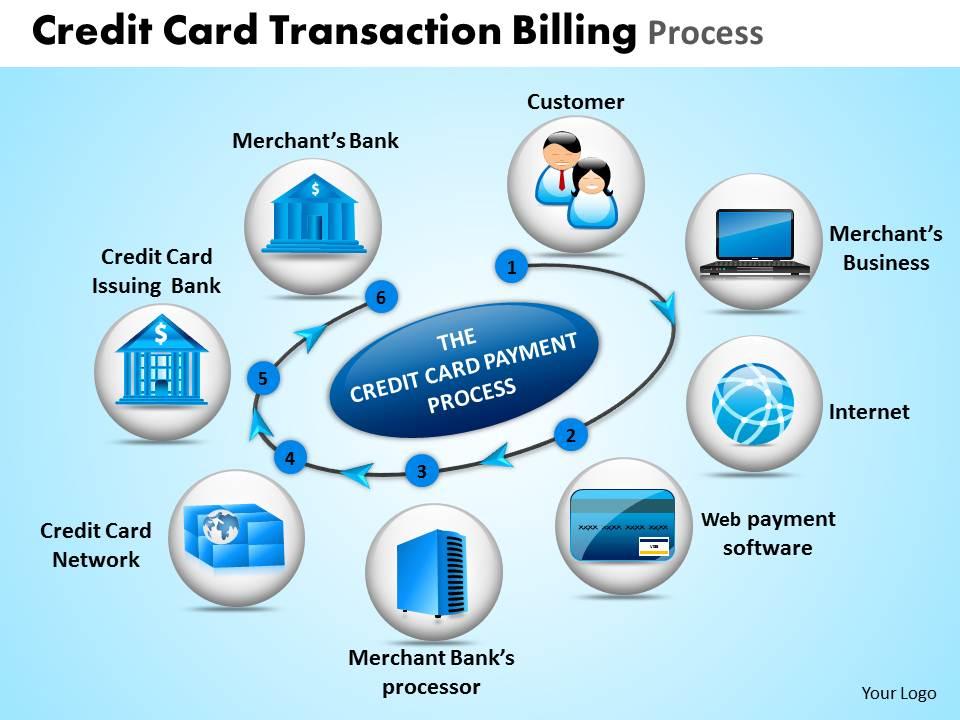
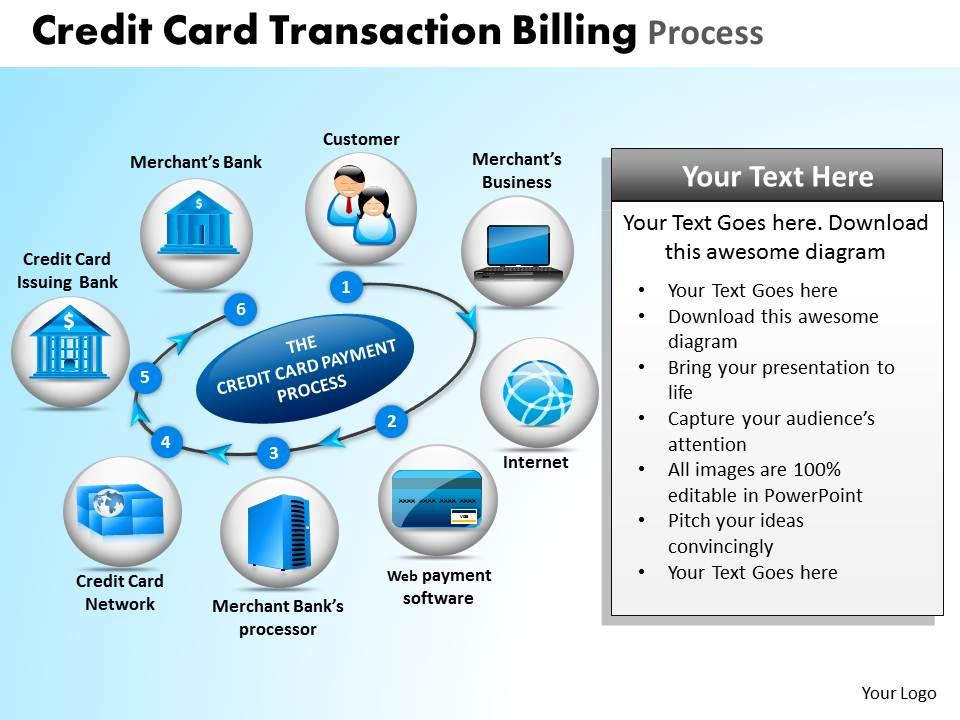
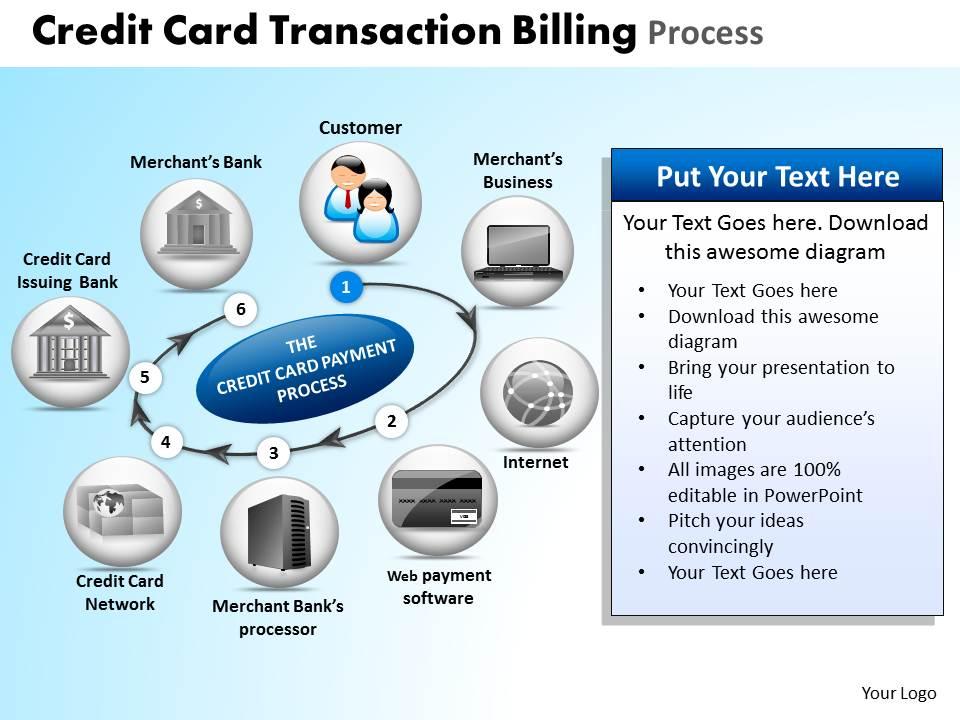
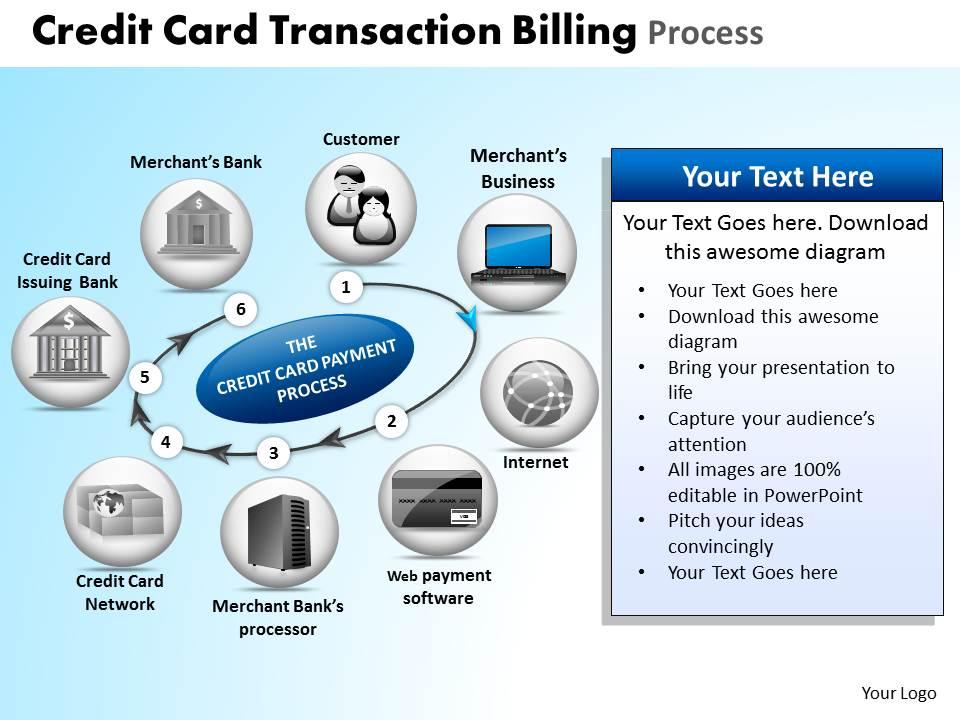
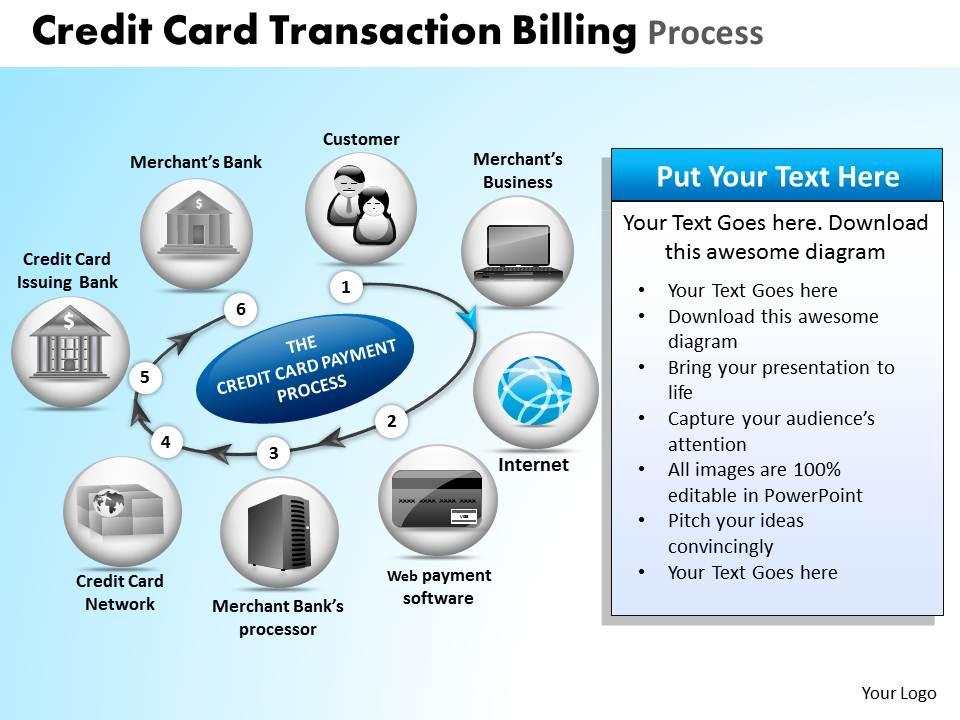
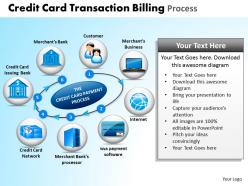
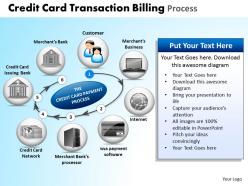
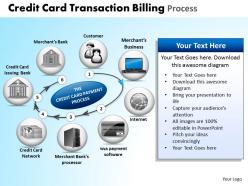
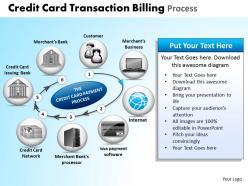
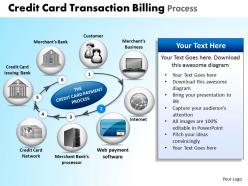
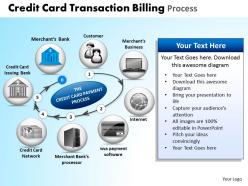
Credit card transaction billing process powerpoint slides and ppt templates db

Rating:
90%
Credit card transaction billing process powerpoint slides and ppt templates db
Slide 1 of 13
Favourites Favourites

Try Before you Buy Download Free Sample Product

Audience Impress Your
Audience
Editable 100%
Editable
Time Save Hours
of Time
The Biggest Sale is ending soon in
0
0
:
0
0
:
0
0
Rating:
90%
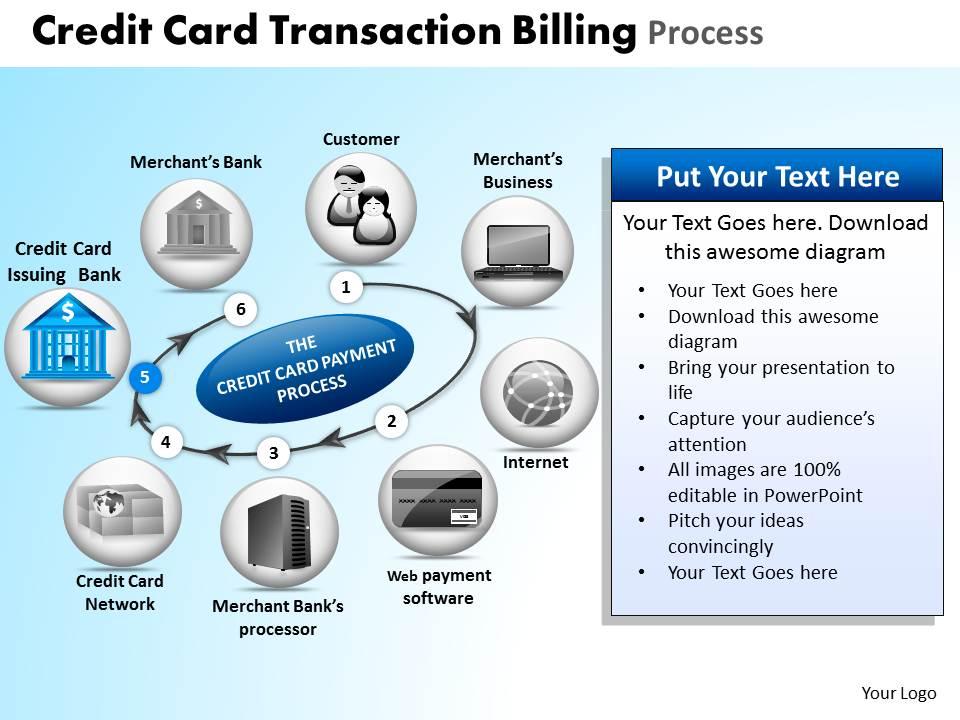
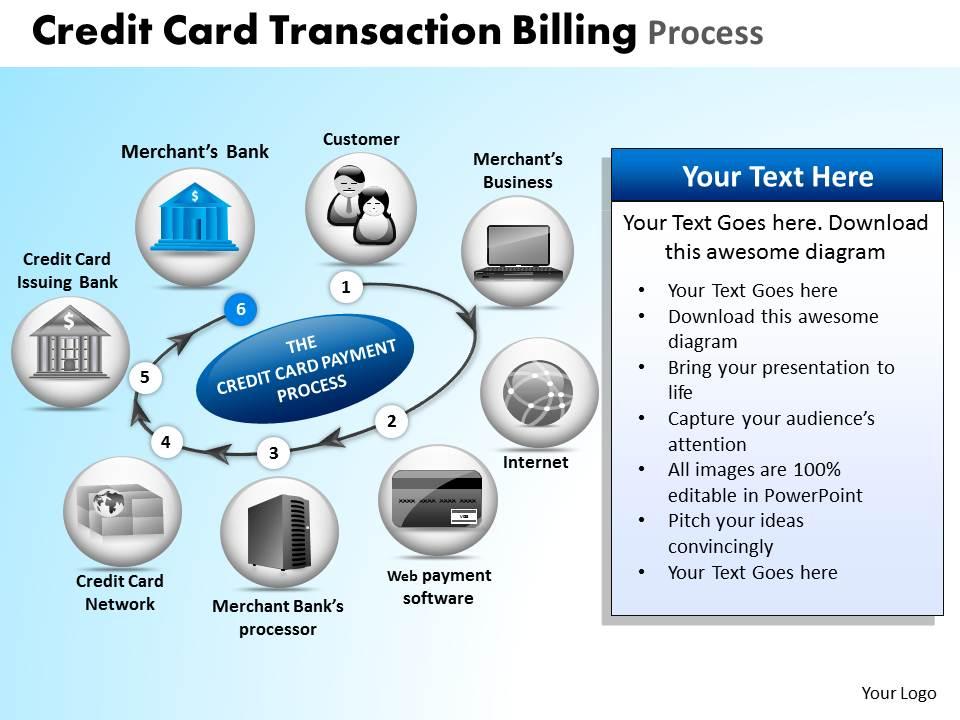
These high quality, editable pre-designed Credit Card Transaction Billing Process Powerpoint Slides And Ppt Templates DB powerpoint slides and powerpoint templates have been carefully created by our professional team to help you impress your audience. Each graphic in every powerpoint slide is vector based and is 100% editable in powerpoint.Each and every property of any slide - color, size, shading etc can be modified to build an effective powerpoint presentation. Use these slides to convey complex business concepts in a simplified manner. Any text can be entered at any point in the powerpoint slide. Simply DOWNLOAD, TYPE and PRESENT

People who downloaded this PowerPoint presentation also viewed the following :

FAQs for Credit card transaction billing process powerpoint slides and

The key components include merchant point-of-sale systems, payment processors, card networks like Visa and MasterCard, issuing banks, and acquiring banks. These systems work together by capturing transaction data, routing authorization requests, and settling funds between parties, with financial institutions increasingly finding that streamlined integration reduces processing times and enhances customer payment experiences.

Merchant banks facilitate credit card billing by processing transaction authorizations, managing settlement funds between issuing and acquiring banks, and handling dispute resolutions. Through specialized payment networks, these institutions streamline authorization approvals, automate fund transfers, and provide fraud monitoring services, ultimately enabling faster transaction processing and reduced operational costs for retailers across industries.

PCI compliance establishes mandatory security standards that protect cardholder data through encrypted storage, secure transmission protocols, regular vulnerability testing, and strict access controls. These requirements significantly reduce fraud risks and data breaches, with many financial institutions and retailers finding that comprehensive PCI adherence ultimately delivers customer trust, regulatory protection, and competitive advantage in payment processing.

Transaction fees in credit card billing are determined by interchange rates set by card networks, processor markups, and merchant category codes, with additional assessment fees from Visa and Mastercard. These fees vary based on transaction volume, risk level, and payment method, with many financial institutions finding that strategic fee structures help balance profitability while maintaining competitive merchant relationships.

Common reasons for billing discrepancies include duplicate charges, incorrect transaction amounts, currency conversion errors, merchant processing delays, and authorization holds that don't clear properly. These issues often occur in high-volume retail, hospitality, and e-commerce sectors, with many financial institutions finding that automated reconciliation systems and real-time monitoring significantly reduce discrepancies while enhancing customer satisfaction.

The chargeback process allows cardholders to dispute transactions directly with their issuing bank, which then reverses the charge and debits the merchant's account pending investigation. Banks typically provide merchants 7-30 days to respond with evidence, and while chargebacks protect consumers from fraud, they cost businesses additional fees and administrative overhead, making dispute prevention increasingly critical for retailers and service providers.

Key technology advancements impacting credit card billing include AI-powered fraud detection, real-time transaction processing, blockchain verification, cloud-based infrastructure, and automated reconciliation systems. These technologies streamline billing by reducing processing times, minimizing errors, and enhancing security protocols, with many financial institutions finding that automated systems deliver faster customer services and significantly lower operational costs.

International transactions involve currency conversion fees, typically 1-3% of the purchase amount, foreign exchange rate fluctuations, and potential delays in processing times. Banks and payment processors handle conversions automatically, with many institutions offering dynamic currency conversion at point-of-sale, while merchants increasingly provide multi-currency options, ultimately delivering streamlined global commerce experiences despite additional costs.

Businesses can streamline credit card billing through automated payment processing, integrated accounting software, real-time transaction monitoring, standardized billing cycles, and digital invoice delivery systems. These technologies enhance operational efficiency by reducing manual errors, accelerating payment reconciliation, and improving cash flow management, with many organizations finding that automated systems deliver faster processing times and significantly lower administrative costs.

Credit card billing cycles significantly influence consumer spending patterns by creating structured payment windows, establishing due date anchors, and enabling budget planning around monthly cycles. This systematic approach helps consumers manage cash flow more effectively, with many finding that longer cycles encourage larger purchases while shorter cycles promote more frequent, smaller transactions, ultimately delivering better financial predictability and enhanced spending control.

Contactless payments streamline traditional billing by enabling faster transaction processing, reduced manual entry errors, automated reconciliation, and enhanced security through tokenization. These technologies revolutionize payment workflows by minimizing processing delays, eliminating paper trails, and integrating seamlessly with existing accounting systems, ultimately delivering improved operational efficiency and enhanced customer experiences across retail and financial services sectors.

Consumers should immediately contact their credit card issuer to report the unauthorized charge, dispute the transaction in writing within 60 days, and request a temporary credit while the investigation proceeds. Banks typically freeze the affected account, issue replacement cards, and conduct thorough fraud investigations, with federal regulations protecting consumers from liability beyond $50, ultimately ensuring account security and financial protection.

Subscription services handle recurring credit card transactions through automated billing systems that store encrypted payment credentials, schedule regular charges based on billing cycles, and process payments automatically without customer intervention. These systems integrate with payment gateways and merchant processors to ensure seamless transactions, while providing customers with billing notifications and subscription management tools, ultimately delivering consistent revenue streams and enhanced customer convenience.

Credit card billing involves a delayed payment process where transactions are compiled monthly and sent to cardholders for later payment, while debit card billing immediately deducts funds from the linked bank account at transaction time. These different approaches enable credit cards to offer flexible payment schedules and credit building opportunities, while debit cards streamline real-time expense tracking and budget control, ultimately delivering distinct financial management advantages for different consumer needs.

Businesses can utilize data analytics to improve credit card transaction billing efficiency by implementing predictive fraud detection, automated reconciliation systems, real-time transaction monitoring, and customer behavior analysis. These analytics-driven approaches streamline payment processing by reducing manual oversight, minimizing chargebacks, and identifying billing discrepancies faster, with many financial institutions finding significantly lower operational costs and enhanced customer satisfaction.

Ratings and Reviews

90% of 100
Write a review
Most Relevant Reviews
  1. 100%

    by Clint Perry

    Easy to edit slides with easy to understand instructions.
  2. 80%

    by Dustin Perkins

    It saves your time and decrease your efforts in half.

2 Item(s)

per page: