

Crypto Wallets Types And Applications Powerpoint Presentation Slides




Try Before you Buy Download Free Sample Product
 Impress Your
 Audience
 100%
100% Editable
 Save Hours
 of Time


This Crypto Wallets Types and Applications PPT includes an introduction, advantages, and features of cryptocurrency. It also comprises the crypto wallets introduction, attributes, advantages, and disadvantages of different types of wallets in the market. This Exploring Cryptocurrency Wallet Types PowerPoint presentation represents different types such as mobile wallets, desktop wallets, web wallets, and hardware wallets. In addition, Variations in Crypto Wallets Choosing the Right One demonstrates the various steps involved in opening the crypto wallet and the key information required to do so. It also discusses how it generates money through networking, staking, consultation fees, and launching new coins. Furthermore, the Understanding Variations and Features of Crypto Wallets deck discusses how we can secure our crypto wallets such as cryptography, two-factor authentication, and multi-signature wallets. Moreover, Diving into the World of Crypto Wallets PPT contains sections about tax and scams in crypto wallet, and applications and use cases. Lastly, this PowerPoint Presentation contains dashboards of crypto wallets and the roadmap deployment of crypto wallets. Download our 100 percent editable and customizable template, which is also compatible with Google Slides.
People who downloaded this PowerPoint presentation also viewed the following :
Content of this Powerpoint Presentation
Slide 1: This slide introduces Crypto Wallets Types and Applications. State Your Company Name and begin.
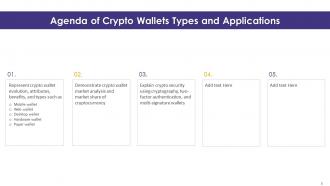
Slide 2: This slide is an Agenda slide. State your agendas here.
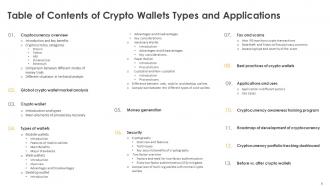
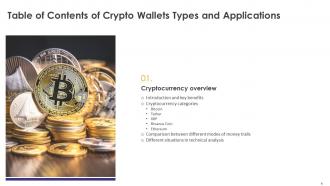
Slide 3: This slide shows a Table of Contents for the presentation.
Slide 4: This slide is an introductory slide.
Slide 5: This slide discusses the introduction and main advantages of cryptocurrency.
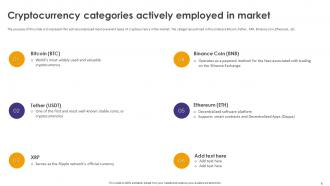
Slide 6: This slide represents the actively employed most prevalent types of cryptocurrency in the market.
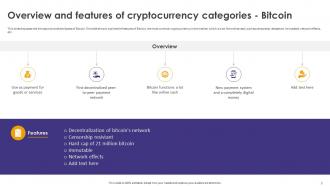
Slide 7: This slide denotes the introduction and attributes of Bitcoin.
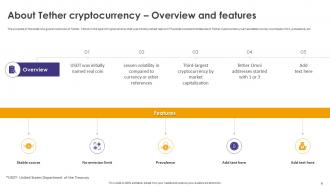
Slide 8: This slide gives an overview of Tether.
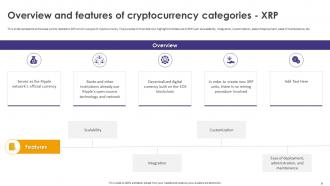
Slide 9: This slide represents some basic points related to XRP which is a type of cryptocurrency.
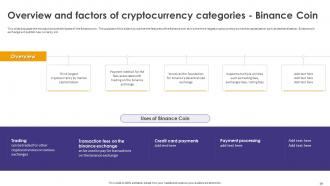
Slide 10: This slide denotes the introduction and attributes of the Binance coin.
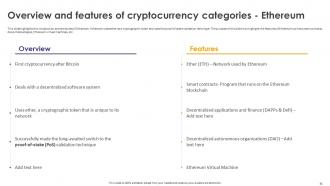
Slide 11: This slide highlights the introduction and attributes of Ethereum.
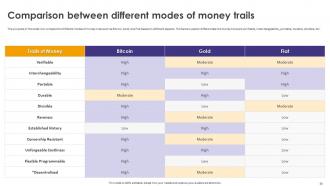
Slide 12: This slide compares the different modes of money trials such as Bitcoin, Gold, and Fiat based on different aspects.
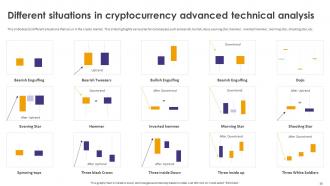
Slide 13: This slide depicts different situations that occur in the crypto market.
Slide 14: This slide is an introductory slide.
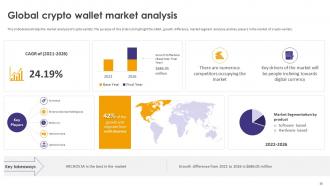
Slide 15: This slide demonstrates the market analysis of crypto wallets.
Slide 16: This slide is an introductory slide.
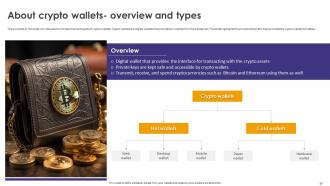
Slide 17: This slide demarcates the introduction and types of crypto wallets.
Slide 18: This slide entails the primary components associated with private key recovery.
Slide 19: This slide is an introductory slide.
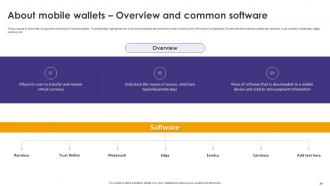
Slide 20: This slide gives an overview of mobile wallets.
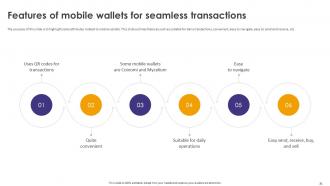
Slide 21: This slide illustrates some attributes related to mobile wallets.
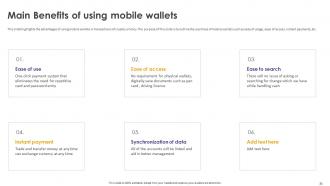
Slide 22: This slide caters to the advantages of using mobile wallets in transactions of cryptocurrency.
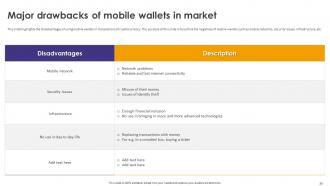
Slide 23: This slide highlights the disadvantages of using mobile wallets in transactions of cryptocurrency.
Slide 24: This slide is an introductory slide.
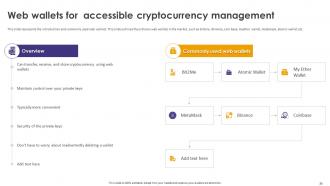
Slide 25: This slide contains the introduction and commonly used web wallets.
Slide 26: This slide marks some attributes related to web wallets.
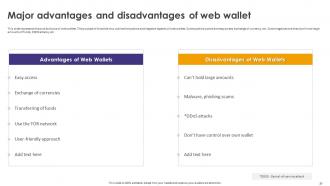
Slide 27: This slide pertains to the pros and cons of web wallets.
Slide 28: This slide is an introductory slide.
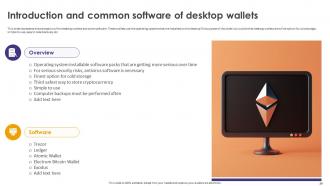
Slide 29: This slide represents the perception of the desktop wallets and some software.
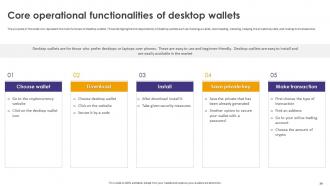
Slide 30: This slide presents the main functions of desktop wallets.
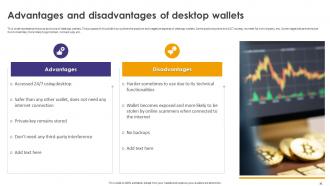
Slide 31: This slide demonstrates the pros and cons of desktop wallets.
Slide 32: This slide is an introductory slide.
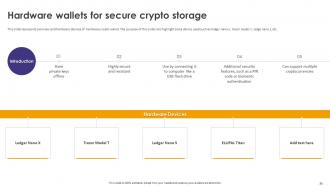
Slide 33: This slide denotes overview and hardware devices of hardware crypto wallet.
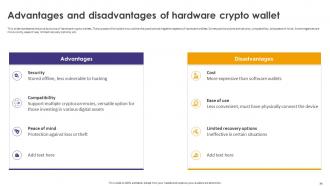
Slide 34: This slide depicts the pros and cons of hardware crypto wallets.
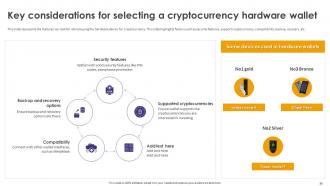
Slide 35: This slide elucidates the features we look for while buying the hardware device for cryptocurrency.
Slide 36: This slide is an introductory slide.
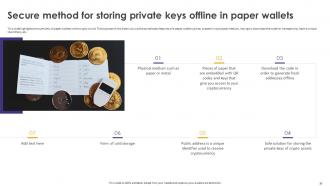
Slide 37: This slide highlights the overview of paper wallets in the crypto world.
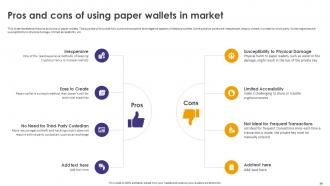
Slide 38: This slide pertains to the pros and cons of paper wallets.
Slide 39: This slide is an introductory slide.
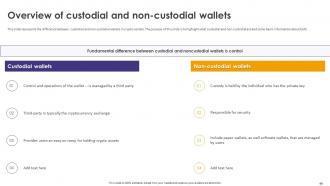
Slide 40: This slide projects the difference between custodial and non-custodial wallets in crypto wallets.
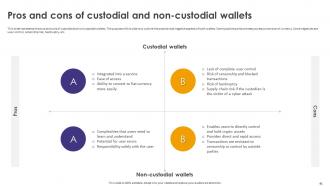
Slide 41: This slide contains the pros and cons of custodial and non-custodial wallets.
Slide 42: This slide is an introductory slide.
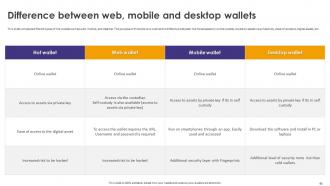
Slide 43: This slide compares different types of hot wallets such as web, mobile, and desktop.
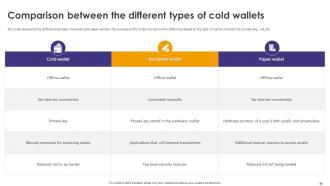
Slide 44: This slide represents the difference between hardware and paper wallets.
Slide 45: This slide is an introductory slide.
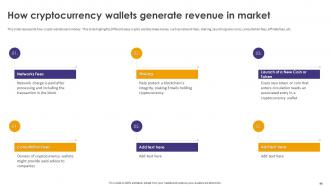
Slide 46: This slide pertains to how crypto wallets earn money.
Slide 47: This slide is an introductory slide.
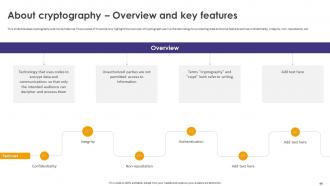
Slide 48: This slide discusses cryptography and its key features.
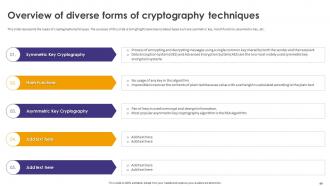
Slide 49: This slide puts the types of cryptography techniques.
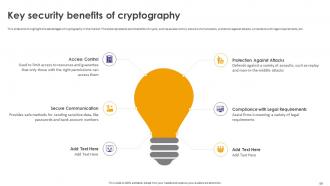
Slide 50: This slide aims to highlight the advantages of cryptography in the market.
Slide 51: This slide is an introductory slide.
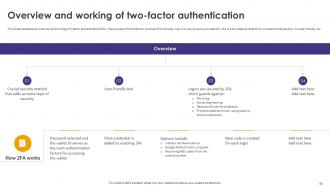
Slide 52: This slide outlines an overview and working of 2-factor authentication(2FA).
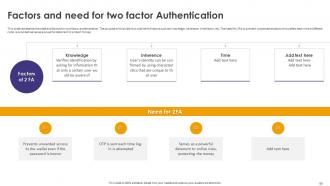
Slide 53: This slide contains the need and factors for two-factor authentication.
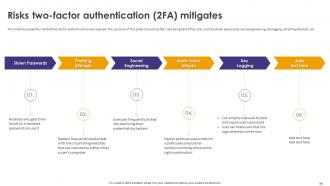
Slide 54: This slide caters to the risk that two-factor authentication has reduced.
Slide 55: This slide is an introductory slide.
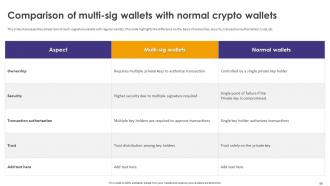
Slide 56: This slide showcases the comparison of multi-signature wallets with regular wallets.
Slide 57: This slide is an introductory slide.
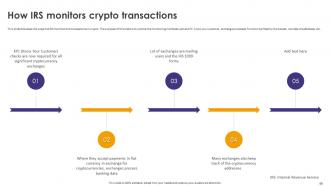
Slide 58: This slide discusses the ways the IRS monitors the transactions in crypto.
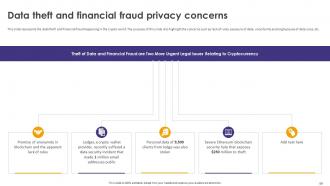
Slide 59: This slide puts the data theft and financial fraud happening in the crypto world.
Slide 60: This slide outlines the accessing type and severity of the scam.
Slide 61: This slide is an introductory slide.
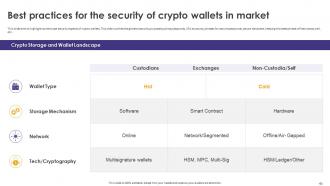
Slide 62: This slide aims to highlight some broad security aspects of crypto wallets.
Slide 63: This slide is an introductory slide.
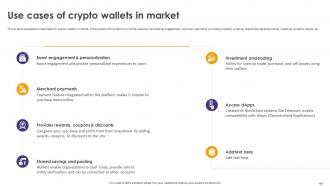
Slide 64: This slide showcases the used cases for crypto wallets in market.
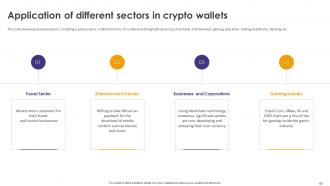
Slide 65: This slide shows business sectors, including cryptocurrency, in daily functions.
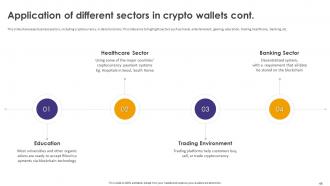
Slide 66: This slide depicts business sectors, including cryptocurrency, in daily functions.
Slide 67: This slide is an introductory slide.
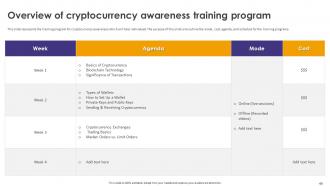
Slide 68: This slide denotes the training program for cryptocurrency awareness which will help individuals.
Slide 69: This slide marks the roadmap for the development of cryptocurrency.
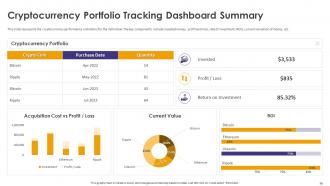
Slide 70: This slide represents the cryptocurrency performance indicators for the individual.
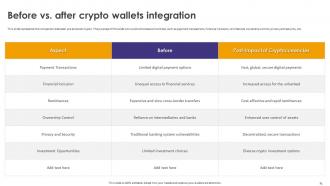
Slide 71: This slide presents the comparison between pre and post-crypto.
Slide 72: This slide is titled Additional Slides for moving forward.
Slide 73: This slide depicts different cryptocurrency charts and some basic information.
Slide 74: This slide shows all the icons included in the presentation.
Slide 75: This slide is Our Team slide with names and designations.
Slide 76: This slide is Our Mission slide with related imagery and text.
Slide 77: This slide showcases Magnifying Glass to highlight information, specifications, etc.
Slide 78: This slide depicts a Venn diagram with text boxes.
Slide 79: This slide contains a Puzzle with related icons and text.
Slide 80: This is an additional slide.
Slide 81: This slide is a thank-you slide with address, contact numbers, and email address.
Crypto Wallets Types And Applications Powerpoint Presentation Slides with all 88 slides:
Use our Crypto Wallets Types And Applications Powerpoint Presentation Slides to effectively help you save your valuable time. They are readymade to fit into any presentation structure.




















FAQs for Crypto Wallets Types And Applications
Crypto wallets include hardware wallets, software wallets, mobile wallets, web-based wallets, and paper wallets, each offering different security and accessibility features. These storage solutions enhance digital asset management by providing offline security, seamless transactions, and multi-currency support, with many financial institutions and retail investors finding that diversified wallet strategies deliver optimal protection and operational flexibility.
Hardware wallets offer superior security through offline storage, physical authentication, and isolated key management, while software wallets provide convenience but remain vulnerable to malware and online threats. Many financial institutions and crypto exchanges find that hardware wallets significantly reduce breach risks for large holdings, though software wallets enable faster transactions for daily trading activities.
**INPUT**: What are the top features to look for in a crypto wallet? **OUTPUT**: Top crypto wallet features include multi-currency support, advanced security protocols, user-friendly interfaces, backup and recovery options, and seamless transaction capabilities. These features enhance digital asset management by streamlining operations, minimizing security risks, and enabling efficient portfolio tracking, with many financial institutions and individual investors finding that comprehensive wallet solutions deliver superior control and competitive advantages in cryptocurrency markets. [Word count: 58 words]
Users can determine the best wallet by evaluating their investment strategy, security requirements, frequency of transactions, and supported cryptocurrencies. Active traders benefit from hot wallets offering quick access, while long-term investors prioritize cold storage solutions, with many finding that combining both approaches delivers optimal security and accessibility for diverse investment portfolios.
**INPUT**: What security measures should be taken to protect a crypto wallet? **OUTPUT**: Essential crypto wallet security measures include using hardware wallets, enabling two-factor authentication, creating strong passwords, regularly updating software, and maintaining secure backup phrases. These protections streamline risk management by minimizing exposure to online threats, enhancing transaction verification, and ensuring recovery capabilities, with many financial institutions finding that layered security approaches ultimately deliver greater client trust and operational resilience. **Word count: 60 words**
Backing up a crypto wallet involves securely storing your private keys or seed phrase, typically a 12-24 word recovery phrase generated during wallet creation. Restoration requires entering this seed phrase into compatible wallet software, which regenerates access to your cryptocurrency holdings, with many investors finding that regular backups across multiple secure locations significantly reduce the risk of permanent asset loss.
Multi-signature wallets enhance security by requiring multiple private keys to authorize transactions, distributing control across several parties, and eliminating single points of failure. These wallets enable organizations to implement approval workflows, prevent unauthorized access, and reduce fraud risks, with many financial institutions and crypto exchanges finding that multi-sig significantly strengthens their asset protection strategies.
Mobile crypto wallets present risks including device theft or loss, malware attacks, phishing scams, weak password vulnerabilities, and network security breaches. While these challenges exist, many financial institutions and crypto exchanges are implementing multi-factor authentication, biometric security, and encrypted storage solutions, ultimately delivering enhanced protection and user confidence in mobile cryptocurrency management.
Decentralized wallets give users complete control over their private keys and funds, while custodial wallets require third-party providers to manage keys and security on users' behalf. This fundamental difference means decentralized wallet users maintain full ownership and transaction authority, whereas custodial users rely on exchanges or services for access, ultimately trading convenience for autonomy in their cryptocurrency management approach.
Wallet recovery phrases serve as master keys that enable users to restore access to their cryptocurrency holdings if devices are lost, damaged, or compromised, typically consisting of 12-24 randomly generated words. These phrases provide critical backup security by allowing wallet reconstruction on new devices, with many cryptocurrency investors finding that proper phrase storage in secure, offline locations ultimately delivers peace of mind and protects against permanent asset loss.
Users can identify fraudulent crypto wallet applications by verifying developer authenticity, checking official app store ratings and reviews, examining security certifications, and avoiding unsolicited downloads or links. These verification methods protect against malicious apps that steal private keys or personal information, with many cryptocurrency users finding that downloading wallets only from official websites and established app stores significantly reduces fraud risk while ensuring secure asset management.
Common mistakes include using weak passwords, not backing up recovery phrases, storing credentials online, falling for phishing scams, and neglecting software updates. These oversights can lead to significant financial losses, with many cryptocurrency users finding that implementing proper security protocols, using hardware wallets for large holdings, and maintaining offline backups ultimately delivers enhanced protection and peace of mind.
Crypto wallets handle transaction fees by automatically calculating network costs based on blockchain congestion, transaction complexity, and user-selected priority levels. Most wallets offer fee customization options, allowing users to choose between faster, higher-cost transactions or slower, economical ones, with many finding that understanding peak network times helps optimize costs while ensuring reliable transaction processing.
Regular wallet software updates are crucial for maintaining security patches, bug fixes, enhanced encryption protocols, and compatibility with new blockchain features. These updates protect against emerging threats, improve transaction efficiency, and ensure seamless integration with evolving cryptocurrency networks, with many financial institutions and crypto exchanges finding that consistent updates minimize security vulnerabilities while enhancing operational reliability.
Wallet integration with DeFi platforms enables users to connect their crypto wallets directly to decentralized applications through protocols like WalletConnect, MetaMask integration, and smart contract interactions. Through these connections, users can seamlessly lend, borrow, trade, and stake cryptocurrencies across platforms like Uniswap, Compound, and Aave, while maintaining custody of their assets and accessing yield-generating opportunities without traditional intermediaries.
-
“As you have innovative ideas and they are all customizable, this saves a huge chunk of your time to prepare well-read presentations.”
-
Informative and engaging! I really like the design and quality of the slides.