

Current Transition Future Structural Process Planning Organizations Strategic Execution





Try Before you Buy Download Free Sample Product
 Impress Your
Audience
 100%
Editable
 Save Hours
of Time


Our Current Transition Future Structural Process Planning Organizations Strategic Execution are topically designed to provide an attractive backdrop to any subject. Use them to look like a presentation pro.
People who downloaded this PowerPoint presentation also viewed the following :
Current Transition Future Structural Process Planning Organizations Strategic Execution with all 12 slides:
Use our Current Transition Future Structural Process Planning Organizations Strategic Execution to effectively help you save your valuable time. They are readymade to fit into any presentation structure.

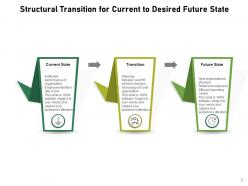


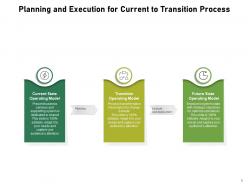
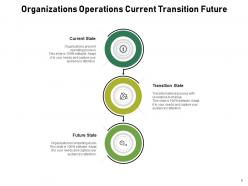
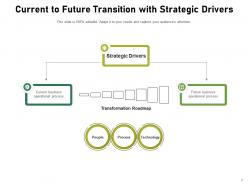


FAQs for Current Transition Future Structural Process Planning
Start with figuring out where you actually stand right now - that's your foundation. Then map out your vision, set specific goals, and develop strategies to get there. Implementation planning comes next with clear metrics attached. Loop in your key people from the beginning, not as an afterthought. Someone needs to own each piece or it'll just float around forever. Quarterly check-ins are crucial because things always shift. Honestly, most strategic plans end up collecting dust, so build in those review cycles from day one. The real work happens in execution anyway.
Think of your mission and vision as your compass - every goal should clearly point back to them. If you can't draw that line, ditch it. I've watched so many companies get distracted by goals that look good on paper but don't actually serve their purpose. Before you commit any time or money, ask yourself: "Will this actually get us closer to where we're headed?" Your leadership needs to understand these connections inside and out, then make sure everyone else gets it too. Honestly, it sounds basic but most teams skip this step entirely.
Look, stakeholder analysis saves you from major headaches later. Map out everyone who'll be impacted - employees, customers, investors, the whole crew. Rate their influence and how much they actually care about your project. I've watched so many solid plans crash because someone overlooked a random department head or regulatory group. It's honestly painful to see. The smart move? Figure out their motivations upfront and build strategies that work with them, not against them. Getting buy-in early beats trying to fix resistance after you've already rolled everything out. Trust me on this one.
SWOT's honestly pretty solid for cutting through all the decision-making chaos. Map out your strengths, weaknesses, opportunities, and threats in four boxes. Then you can see where your strong points line up with good opportunities, plus figure out what weaknesses might trip you up. Threats become way less scary when you've actually thought them through ahead of time. The trick is don't sugarcoat anything - be harsh about your weak spots or you'll just fool yourself. I know it sounds super simple but it really does help you focus on what'll actually move the needle instead of spinning your wheels on random stuff.
Figure out exactly who you're selling to first - that's honestly the hardest part. Then look at what competitors are doing, pricing stuff, market size. I used to go way too deep into spreadsheets and data (still do sometimes lol). But you also need the big picture - regulations changing, economy doing weird things, new tech disrupting everything. Mix hard numbers from industry reports with softer stuff like customer surveys and what people are saying online. Oh and don't wait until you desperately need insights. Set up a weekly routine so you're not panicking later when planning rolls around.
Look, most companies do their big strategic review once a year, but that's honestly not enough anymore. You need to check your key numbers quarterly at minimum - markets shift way too fast these days. I learned this the hard way at my last job when we stuck to a plan that was already outdated by summer. Quarterly check-ins let you catch problems early and tweak things without going nuts. Don't change direction every month though, that's just asking for chaos. Save the major pivots for your annual deep dive when you've got real data to work with.
Track both money stuff and the softer metrics. Revenue and profit margins are obvious, but they're slow to show what's actually happening. Customer satisfaction, employee engagement, market share - those tell you way more about where you're headed. Pick maybe 6 metrics tops that connect to your main goals. Seriously, more than that and you'll get overwhelmed trying to analyze everything. I learned this the hard way at my last job. Set up monthly check-ins instead of waiting for quarterly reports - you can pivot faster that way.
Honestly, the biggest mistake I see is when leadership locks themselves in a room and emerges with this "perfect" plan nobody else had input on. Get your people involved from day one - workshops, brainstorming sessions, whatever works. When employees help shape the strategy, they actually give a damn about making it happen. Be super clear about the reasoning behind decisions too. And here's what really works: let people own the pieces they're passionate about. I swear, that ownership piece is everything. Also don't forget the trade-offs part - people respect transparency way more than sugar-coating.
Start with a SWOT analysis - it's pretty straightforward and shows you where you actually stand. For goal-setting, OKRs work really well, way better than those overly complicated frameworks some consultants push. Porter's Five Forces is solid for checking out your competition, and PEST analysis covers the external stuff (political, economic, social, tech factors). Oh, and McKinsey's 7S thing helps align your internal operations. Honestly though? Don't go crazy trying to use every tool out there. Pick maybe 2-3 max or you'll just confuse yourself. I'd stick with SWOT and OKRs first - they're simple but actually useful.
Dude, this stuff actually works. Real-time data beats guessing every time - you can see what customers are doing, track competitors, spot market shifts as they happen. Predictive analytics lets you test scenarios before you waste money on bad ideas. Honestly, most companies sit on tons of useful data they never touch. Start there. Dashboards help you watch your KPIs without drowning in spreadsheets. When something's off, you'll catch it fast and pivot. Way better than flying blind with quarterly reports that are already ancient history.
Here's what I've seen totally bomb companies: strategies that are way too broad or unrealistic about timing. Also, leadership creating plans in some boardroom bubble without talking to people actually doing the work - huge mistake. Treating it like you write it once and you're done is another disaster. Quarterly check-ins are pretty much non-negotiable because stuff always changes. Oh, and don't ignore outside factors that could mess everything up. Honestly? Pick like 3 focused things max and build in regular reviews. Way better than some 47-point masterplan nobody follows.
So scenario planning is basically stress-testing your strategy with different "what if" situations. You dream up 3-4 possible futures (not predictions, just plausible stuff) then figure out how you'd respond to each. Think of it like business fire drills, honestly. The whole point isn't predicting what'll happen - nobody's that good anyway. It's about making your team more flexible and spotting warning signs early. I'd start simple though: grab one big uncertainty in your industry and build two opposite scenarios around it. Works way better than trying to boil the ocean right away.
Honestly, culture can totally torpedo your strategic planning if you're not careful. When teams embrace risk and innovation, strategies actually happen - people execute instead of just talking about it. But in those old-school, bureaucratic places? Forget it. Even amazing plans just sit there collecting dust because everyone's scared of change or stuck in their departments. Communication gets weird too - nobody wants to be honest in meetings. I swear, some companies spend months crafting perfect strategies that'll never see daylight. Worth checking if your culture's actually ready before you waste time planning stuff that won't happen anyway.
Look, strategic planning forces you to step back from the daily grind and actually think about possibilities. You're literally building innovation into your roadmap, which gives you permission to try stuff and take smart risks. Here's the thing though - ideas die without money behind them, so you need real budget allocated. During planning sessions, spend time brainstorming game-changing opportunities instead of just tweaking what already exists. Don't forget to set specific innovation targets with deadlines. Otherwise it just becomes another nice-to-have that never happens. The whole point is creating actual space for experimentation.
Okay so here's the thing - most strategic plans just collect dust because nobody actually sees them. Create a one-page visual that hits the main points, then talk about it constantly. Town halls are fine for the overview, but honestly? Those smaller team meetings where people can actually ask questions - that's where it clicks. Mix up how you share it too: email updates, dashboards, maybe even those cheesy posters if your office is into that. Oh and make sure every manager can explain it without reading from slides. Repetition is everything. People need to connect their daily stuff back to the bigger picture or it's just noise.
-
Awesome use of colors and designs in product templates.
-
Good research work and creative work done on every template.
-
Great experience, I would definitely use your services further.
-
Nice and innovative design.
-
Great designs, really helpful.
-
Great product with highly impressive and engaging designs.
-
Informative design.
-
Best way of representation of the topic.
-
Awesome presentation, really professional and easy to edit.
-
Very unique and reliable designs.