

Cybersecurity Risk Management Framework Powerpoint Presentation Slides





Try Before you Buy Download Free Sample Product
 Impress Your
Audience
 100%
Editable
 Save Hours
of Time


Keeping valuable and confidential information of employees and organizations is a difficult task, and to achieve this goal, organizations are spending more on information security risk management programs. Check out our competently designed Cybersecurity Risk Management Framework template that will be useful for organizations looking to implement a risk program to ensure information security by effectively managing organizational risks caused by incidents, threats, and vulnerabilities. Firstly, organizations can use the section present scenario to address the present security management capabilities of their business and security infrastructure performance. The current scenario section is followed by how the firm will effectively manage the information security section; organizations can use it to provide an in-depth overview of new information security risk assessment process workflow covering stages such as asset identification, incident management, threat, and vulnerability management, and managing the risks. Organizations can use slide roles and responsibilities and sections for practical information system management, namely training and budget and information security system checklists. Finally, slides such as the impact on security infrastructure performance and dashboards will aid the organization in monitoring their business performance while protecting confidential data. Book a free demo with our experts and customize our 100 percent editable cybersecurity ppt template based on needs. Get access now.
People who downloaded this PowerPoint presentation also viewed the following :
Content of this Powerpoint Presentation
Slide 1: This slide introduces Cybersecurity Risk Management Framework. State Your Company Name and begin.
Slide 2: This slide states Agenda of the presentation.
Slide 3: This slide presents Table of Content for the presentation.
Slide 4: This slide shows title for 'present scenario'.
Slide 5: This slide shows the current security management capabilities of the firm.
Slide 6: This slide displays performance analysis of current security infrastructure based on NIST core functions.
Slide 7: This slide depicts title for 'Introduction to process workflow'.
Slide 8: This slide illustrates information security risk assessment process workflow.
Slide 9: This slide presents title for 'Asset Identification'.
Slide 10: This slide illustrates system categorization worksheet.
Slide 11: This slide demonstrates the asset criticality of identified system components.
Slide 12: This slide exhibits title for 'Incident Management'.
Slide 13: This slide presents the incident management workflow of the firm.
Slide 14: This slide covers incident management tools.
Slide 15: This slide displays incident logging process of the firm.
Slide 16: This slide shows incident prioritization matrix.
Slide 17: This slide displays continued content.
Slide 18: This slide presents title for 'Threat & vulnerability management'.
Slide 19: This slide shows the categorization of information security threats.
Slide 20: This slide defines the vulnerability ranking set by the firm.
Slide 21: This slide shows threat identification and vulnerability impact assessment.
Slide 22: This slide exhibits title for 'Managing the risk'.
Slide 23: This slide defines the incident risk level.
Slide 24: This slide displays security control scenario setting.
Slide 25: This slide shows encountered risk reporting and its likelihood.
Slide 26: This slide illustrates information security risk assessment worksheet.
Slide 27: This slide highlights continued content.
Slide 28: This slide shows mitigation plan for resolving encountered threat.
Slide 29: This slide displays title for 'Roles & responsibilities for managing information security'.
Slide 30: This slide represents Role and Responsibilities of QA in DevOps.
Slide 31: This slide highlights title for topics that are to be covered next in the template.
Slide 32: This slide illustrates employee training schedule.
Slide 33: This slide shows budget for managing information security.
Slide 34: This slide presents title for 'Information security system checklists'.
Slide 35: This slide displays system management checklist.
Slide 36: This slide shows system disposal checklist.
Slide 37: This slide exhibits title for 'Impact on security infrastructure performance'.
Slide 38: This slide shows performance impact on security infrastructure after introducing risk assessment process.
Slide 39: This slide depicts title for 'Dashboards'.
Slide 40: This slide covers information security risk management dashboard.
Slide 41: This slide displays threat and vulnerability management dashboard.
Slide 42: This slide displays Icons for Cybersecurity Risk Management Framework.
Slide 43: This slide is titled as Additional Slides for moving forward.
Slide 44: This slide showcases Impact Assessment Matrix.
Slide 45: This slide shows Information Security Decision Framework - PRISM Workflow.
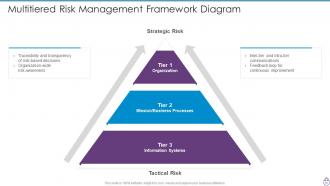
Slide 46: This slide presents Multitiered Risk Management Framework Diagram.
Slide 47: This is About Us slide to show company specifications etc.
Slide 48: This is Our Team slide with names and designation.
Slide 49: This slide contains Puzzle with related icons and text.
Slide 50: This is Our Mission slide with related imagery and text.
Slide 51: This slide showcases Magnifying Glass to highlight information, specifications, etc.
Slide 52: This slide represents Roadmap For Process Flow.
Slide 53: This slide provides 30 60 90 Days Plan with text boxes.
Slide 54: This slide depicts Venn diagram with text boxes.
Slide 55: This is a Timeline slide. Show data related to time intervals here.
Slide 56: This slide shows Post It Notes. Post your important notes here.
Slide 57: This is Our Goal slide. State your firm's goals here.
Slide 58: This is a Thank You slide with address, contact numbers and email address.
Cybersecurity Risk Management Framework Powerpoint Presentation Slides with all 63 slides:
Use our Cybersecurity Risk Management Framework Powerpoint Presentation Slides to effectively help you save your valuable time. They are readymade to fit into any presentation structure.



















FAQs for Cybersecurity Risk Management Framework
So there's this NIST framework that breaks it down into five parts: identify, protect, detect, respond, and recover. Start by figuring out what assets you actually have and where you're vulnerable. Then build your defenses - access controls, employee training, that stuff. Your monitoring systems need to catch threats as they happen (which honestly is harder than it sounds). When something goes wrong, you contain it fast. Recovery gets everything back online afterward. The whole thing's cyclical though - you can't just set it and forget it because hackers keep getting smarter.
Start with mapping what assets you actually have - can't protect what you don't know exists, right? Get your team together for threat modeling sessions and brainstorm realistic attack scenarios for each critical system. Frameworks like NIST or ISO 27001 help structure everything, but honestly the business stakeholder input is what makes or breaks it. They'll tell you which risks would actually tank the company. Don't forget regular vuln scans and pen testing. Oh, and this needs to be ongoing - those annual "checkbox" assessments are pretty much useless.
Look, risk tolerance is basically your cybersecurity roadmap - it tells you how much risk you can live with before hitting the panic button. Use it to figure out which threats need immediate attention and where to spend your budget. Without clear thresholds, you're just randomly deploying security tools and hoping for the best (which honestly happens more than it should). The key is getting leadership to actually define specific risk levels first. That way you can build controls that make business sense instead of just checking boxes. Trust me, alignment with business goals makes everything so much easier.
Figure out what regulations hit your industry first - HIPAA if you're in healthcare, PCI DSS for payments, that kind of thing. Map what you've got against what's required to find the holes. NIST and ISO 27001 frameworks are honestly pretty solid for this stuff, even if they seem dry at first. Don't just aim for the bare minimum though. Get third-party assessments done regularly. Keep your docs current because auditors get cranky when things are outdated. Oh, and treat compliance like your starting point, not the finish line. You'll actually sleep better once everything's buttoned up properly.
Use a risk matrix - plot threats by how likely they are vs their potential impact. Figure out your most critical stuff first (key data, systems, whatever keeps the lights on). Honestly, don't stress too much about perfect scores though. NIST and ISO 27001 are decent starting points, but your business matters more. Like, if you're in retail, payment systems probably need extra attention during busy seasons. Just stay consistent with however you score things and revisit it regularly since threats change all the time.
Oh man, this stuff keeps me up at night sometimes! New tech like AI and IoT creates attack surfaces we've never seen before. Your old risk frameworks? Pretty much useless against fresh threats. I'd start by actually mapping what emerging tech you're already using - might surprise you how much is already there. Then figure out what specific risks each one brings. The trick isn't predicting every possible threat (impossible), but building flexibility into your assessment process. You'll constantly be updating controls, but that's just how it works now. Beats getting blindsided by something completely new.
Honestly, start with basic automated scanning if you don't have it yet - catches most of the obvious stuff before it bites you. SIEM systems are solid for pulling together all your security data and flagging weird activity. I'd run pen tests quarterly, or whenever you make big changes to your setup. Threat intel feeds are worth it too, especially ones tailored to your industry. The trick is making this continuous instead of some annual thing you check off a list. Real-time monitoring tools help tons here. Oh, and don't sleep on regular risk assessments - they're boring but actually useful for spotting gaps.
So your risk framework is basically your game plan before shit hits the fan. When you've already mapped out your critical stuff and weak spots, incidents don't catch you completely off guard. You know what matters most and can jump on it faster. Recovery priorities are already set from those business impact assessments you did earlier - honestly saves so much time during chaos. It's like having your fire escape route planned instead of figuring it out while the building's burning. Just make sure those incident playbooks actually match what your risk analysis says is important.
Ugh, the worst part is turning all that techy stuff into language executives actually get. Like, they don't give a damn about SQL injections - but tell them it could cost $2M in fines and suddenly they're listening. Board meetings are brutal too since you get maybe 10 minutes to explain complex risks. Plus everyone's burned out from constant "the sky is falling" security updates. Honestly? Ditch the boring reports. Show them real numbers, walk through actual scenarios that could hit your company. Visual dashboards work way better than walls of text. Make it concrete and you'll finally get their attention.
Honestly, culture is everything when it comes to cybersecurity. If people are terrified of getting blamed, they'll never report incidents - which is like, the worst possible outcome. You need folks to feel safe speaking up about mistakes. Trust between departments is massive too. Security teams can't just hide in their corner (saw this disaster unfold at my buddy's company last year). Some places are paranoid about every little risk while others basically wing it. My advice? Figure out how your workplace actually handles screw-ups and whether teams talk to each other. That'll tell you everything.
Honestly, your employees are gonna make or break your security. Most breaches happen because someone clicked a sketchy link or used "password123" - not because hackers are pulling some Ocean's Eleven stuff. It's way easier to fool people than crack systems. You need regular training so your team can spot phishing emails and social engineering tricks. Don't just do the boring annual thing though - my old company did that and everyone zoned out. Make it ongoing and actually relevant to what they're dealing with. Focus on whatever risky behaviors you're seeing first.
Dude, start with the boring stuff first - automate your vulnerability scans and compliance checks so they run 24/7. Game changer honestly. Then work on incident response playbooks and threat feeds. Your team will actually thank you because they can focus on the real analysis instead of collecting data all day. Oh and definitely set up automated reporting dashboards - I learned this the hard way after spending way too many late nights manually pulling reports. Asset inventory updates are perfect for testing this out since they're super repetitive. Once you nail that, you'll want to automate everything else.
So you want both proactive and reactive stuff - mean time to detect incidents, how fast you patch vulns within your SLAs, and whether your overall risk is getting better or worse. Security training completion rates matter too, honestly more than people think. The real goldmine though? Track how many risks actually happen versus what you predicted. That tells you if your whole framework is BS or not. Oh and compliance audits, vendor security scores - the usual suspects. Just pick 3-4 that actually move the needle for your business first, then expand from there.
Dude, you gotta build security checks right into each development phase instead of slapping them on at the end. Do threat modeling when you're designing stuff, run those automated scans while coding, then hit it with pen testing before launch. Security reviews need to be hard stops - nothing moves forward without passing. Honestly, I've watched so many teams think they can wing it and then panic later when everything breaks. Get automated tools that'll yell at developers the second something looks sketchy. Way cheaper to fix bugs early than after they're live. Oh, and start small - pick like two checkpoints first.
Honestly, get your executives on board first - without that you're dead in the water. Someone has to actually own this project or it becomes another binder gathering dust. Start by figuring out what assets you have and where your real vulnerabilities are. Build your controls around those high-risk areas, not some cookie-cutter template. Document everything, test your incident response regularly (like actually test it, don't just talk about it). The whole thing should fit into how you already work, not create some weird separate compliance world. Oh, and set up quarterly reviews to keep it fresh and relevant.
-
SlideTeam is the best in the business. Their templates are engaging and customizable. You can rely on them.
-
World-class PowerPoint designs that are fully customizable!