

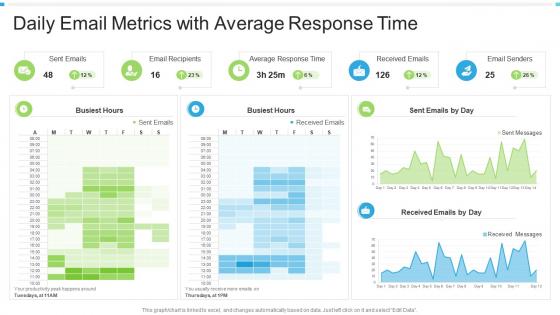
Daily email metrics with average response time




Try Before you Buy Download Free Sample Product
 Impress Your
Audience
 100%
Editable
 Save Hours
of Time


Our Daily Email Metrics With Average Response Time are topically designed to provide an attractive backdrop to any subject. Use them to look like a presentation pro.
People who downloaded this PowerPoint presentation also viewed the following :
Daily email metrics with average response time with all 10 slides:
Use our Daily Email Metrics With Average Response Time to effectively help you save your valuable time. They are readymade to fit into any presentation structure.










FAQs for Daily email metrics with
Essential daily email metrics include open rates, click-through rates, bounce rates, unsubscribe rates, and conversion rates, along with delivery rates and spam complaint percentages. These metrics enable marketers to quickly identify performance trends, optimize subject lines and content timing, and adjust targeting strategies, with many organizations finding that daily monitoring ultimately delivers higher engagement rates and improved ROI across campaigns.
Open rates vary significantly across industries and audience segments, with B2B sectors like technology and finance typically seeing 15-25% rates, while retail and hospitality often achieve higher engagement. These variations reflect audience behavior patterns, content expectations, and communication preferences, with younger demographics favoring mobile-optimized content and professional audiences responding better to personalized, value-driven messaging that addresses specific industry challenges.
Click-through rates measure subscriber engagement beyond email opens, indicating genuine interest in content and willingness to take desired actions like visiting websites or making purchases. This metric enables marketers to assess content relevance, optimize messaging strategies, and identify high-performing campaigns, with many organizations finding that strong CTRs directly correlate with improved conversion rates and revenue generation.
High bounce rates signal poor list quality and can damage your sender reputation, leading to decreased deliverability and potential blacklisting by email service providers. While soft bounces from temporary issues can be manageable, hard bounces from invalid addresses require immediate removal, with many organizations finding that maintaining bounce rates below 2% significantly enhances inbox placement and campaign effectiveness.
Unsubscribe rate serves as a critical indicator of content relevance, audience alignment, and messaging effectiveness, helping identify disconnect between subscriber expectations and delivered value. While rates above 2% typically signal content misalignment or frequency issues, strategic analysis of unsubscribe patterns enables marketers to refine targeting, optimize messaging cadence, and enhance subscriber engagement, ultimately improving campaign performance and list quality.
Analyzing email open times helps optimize send schedules to maximize engagement, as recipients often check emails during predictable patterns like morning commutes or lunch breaks. This timing intelligence enables marketers to strategically schedule campaigns when their specific audience is most active, ultimately delivering higher open rates, improved click-through performance, and better ROI from email marketing efforts.
A/B testing improves daily email metrics by comparing subject lines, send times, content formats, call-to-action buttons, and personalization elements across split audiences. Through systematic testing, organizations can optimize open rates, click-through rates, and conversions, with many retail and financial services companies finding that data-driven refinements ultimately deliver significantly higher engagement and customer response rates.
Email list segmentation best practices include demographic targeting, behavioral analysis, purchase history tracking, engagement level assessment, and geographic positioning. These strategic approaches enhance metric performance by delivering personalized content, improving open rates, and reducing unsubscribe rates, with many organizations finding that targeted campaigns generate significantly higher conversion rates and customer retention.
Engagement metrics like replies and forwards reveal audience preferences, content effectiveness, and optimal timing patterns, enabling strategic refinements to subject lines, messaging approaches, and segmentation tactics. These insights help marketers identify high-performing content themes, optimize send frequencies, and develop more personalized campaigns, ultimately delivering improved open rates, stronger customer relationships, and enhanced ROI across email marketing initiatives.
Email automation tools include Mailchimp, HubSpot, Constant Contact, SendGrid, and Campaign Monitor, which streamline tracking through real-time dashboards and automated reporting features. These platforms enhance operational efficiency by monitoring open rates, click-through rates, and conversion metrics seamlessly, with many organizations finding that automated insights enable faster campaign optimization and ultimately deliver improved customer engagement across their marketing initiatives.
Correlate daily email metrics with conversion rates by implementing UTM parameters in email links, integrating email platforms with analytics tools like Google Analytics, and tracking customer journey touchpoints from email open to website conversion. This strategic combination enables marketers to identify high-performing email content, optimize send times, and measure true ROI, with many organizations finding that synchronized tracking increases conversion attribution accuracy by 40-60%.
High open rates with low click-through rates indicate strong subject line effectiveness but weak email content engagement, suggesting misalignment between expectations and delivery. This pattern often signals that while your headlines capture attention, the email body, call-to-action placement, or content relevance needs optimization, with many marketers finding that A/B testing content formats and personalizing offers significantly improves engagement conversion rates.
Different email types require tailored evaluation approaches, with newsletters measured by engagement rates, open patterns, and content performance, while promotions focus on conversion rates, click-through rates, and revenue attribution. Announcements emphasize reach metrics, time-sensitive opens, and response rates, with many organizations finding that segmenting daily metrics by email purpose delivers clearer insights and enables more strategic optimization of their communication strategies.
**INPUT**: What strategies can be employed to improve daily email metrics over time? **OUTPUT**: Strategies include A/B testing subject lines and content, segmenting audiences by behavior and demographics, personalizing messages, optimizing send times, and maintaining clean subscriber lists. These approaches enhance engagement by delivering relevant content, reducing unsubscribes, and increasing open rates, with many organizations finding that consistent testing and data-driven adjustments ultimately deliver improved conversions and stronger customer relationships. [Word count: 59 words]
**INPUT**: How can I ensure data privacy while tracking user interactions with my emails? **OUTPUT**: Data privacy in email tracking requires implementing encrypted analytics platforms, obtaining explicit consent through clear opt-in processes, anonymizing user data, and adhering to GDPR and CCPA regulations. These approaches enable organizations to gather valuable engagement insights while maintaining customer trust, with many companies finding that transparent privacy practices ultimately enhance subscriber relationships and deliver sustainable competitive advantages. [Word count: 58 words]
-
Colors used are bright and distinctive.
-
Illustrative design with editable content. Exceptional value for money. Highly pleased with the product.
-
Innovative and Colorful designs.
-
Enough space for editing and adding your own content.