


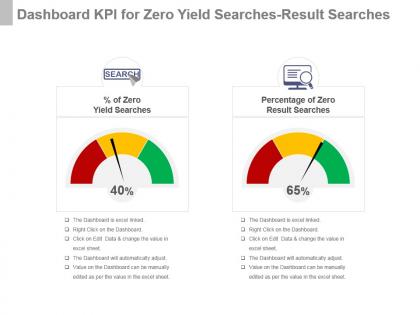
Dashboard Snapshot kpi for zero yield searches result searches presentation slide




Try Before you Buy Download Free Sample Product
 Impress Your
 Audience
 100%
100% Editable
 Save Hours
 of Time


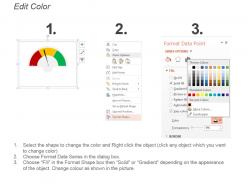
Our Dashboard Snapshot Kpi For Zero Yield Searches Result Searches Presentation Slide offer you an enlarged canvas, They allow you to have a free hand.
People who downloaded this PowerPoint presentation also viewed the following :
Dashboard Snapshot kpi for zero yield searches result searches presentation slide with all 6 slides:
Enjoy the great convenience of our Dashboard Kpi For Zero Yield Searches Result Searches Presentation Slide. Function with complete freedom.

FAQs for Dashboard Snapshot kpi for zero yield searches result
Key performance indicators for zero yield searches include search volume frequency, user abandonment rates, session duration impact, query refinement attempts, and conversion recovery metrics. These KPIs enable organizations to identify content gaps, optimize search functionality, and improve user experience, with many e-commerce and content platforms finding that tracking these metrics reduces bounce rates and ultimately delivers higher customer satisfaction and revenue recovery.
A zero yield search occurs when a user's query returns no matching results from your database, indicating either missing data, inadequate search parameters, or misaligned user expectations with available content. These instances represent critical opportunities for database optimization, content gap identification, and user experience enhancement, with many organizations finding that analyzing zero yield patterns reveals valuable insights about user intent, content coverage, and search functionality effectiveness.
Common trends in zero yield search data include seasonal fluctuations, emerging terminology gaps, evolving user behavior patterns, and content inventory misalignments over time. These trends enable organizations to identify systematic search failures, anticipate demand shifts, and optimize content strategies, with many e-commerce and digital platforms finding that addressing recurring zero-yield patterns significantly enhances user satisfaction and conversion rates.
Essential data sources for monitoring zero yield searches include search query logs, user session data, product catalog information, search result analytics, and customer behavior tracking systems. These comprehensive datasets enable organizations to identify search gaps, optimize product visibility, and enhance search algorithms, with many e-commerce and content platforms finding that integrating multiple data streams delivers significantly improved search experiences and conversion rates.
User feedback integration enhances zero yield search analysis through surveys, feedback forms, rating systems, and user behavior tracking that capture intent behind unsuccessful queries. These mechanisms enable organizations to understand search expectations, identify content gaps, and refine search algorithms, with many e-commerce and content platforms finding that direct user input significantly improves search relevance and reduces future zero yield rates.
Keyword optimization reduces zero yield searches by enhancing search algorithm accuracy, expanding synonym recognition, implementing auto-complete suggestions, and refining query interpretation capabilities. Through strategic keyword mapping and semantic analysis, retail platforms and e-commerce sites deliver more relevant results, reduce customer frustration, and ultimately increase conversion rates, with many organizations finding that optimized search functionality significantly boosts sales performance.
Machine learning utilizes predictive algorithms, natural language processing, search pattern analysis, and behavioral modeling to forecast and dissect zero yield searches. These technologies enable organizations to identify search intent gaps, optimize content strategies, and enhance user experiences by analyzing historical data patterns, with many e-commerce and content platforms finding that predictive models significantly reduce search abandonment rates.
Converting zero yield searches requires implementing query expansion through synonyms and related terms, auto-suggest functionality, fuzzy matching algorithms, and intelligent search result recommendations. These technologies streamline user experiences by correcting misspellings, suggesting alternative keywords, and displaying related products or content, with many e-commerce platforms and digital libraries finding that such enhancements significantly reduce bounce rates while improving customer satisfaction and conversion outcomes.
Seasonal and market trends significantly influence zero yield searches by driving demand for products, services, or information that businesses haven't yet optimized for in their search systems. During peak seasons like holidays or market shifts, customers search for trending items, seasonal variations, or emerging categories that may not exist in current inventories or content databases, with many e-commerce and content platforms finding that proactive trend analysis reduces these gaps substantially.
A/B testing helps improve search results by comparing different search algorithms, interface designs, query suggestion methods, and result ranking systems to identify which variations reduce zero yield rates most effectively. Through controlled experiments, organizations can test personalized recommendations, enhanced filtering options, and improved autocomplete features, with many e-commerce platforms and content sites finding that data-driven optimization ultimately delivers better user experiences and higher conversion rates.
Competitor analysis reveals how rivals handle similar search scenarios, optimization strategies, and alternative content offerings when users find no results. By examining competitors' search functionalities, suggested alternatives, and user redirection methods, organizations can identify gaps in their own systems, benchmark performance standards, and develop strategic approaches that ultimately enhance user experience while reducing zero yield occurrences.
Effective zero yield search visualizations include trend lines showing search failure rates over time, heat maps highlighting problematic query categories, funnel charts displaying search abandonment points, and comparative bar charts showing before-and-after improvement metrics. These dashboard elements enable product teams to quickly identify search gaps, monitor optimization efforts, and track user experience improvements, ultimately delivering enhanced search functionality and reduced customer frustration across digital platforms.
Metrics from zero yield searches reveal content gaps, unmet user needs, and emerging market demands that directly inform strategic content development. These insights enable organizations to create targeted content addressing specific user queries, optimize marketing campaigns around high-demand topics, and develop products or services that fill identified market gaps, ultimately delivering enhanced user experiences and competitive advantage.
Zero yield searches significantly impact user experience by creating frustration, reducing engagement, and increasing abandonment rates, while also diminishing trust in platform capabilities and search accuracy. These failed search attempts ultimately lead to decreased customer satisfaction, lower conversion rates, and potential revenue loss, with many e-commerce and content platforms finding that addressing zero yield searches through improved search algorithms and alternative suggestions enhances retention and competitive advantage.
KPIs for zero yield searches should be reviewed weekly for immediate tactical adjustments and updated monthly for strategic refinements, with quarterly comprehensive assessments to align with evolving business objectives. This multi-tiered approach enables organizations to quickly identify emerging search gaps, adapt to seasonal patterns, and maintain competitive advantage, with many e-commerce and content platforms finding that regular monitoring ultimately delivers improved user experiences and higher conversion rates.
-
Excellent work done on template design and graphics.
-
Great product with effective design. Helped a lot in our corporate presentations. Easy to edit and stunning visuals.