


Data Review Planning And Preparing Gathering Evidence





Try Before you Buy Download Free Sample Product
 Impress Your
 Audience
 100%
100% Editable
 Save Hours
 of Time


Our Data Review Planning And Preparing Gathering Evidence are topically designed to provide an attractive backdrop to any subject. Use them to look like a presentation pro.
People who downloaded this PowerPoint presentation also viewed the following :
Content of this Powerpoint Presentation
Slide 1: This slide introduces Data Review. State Your Company Name and begin.
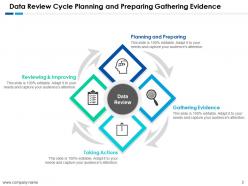
Slide 2: This slide shows Data Review Cycle with- Planning and Preparing, Gathering Evidence, Taking Actions, Reviewing & Improving.
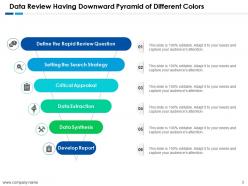
Slide 3: This slide presents Data Review Having Downward Pyramid of Different Colors.
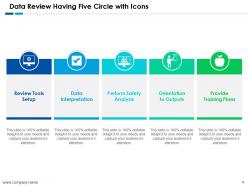
Slide 4: This slide displays Data Review Having Five Circle with Icons.
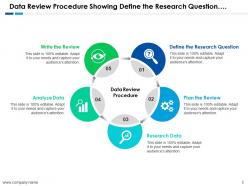
Slide 5: This slide represents Data Review Procedure Showing- Define the Research Question, Plan the Review, Research Data, Analyze Data, Write the Review.
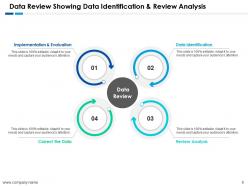
Slide 6: This slide showcases Data Review with- Data Identification, Review Analysis, Correct the Data, Implementation & Evaluation.
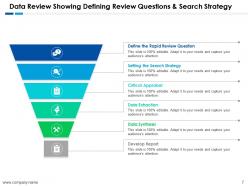
Slide 7: This slide shows Data Review describing- Define the Rapid Review Question, Setting the Search Strategy, Critical Appraisal, Data Extraction, Data Synthesis, Develop Report.
Slide 8: This slide presents Data Review Showing Extract, Review, Verify & Update.
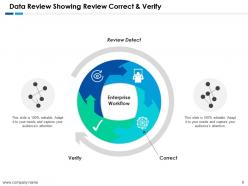
Slide 9: This slide displays Data Review Showing Review, Correct & Verify.
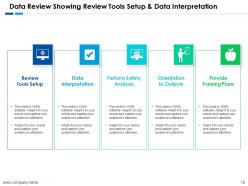
Slide 10: This slide represents Data Review describing- Review Tools Setup, Data Interpretation, Perform Safety Analysis, Orientation to Outputs, Provide Training Plans.
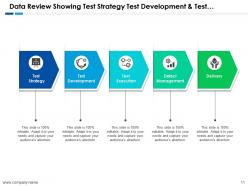
Slide 11: This slide showcases Data Review with- Delivery, Defect Management, Text Execution, Test Development, Test Strategy.
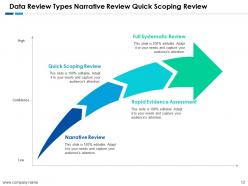
Slide 12: This slide shows Data Review Types as Narrative Review, Quick Scoping Review, Rapid Evidence Assessment, Full Systematic Review.
Slide 13: This slide presents Data Review Types Shown By Upward Green Blue Arrow.
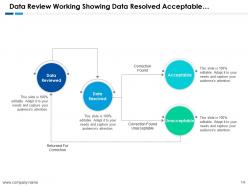
Slide 14: This slide represents Data Review Working with related diagram.
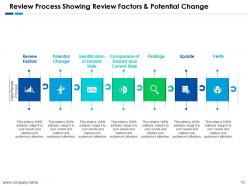
Slide 15: This slide showcases Review Process describing- Review Factors, Potential Change, Identification of Desired State, Comparison of Desired and Current State, Findings, Update, Verify.
Slide 16: This is a Thank You slide with address, contact numbers and email address.
Data Review Planning And Preparing Gathering Evidence with all 16 slides:
Use our Data Review Planning And Preparing Gathering Evidence to effectively help you save your valuable time. They are readymade to fit into any presentation structure.




FAQs for Data Review Planning And
Dude, chain of custody is everything - document who touched what and when. Always use write-blockers when you're imaging drives so you don't mess anything up. Hash your evidence twice because I've seen cases fall apart over missing checksums (defense lawyers love that stuff). Take photos before you move anything around. Oh, and follow whatever protocols your place has exactly - doesn't matter how good your work is if you skip steps and it gets tossed out. Honestly, the paperwork side is almost more important than the technical stuff sometimes. Get some training if you haven't yet.
Dude, the paperwork is honestly such a pain but you can't skip it. Label everything properly right at the scene, then track who touches it and when. Each person has to sign off when they get it or pass it along - no exceptions. Tamper-evident seals are your best friend here. Between transfers, lock that stuff up tight. The whole point is building an unbreakable chain showing nobody messed with your evidence. Trust me, set up some basic tracking system now. You'll be grateful later when you're sitting in court trying to explain where that crucial piece went.
Okay so first grab the basics - gloves (nitrile are better than latex imo), evidence bags, tweezers, swabs. Get a decent camera and some rulers for scale shots. Permanent markers and labels are crucial because unmarked stuff is totally worthless later. Oh and measuring tape, flashlight, maybe fingerprint powder depending on what you're doing. I always forget to charge my camera battery which is annoying as hell when you're actually there. Keep everything in one kit so you're not digging around for supplies. Organization saves your butt.
So basically hard evidence needs super strict chain of custody - like photographing everything first, proper containers, logging who touched what. Soft evidence is different though. You're more focused on getting the full context and proving it's authentic later (emails, screenshots, witness stuff). Honestly, screwing up chain of custody on physical evidence will wreck you in court - I've seen it happen. Both types matter but the protocols are just... different. Oh and definitely get your procedures sorted out beforehand because you don't want to be figuring this out when something actually goes down.
Witnesses are your human evidence - they fill gaps physical stuff can't. Use them for timelines, identifying people, understanding motives. Memory's weird though, people genuinely see the same event differently. Multiple witnesses backing each other up? That's gold. Even better when their stories match physical evidence. Interview them ASAP while details are fresh - I learned this the hard way once. Document everything they say properly. Short witnesses can be just as valuable as chatty ones, honestly depends what they actually saw.
Honestly, you're gonna run into some annoying stuff right off the bat. Posts vanish without warning - people delete them, accounts get banned, platforms randomly change their rules. It's wild how fast things disappear. Then there's the API nightmare where these companies basically lock you out of half the data you actually need. Privacy updates happen constantly too, which screws with your collection methods. Oh and proving everything's authentic? Total pain. Just screenshot literally everything the second you see it and get proper forensic tools that track chain of custody from the start.
Chain of custody is everything here. Document who touched what and when - seriously, this stuff matters in court. Get decent evidence bags, not the dollar store kind that'll rip on you. Always snap photos before you move anything, wear gloves obviously, and never leave evidence sitting around unattended. The whole point is building a rock-solid paper trail so nobody can claim tampering later. Oh, and start that evidence log ASAP - you'll basically live by it. Trust me, sloppy documentation has killed more cases than you'd think.
Dude, definitely talk to a lawyer first before you touch anything - trust me on this one. Fourth Amendment stuff is no joke, and you can't just grab evidence without a warrant or some exception. Document absolutely everything because broken chain of custody = evidence gets tossed. Also, don't mess with or delete anything since that's spoliation and you'll be in deep trouble. Honestly the legal side of this is way trickier than people think. Get proper authorization sorted out beforehand. Your future self will thank you for doing the paperwork right from the start.
So basically, forensic teams have to document every single person who touches evidence from crime scene to courtroom. They photograph everything first, then use special tamper-proof seals and keep crazy detailed logs - signatures, timestamps, the works. Digital stuff gets hash values to prove nobody messed with it. Physical evidence needs proper storage too. The paperwork is honestly a nightmare, but defense lawyers will tear apart any gaps in your documentation. My cousin works in forensics and she's always complaining about how much logging she has to do. If you can't prove that chain stayed intact? Your evidence is toast.
The three C's are your best friend: capture, catalog, context. Get photos from every angle - wide shots of the whole scene plus close-ups of key details. I totally screwed up my first few cases by missing obvious background stuff! Write everything down while it's fresh because you'll 100% forget later, trust me. Date and time stamp everything, and those chain of custody forms aren't optional - track who touched what and when. Oh, and start building an evidence log template now if you haven't already. Your future self will thank you when you're not scrambling at 2am trying to remember where you put something.
Okay so the main thing is burden of proof - criminal needs "beyond reasonable doubt" but civil is just "more likely than not." Way different standards. Criminal cases have way stricter evidence rules too since someone could go to jail. Prosecutors can subpoena people and force them to testify, which is pretty powerful. Civil cases? You're more limited in what you can make people give you. Discovery works differently in each one too - honestly it's kinda confusing at first. Bottom line though, figure out what type of case you're dealing with right away because your whole strategy changes.
You're gonna want to focus on chain of custody first - that's like the foundation of everything. Documentation techniques are huge too, and trust me, most people totally bomb this part because they slack on taking detailed notes. Then there's evidence handling protocols, which changes depending if you're dealing with digital stuff, physical evidence, biological samples, whatever. Photography and scene processing skills are pretty critical. Oh, and don't skip the legal training on admissibility rules and contamination prevention - that'll bite you later if you ignore it. I'd start with basic evidence handling certification, then branch out based on what you're actually collecting day-to-day.
Dude, the tech stuff coming down the pipeline is wild. AI's gonna let you crunch through tons of data way faster than doing it by hand. Your smart doorbell, fitness tracker, even cars - basically everything's becoming a potential evidence goldmine now. Blockchain might make evidence chains completely tamper-proof, which courts will love. Machine learning catches patterns humans totally miss. VR could recreate entire crime scenes too, though that still feels kinda sci-fi to me. Organizations jumping on this early will crush it compared to those still doing everything the old way. You gotta keep up or you'll get left behind.
Oh man, evidence collection is honestly such a minefield. Privacy vs thoroughness is the big headache - like, do you really need someone's personal texts for a workplace investigation? Then there's whether to give people a heads up before you start digging (spoiler: they might delete stuff). Sometimes you're legally allowed to grab something but it just feels sketchy, you know? And don't even get me started on stumbling across totally unrelated dirt. My take? Write down why you made each call as you go. Future you will thank present you when someone questions your choices later.
Look, pooling resources is huge - you get access to specialized equipment, forensic labs, and personnel that your agency probably doesn't have. Plus different databases and intel networks. The bureaucracy can be absolutely brutal though, not gonna lie. But you avoid stepping on each other's toes and duplicating work. Clear protocols from day one about who's handling what - trust me on this. Otherwise you'll have conflicting approaches that mess up your evidence collection. Share findings early and often.
-
Graphics are very appealing to eyes.
-
Great quality product.