


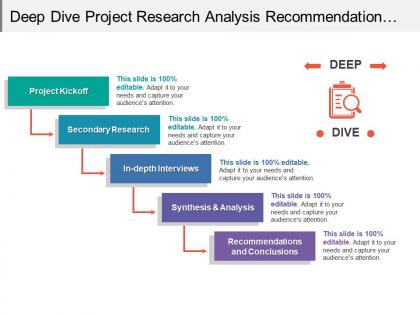
Deep dive project research analysis recommendation deliverables




Try Before you Buy Download Free Sample Product
 Impress Your
 Audience
 100%
100% Editable
 Save Hours
 of Time


Our Deep Dive Project Research Analysis Recommendation Deliverables have alluring design patterns. Your ideas will get attractive too.
People who downloaded this PowerPoint presentation also viewed the following :
Deep dive project research analysis recommendation deliverables with all 5 slides:
Explore alternatives with our Deep Dive Project Research Analysis Recommendation Deliverables. Establish the credibility of different approaches.




FAQs for Deep dive project research
Project deliverables are defined by specific components including scope definition, acceptance criteria, quality standards, delivery timelines, and stakeholder requirements. These elements work together by establishing clear expectations, measurable outcomes, and accountability frameworks, with many organizations finding that well-defined deliverables streamline project execution, minimize scope creep, and ultimately enhance client satisfaction and team performance.
Tangible deliverables are physical, measurable outputs like software applications, reports, prototypes, and documentation, while intangible deliverables include knowledge transfer, improved processes, enhanced team capabilities, and stakeholder relationships. These categories work together strategically, with tangible deliverables providing concrete value and intangible ones delivering long-term competitive advantages, ultimately enabling organizations to maximize project ROI.
Deliverables serve as concrete boundaries that define project scope by establishing specific outcomes, timelines, quality standards, and resource requirements, while providing measurable milestones for progress tracking. They enable project managers to control scope creep, facilitate stakeholder alignment, and ensure accountability across teams, with many organizations finding that well-defined deliverables ultimately streamline execution and enhance project success rates.
Project managers effectively communicate deliverables to stakeholders through clear documentation, regular status updates, visual progress tracking, stakeholder-specific reporting, and structured review meetings. These approaches streamline expectations by establishing transparent timelines, providing actionable insights, and maintaining consistent touchpoints, with many organizations finding that proactive communication ultimately delivers enhanced project alignment and stakeholder satisfaction.
Quality assurance strategies include establishing clear acceptance criteria, implementing regular review checkpoints, conducting peer evaluations, utilizing testing protocols, and maintaining documentation standards. These approaches streamline project oversight by enabling early issue detection, ensuring stakeholder alignment, and facilitating continuous improvement, with many organizations finding that systematic quality frameworks ultimately deliver reduced rework costs and enhanced client satisfaction.
Changes to deliverables are managed through structured change control processes, impact assessments, stakeholder approvals, and documentation updates. These processes streamline modifications by evaluating scope implications, timeline adjustments, and resource requirements, while maintaining project alignment and budget control, ultimately delivering flexibility without compromising project success or team accountability.
Project deliverables management tools include Microsoft Project, Asana, Trello, Monday.com, and Jira, each offering scheduling, tracking, and collaboration capabilities. These platforms streamline project oversight by enabling real-time progress monitoring, automated status updates, and centralized documentation, with many organizations finding that integrated dashboards enhance team coordination while ultimately delivering improved project visibility and faster completion rates.
Deliverables directly shape project timelines by establishing milestone dependencies, resource requirements, and completion sequences that determine overall project duration. Each deliverable requires specific expertise, tools, and time commitments, with project managers strategically allocating team members and budgets accordingly, ultimately ensuring efficient resource utilization while maintaining quality standards and meeting stakeholder expectations.
Common pitfalls include vague descriptions, unrealistic timelines, inadequate stakeholder input, insufficient resource allocation, and lack of clear acceptance criteria. These challenges often emerge in complex projects across industries like software development, construction, and consulting, where unclear deliverable definitions can lead to scope creep, budget overruns, and stakeholder misalignment, ultimately compromising project success.
Stakeholder feedback can be integrated through structured review cycles, collaborative workshops, feedback management systems, and iterative refinement processes that occur at key project milestones. These approaches streamline communication by establishing clear feedback channels, implementing version control protocols, and creating systematic approval workflows, ultimately delivering deliverables that align with stakeholder expectations while maintaining project timelines and quality standards.
Project deliverable success metrics include quality scores, timeline adherence, budget variance, stakeholder satisfaction ratings, and performance against specified requirements. These measurements enable organizations to track completion rates, resource efficiency, and client acceptance levels across industries like consulting, software development, and construction, ultimately delivering improved project outcomes and competitive advantage.
Deliverables contribute to project success by establishing clear expectations, providing measurable milestones, and ensuring accountability throughout the project lifecycle. They enhance client satisfaction through transparent progress tracking, regular communication touchpoints, and tangible proof of value delivery, with many organizations finding that well-defined deliverables ultimately streamline project management and strengthen long-term client relationships.
Best practices for documenting project deliverables include creating detailed specifications, establishing clear acceptance criteria, implementing version control systems, maintaining approval workflows, and developing comprehensive review processes. These methodologies streamline project management by ensuring stakeholder alignment, reducing revision cycles, and accelerating approval timelines, with many organizations finding that structured documentation ultimately delivers improved project outcomes and enhanced client satisfaction.
Cultural differences influence deliverable perception through varying communication styles, decision-making processes, quality expectations, and feedback approaches. In high-context cultures like Japan, detailed documentation and consensus-building enhance acceptance, while direct cultures prefer concise deliverables, with many global organizations finding that culturally-adapted presentation formats and stakeholder engagement methods ultimately deliver better project outcomes and stronger client relationships.
Project deliverables establish clear accountability frameworks by defining specific outputs, timelines, and quality standards that individual team members must meet. This creates transparency around responsibilities, enabling project managers to track progress, identify bottlenecks, and ensure collaborative success, with many organizations finding that well-defined deliverables significantly enhance team performance and project outcomes.
-
It saves your time and decrease your efforts in half.
-
Excellent design and quick turnaround.