

Defining Buyer Persona Of Spa Business Beauty Spa Business Plan BP SS





Try Before you Buy Download Free Sample Product
 Impress Your
Audience
 100%
Editable
 Save Hours
of Time


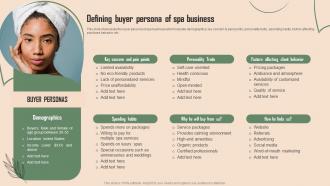
This slide showcases the buyer persona of spa business which includes demographics, key concern and pain points, personality traits, spending habits, factors affecting purchase behavior, etc.
People who downloaded this PowerPoint presentation also viewed the following :
Defining Buyer Persona Of Spa Business Beauty Spa Business Plan BP SS with all 9 slides:
Use our Defining Buyer Persona Of Spa Business Beauty Spa Business Plan BP SS to effectively help you save your valuable time. They are readymade to fit into any presentation structure.








FAQs for Defining Buyer Persona Of Spa Business Beauty Spa Business
Start with the obvious stuff - age, gender, income, where they live. Their job title's super important because that tells you what problems they're dealing with and how much they can spend. Family situation is honestly underrated - someone with three kids isn't buying the same stuff as a single person in their 20s. Tech comfort level matters too, plus how they like to be contacted. Oh, and urban vs rural makes a difference for lifestyle choices. Just be specific enough that you can picture them as a real person, but don't get so narrow you're describing your neighbor Steve.
Buyer personas are game-changers for product decisions. They help you focus on features users actually need instead of random cool stuff nobody cares about. I've seen so many teams waste months building things that flop because they didn't think about their users first. Once you really get your personas, designing becomes way easier - you understand what frustrates them and what they're trying to accomplish. Pro tip: bring them into every product meeting. Like literally ask "would busy manager Sarah even touch this feature?" Trust me, it cuts through the BS debates fast.
Honestly, start with your current customers - they're your best bet for real insights. Send out surveys or hop on calls with them. Your sales team is sitting on a goldmine too since they hear the same objections and problems every day. Google Analytics will show you who's actually visiting your site, and social media gives you demographic breakdowns. I'd also peek at where your competitors are hanging out online and what their audiences look like. Focus groups are cool if you've got the budget, but honestly? Pick 2-3 of these methods and you'll get a pretty solid picture without going overboard.
Think of buyer personas as your cheat sheet for talking to people the right way. You'll know exactly what tone hits and what doesn't. A busy CEO? Skip the fluff and jump straight to ROI numbers. But if you're targeting creative types, they might want the whole story behind your brand. Honestly, generic messaging is kind of a waste of everyone's time. Map out what you're currently saying versus who you're actually trying to reach. The gaps will be pretty obvious once you see them side by side.
Honestly, your personas are probably way off without real customer feedback. Surveys and support tickets show you what's actually going on - not just what you think is happening. I've watched companies discover their "target customer" was completely wrong once they dug into reviews and actual conversations. Pain points you never considered pop up everywhere. Demographics shift. People describe your product in ways that'll surprise you. Short surveys work best, btw - nobody wants to fill out a novel. Update your personas every few months with fresh data, and don't be shocked when whole new customer segments emerge.
Look, I'd say every 6-12 months minimum, but don't be rigid about it. If your market's shifting or you're getting weird customer feedback, just do it sooner. I've watched teams cling to personas from like 2019 – total waste of time honestly. Your customers change, new competitors pop up, economic stuff affects how people buy. New product launch? Different market? Yeah, definitely refresh time. Maybe set a quarterly reminder to at least glance at them and see if they still make sense. Sometimes you'll realize they're way off after just talking to a few actual customers.
So your primary buyer persona is whoever's actually pulling out the credit card - that's your main target. Then you've got secondary personas who don't buy directly but still mess with the decision. Like if you're buying team software, you're the primary one, but your coworkers who'll use it every day? They're secondary personas whose opinions can totally tank your sale if they hate it. I'd say spend most of your marketing budget on the primary - maybe 70-80%. But honestly, don't sleep on those secondary folks because they'll whisper in the decision-maker's ear.
Honestly, you can't build journey maps without knowing who you're mapping for first. Think about it - your penny-pinching customers research totally differently than those premium buyers who just want things fast. Each persona has their own weird quirks and pain points at every step. I'd start with your biggest persona and map their whole journey out. The personas are basically the WHO, and the journey map shows the HOW of everything. Makes way more sense to tackle one at a time rather than trying to do them all at once. Trust me on this one.
Honestly, buyer personas are a game changer for ads. Pick your main persona first - like "busy working moms" - then build everything around them. Hit the platforms they're actually on when they're scrolling. Your messaging should speak directly to their problems, not some generic fluff everyone ignores. I'd start with one super focused campaign rather than trying to target everyone at once (that never works anyway). You can get way more specific with keywords, customize your creative, and set up retargeting based on how they behave. Way better than throwing money at random people who don't care.
Honestly, most people just make stuff up instead of talking to real customers - huge mistake. Don't create like 5 overlapping personas either, you'll just confuse yourself. Being super vague kills you too. "Busy professionals" means absolutely nothing useful. Here's what I learned the hard way: demographics are pretty overrated. Age and income? Whatever. What actually matters is understanding why they buy, what pisses them off, how they make decisions. That's the stuff that helps you sell. Start with maybe 2-3 personas max, but base them on actual interviews. Then tweak as you go.
So buyer personas are like giving your customer segments actual personalities instead of just boring stats. You know how you might segment "women 25-35"? A persona makes that into "Sarah, the working mom who's always shopping on her phone during lunch and needs fast delivery." Way more useful, right? It honestly changes everything for targeting campaigns and messaging. You can predict what Sarah actually wants vs just guessing based on her age bracket. My advice? Start by talking to real customers first - that's where the good stuff comes from. Then you can map those personas back to whatever segments you're already using.
Honestly, just mix customer feedback with your analytics data. Surveys are clutch - I love Typeform for this. Do some actual customer interviews too, don't skip that part. Your CRM probably has tons of useful stuff already sitting there. Google Analytics + social media insights will show you who's actually engaging. Oh, and dig through your support tickets - customers literally tell you their problems there. HubSpot's got this persona template that's pretty decent if you need somewhere to start. The thing is, you can't just guess at this stuff. Pick maybe 2-3 tools and stick with them consistently instead of jumping around.
Think of buyer personas as getting your sales and marketing teams on the same page – literally. Both teams target the same made-up customer with identical pain points and messaging. Marketing finally creates stuff that actually helps close deals. Sales gives feedback that doesn't make marketing roll their eyes. Honestly, it's kind of magical when everyone stops working in their own little bubbles. The trick is having both teams build these personas together from day one. That shared ownership thing? It works way better than you'd expect for getting everyone to actually use them.
Honestly, just be upfront about what you're collecting and why. Get real permission before doing surveys or interviews - none of that sneaky stuff. Anonymize personal details obviously. Stalking people's social media without context is honestly pretty weird, so stick to public info or ask willing participants directly. Oh, and don't make assumptions based on demographics that could reinforce stereotypes. That's just bad practice. You want to understand your audience better, not be invasive about it. Maybe audit what you're currently doing first to make sure it doesn't feel sketchy.
So buyer personas are like your content GPS - they show you what to write about, how to format it, and where to post. Instead of creating random stuff, you're targeting specific pain points your ideal customers actually have. Way more effective than just throwing content at the wall, honestly. Your tech people might love detailed LinkedIn posts while executives want quick video updates. Map out what content you already have for each persona first - you'll probably find some obvious holes to fill. It's basically having focused conversations instead of screaming into the internet void.
-
Their professional templates are very impressive, even my manager was curious about the source. I am very grateful.
-
I have just started downloading templates for my presentations and I must say this is a great design. It helped accelerate my presentation design process and made it more visually appealing.