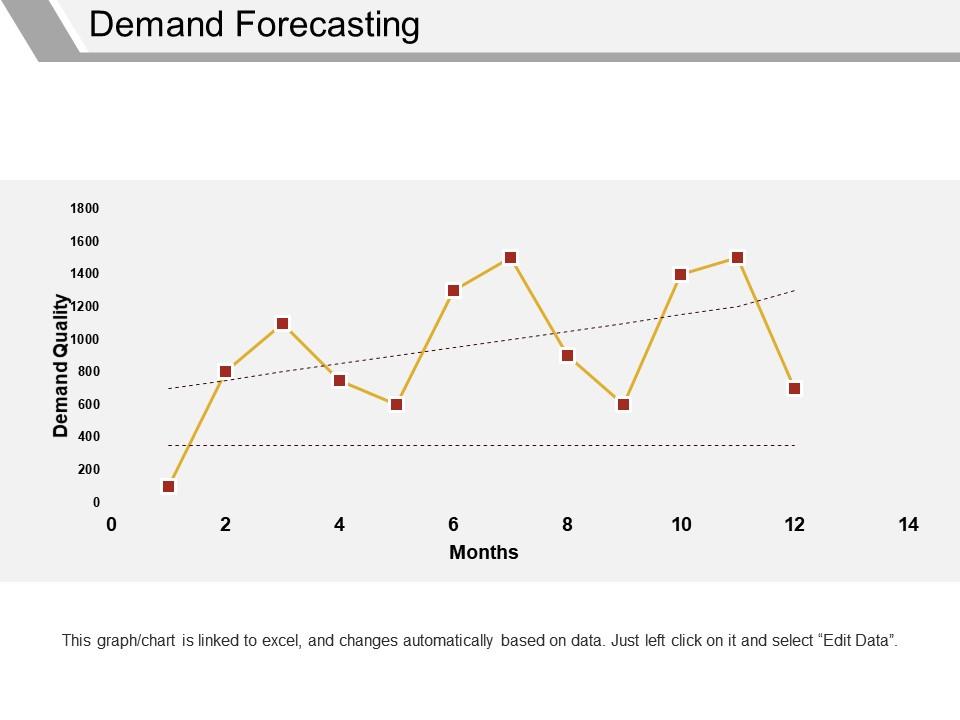
Demand forecasting powerpoint layout

Rating:
90%
Demand forecasting powerpoint layout
Slide 1 of 5

or

Favourites Favourites

Try Before you Buy Download Free Sample Product

Audience Impress Your
Audience
Editable 100%
Editable
Time Save Hours
of Time
The Biggest Sale is ending soon in
0
0
:
0
0
:
0
0
Rating:
90%
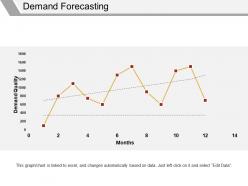
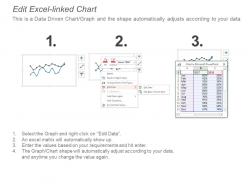
Presenting Demand Forecasting Powerpoint Layout PowerPoint slide. This PPT template is 100% editable and hence you can modify the font, color, font size, and shapes. You can download this PPT layout in formats like PDF, PNG and JPG. This PowerPoint presentation is Google Slides compatible and is easily accessible. This PPT theme is available in both 4:3 and 16:9 aspect ratios.

FAQs for Demand

Key factors influencing demand fluctuations include seasonal patterns, economic conditions, consumer behavior shifts, competitive actions, and technological disruptions. These variables create complex market dynamics across industries, with retail experiencing holiday surges, healthcare facing demographic changes, and manufacturing responding to supply chain variations, ultimately requiring sophisticated forecasting models for strategic advantage.

Businesses can leverage historical sales data by identifying seasonal patterns, trend analysis, customer behavior insights, and market cycle recognition to enhance forecasting models. Through advanced analytics and machine learning algorithms, companies in retail, manufacturing, and consumer goods sectors streamline inventory management, reduce stockouts, and optimize resource allocation, ultimately delivering improved customer satisfaction and competitive advantage.

Seasonality significantly impacts demand forecasting by creating predictable patterns based on time periods, weather changes, holidays, and consumer behavior cycles that repeat annually or quarterly. Advanced forecasting models account for seasonality through time-series decomposition, seasonal indices, and machine learning algorithms, with retail, hospitality, and manufacturing sectors finding that incorporating seasonal adjustments enhances accuracy and enables better inventory planning.

Advanced analytics and machine learning enhance traditional demand forecasting by processing vast datasets, identifying complex patterns, and adapting to real-time market changes automatically. Through predictive algorithms, retailers and manufacturers achieve significantly more accurate forecasts, reduce inventory costs, and minimize stockouts, while machine learning continuously improves predictions based on seasonal trends, consumer behavior, and external factors, ultimately delivering competitive advantage in dynamic markets.

Common demand forecasting pitfalls include over-relying on historical data, ignoring market shifts, poor data quality, lack of cross-departmental collaboration, and inadequate technology integration. These challenges can be avoided by combining multiple forecasting methods, incorporating real-time market intelligence, ensuring data accuracy through automated systems, and fostering collaboration between sales, marketing, and operations teams, ultimately delivering more accurate predictions and improved inventory management.

External factors integrate into demand forecasting through advanced analytics, econometric modeling, competitive intelligence systems, sentiment analysis, and real-time data feeds from market sources. These models incorporate economic indicators like GDP growth and unemployment rates alongside competitor pricing strategies, ultimately enabling organizations to anticipate market shifts more accurately and maintain competitive advantage.

Effective demand forecasting automation tools include SAP Integrated Business Planning, Oracle Demand Management Cloud, Microsoft Azure Machine Learning, Tableau with predictive analytics, and specialized solutions like GMDH Streamline. These platforms enhance accuracy by integrating historical data, market trends, and real-time inputs, with many retailers and manufacturers finding that automated forecasting reduces planning time while delivering more precise inventory optimization and strategic resource allocation.

Businesses can effectively communicate demand forecasts through standardized data formats, collaborative planning platforms, regular review meetings, transparent sharing of assumptions, and real-time visibility dashboards. Through integrated supply chain management systems, partners achieve synchronized inventory levels, reduced bullwhip effects, and improved service levels, while many manufacturers finding that transparent forecast communication ultimately delivers stronger supplier relationships and enhanced operational efficiency.

Organizations should evaluate forecast accuracy using Mean Absolute Percentage Error (MAPE), Mean Absolute Deviation (MAD), forecast bias, tracking signal, and forecast value added metrics. These measurements enable businesses to identify systematic errors, seasonal variations, and model performance across different product lines, with many retail and manufacturing companies finding that combining multiple accuracy metrics delivers better inventory optimization and ultimately reduces costs while improving customer service levels.

Customer feedback and market research enhance demand forecasting by providing real-time consumer sentiment data, identifying emerging trends, validating predictive models, and revealing seasonal preferences. These insights enable companies across retail, manufacturing, and consumer goods sectors to adjust inventory levels, optimize production schedules, and anticipate market shifts, ultimately delivering improved forecast accuracy and reduced operational costs.

Cross-departmental collaboration enhances demand forecasting accuracy by integrating sales insights, marketing campaign data, supply chain constraints, and financial targets into comprehensive predictions. When sales, marketing, operations, and finance teams share real-time information, organizations achieve more precise forecasts, reduce inventory costs, and improve customer satisfaction, ultimately delivering competitive advantage through strategic alignment.

Demand forecasting enhances inventory management by predicting customer demand patterns, optimizing stock levels, reducing excess inventory, and minimizing stockouts. Through advanced analytics and historical data analysis, retailers and manufacturers streamline procurement processes, lower carrying costs, and improve cash flow, ultimately delivering better customer satisfaction while reducing operational expenses by up to thirty percent.

Demand forecasting for new product launches enables strategic inventory planning, optimal pricing strategies, targeted marketing allocation, and informed production scheduling decisions. Through predictive analytics and market research, companies across retail, technology, and consumer goods sectors can minimize launch risks, reduce excess inventory costs, and maximize market penetration, ultimately delivering stronger ROI and competitive positioning.

Forecasting bias systematically skews demand predictions through overoptimism, underestimation, or anchoring to historical patterns, leading to poor inventory decisions, misallocated resources, and missed market opportunities. This bias particularly impacts retail and manufacturing sectors, where inaccurate forecasts result in stockouts or excess inventory, ultimately reducing profitability and customer satisfaction while undermining competitive advantage.

Digital transformation and big data are driving trends toward real-time predictive analytics, AI-powered demand sensing, automated inventory optimization, and integrated supply chain visibility platforms. These technologies enhance forecasting accuracy by processing vast datasets, social media signals, and market indicators simultaneously, with retail giants and manufacturers finding that machine learning algorithms deliver significantly improved demand predictions and reduced inventory costs.

Ratings and Reviews

90% of 100
Review Form
Write a review
Most Relevant Reviews
  1. 100%

    by Ethan Sanchez

    The Designed Graphic are very professional and classic.
  2. 80%

    by Murphy Green

    Professional and unique presentations.

2 Item(s)

per page: