

Deploying Effective Ecommerce Management System Powerpoint Presentation Slides





Try Before you Buy Download Free Sample Product
 Impress Your
Audience
 100%
Editable
 Save Hours
of Time


An e commerce management system is software that enables commerce shop owners to develop, edit and publish online website content without writing code. It allows users to transform the look and feel of a digital store, such as making changes in product page layout, adding promotional banners, or adding new website sections for better promotion of products. Grab our insightfully designed template on Deploying effective e commerce management system. It covers the key issues experienced by the e commerce marketing manager due to the lack of an effective e commerce management system. The PPT also includes details related to the overview of the e commerce management system and its various types. Additionally, it highlights details related to types of e commerce management systems such as Content management, order management, and warehouse management system. Moreover, the deck provides information related to e commerce payment gateways and security systems. Further, our Ecommerce management platforms module compares various e commerce management systems on multiple parameters to help the enterprise select the best platform. It also represents the impact of an e commerce management system on an organization pre and post implementation. At last, the presentation depicts the cost incurred by the enterprise in implementing an e commerce management system and shows forecasted revenues and profits of the enterprise for five years. Get access to this powerful template now.
People who downloaded this PowerPoint presentation also viewed the following :
Content of this Powerpoint Presentation
Slide 1: This slide displays the title Deploying Effective Ecommerce Management System.
Slide 2: This slide displays the title Agenda.
Slide 3: This slide exhibit table of content.
Slide 4: This slide exhibit table of content.
Slide 5: This slide exhibit table of content- Current ecommerce management system overview.
Slide 6: This slide represents the hurdles and business challenges faced by marketing manager of ABC ecommerce firm in the current scenario.
Slide 7: This slide represents the key performance indicators to track and monitor the performance of ecommerce website to draw effective strategies to tackle the problems.
Slide 8: This slide exhibit table of content- Overview of ecommerce management system.
Slide 9: This slide represents the overview of ecommerce management system for reaching maximum customers at right time for increasing sales and profitability of business.
Slide 10: This slide exhibit table of content- Content management system.
Slide 11: This slide represents the working of content management system to enable users to effectively create, edit, publish and store digital content.
Slide 12: This slide represents the importance of CMS in introducing dynamics and flexibility in building landing pages and working with content which is not chiefly products.
Slide 13: This slide represents the analysis of key players of content management system platforms in the market to help the organization in selecting the best CMS platform.
Slide 14: This slide represents the analysis of CMS platforms to help organization to select best platform.
Slide 15: This slide represents the CMS checklist to summarize the base requirements to help the organization in assessing the needs required from a CMS.
Slide 16: This slide discuss table of content that are to be discussed further in the slide.
Slide 17: This slide represents the procedure to help organization to organize all received orders into clear and manageable tasks and facilitate fulfillment of received orders.
Slide 18: This slide represents the architecture of ecommerce OMS showing proves of order capturing, tracking and fulfilling the orders of customers.
Slide 19: This slide represents the importance of order management system in helping business scale.
Slide 20: This slide represents the characteristics of an effective order management system for reducing the manual and repetitive work.
Slide 21: This slide represents the problems faced by the organization in selecting the best order management software among a pool of OMS softwares available in the market.
Slide 22: This slide represents the techniques to help organization in choosing the right OMS which well integrates with the existing ecommerce site of the organization.
Slide 23: This slide exhibit table of content- Warehouse management system.
Slide 24: This slide represents the channels of WMS which ensures efficient movement of goods through the warehouse to avoid inventory shrinkage.
Slide 25: This slide represents the importance of an effective warehouse management system in reducing the human errors and proactive management of stocks.
Slide 26: This slide represents the flow of integration of WMS with the existing ecommerce site to ensure effectiveness and cost-efficiency in movement of goods.
Slide 27: This slide represents the key features for selecting an efficient and effective WMS for effective monitoring and controlling of organization’s warehouse operations.
Slide 28: This slide exhibit table of content- Ecommerce payment gateways and security system.
Slide 29: This slide represents the types of merchant services which processes credit card payments for the ecommerce sites and traditional brick-and-mortar stores.
Slide 30: This slide represents the importance of payment gateways in facilitating systemized payment methods and providing consumers with fast and flexible way.
Slide 31: This slide represents the architecture showing the ways in which payment gateway validates consumer’s card details securely and ensures availability of funds.
Slide 32: This slide represents the workflow of the payment gateways and their relation with payment processor.
Slide 33: This slide represents the strategies and attributes to look for in order to select the best payment gateway provider for ecommerce site.
Slide 34: This slide shows the comparative analysis of top payment gateway providers based on various fey features.
Slide 35: This slide exhibit table of content- Implementing ecommerce management system.
Slide 36: This slide represents comparative assessment of multiple ecommerce management platforms based on solutions offered by them.
Slide 37: This slide exhibit table of content- Impact of ecommerce management system post implementation.
Slide 38: This slide represents the key performance indicators to measure the impact of ecommerce management system on ecommerce business operations.
Slide 39: This slide exhibit table of content- Cost of ecommerce management system implementation.
Slide 40: This slide represents the plan to project income and expenses and allocate resources for implementing best ecommerce management system in the organization.
Slide 41: This slide represents the graph showing forecasts revenues and profits to help ecommerce business to develop strategies for business growth and expansion.
Slide 42: This slide exhibit table of content- Website performance measurement through key metrics.
Slide 43: This slide represents the dashboard to analyze and monitor the performance of ecommerce website.
Slide 44: This slide represents the dashboard to help management in analyzing the point at which customers leave the checkout process.
Slide 45: This slide represents the dashboard showing the key performance measures to analyze and monitor the customer acquisition and conversion rate.
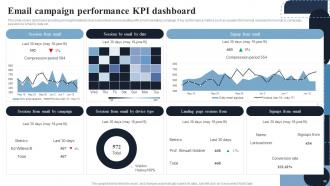
Slide 46: This slide covers dashboard providing an insight related to how subscribers and resonating with email marketing campaign.
Slide 47: This is the icons slide.
Slide 48: This slide presents title for additional slides.
Slide 49: This slide shows details of team members like name, designation, etc.
Slide 50: This slide depicts 30-60-90 days plan for projects.
Slide 51: This slide shows puzzle for displaying elements of company.
Slide 52: This slide exhibits ideas generated.
Slide 53: This slide depicts posts for past experiences of clients.
Slide 54: This is thank you slide & contains contact details of company like office address, phone no., etc.
Deploying Effective Ecommerce Management System Powerpoint Presentation Slides with all 59 slides:
Use our Deploying Effective Ecommerce Management System Powerpoint Presentation Slides to effectively help you save your valuable time. They are readymade to fit into any presentation structure.









FAQs for Deploying Effective Ecommerce Management System
Essential eCommerce management features include inventory tracking, order processing, payment integration, customer relationship management, and analytics dashboards. These systems streamline operations by automating stock updates, facilitating secure transactions, and providing real-time sales insights, with many retail businesses finding that comprehensive platforms ultimately enhance customer experiences while reducing operational costs.
An eCommerce management system enhances customer relationship management by consolidating customer data, tracking purchase histories, personalizing communications, and automating follow-up sequences across all touchpoints. Through integrated CRM capabilities, retailers can segment audiences more effectively, deliver targeted promotions, and provide seamless customer service experiences, ultimately increasing customer retention rates and lifetime value while streamlining operational efficiency.
Analytics serves as the strategic backbone of eCommerce optimization, enabling data-driven decisions through customer behavior analysis, inventory forecasting, sales performance tracking, and conversion rate optimization. These insights streamline operations by identifying profitable products, predicting demand patterns, and personalizing customer experiences, with many retailers finding that analytics-driven strategies ultimately deliver higher sales conversions and operational efficiency.
Inventory management integrates with eCommerce platforms through real-time synchronization, automated stock updates, multi-channel coordination, and centralized product catalogs that streamline operations across sales channels. This integration enables retailers to prevent overselling, optimize stock levels, and enhance customer experiences, with many businesses finding that automated inventory systems reduce operational costs while delivering faster order fulfillment and improved accuracy.
Essential security measures include SSL encryption, PCI DSS compliance, two-factor authentication, regular security audits, and secure payment gateways. These protocols streamline protection by safeguarding customer data, preventing fraud, and maintaining regulatory compliance, with many retail organizations finding that comprehensive security frameworks ultimately enhance customer trust while reducing operational risks and potential breach costs.
An eCommerce management system streamlines payment processing by integrating multiple payment gateways, automating transaction verification, and enabling real-time fraud detection. These systems enhance customer experiences through faster checkout processes, reduced cart abandonment, and seamless payment options, while providing businesses with comprehensive transaction analytics, automated reconciliation, and improved cash flow management across all sales channels.
Common challenges include system integration complexities, data migration issues, staff training requirements, customization limitations, and ongoing maintenance costs. While these obstacles can initially slow deployment, many retail and manufacturing businesses find that strategic planning, phased implementation approaches, and comprehensive staff training ultimately streamline operations, enhance customer experiences, and deliver significant competitive advantages in increasingly digital marketplaces.
User experience design significantly influences eCommerce success by streamlining navigation, optimizing checkout processes, and enhancing mobile responsiveness, ultimately reducing cart abandonment and increasing conversion rates. Through intuitive interfaces and personalized shopping experiences, retailers like Amazon and major fashion brands deliver faster product discovery, seamless transactions, and improved customer satisfaction, with many finding that strategic UX investments directly correlate with higher revenue growth.
Effective strategies for integrating eCommerce management systems with existing ERP systems include API-based connections, real-time data synchronization, middleware platforms, automated inventory updates, and unified customer databases. These approaches streamline operations by eliminating data silos, reducing manual entry errors, and enabling seamless information flow between sales channels and backend processes, ultimately delivering enhanced operational efficiency and improved customer experiences across retail organizations.
Mobile accessibility enhances eCommerce management systems by enabling real-time inventory updates, remote order processing, and instant customer communication from any location. Through responsive design and mobile apps, businesses streamline operations, accelerate decision-making, and improve customer experiences, with many retailers finding that mobile-optimized systems deliver faster response times and increased operational efficiency.
SEO significantly enhances eCommerce management systems by improving product visibility, driving organic traffic, and increasing conversion rates through optimized search rankings. These strategic optimizations streamline customer acquisition costs, enhance user experience through better site navigation, and deliver measurable ROI improvements, with many retailers finding that integrated SEO tools ultimately boost both search performance and sales efficiency.
Automation features reduce operational costs by streamlining inventory management, automating order processing, and minimizing manual data entry across multiple channels. These systems enable retailers to handle larger transaction volumes with fewer staff hours, automatically update stock levels, and process customer inquiries through chatbots, ultimately delivering significant labor cost reductions and enhanced operational efficiency.
Customer feedback serves as a critical input for optimizing inventory management, payment processing, user interface design, checkout workflows, and personalization features within eCommerce systems. Through analyzing customer reviews, support tickets, and usage patterns, businesses can identify pain points, streamline navigation, and enhance functionality, ultimately delivering improved shopping experiences and higher conversion rates.
eCommerce management systems support multi-channel selling by centralizing inventory management, synchronizing product listings across platforms, and streamlining order processing from various channels. Through integrated dashboards, retailers can manage Amazon, eBay, social media stores, and physical locations simultaneously, ensuring consistent pricing and stock levels while reducing manual errors, ultimately delivering seamless customer experiences and operational efficiency.
Emerging eCommerce trends include AI-powered personalization, voice commerce, augmented reality shopping experiences, social commerce integration, and blockchain-based payment systems. These technologies streamline customer journeys, enhance product discovery, and automate inventory management, with many retail businesses finding that early adoption delivers significant competitive advantages and improved conversion rates.
-
The best part about SlideTeam is their meticulously prepared presentations (complete-decks and single-slides both), infused with high-quality graphics and easy to edit. All-in-all worthy products.
-
Placing an order on SlideTeam is very simple and convenient, saves you a lot of your time.