


Determine Workforce Training Performance Tracking Dashboard Metrics





Try Before you Buy Download Free Sample Product
 Impress Your
Audience
 100%
Editable
 Save Hours
of Time


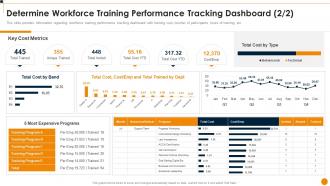
This slide provides information regarding workforce training performance tracking dashboard with training cost, number of participants, hours of training, etc.
People who downloaded this PowerPoint presentation also viewed the following :
Determine Workforce Training Performance Tracking Dashboard Metrics with all 6 slides:
Use our Determine Workforce Training Performance Tracking Dashboard Metrics to effectively help you save your valuable time. They are readymade to fit into any presentation structure.





FAQs for Determine Workforce Training Performance
Honestly, you need both quick wins and long-term stuff. Completion rates and satisfaction scores are easy to show your boss right away. But the real gold? Check if people actually remember things 30-90 days later and whether their job performance improved. ROI matters too - look at productivity bumps and fewer mistakes. Oh, and if nobody's engaged during the actual training, you're basically screwed on everything else. I'd stick to maybe 5 key metrics tops. Any more than that and you'll never actually use them consistently, which defeats the whole purpose.
Look, engaged employees during training are honestly your best bet for actual results. When people are asking questions and participating instead of just sitting there, they retain way more and actually use what they learned later. Makes total sense, right? Plus they're more likely to finish programs and help train others too. I'd track things like participation rates alongside performance metrics - you'll probably see some obvious patterns. Oh, and engaged trainees rarely drop out halfway through, which saves you money in the long run.
Honestly, I'd start simple - maybe test people at 3, 6, and 12 months to see what they actually remember. Performance reviews are super helpful since managers can tell you if anyone's using the stuff day-to-day. Oh, and definitely ask their coworkers too because they see everything lol. If you want to get fancy, track some business numbers that connect to the training - like how many mistakes people make or productivity stuff. Just don't go crazy with data collection right away. Pick like two methods max or you'll drown in spreadsheets.
Honestly, the math part is straightforward - just use (benefits - costs) / costs x 100. So like if you drop $50k on training but get $150k back in productivity, boom, 200% ROI. The annoying part though? Figuring out what actually came from your training vs everything else happening at work. I'd start by measuring stuff before you train anyone - productivity, error rates, how long new people take to get up to speed. Then check those same things 3-6 months later. Focus on metrics that hit your bottom line directly. Employee retention is huge too since replacing people costs a fortune.
Honestly, employee feedback is like your cheat sheet for fixing training programs. It shows you what's actually landing vs what you think is working. Sure, tracking completion rates sounds good on paper, but if everyone's saying the content is useless for their day-to-day work, those metrics are pretty pointless. Get feedback through surveys or just casual conversations - whatever works. Then use what they tell you to tweak both your training delivery and how you're measuring success. The key thing? Ask your team what winning looks like from where they sit.
Look, data analytics stops you from just guessing whether your training programs actually work. Track completion rates and skill assessments, then see how job performance changes afterward. You can slice the data by department or role - honestly, the patterns you'll find are pretty surprising. The real win? You can finally prove if that pricey leadership course actually boosted team productivity or was just expensive fluff. I'd pick 3-4 metrics your bosses care about first. Then set up some simple dashboards to watch them consistently.
Honestly, shoot for 85-95% on mandatory stuff and maybe 70-85% for optional training. I know that sounds super high, but it's totally doable if you actually engage people properly. So many companies I've worked with set pathetically low bars like 60% then act shocked when nobody takes training seriously lol. Compliance training? Push for 95%. Skills development can be more chill. Also track monthly instead of quarterly - you'll catch problems way faster. Don't jump straight to these numbers though. Figure out where you're at now, then work your way up gradually.
You'll want to track different stuff depending on how you deliver training. E-learning usually gets better completion rates and costs way less per person, but honestly? Engagement can be pretty flat unless someone really nailed the design. In-person training tends to stick better in people's heads and they actually like it more - just costs a fortune and doesn't scale well. Hybrid's kind of the sweet spot though. I'd measure completion rates, how much people retain, engagement levels, and what you're spending. Then just pick whatever fits your team and budget best.
Honestly, you need to track the stuff that actually matters - productivity, quality scores, error rates, customer satisfaction. If it's sales training, obviously watch the sales numbers. But here's the thing: real change takes forever to show up, so don't expect miracles after two weeks. I'd compare data from before and after training over like 3-6 months minimum. Get supervisors to observe people, ask for peer feedback, whatever works. The trick is picking 2-3 specific metrics that match what you taught them and sticking with it. Self-assessments can work too if people are honest about using their new skills.
So basically you want to compare how different groups are doing with your training stuff - like who's actually showing up, finishing the courses, and how they're scoring. Look for weird gaps. Maybe one group is bombing the assessments or just not completing things at a high rate. That's where it gets interesting because you might find issues you didn't even know existed. But honestly, the real test is what happens after - are people actually getting promoted and staying at the company at similar rates? That tells you if your training is worth anything. I'd just pick like 2 or 3 basic things to track first, then add more later once you get the hang of it.
So from what I've seen, training programs usually cut turnover by around 25-40%. People stick around when they feel valued and can actually see where they're headed career-wise. To measure it, compare your turnover rates before and after you roll out training. Also track how trained employees do versus the ones who didn't get training - the difference is usually pretty stark. Exit interviews are your best friend here since people will straight up tell you if they left because of no growth opportunities. Oh, and don't forget to calculate what you're saving on recruitment costs. Start with your current turnover numbers, then check in every quarter to see how things are improving.
Look, figure out what actually matters to your company first - revenue, customer happiness, retention, whatever's making your boss stressed. Work backwards from there to find training metrics that connect to real outcomes. Completion rates are pretty much useless, honestly. Track performance differences between trained and untrained people instead, or see how training moves the needle on customer scores. The whole point is proving training actually does something measurable. Each program should tie to specific business numbers so you can show the before/after difference. Otherwise you're just throwing money at feel-good activities.
Ugh, data quality is always a nightmare. Different departments track things completely differently, and half the systems don't even talk to each other. The worst part? Most programs weren't built with measurement in mind from day one - such a pain to retrofit that stuff later. ROI gets tricky too because how do you know if someone improved from training vs just getting better naturally? You end up measuring what happened weeks ago instead of catching problems early. Honestly, just pick 2-3 metrics that actually matter to your business goals. Don't try tracking everything or you'll go crazy.
Honestly, LMS platforms will save you so much time on data collection. Right now you're probably chasing people down for completion rates and manually tracking quiz scores - these systems do all that automatically. You'll get real-time dashboards that show engagement levels, time spent on modules, all that good stuff. Filter by department or role, whatever you need. Oh and you can set alerts when completion rates tank, which is super helpful. My advice though? Start with maybe 3-4 key metrics. Don't go crazy tracking everything at first or you'll drown in data.
Okay so here's the thing - ditch the data dump approach. Tell stories instead. Like, show how that safety training actually cut incidents by 30%, not just "85% completion rate." Executives literally zone out when you throw raw numbers at them. Visuals help tons, and always compare to industry benchmarks so they get the context. Oh and this is crucial - tailor what you're saying to who you're talking to. HR cares about totally different stuff than the CFO does. Connect everything back to business outcomes they actually give a damn about. Trust me on this one.
-
Great experience, I would definitely use your services further.
-
Wow! The design and quality of templates on SlideTeam are simply the best.