

Developing Effective Team Performance Management System Complete Deck




Try Before you Buy Download Free Sample Product
 Impress Your
 Audience
 100%
100% Editable
 Save Hours
 of Time


Team performance management comprises frequent tasks to formulate team goals, track their progress and make decisions to achieve them more effectively and efficiently. The overall goal of team performance management is to ensure that teams work together in an optimal manner to attain the results that team supervisors desire. To help you achieve such a goal, our professionals at SlideTeam have curated this customizable Developing Effective Team Performance Management System template. Slides included in this PPT provide information about existing issues, challenges and gap analysis in team management, industrial comparative assessment, and poor performance reasons. It also gives insights about the benefits and types of team performance management systems added with its implementation timeline. This presentation offers slides that can help organizations boost team performance through benchmarking, task automation, deadlines and KPIs, performance evaluation, team recognition, incentives, etc. Furthermore, it includes the organizational structure and workflow of the training and development team along with their annual costs incurred in team management software, learning, and development programs. These slides also contain KPIs, dashboards, and impact analysis for tracking team management system performance. Get access now.
People who downloaded this PowerPoint presentation also viewed the following :
Content of this Powerpoint Presentation
Slide 1: This slide introduces Developing Effective Team Performance Management System. State Your Company Name and begin.
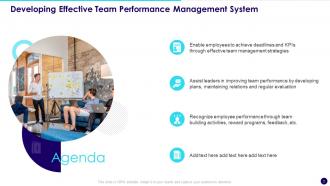
Slide 2: This slide states Agenda of the presentation.
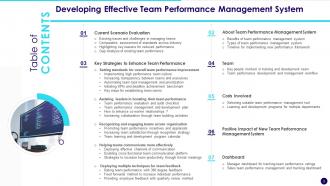
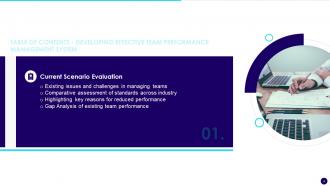
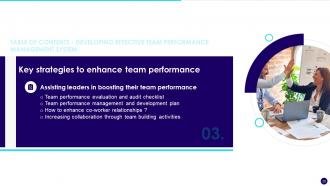
Slide 3: This slide presents Table of Content for the presentation.
Slide 4: This slide highlights title for topics that are to be covered next in the template.
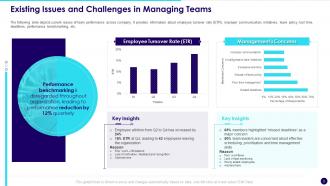
Slide 5: This slide displays Existing Issues and Challenges in Managing Teams.
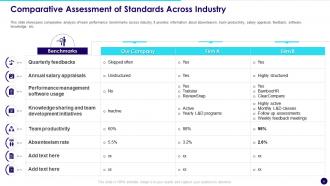
Slide 6: This slide represents Comparative Assessment of Standards Across Industry.
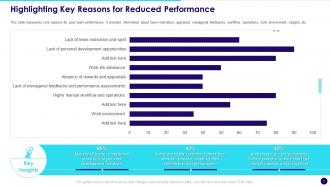
Slide 7: This slide showcases Highlighting Key Reasons for Reduced Performance.
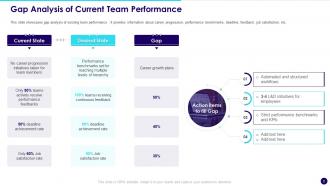
Slide 8: This slide shows Gap Analysis of Current Team Performance.
Slide 9: This slide highlights title for topics that are to be covered next in the template.
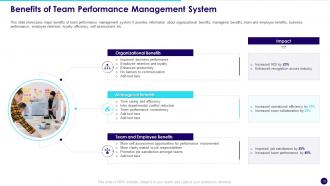
Slide 10: This slide presents Benefits of Team Performance Management System.
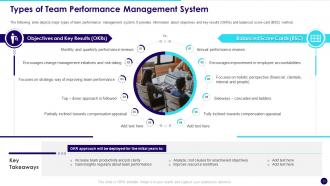
Slide 11: This slide displays Types of Team Performance Management System.
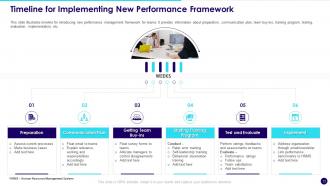
Slide 12: This slide represents Timeline for Implementing New Performance Framework.
Slide 13: This slide highlights title for topics that are to be covered next in the template.
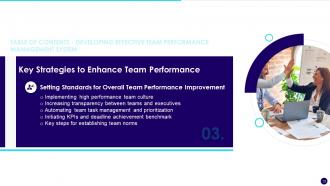
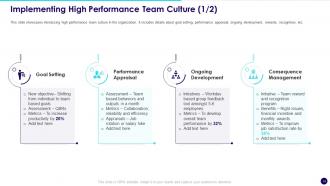
Slide 14: This slide showcases Implementing High Performance Team Culture.
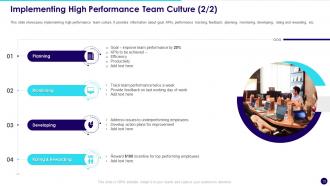
Slide 15: This is another slide continuing Implementing High Performance Team Culture.
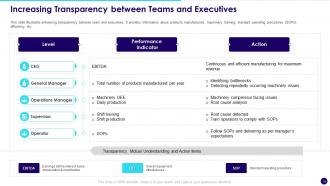
Slide 16: This slide shows Increasing Transparency between Teams and Executives.
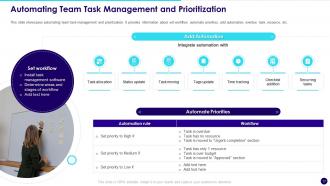
Slide 17: This slide presents Automating Team Task Management and Prioritization.
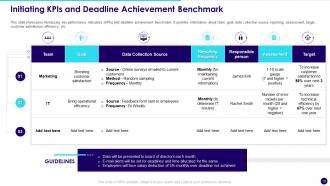
Slide 18: This slide displays Initiating KPIs and Deadline Achievement Benchmark.
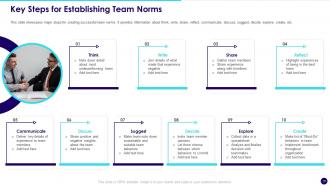
Slide 19: This slide represents Key Steps for Establishing Team Norms.
Slide 20: This slide highlights title for topics that are to be covered next in the template.
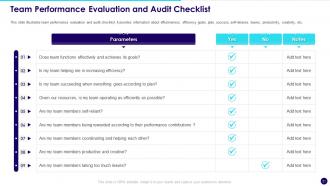
Slide 21: This slide showcases Team Performance Evaluation and Audit Checklist.
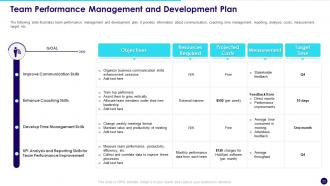
Slide 22: This slide shows Team Performance Management and Development Plan.
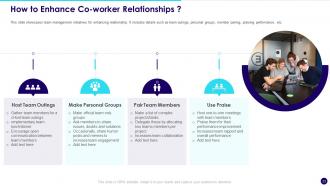
Slide 23: This slide presents How to Enhance Co-worker Relationships.
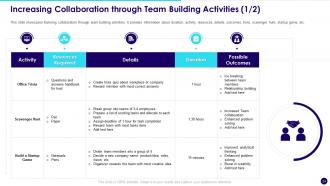
Slide 24: This slide displays Increasing Collaboration through Team Building Activities.
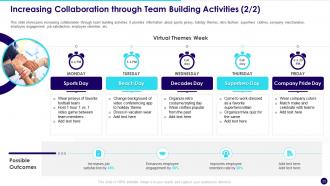
Slide 25: This is another slide continuing Increasing Collaboration through Team Building Activities.
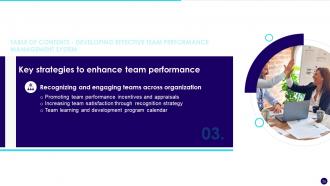
Slide 26: This slide highlights title for topics that are to be covered next in the template.
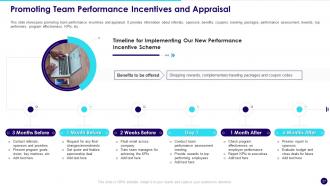
Slide 27: This slide represents Promoting Team Performance Incentives and Appraisal.
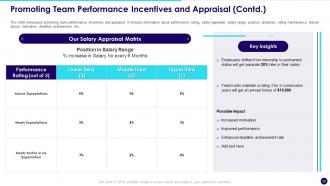
Slide 28: This is another slide continuing Promoting Team Performance Incentives and Appraisal.
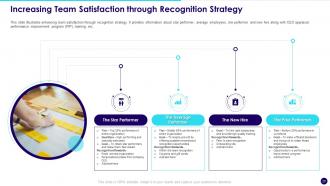
Slide 29: This slide showcases Increasing Team Satisfaction through Recognition Strategy.
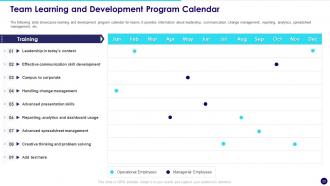
Slide 30: This slide shows Team Learning and Development Program Calendar.
Slide 31: This slide highlights title for topics that are to be covered next in the template.
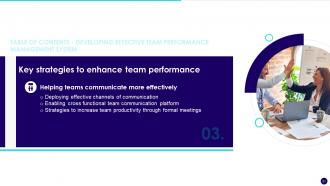
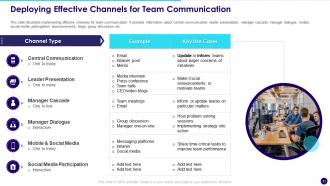
Slide 32: This slide presents Deploying Effective Channels for Team Communication.
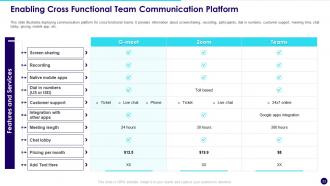
Slide 33: This slide displays Enabling Cross Functional Team Communication Platform.
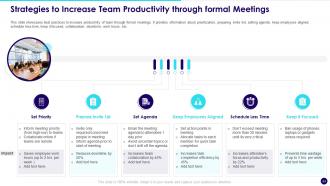
Slide 34: This slide represents Strategies to Increase Team Productivity through formal Meetings.
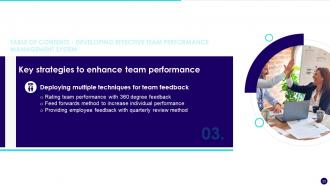
Slide 35: This slide highlights title for topics that are to be covered next in the template.
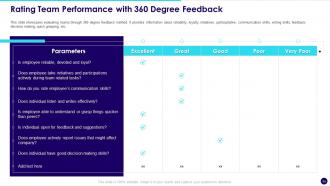
Slide 36: This slide showcases Rating Team Performance with 360 Degree Feedback.
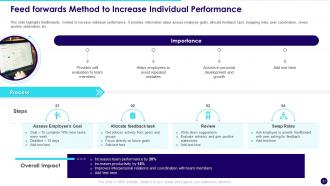
Slide 37: This slide shows Feed forwards Method to Increase Individual Performance.
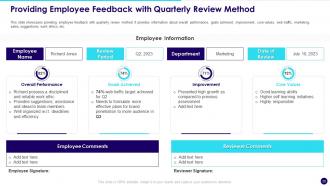
Slide 38: This slide presents Providing Employee Feedback with Quarterly Review Method.
Slide 39: This slide highlights title for topics that are to be covered next in the template.
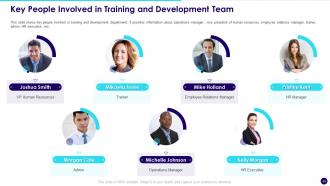
Slide 40: This slide displays Key People Involved in Training and Development Team.
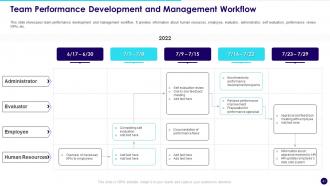
Slide 41: This slide represents Team Performance Development and Management Workflow.
Slide 42: This slide highlights title for topics that are to be covered next in the template.
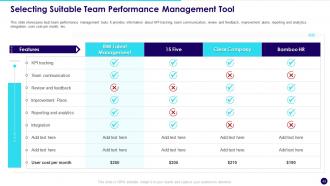
Slide 43: This slide showcases Selecting Suitable Team Performance Management Tool.
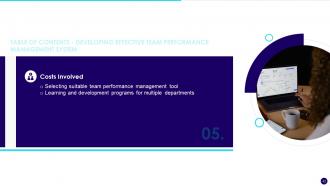
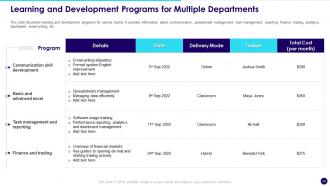
Slide 44: This slide shows Learning and Development Programs for Multiple Departments.
Slide 45: This slide highlights title for topics that are to be covered next in the template.
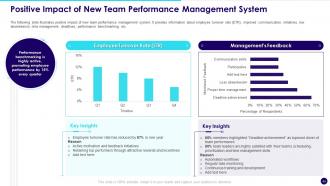
Slide 46: This slide presents Positive Impact of New Team Performance Management System.
Slide 47: This slide highlights title for topics that are to be covered next in the template.
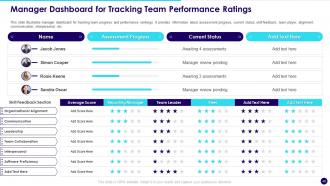
Slide 48: This slide displays Manager Dashboard for Tracking Team Performance Ratings.
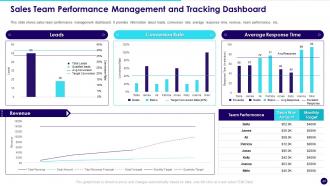
Slide 49: This slide represents Sales Team Performance Management and Tracking Dashboard.
Slide 50: This slide showcases Icons for Developing Effective Team Performance Management System.
Slide 51: This slide is titled as Additional Slides for moving forward.
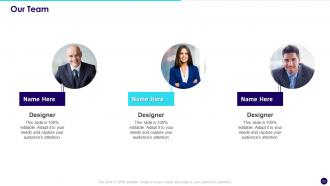
Slide 52: This is Our Team slide with names and designation.
Slide 53: This slide shows Post It Notes. Post your important notes here.
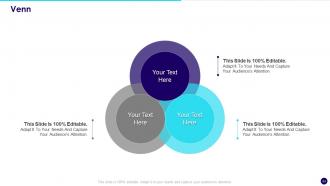
Slide 54: This slide depicts Venn diagram with text boxes.
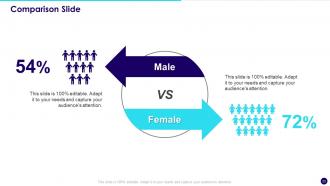
Slide 55: This is a Comparison slide to state comparison between commodities, entities etc.
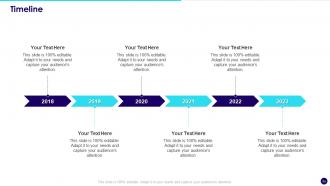
Slide 56: This is a Timeline slide. Show data related to time intervals here.
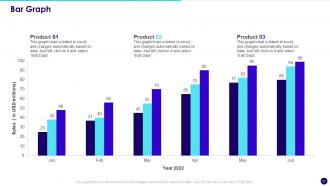
Slide 57: This slide presents Bar chart with two products comparison.
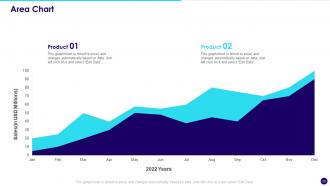
Slide 58: This slide depicts Area chart with two products comparison.
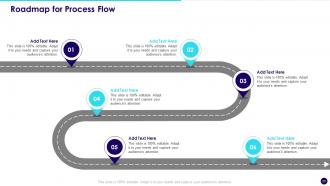
Slide 59: This slide showcases Roadmap for Process Flow.
Slide 60: This is Our Goal slide. State your firm's goals here.
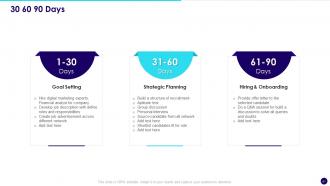
Slide 61: This slide provides 30 60 90 Days Plan with text boxes.
Slide 62: This slide contains Puzzle with related icons and text.
Slide 63: This is a Thank You slide with address, contact numbers and email address.
Developing Effective Team Performance Management System Complete Deck with all 68 slides:
Use our Developing Effective Team Performance Management System Complete Deck to effectively help you save your valuable time. They are readymade to fit into any presentation structure.





FAQs for Developing Effective Team Performance Management
Key performance metrics include productivity rates, quality scores, goal achievement percentages, collaboration effectiveness, and individual contribution assessments. These metrics enable organizations to streamline performance evaluation by identifying strengths, addressing gaps, and optimizing resource allocation, with many companies finding that balanced scorecards ultimately deliver improved team cohesion and competitive advantage.
A Team Performance Management System supports remote teams by enabling centralized goal tracking, facilitating regular virtual check-ins, and providing transparent performance analytics across distributed workforces. These platforms streamline communication workflows, automate progress monitoring, and deliver real-time visibility into team productivity, with many organizations finding that structured remote performance frameworks ultimately enhance accountability and collaboration.
Feedback serves as the cornerstone of effective Team Performance Management Systems, enabling continuous improvement, skill development, goal alignment, and performance optimization. Through regular feedback loops, managers can address performance gaps, recognize achievements, and guide professional growth, while team members receive clear direction and support, ultimately enhancing productivity and fostering a culture of continuous learning and development.
Technology streamlines team performance assessments by automating data collection, providing real-time analytics, and enabling continuous feedback loops rather than annual reviews. Through AI-powered platforms, organizations can track productivity metrics, identify skill gaps, and deliver personalized development insights, while managers gain comprehensive dashboards that enhance decision-making and ultimately improve team outcomes across departments.
Common challenges include inconsistent evaluation criteria, biased assessments, lack of regular feedback, unclear performance expectations, and insufficient documentation of achievements. These issues often result from poor communication between managers and team members, outdated review processes, and inadequate training on evaluation methods, ultimately leading to decreased morale, unfair ratings, and missed development opportunities across organizations.
Employee goal-setting integrates into performance management systems through cascading organizational objectives, SMART goal frameworks, regular milestone tracking, and automated progress monitoring. This strategic combination enables managers to align individual contributions with business outcomes, streamline performance reviews, and deliver real-time feedback, with many organizations finding that integrated systems enhance accountability while reducing administrative overhead.
Methods to align team performance with organizational objectives include cascading goal frameworks, balanced scorecards, OKRs (Objectives and Key Results), regular performance reviews, and cross-functional project assignments. These approaches streamline alignment by establishing clear metrics, enhancing communication channels, and creating accountability structures, with many organizations finding that strategic goal cascading ultimately delivers improved productivity and competitive advantage.
A Team Performance Management System fosters collaboration by establishing shared goals, transparent performance metrics, real-time feedback mechanisms, and cross-functional visibility into team contributions. These systems enable teams to align priorities, identify collaboration opportunities, and leverage collective strengths, with many organizations finding that integrated performance tracking ultimately delivers enhanced communication, accountability, and coordinated project outcomes.
Real-time team performance tracking tools include performance dashboards, project management software, time tracking applications, communication analytics platforms, and goal monitoring systems. These technologies enhance operational efficiency by providing instant visibility into productivity metrics, milestone progress, and collaboration patterns, with many organizations finding that continuous monitoring ultimately delivers faster project completion and improved resource allocation.
Data analytics enhances team performance management by identifying performance patterns, predicting potential issues, and providing actionable insights through real-time dashboards and comprehensive reporting. Through advanced analytics, organizations can track productivity metrics, assess collaboration effectiveness, and optimize resource allocation, with many companies finding that data-driven approaches deliver improved team outcomes and strategic competitive advantage.
**INPUT**: What strategies can be implemented to ensure consistent performance reviews? **OUTPUT**: Effective strategies include standardized evaluation criteria, structured review templates, regular calibration sessions among managers, documented performance metrics, and systematic training programs for evaluators. These approaches streamline the review process by eliminating subjective bias, ensuring equitable assessments across departments, and maintaining transparency, with many organizations finding that consistent frameworks ultimately deliver improved employee engagement and stronger performance outcomes. **Word count: 58 words**
A performance management system addresses underperformance by establishing clear performance metrics, providing regular feedback mechanisms, identifying skill gaps through data analysis, and creating targeted improvement plans. Through systematic tracking and coaching tools, organizations can intervene early with personalized development strategies, ultimately transforming struggling teams into high-performing units while reducing turnover costs.
Employee self-assessments enhance evaluation accuracy by encouraging reflection, identifying skill gaps, increasing ownership of development goals, and providing managers with comprehensive performance insights. This strategic combination streamlines the review process while fostering dialogue between employees and supervisors, with many organizations finding that self-evaluations ultimately deliver improved engagement and more targeted professional development outcomes.
A culture of continuous improvement enhances team performance by encouraging regular feedback, promoting learning from mistakes, and fostering innovation through iterative processes. Through systematic performance reviews, skills development programs, and collaborative problem-solving, teams deliver higher productivity, improved quality outcomes, and enhanced adaptability, with many organizations finding that this approach significantly increases employee engagement and competitive advantage.
Recognizing and rewarding high-performing teams drives employee engagement, retention, and motivation while establishing clear performance benchmarks across organizations. These strategic recognition programs enhance productivity, foster healthy competition, and reinforce desired behaviors, with many companies finding that consistent acknowledgment ultimately delivers improved morale, reduced turnover, and sustained competitive advantage.
-
Requested a complete pitch deck. Delivered immediately and with high quality well researched content.
-
Extremely professional slides with attractive designs. I especially appreciate how easily they can be modified and come in different colors, shapes, and sizes!