

Developing Private Label Branding Strategy For Improving Brand Image powerpoint Presentation Slides





Try Before you Buy Download Free Sample Product
 Impress Your
 Audience
 100%
100% Editable
 Save Hours
 of Time


Private branding refers to a strategy where a product is manufactured and sold under a specific vendors name, competing with well known brand name products. Explore our meticulously crafted Developing Private Label Branding Strategy for Improving Brand Image template. It offers an overview of private branding, including statistics, comparisons, types of manufacturers, online private labels, decision factors, evolution, and the overall process involved. Our Private label deck delves into effective secret personal branding strategies, like enhancing digital awareness, devising product marketing strategies, delivering value to customers, prioritizing innovation, and establishing a competitive pricing strategy. It also emphasizes the implementation process of a personal branding strategy. Our National brands PPT covers essential steps like gathering customer feedback, defining the target audience, selecting appropriate products, etc. Finally, it highlights the financial valuation of the brand through a thorough analysis of sales margin comparison, market share, profit trends, and case studies featuring successful private labels like IKEA and Kirkland Signature. Dont miss the opportunity to download our fully editable and customizable template, compatible with Google Slides, to enhance your understanding of effective private branding strategies and attract potential customers.
People who downloaded this PowerPoint presentation also viewed the following :
Content of this Powerpoint Presentation
Slide 1: This slide introduces Developing Private Label Branding Strategy for Improving Brand Image. Commence by stating Your Company Name.
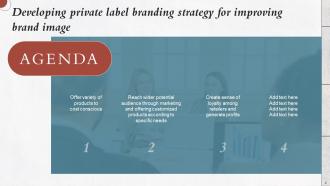
Slide 2: This slide depicts the Agenda of the presentation.
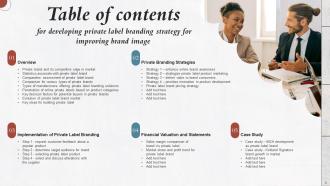
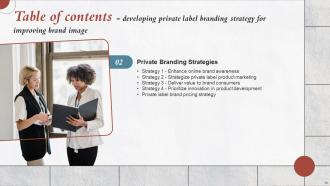
Slide 3: This slide includes the Table of contents.
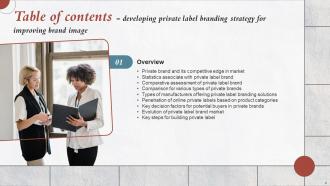
Slide 4: This slide highlights the Title for the Topics to be discussed further.
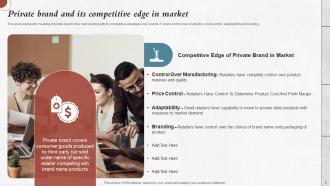
Slide 5: This slide represents meaning of private brand in the market along with its competitive advantage over brands.
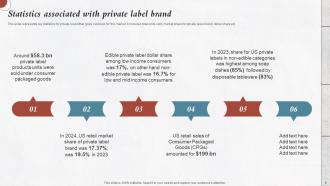
Slide 6: This slide showcases the Statistics associated with private label brand.
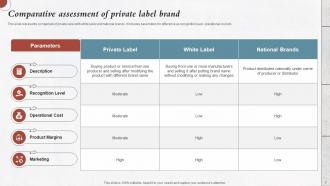
Slide 7: This slide reveals the Comparative assessment of private label brand.
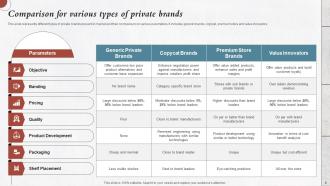
Slide 8: This slide shows the Comparison for various types of private brands.
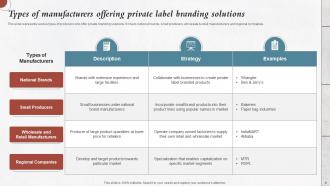
Slide 9: This slide states the Types of manufacturers offering private label branding solutions.
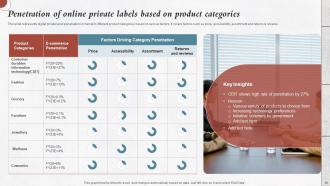
Slide 10: This slide represents digital private label penetration in market in different product categories based on various factors.
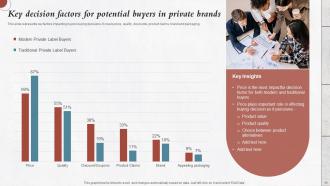
Slide 11: This slide highlights the Key decision factors for potential buyers in private brands.
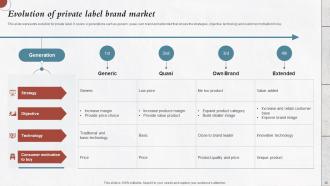
Slide 12: This slide portrays the Evolution of private label brand market.
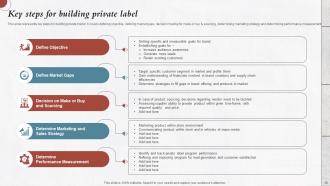
Slide 13: This slide depicts the Key steps for building private label.
Slide 14: This slide indicates the Heading for the Contents to be covered in the upcoming template.
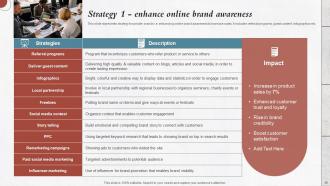
Slide 15: This slide represents strategy for private brands i.e. enhancing online brand awareness to increase sales.
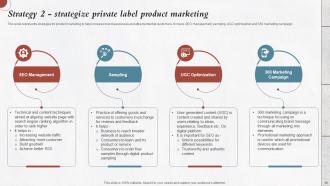
Slide 16: This slide shows strategies for product marketing to help increase brand awareness and attract potential customers.
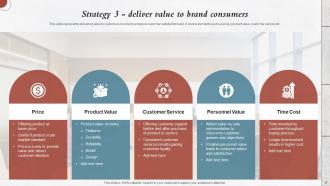
Slide 17: This slide presents delivering value to customers in order to enhance customer satisfaction level.
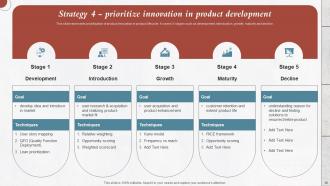
Slide 18: This slide portrays prioritization of product innovation in product lifecycle.
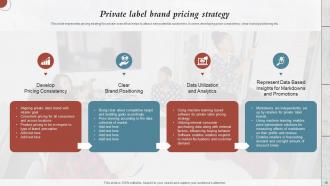
Slide 19: This slide indicates the Private label brand pricing strategy.
Slide 20: This slide displays the Title for the Ideas to be discussed further.
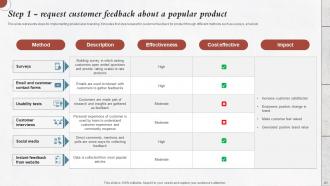
Slide 21: This slide represents steps for implementing private label branding.
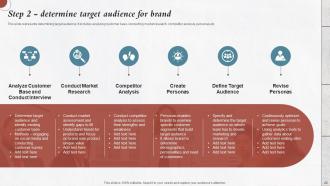
Slide 22: This slide portrays determining target audience.
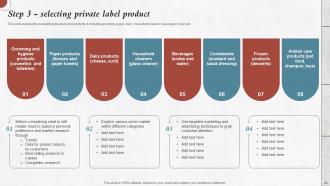
Slide 23: This slide reveals considering private brand products.
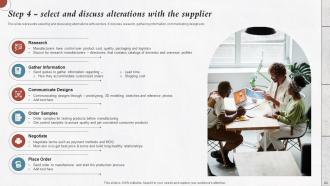
Slide 24: This slide presents selecting and discussing alternations with vendors.
Slide 25: This slide includes the Heading for the Ideas to be covered in the upcoming template.
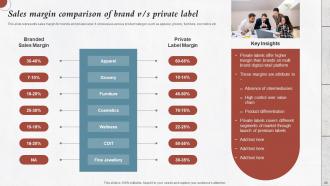
Slide 26: This slide represents sales margin for brands and private label.
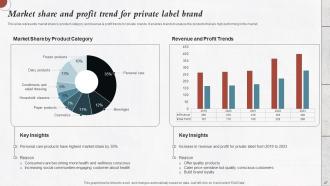
Slide 27: This slide highlights the Market share and profit trend for private label brand.
Slide 28: This slide contains the Title for the Contents to be further discussed.
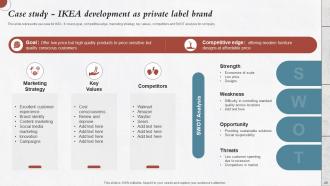
Slide 29: This slide represents use case for IKEA.
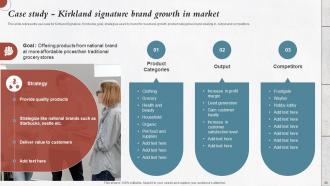
Slide 30: This slide highlights the use case for Kirkland Signature.
Slide 31: This is the Icons slide containing all the Icons used in the plan.
Slide 32: This slide is used for depicting some Additional information.
Slide 33: This slide reveals the organization's vision, mission & goal.
Slide 34: This is the About us slide. State your company-related information here.
Slide 35: This is Meet our team slide for highlighting the firm-related information.
Slide 36: This is the Idea generation slide for encouraging fresh ideas.
Slide 37: This is the Puzzle slide with related imagery.
Slide 38: This slide contains the Post it notes for reminders and deadlines.
Slide 39: This is the Venn diagram slide.
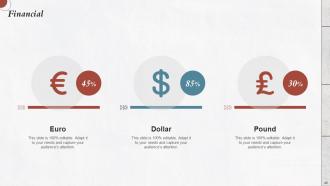
Slide 40: This slide elucidates information related to the Financial topic.
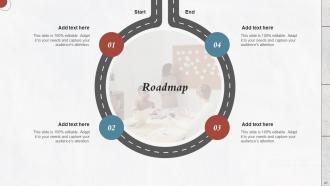
Slide 41: This slide presents the company's Roadmap.
Slide 42: This is the Thank You slide for acknowledgement.
Developing Private Label Branding Strategy For Improving Brand Image powerpoint Presentation Slides with all 47 slides:
Use our Developing Private Label Branding Strategy For Improving Brand Image powerpoint Presentation Slides to effectively help you save your valuable time. They are readymade to fit into any presentation structure.












FAQs for Developing Private Label Branding Strategy For Improving Brand Image
Private label branding offers new businesses cost-effective market entry, faster product launches, reduced manufacturing risks, and higher profit margins compared to traditional product development. This strategic approach enables startups to focus resources on marketing and customer acquisition rather than production complexities, with many retailers and e-commerce businesses finding competitive advantages through customized offerings.
Private label products enhance brand identity by offering exclusive merchandise, creating distinctive customer experiences, and establishing unique value propositions that differentiate retailers from competitors. These products enable retailers to control quality, pricing, and messaging while building customer loyalty, with many grocery chains and department stores finding that private labels significantly increase profit margins and strengthen brand recognition.
Retailers should evaluate manufacturers based on production capacity, quality certifications, cost structure, geographic proximity, and alignment with brand values. Through comprehensive supplier audits, retailers can assess manufacturing capabilities, supply chain reliability, and scalability potential, while many successful private label programs find that long-term partnerships with certified manufacturers ultimately deliver consistent quality and competitive pricing advantages.
Consumer perception typically favors national brands for quality, with many shoppers associating established brand names with superior standards, consistency, and reliability. However, this gap is narrowing significantly as retailers like Costco, Target, and Whole Foods invest heavily in premium private label development, with studies showing that quality-focused private labels increasingly match or exceed national brand perception in categories like grocery, pharmacy, and home goods.
Private label branding involves trademark research, intellectual property protection, regulatory compliance, product liability insurance, and manufacturing agreements with clear quality standards. These legal frameworks enable retailers to navigate compliance requirements across different markets while protecting their brand assets, with many companies finding that comprehensive legal preparation streamlines product launches and minimizes costly disputes.
Effective marketing strategies boost private label success by emphasizing value proposition, leveraging customer data insights, building brand storytelling, and optimizing packaging design and placement. Through targeted digital campaigns and strategic positioning, retailers like Walmart and Target enhance customer perception, increase profit margins, and compete directly with national brands, ultimately delivering stronger customer loyalty and sustainable revenue growth.
Packaging plays a crucial role in private label brand success by establishing brand identity, communicating quality perceptions, and differentiating products from competitors on crowded retail shelves. Through strategic design, clear messaging, and premium materials, private label brands enhance consumer trust, drive purchase decisions, and ultimately deliver stronger margins while competing effectively against national brands.
Retailers leverage data analytics to optimize private label offerings by analyzing customer purchase patterns, identifying market gaps, monitoring competitor pricing, and tracking seasonal demand trends. Through predictive analytics and consumer behavior insights, retailers can strategically position products, adjust pricing models, and enhance product development, ultimately delivering higher profit margins and stronger customer loyalty in increasingly competitive retail environments.
Common pitfalls include inadequate market research, poor supplier selection, insufficient quality control, weak brand positioning, and underestimating marketing investment required for differentiation. These challenges can significantly impact product success, with many retailers finding that rushed launches without proper testing, competitor analysis, and clear value propositions ultimately compromise brand credibility and market penetration.
Private label products typically employ cost-based pricing strategies focusing on value and competitive positioning against national brands, while branded products use premium pricing reflecting brand equity, marketing investments, and perceived quality. Retailers leverage private labels to offer consumers 20-30% savings compared to national brands, ultimately delivering higher margins while maintaining customer loyalty through strategic price positioning in an increasingly competitive retail landscape.
Private label branding significantly enhances customer loyalty by creating unique value propositions, fostering emotional connections, and delivering consistent quality experiences that competitors cannot replicate. Through strategic brand differentiation, retailers like Target and Costco cultivate devoted customer bases who return specifically for exclusive products, ultimately driving repeat purchases, higher lifetime value, and reduced price sensitivity across their operations.
Retailers can assess private label market demand through consumer surveys, sales data analysis, competitor research, focus groups, and market trend studies. These methods enable retailers to identify gaps in current offerings, understand pricing sensitivities, and evaluate consumer preferences across categories, with many finding that strategic combination of these approaches delivers competitive advantage and minimizes investment risks.
Best practices for sourcing private label ingredients include establishing clear quality standards, conducting thorough supplier audits, maintaining transparent supply chains, implementing rigorous testing protocols, and building long-term partnerships with certified vendors. These practices enable brands to ensure consistent product quality, reduce costs, and maintain regulatory compliance, with many retailers finding that strategic supplier relationships ultimately deliver competitive pricing, reliable inventory management, and enhanced brand reputation in increasingly quality-conscious markets.
Product differentiation becomes absolutely critical in saturated private label markets, as it directly determines competitive positioning, customer loyalty, and market share retention. Through strategic packaging design, unique formulations, superior quality standards, and targeted messaging, private label brands can distinguish themselves from competitors, with many retailers finding that differentiated products command higher margins and stronger customer preference.
Current trends shaping the private label industry include premium positioning, sustainability focus, digital-first strategies, health and wellness expansion, and AI-driven personalization. These developments enable retailers to differentiate through quality innovation, eco-friendly packaging, and targeted product lines, with many brands finding that strategic private labeling delivers enhanced margins and stronger customer loyalty.
-
Extremely professional slides with attractive designs. I especially appreciate how easily they can be modified and come in different colors, shapes, and sizes!
-
Commendable slides with attractive designs. Extremely pleased with the fact that they are easy to modify. Great work!