

Developing Retail Merchandising Strategies To Boost Sales Powerpoint Presentation Slides




Try Before you Buy Download Free Sample Product
 Impress Your
 Audience
 100%
100% Editable
 Save Hours
 of Time


Every merchandising manager needs a set of digital and in store strategies to promote and sell the retail products. Merchandising strategies involve various tactics the store manager can use to engage customers and increase brand recognition. Here is an efficiently designed template on Developing Retail Merchandising Strategies to Boost Sales. Initially, the PPT covers the different issues faced by the retail store with the current merchandising strategy and market outlook of the retail industry. Secondly, the deck covers information about the most successful competitor in the retail sector of the USA. Furthermore, it includes a budget plan which can be used to determine the total cost of implementing a new merchandising strategy. Additionally, the complete deck provides an overview of the team responsible for successfully implementing merchandising strategy. Lastly, it covers a few dashboards which will assist the company in tracking and measuring the effectiveness of the new merchandising strategy. Download our 100 percent editable and customizable template, which is also compatible with Google slides.
People who downloaded this PowerPoint presentation also viewed the following :
Content of this Powerpoint Presentation
Slide 1: This slide introduces Developing retail merchandising strategies to boost sales. State Your Company Name and begin.
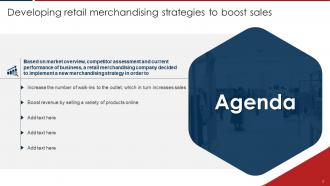
Slide 2: This slide states Agenda of the presentation.
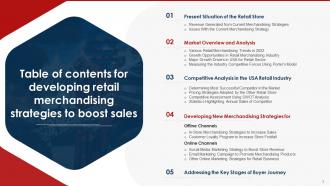
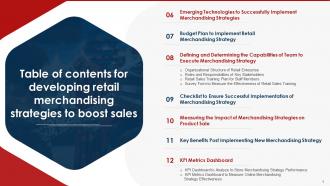
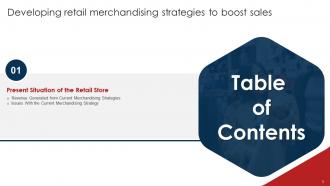
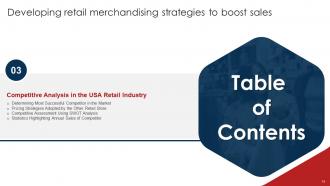
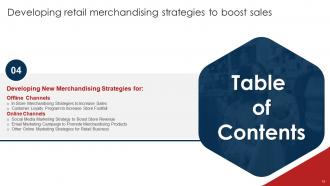
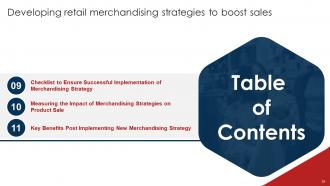
Slide 3: This slide presents Table of Content for the presentation.
Slide 4: This is another slide continuing Table of Content for the presentation.
Slide 5: This slide highlights title for topics that are to be covered next in the template.
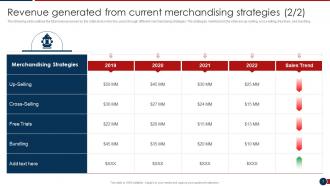
Slide 6: This slide displays Revenue generated from current merchandising strategies.
Slide 7: This slide represents total revenue earned by the retail store in the four years.
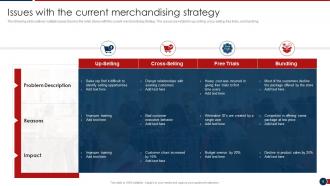
Slide 8: This slide showcases Issues with the current merchandising strategy.
Slide 9: This slide highlights title for topics that are to be covered next in the template.
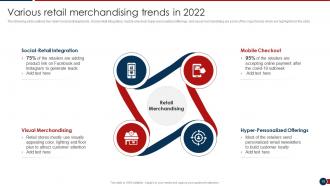
Slide 10: This slide shows Various retail merchandising trends in 2022.
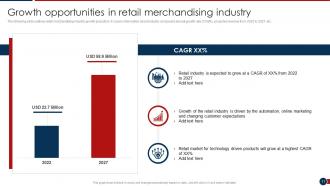
Slide 11: This slide presents Growth opportunities in retail merchandising industry.
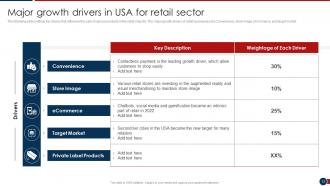
Slide 12: This slide displays Major growth drivers in USA for retail sector.
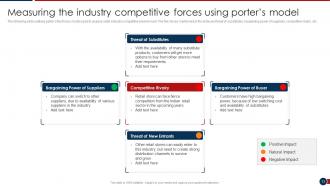
Slide 13: This slide represents Measuring the industry competitive forces using porter’s model.
Slide 14: This slide highlights title for topics that are to be covered next in the template.
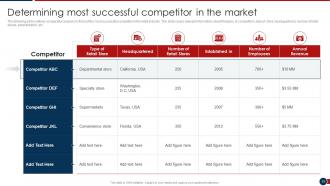
Slide 15: This slide showcases Determining most successful competitor in the market.
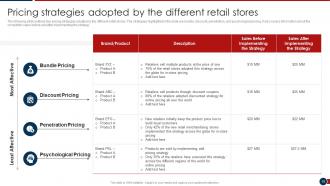
Slide 16: This slide shows Pricing strategies adopted by the different retail stores.
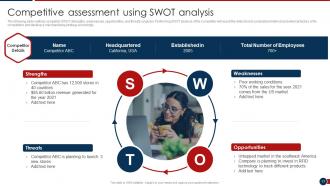
Slide 17: This slide presents Competitive assessment using SWOT analysis.
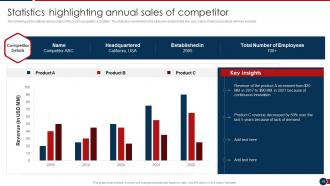
Slide 18: This slide displays Statistics highlighting annual sales of competitor.
Slide 19: This slide highlights title for topics that are to be covered next in the template.
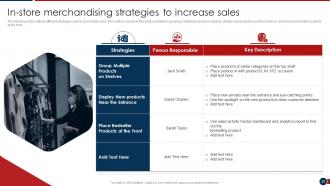
Slide 20: This slide represents In-store merchandising strategies to increase sales.
Slide 21: This is another slide continuing In-store merchandising strategies to increase sales.
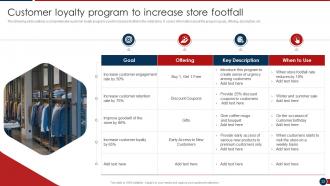
Slide 22: This slide showcases Customer loyalty program to increase store footfall.
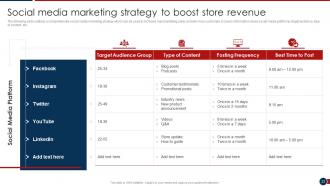
Slide 23: This slide shows Social media marketing strategy to boost store revenue.
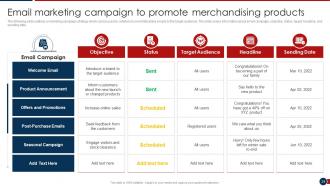
Slide 24: This slide presents Email marketing campaign to promote merchandising products.
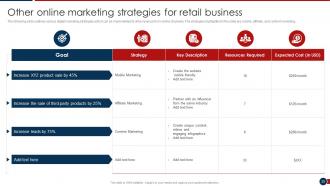
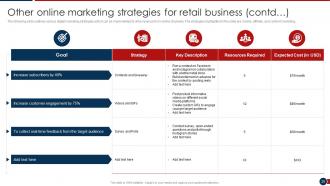
Slide 25: This slide displays Other online marketing strategies for retail business.
Slide 26: This is another slide continuing Other online marketing strategies for retail business.
Slide 27: This slide highlights title for topics that are to be covered next in the template.
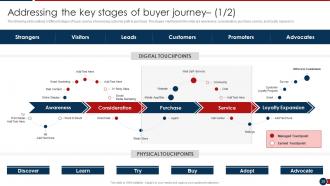
Slide 28: This slide outlines 5 different stages of buyer journey showcasing customer path to purchase.
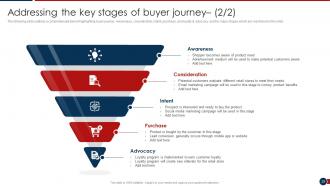
Slide 29: This slide displays a comprehensive funnel highlighting buyer journey.
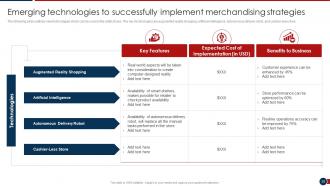
Slide 30: This slide presents Emerging technologies to successfully implement merchandising strategies.
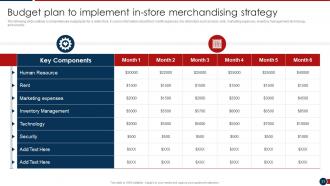
Slide 31: This slide represents Budget plan to implement in-store merchandising strategy.
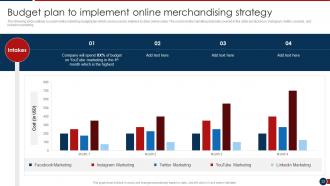
Slide 32: This slide showcases Budget plan to implement online merchandising strategy.
Slide 33: This slide highlights title for topics that are to be covered next in the template.
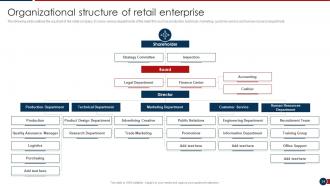
Slide 34: This slide shows Organizational structure of retail enterprise.
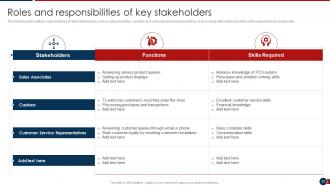
Slide 35: This slide presents Roles and responsibilities of key stakeholders.
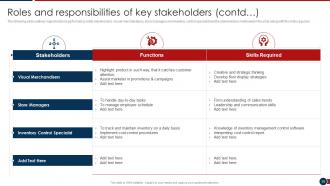
Slide 36: This slide displays major functions performed by retail stakeholders.
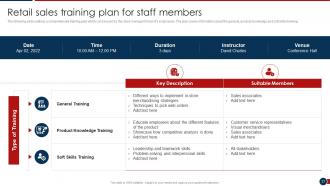
Slide 37: This slide represents Retail sales training plan for staff members.
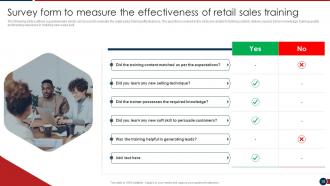
Slide 38: This slide showcases Survey form to measure the effectiveness of retail sales training.
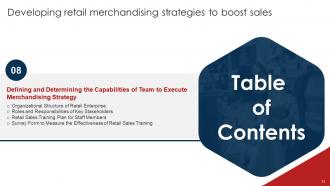
Slide 39: This slide highlights title for topics that are to be covered next in the template.
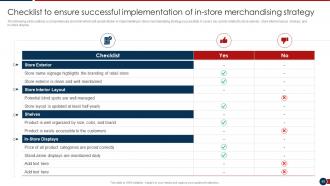
Slide 40: This slide shows Checklist to ensure successful implementation of in-store merchandising strategy.
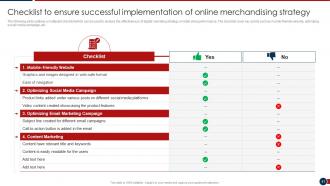
Slide 41: This slide presents Checklist to ensure successful implementation of online merchandising strategy.
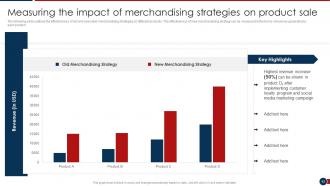
Slide 42: This slide displays Measuring the impact of merchandising strategies on product sale.
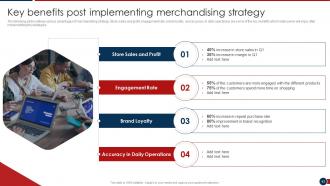
Slide 43: This slide represents Key benefits post implementing merchandising strategy.
Slide 44: This slide highlights title for topics that are to be covered next in the template.
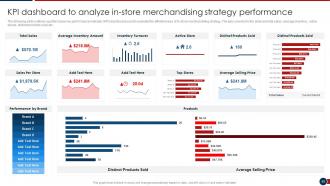
Slide 45: This slide showcases KPI dashboard to analyze in-store merchandising strategy performance.
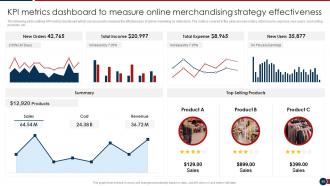
Slide 46: This slide shows KPI metrics dashboard to measure online merchandising strategy effectiveness.
Slide 47: This slide displays Icons for developing retail merchandising strategies to boost sales.
Slide 48: This slide is titled as Additional Slides for moving forward.
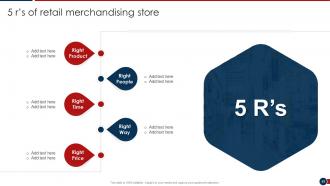
Slide 49: This slide showcases 5 rights of retail merchandising store.
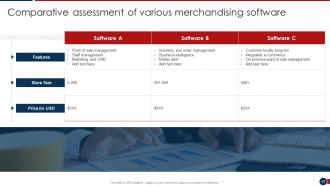
Slide 50: This slide represents Comparative assessment of various merchandising software.
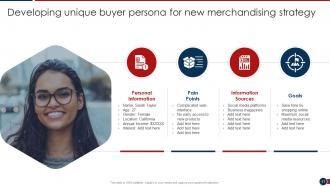
Slide 51: This slide showcases Developing unique buyer persona for new merchandising strategy.
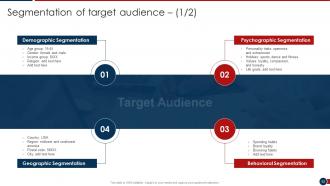
Slide 52: This slide shows Segmentation of target audience.
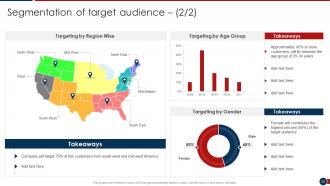
Slide 53: This is another slide continuing Segmentation of target audience.
Slide 54: This is About Us slide to show company specifications etc.
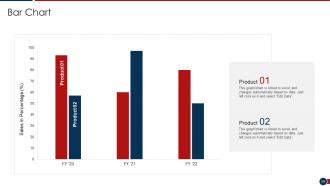
Slide 55: This slide presents Bar chart with two products comparison.
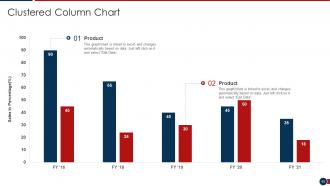
Slide 56: This slide provides Clustered Column chart with two products comparison.
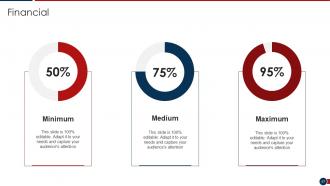
Slide 57: This is a Financial slide. Show your finance related stuff here.
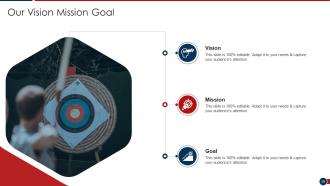
Slide 58: This is Our Mission slide with related imagery and text.
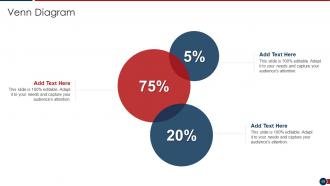
Slide 59: This slide depicts Venn diagram with text boxes.
Slide 60: This slide shows Post It Notes. Post your important notes here.
Slide 61: This is a Thank You slide with address, contact numbers and email address.
Developing Retail Merchandising Strategies To Boost Sales Powerpoint Presentation Slides with all 66 slides:
Use our Developing Retail Merchandising Strategies To Boost Sales Powerpoint Presentation Slides to effectively help you save your valuable time. They are readymade to fit into any presentation structure.








FAQs for Developing Retail Merchandising Strategies To Boost Sales
Okay so first thing - put your high-margin stuff at eye level, that's retail 101. Good lighting is honestly a game changer, people just buy more when they can actually see things properly. Never run out of your bestsellers (obvious but you'd be surprised how often this happens). Your displays should tell some kind of story, not just look random. Pricing's gotta feel competitive but you still need to make money, obviously. Oh and rotate things seasonally - keeps it fresh. But here's the real deal: test different layouts and track what actually sells, not what just looks Instagram-worthy. Start by picking one messy area and fix that first.
Honestly, visual merchandising is just psychology in action. You're guiding customers without them realizing it. Put your best stuff at eye level, use colors that work together, and create clear pathways through the store. I've actually seen stores boost sales 20% just by moving impulse buys near checkout – it's crazy how well that works. Your displays need to tell a story though, not just show products. People buy emotions first, then justify with logic later. The whole point is making their buying journey feel natural. Don't be too obvious about it or you'll kill the magic.
Honestly, placement is everything when it comes to sales. Put your high-margin stuff right at eye level - that's where people naturally look first. Those impulse buys? Stick them by the checkout when customers are already pulling out their wallets. You know how milk is always in the back corner? That's not an accident - makes you walk past literally everything else in the store. Mix up your end displays regularly so it doesn't get stale. Oh, and definitely track which spots actually convert best. Those prime real estate areas are gold, so use them wisely.
So you'll want to plan like 6-8 weeks ahead because people's brains are already jumping to the next season way before it actually hits. Bundle seasonal stuff together and switch up your layout to push whatever's relevant. Don't just focus on the obvious holidays either - back-to-school season is huge, spring cleaning, summer parties, all that drives different buying patterns. Honestly, the whole trick is just getting ahead of where customers' heads are at mentally. Use seasonal colors in your displays too. When you can predict these shifts and have everything ready to go, you're basically meeting people exactly where they already are in their thinking.
Honestly, storytelling in displays is like magic for sales. People don't remember products - they remember how stuff made them feel. When you create a story around your merchandise, suddenly customers care about more than just price tags. Look at Apple stores - they feel more like art galleries than tech shops, right? That narrative approach keeps people browsing longer and makes them okay with paying premium prices. Plus your displays stick in their heads way better. I'd start small though - pick one display and build a clear story about how that product actually fits into someone's daily life. Works every time.
Stop thinking online vs. in-store as competitors - they should work together. QR codes on displays can link to reviews, or do those "buy online, pick up in store" deals that actually get people walking in. Some products honestly just sell better online anyway, while others need that whole touch-and-feel thing. The goal is letting customers bounce between channels without getting annoyed. Like they might browse your Instagram, then come feel the fabric in person, then order different colors online later. Makes their life easier and you get the sale either way.
Dude, color psychology is wild - customers don't even realize it's affecting them. Red and orange trigger impulse buys because they feel urgent. Banks love blue since it screams trustworthy. Green works great for anything organic or eco-friendly. Black automatically makes stuff look expensive (which is why luxury brands obsess over it). I swear I've seen stores increase clearance sales just by switching from yellow tags to red ones. Sounds dumb but it totally works! Just match your colors to whatever vibe you're going for and check if your current setup actually supports your sales goals.
Honestly, data analytics is like having a crystal ball for your store. You can see which products are actually selling vs. just sitting there, figure out who's buying what and when, and catch trends early. The predictive side is where it gets really cool - no more guessing what to order or dealing with dead inventory. I'd start with whatever sales data you already have from your POS system. Even just looking at your best and worst sellers by location or month will show you patterns you probably missed. Oh, and you can finally stop guessing about store layout - actual customer flow data beats gut instinct every time.
Honestly, it's all about hitting multiple senses and giving people stuff to actually touch and try. Interactive displays are clutch - let customers demo things instead of just looking. Create little themed areas that feel like actual spaces, not just shelves with products thrown on them. Good lighting and the right music make such a difference (way more than you'd think). QR codes for extra product details work well too, or those AR mirror things if you're feeling fancy. Oh, and don't go crazy right away - pick one corner of your store to experiment with first. See what people actually respond to before you redo everything.
Dude, inventory is everything - without it you're basically screwed. Can't sell what you don't have, right? Plus getting stuck with dead stock is the worst (trust me on this one). You need the right stuff, right amounts, right timing. Otherwise your cash flow tanks and customers get pissed. Once you've got that sorted though, the fun merchandising stuff like displays becomes way easier. Track your turnover rates first - figure out what flies off the shelves vs what just sits there collecting dust. That's where I'd start anyway.
Start with planograms - they're like blueprints showing where everything should go based on your sales data and foot traffic. Build up, not just out. Use that vertical space with taller shelving. Put your money-makers at eye level because honestly, that's where people look first. Make sure customers can actually see across the store without running into displays everywhere. I'd get flexible fixtures if you can swing it - way easier when you need to switch things up for holidays or whatever. Track your sales per square foot and move stuff around if it's not working. Map out where people never go in your current setup and fix those dead spots first.
Honestly, social media is perfect for this stuff. Post your products in action - styled outfits, behind-the-scenes content, customers wearing your pieces. Instagram Stories and TikTok are absolute gold mines right now, the engagement is insane. Run targeted ads based on people's shopping habits and interests to push specific items. Oh, and definitely track which posts actually convert to sales - that's how you'll figure out what's worth your time. Sometimes I get caught up posting pretty content that doesn't sell anything, so measuring results is key.
Honestly, the costs are brutal - sustainable stuff runs 20-30% more upfront. Supply chain becomes a nightmare too since finding legit suppliers who aren't just greenwashing is tough. Plus all the certification paperwork, ugh. Your customers will say they want eco-friendly products but then balk at paying extra (shocking, I know). Packaging is another headache - most sustainable options suck at actually protecting stuff during shipping. My advice? Test with just one product line first. See if people actually buy it before you go crazy and overhaul everything.
Dude, AR and VR are game-changers for merchandising. Customers can see how that couch actually looks in their living room or try on makeup without making a mess. VR's perfect for those fancy virtual showrooms - way cooler than regular online shopping, honestly. The furniture thing is huge because returns are such a pain. You don't need to go crazy expensive either. Maybe start with something simple like an AR filter on your app? Even Snapchat has AR tools now. It's not as sci-fi as it sounds - most people already have the tech in their phones.
Track your sell-through rate first - shows how fast stuff actually moves. Then watch gross margin per square foot and inventory turnover. Most people just obsess over total sales but honestly? That's missing the whole profit picture. Conversion rate by product category matters too. Your sell-through tells you what customers actually want, while margin per square foot shows if you're using space smart. Oh, and don't sleep on basket size - good merchandising gets people buying more together. Just pick two that match whatever's keeping you up at night business-wise.
-
The customer care of SlideTeam is very responsive. I was having a payment issue and they fixed it for me in no time.
-
If you are looking for satisfactory PowerPoint services, SlideTeam is your go-to place. I am fully contented with their research and development team.